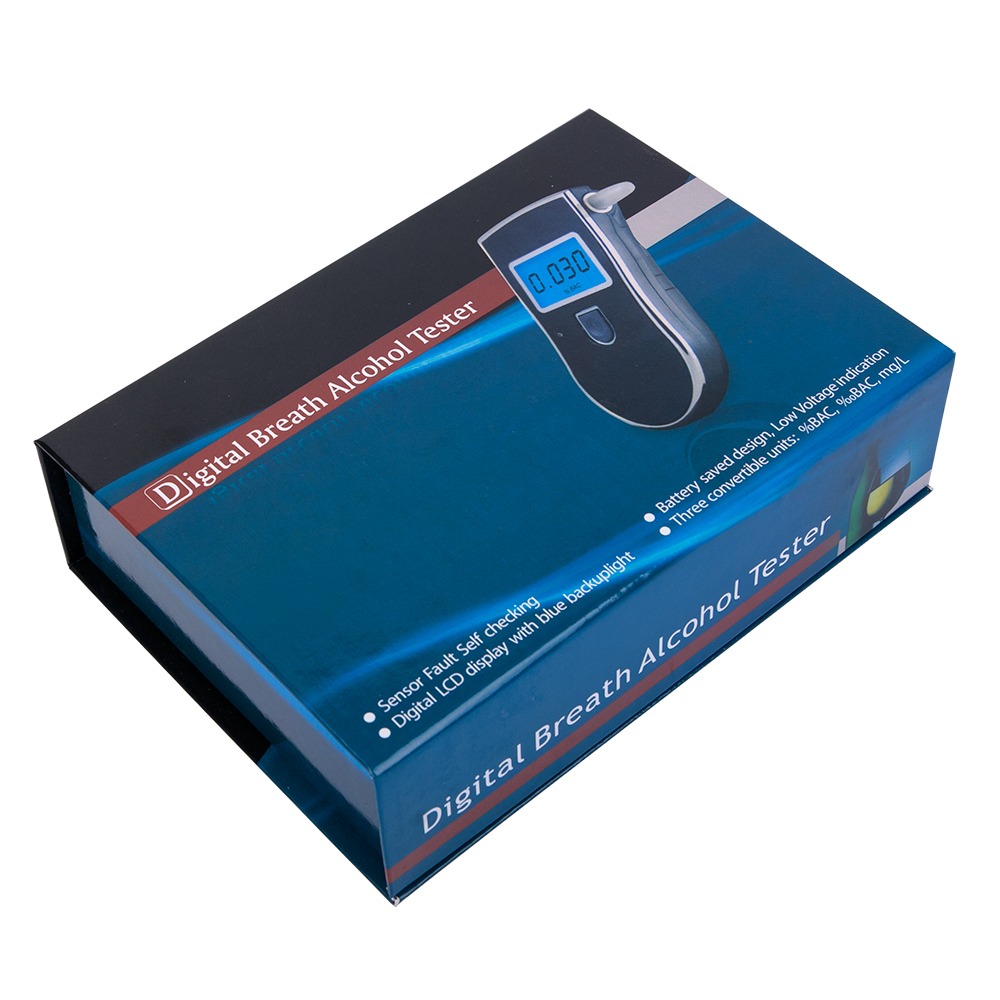
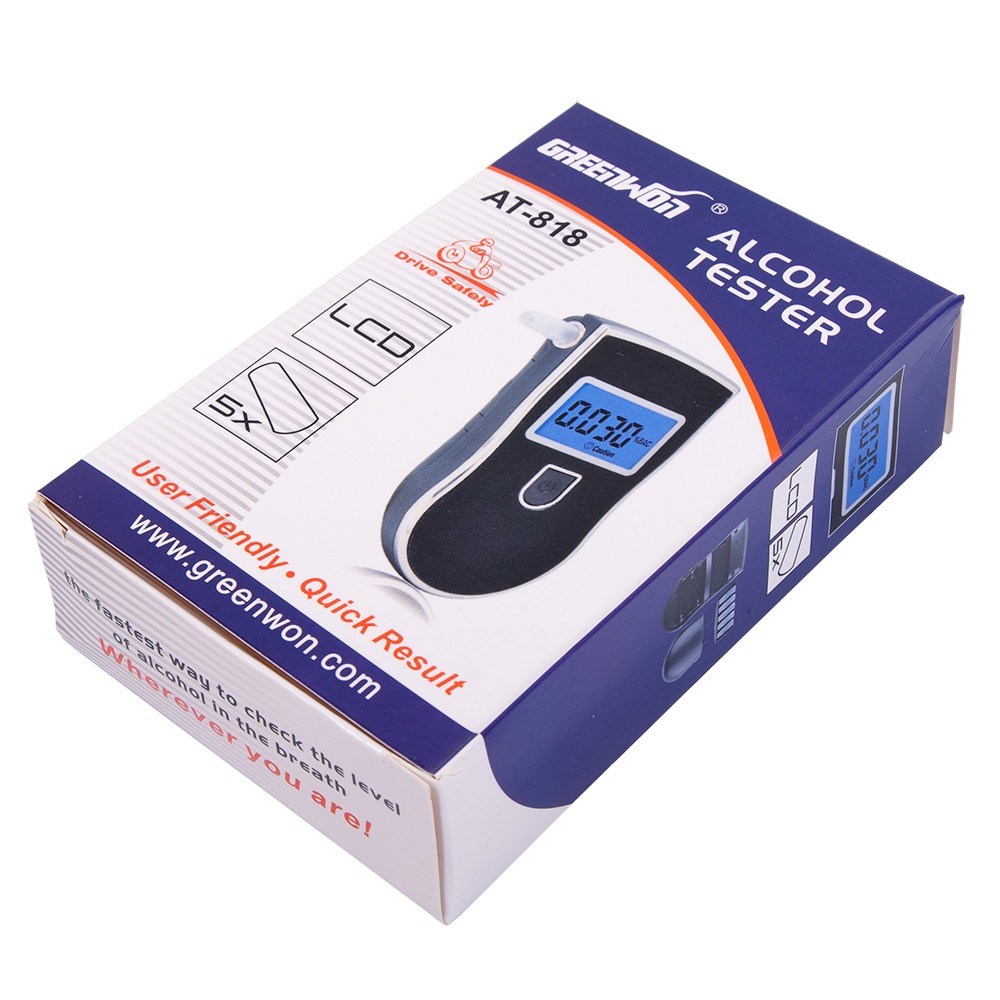
AT-818
Delivery and payment
Choose your city or town to see the price with delivery there and when you can get it.
Pickup points
- Branch
- Parcel locker
Pros
- Results in seconds
- Three measurement units
- Backlit LCD screen
- Sensor self-diagnosis
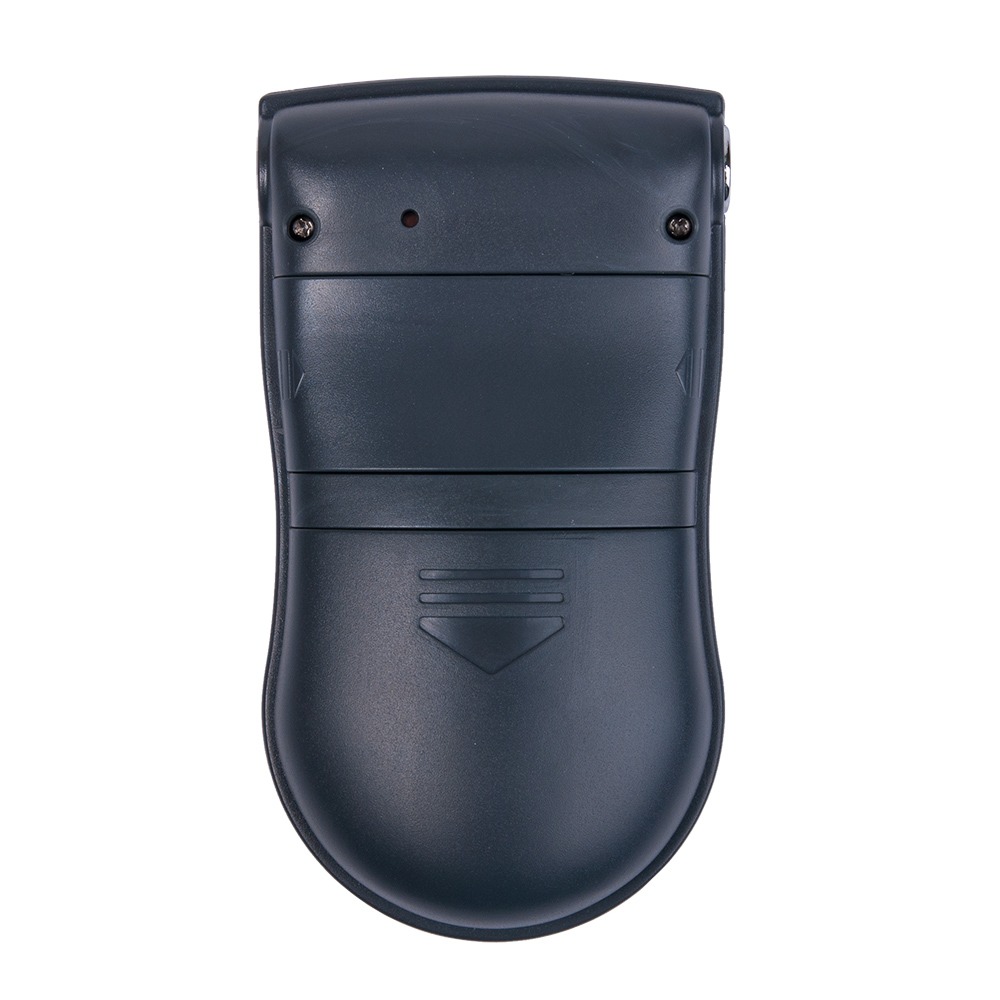
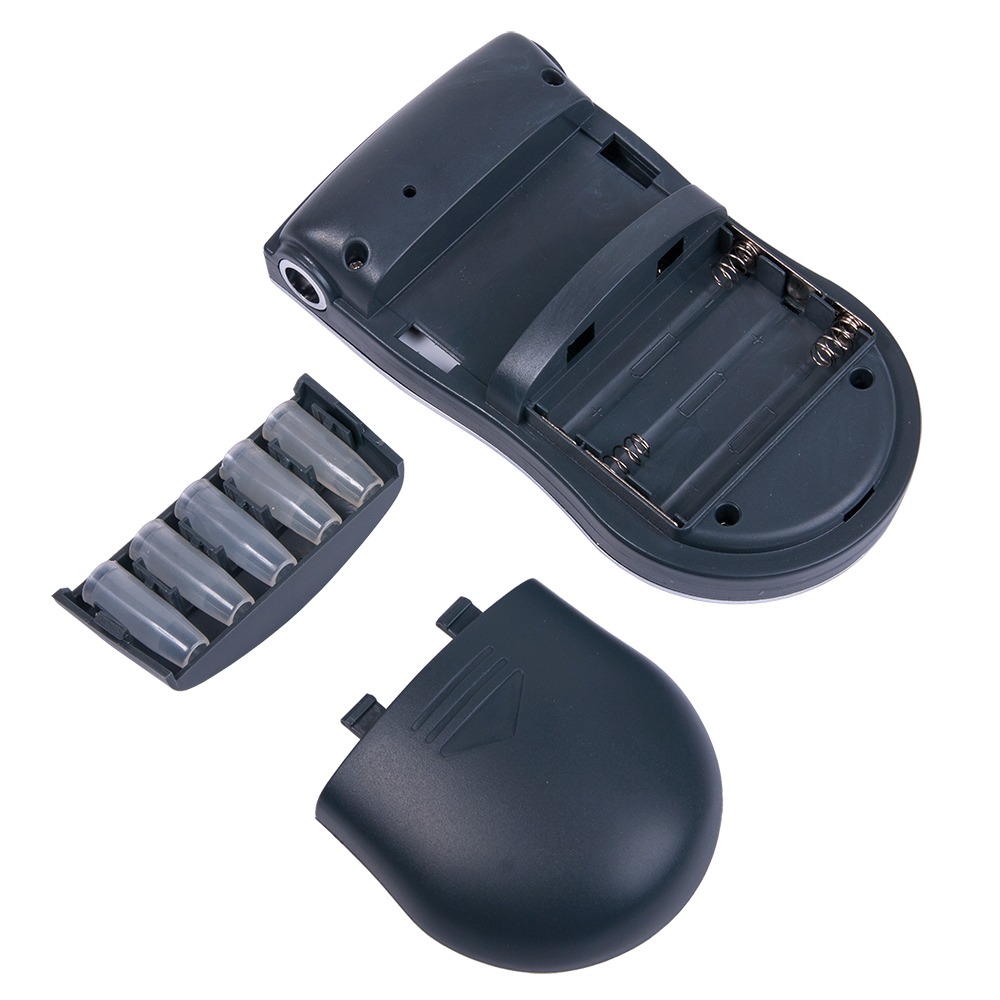
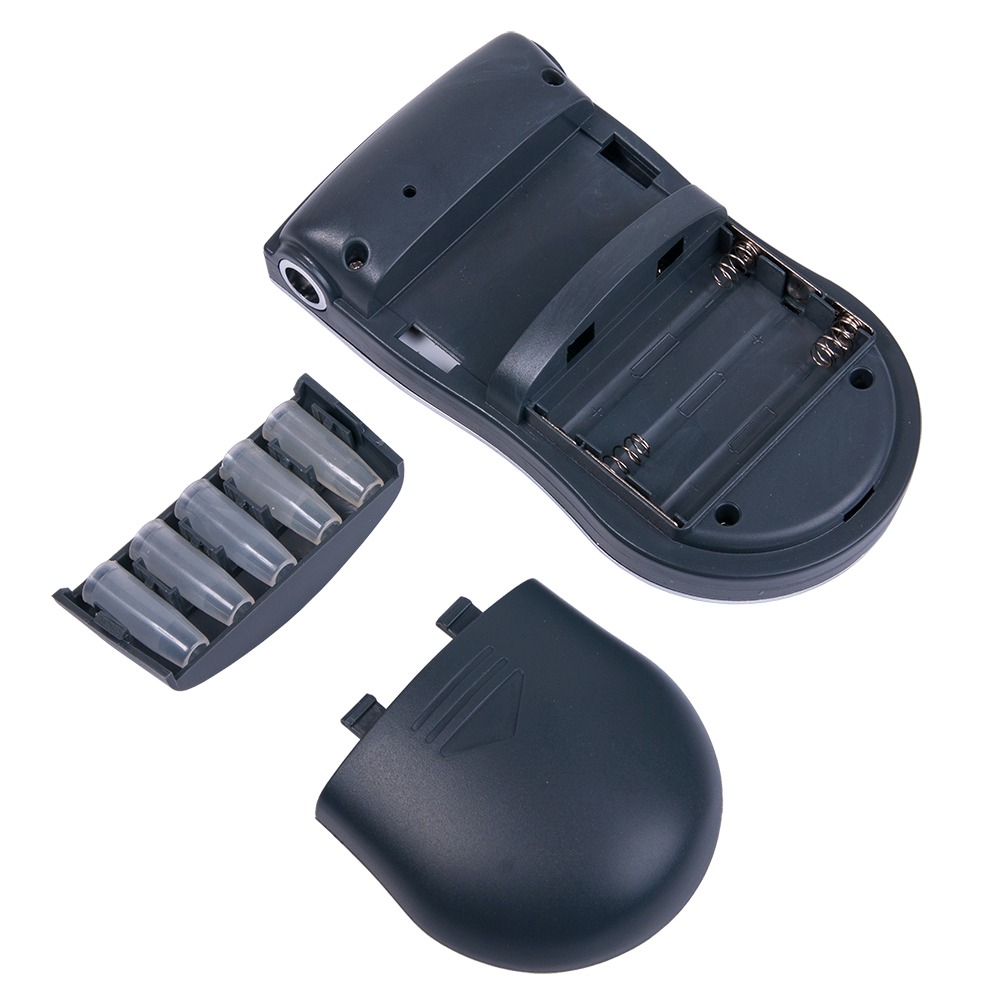
- Mouthpieces stored in the back
Cons
- Indicative only, not evidence for court
- Less accurate than professional models
- Requires 3 AAA batteries
AT-818 is a pocket-sized safety check before you drive
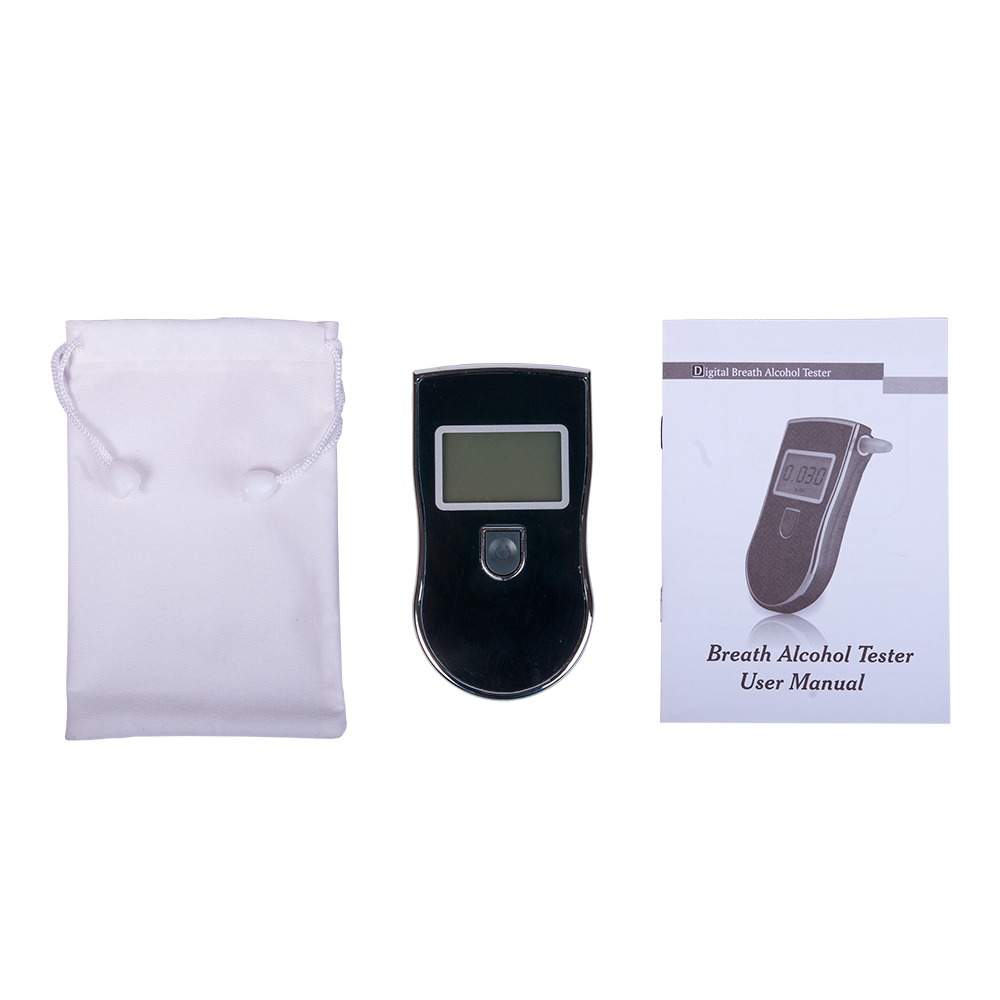
The AT-818 personal breathalyzer (often sold under the GREENWON brand) is a compact device for personal use: quickly check for alcohol in your breath and get a reading on the screen. It is not a substitute for a medical test or an “official” police device, but it is a great tool for practicing sober responsibility at home, literally.
How it measures and what it displays
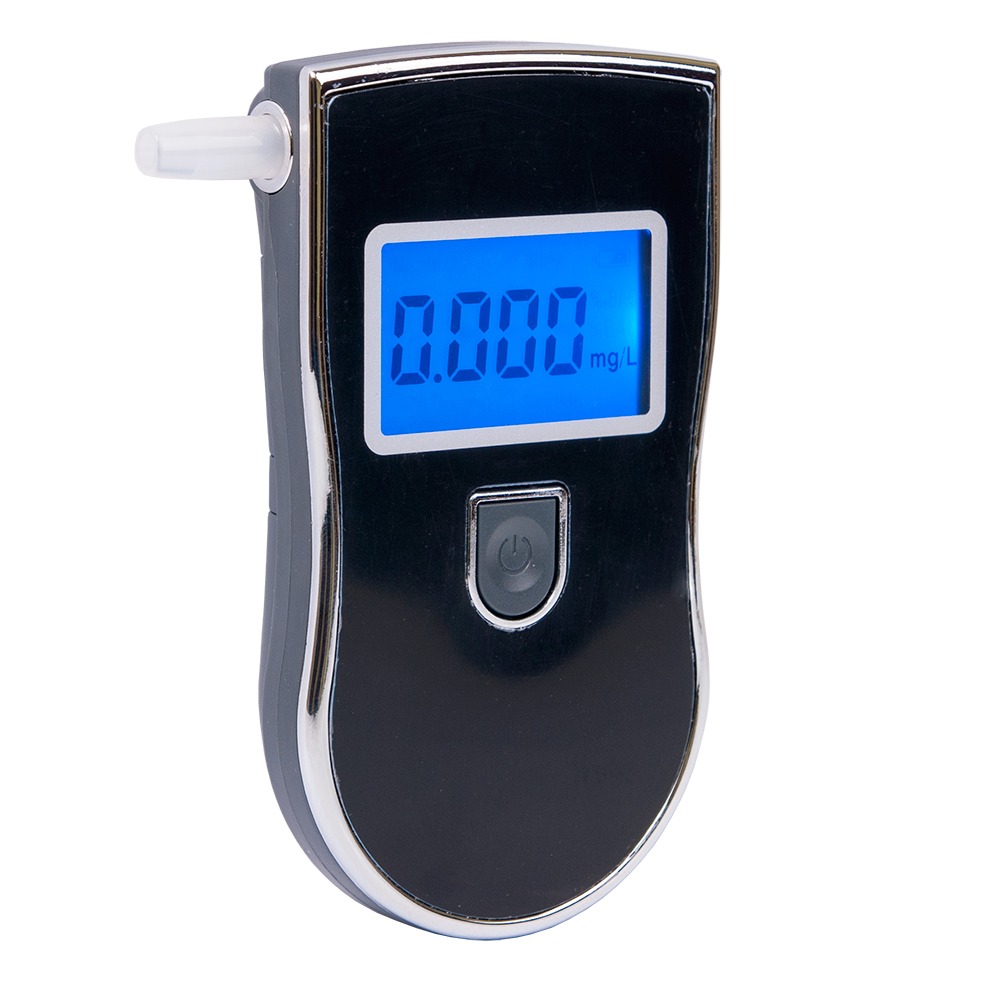
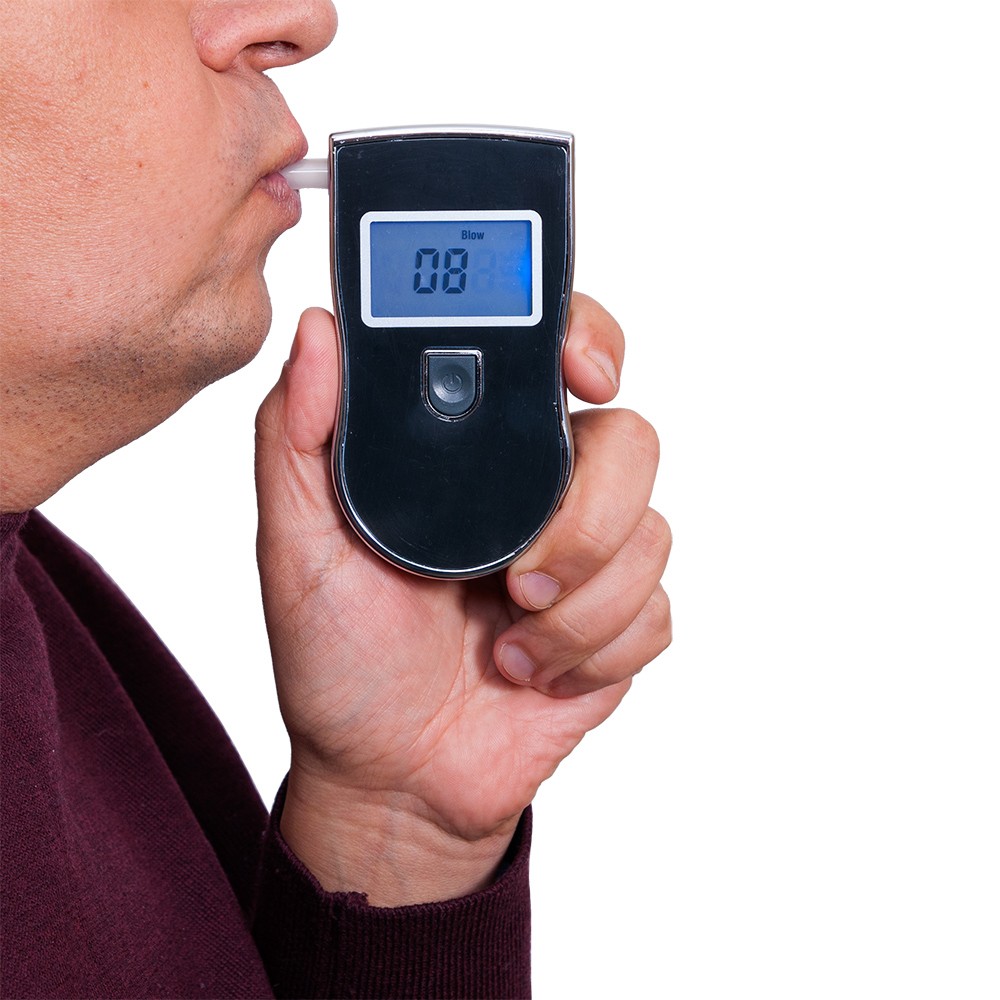
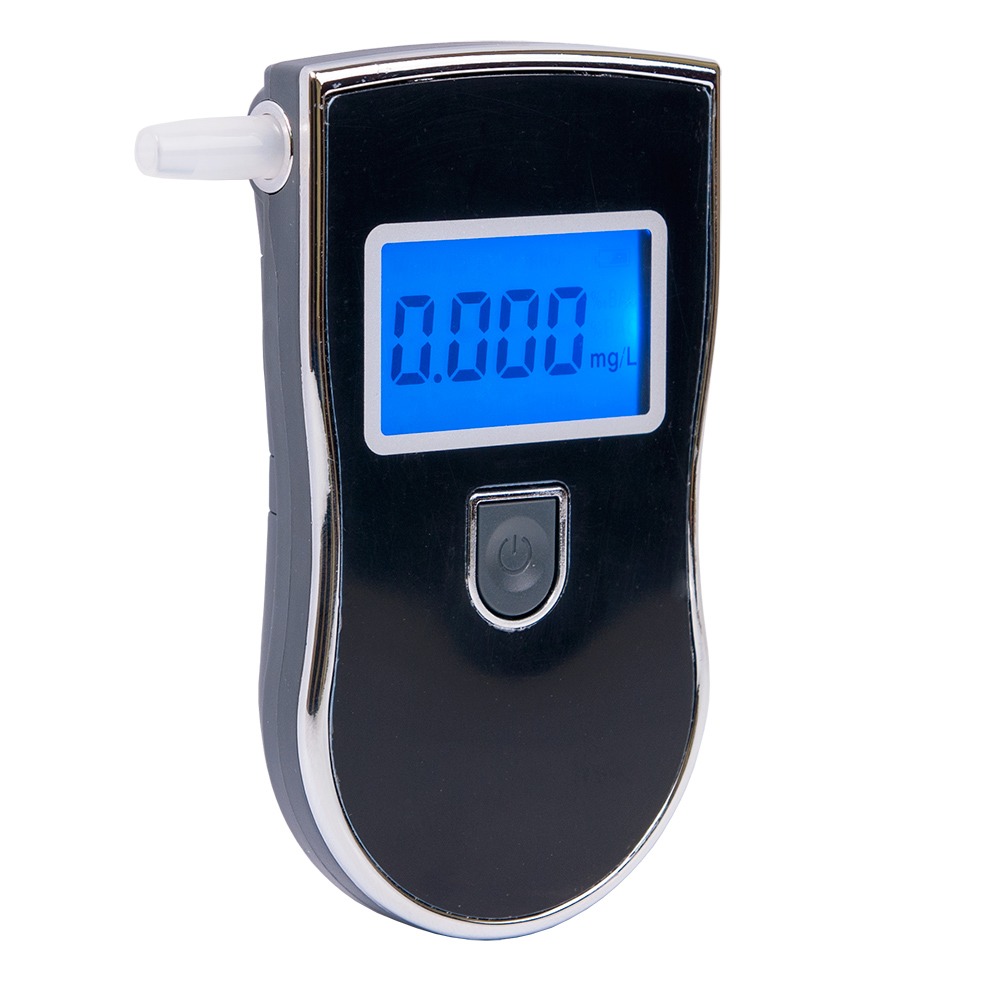
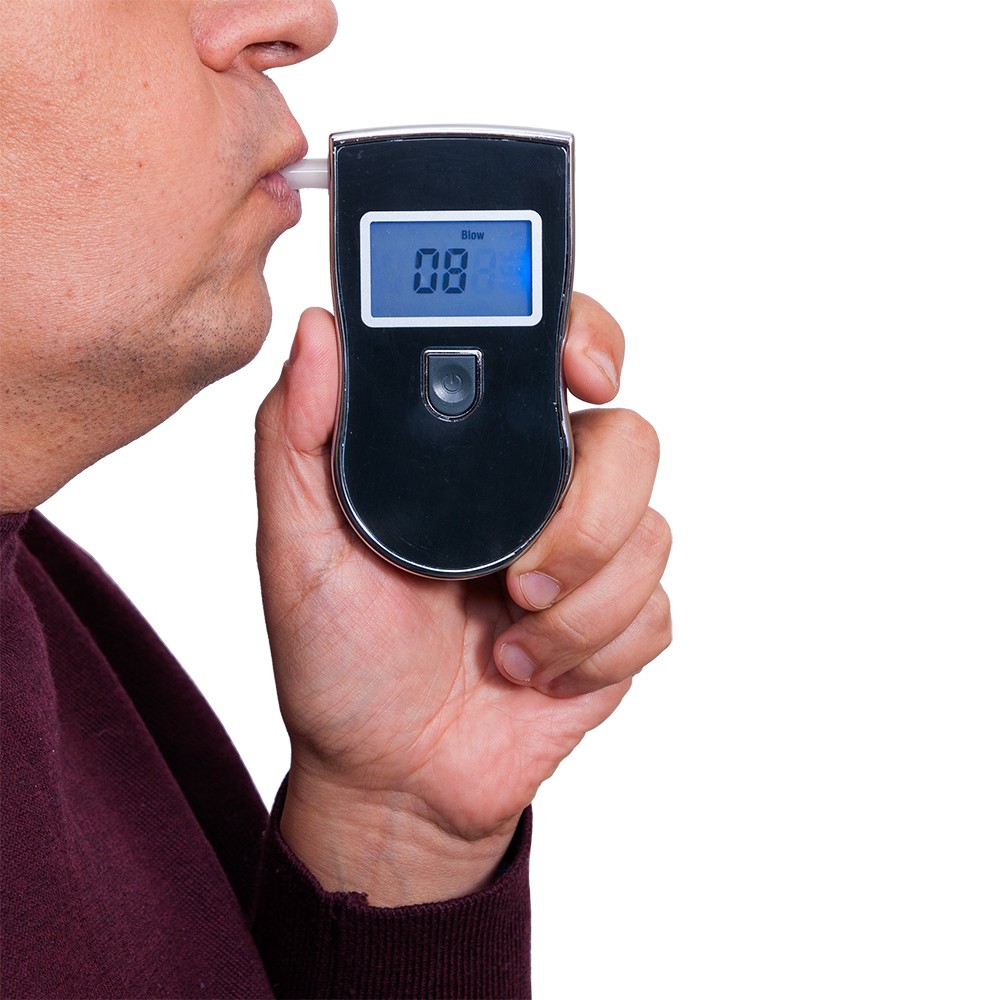
The AT-818 uses a semiconductor (NM Hot-wire) sensor that responds to alcohol vapor in exhaled air and estimates its concentration. The result appears on a blue-backlit LCD display. An audible alert sounds if the reading exceeds the set threshold.
A nice bonus of this model is that you don't have to carry the mouthpieces separately: they are usually stored in a compartment in the back cover.
Measurement units: ‰, %BAC, mg/L, no magic involved
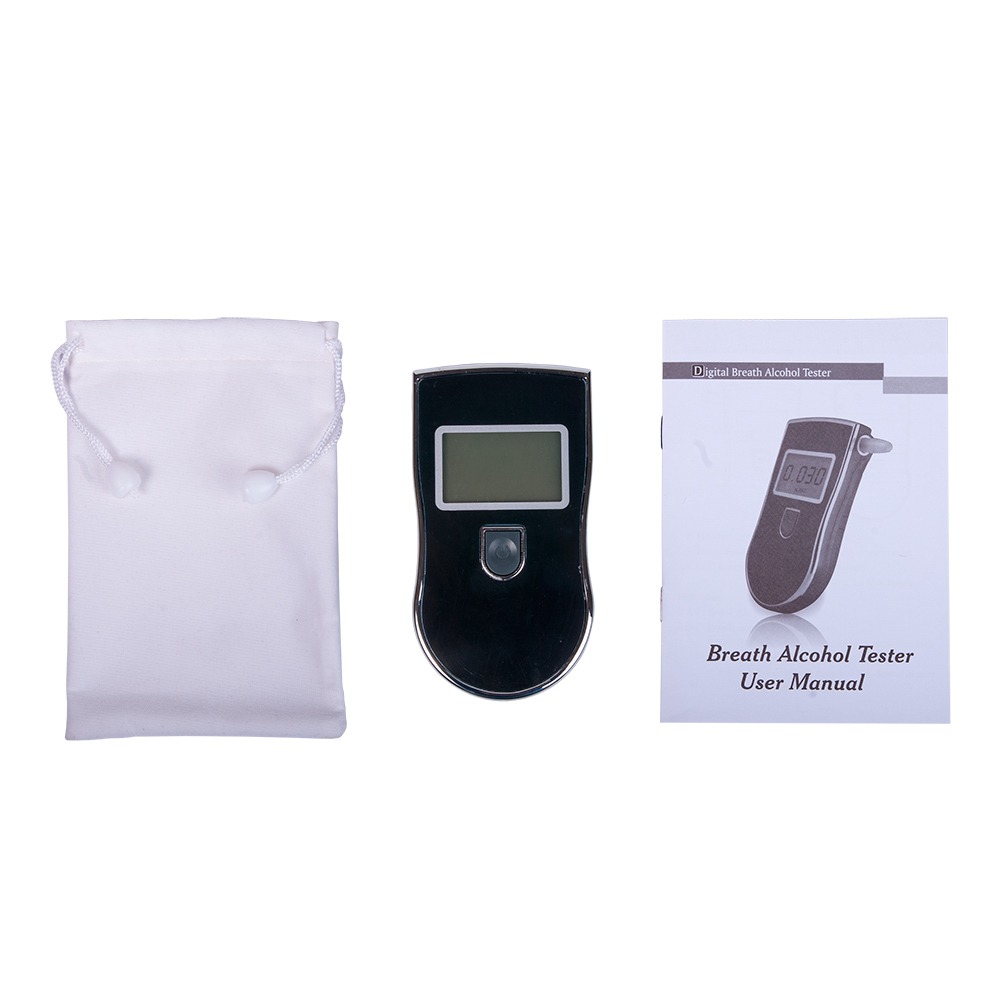
The model can display results in three formats: per mille (‰), %BAC and mg/L (BrAC). This is convenient because the “limit” is expressed differently in different countries and sources. But remember: a personal breathalyzer provides an estimate, not a definitive lab result.
Testing correctly: how not to spoil the result in 30 seconds
The most common cause of “strange” readings is not the device, but a mouth that's still “in bar mode.” To get the most reliable reading from the AT-818:
1) Wait at least 20 minutes after your last sip (ideally longer).
2) Do not use mouthwash or oral sprays before the test, and do not smoke immediately before taking a measurement.
3) Turn on the device. It will run a self-test and warm up the sensor (usually up to 20 s).
4) When prompted to blow, exhale steadily into the mouthpiece for 3–5 seconds.
5) Check the result and let the device “rest” before testing again (a pause of up to ~20 s helps with stability).
The alarm: when it starts beeping and why that's useful
The AT-818 has an audible and visual alert when the threshold is exceeded. The typical alarm setting is around 0.5‰ (or 0.05 %BAC / 0.25 mg/L). This is not “permission” to drive at 0.49; it is a useful threshold that ensures the device alerts you when you should not even be thinking about driving.
Power and everyday convenience
It runs on 3 AAA batteries (4.5 V). Auto power-off and a low battery indicator help prevent the batteries from draining if a button is accidentally pressed in your pocket. The claimed average battery life is hundreds of tests per set (highly dependent on the batteries and temperature).
Who the AT-818 is and isn't for
It's suitable if you want a personal breathalyzer “just in case”: after a party, before a morning drive, or for checking yourself at home or while traveling.
It isn't suitable if you need evidentiary accuracy, regular heavy use in a business, or if you want to “calibrate reality to the result you want.” For those situations, consider more expensive models, often with an electrochemical sensor and professional calibration.
Where to find the instructions
If the instructions from your package are lost, you can often find a copy online, for example on ManualsLib.