DSG-23
Delivery and payment
Choose your city or town to see the price with delivery there and when you can get it.
Pickup points
- Branch
- Parcel locker
Pros
- Measures dose rate and accumulated dose
- Audible, visual, and vibration alerts
- Search mode displays pulses per second
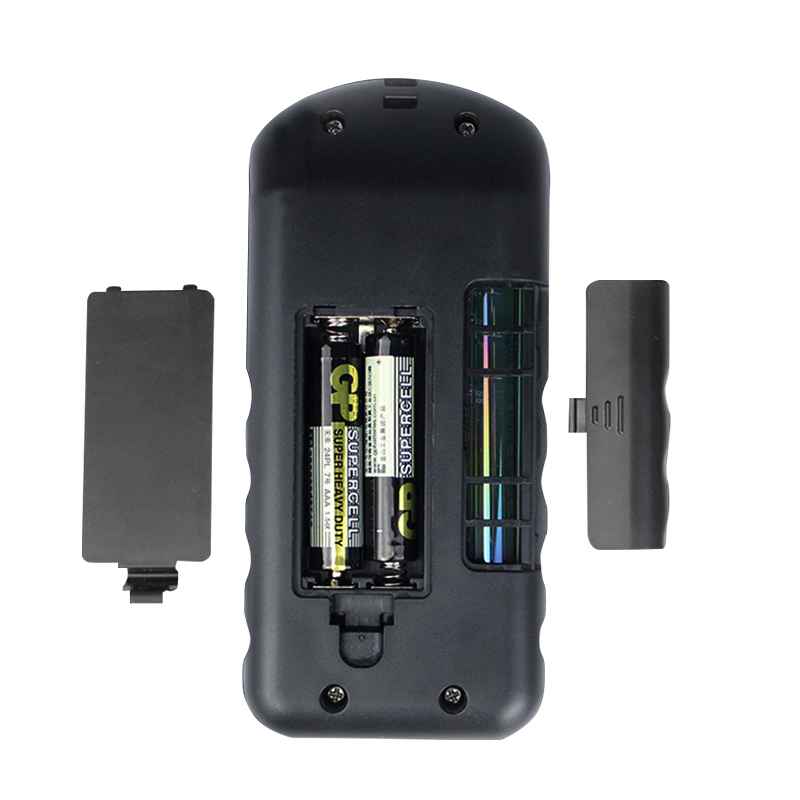
- Compact housing and AAA battery power
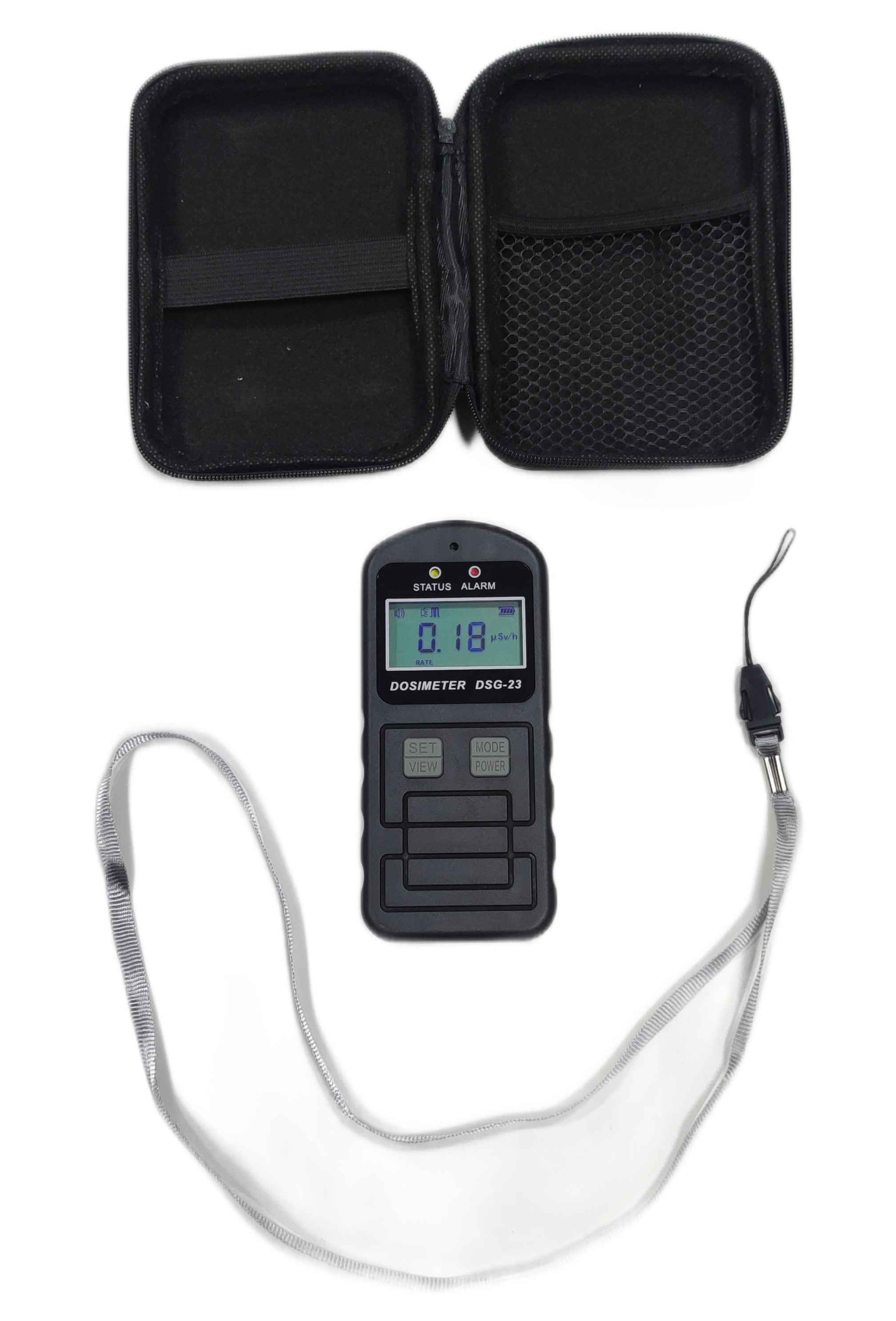
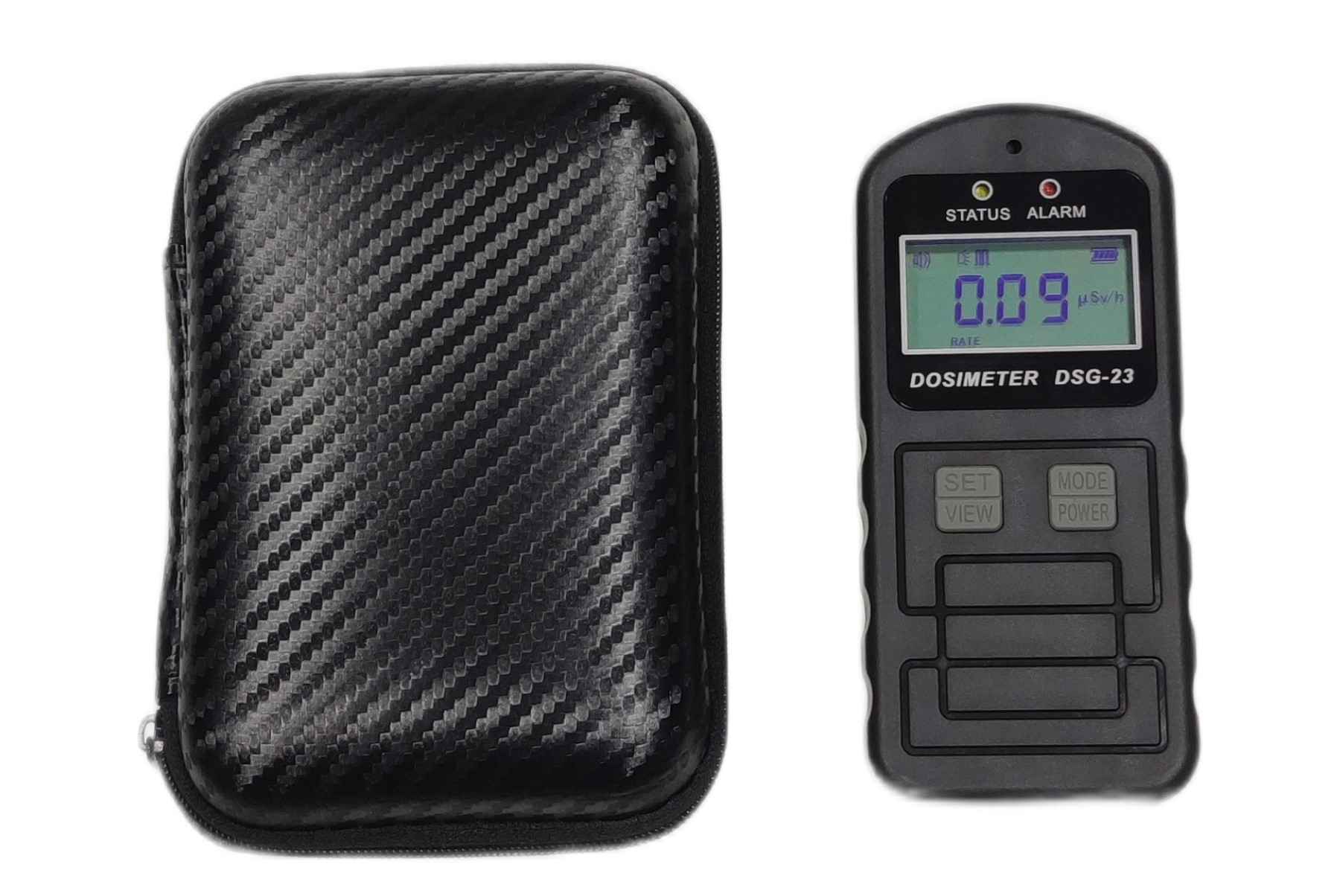
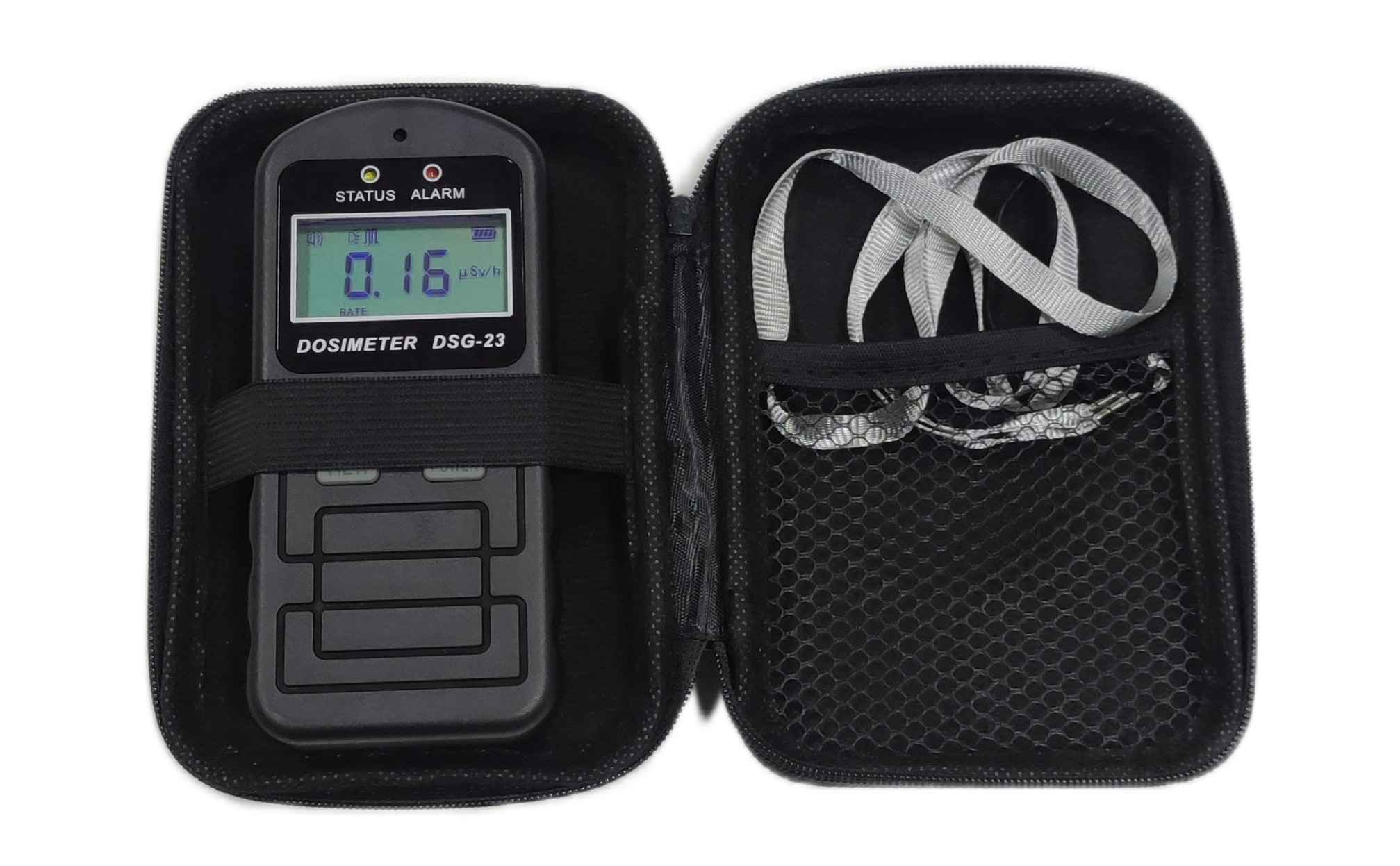
- Case and carrying strap included
Cons
- Does not identify specific radionuclides
- Does not replace laboratory food analysis
- Readings need time to stabilize
DSG-23: a dosimeter that doesn't need a smartphone
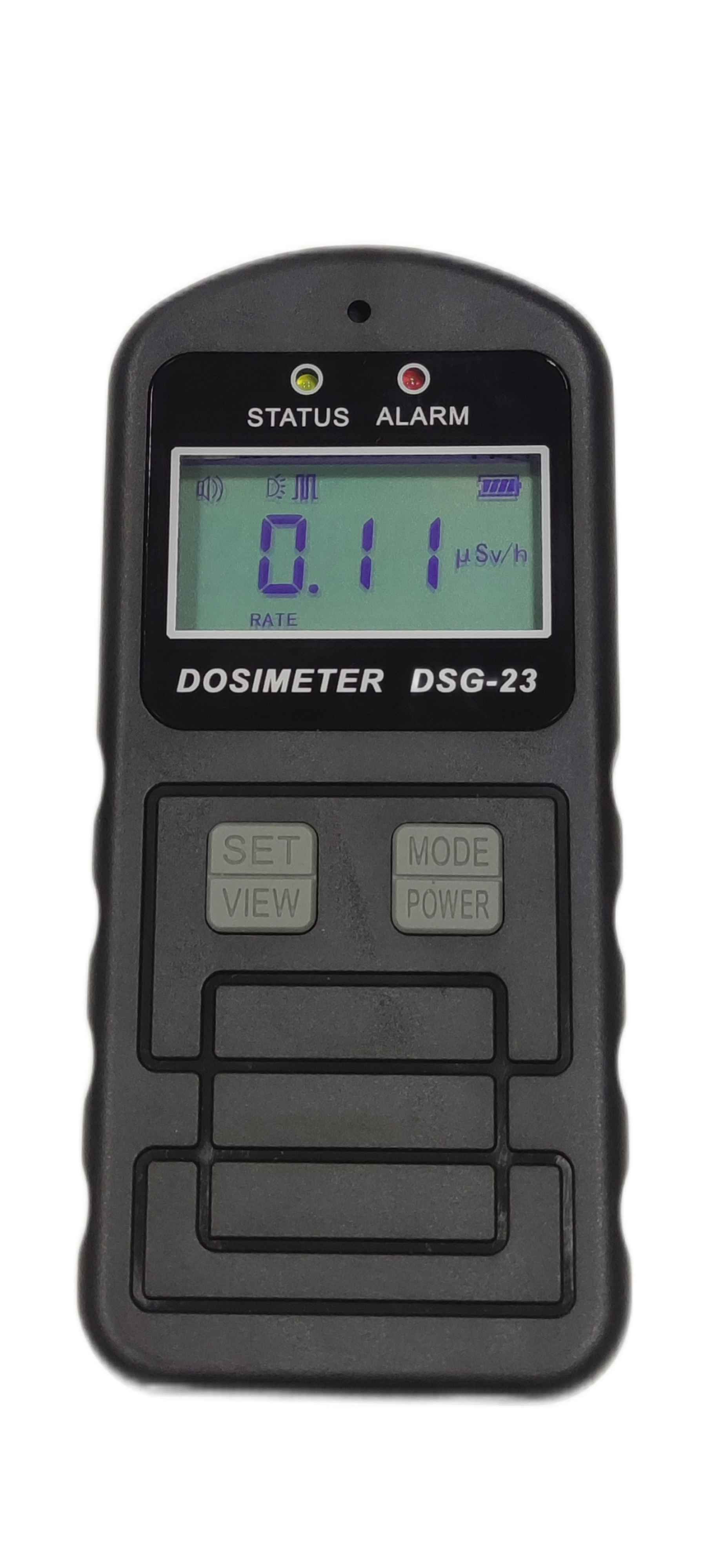
The DSG-23 is a compact personal dosimeter-radiometer based on a Geiger-Muller tube. Its main purpose is simple and useful: to show the current dose rate, track accumulated dose, and warn you if radiation exceeds a preset threshold. The device is designed to detect gamma and beta radiation, with a dose rate measurement range of 0.1 to 1000 µSv/h.
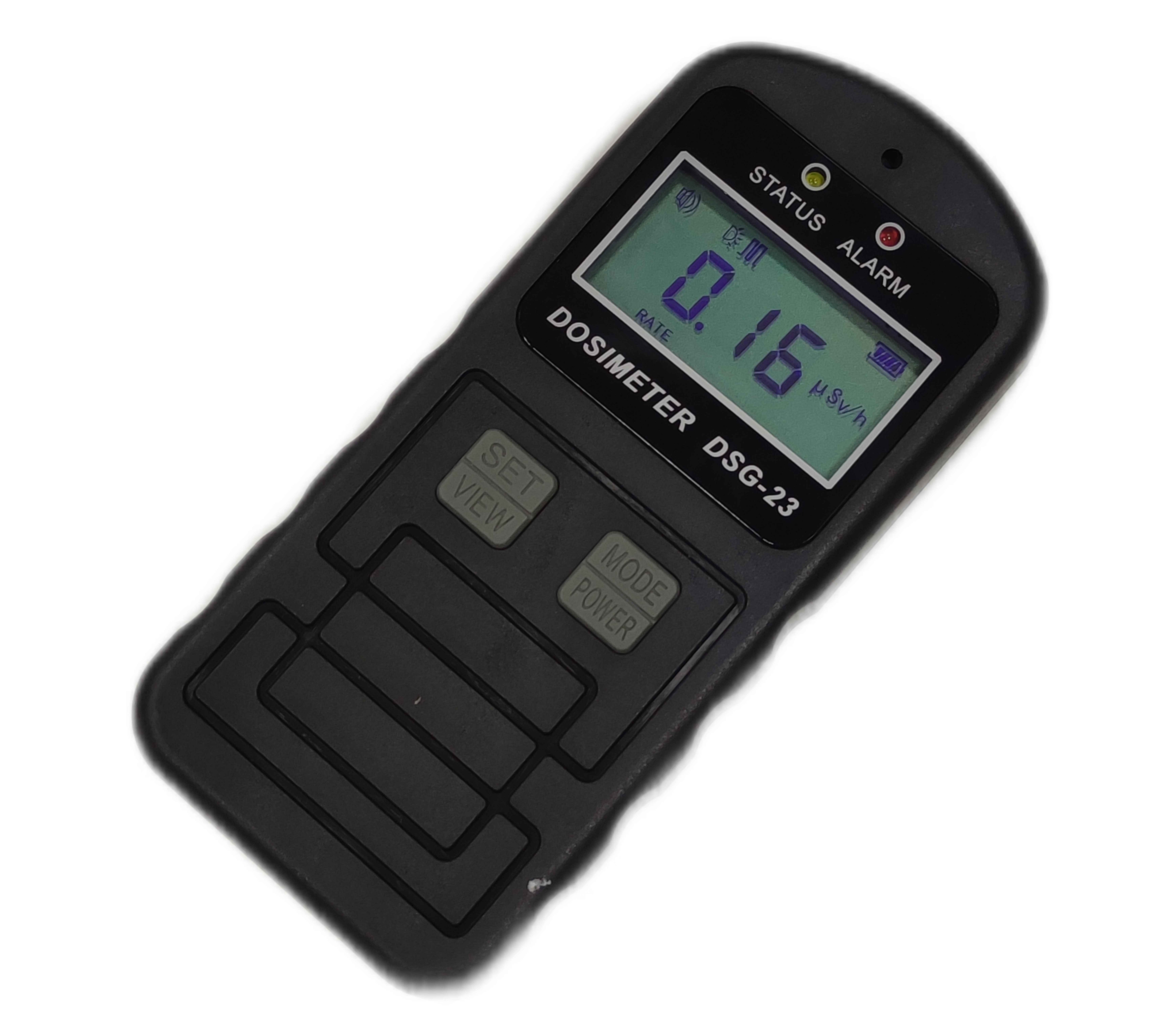
There are no extra menus, accounts, or need to find Wi-Fi in the woods. The DSG-23 has just two function buttons: MODE/POWER and SET/VIEW. They control power, mode switching, viewing readings, and alarm settings. This straightforward approach is especially useful for a device that may be used by non-specialists as well as professionals.
RATE, DOSE, and source search
In RATE mode, the dosimeter displays the ambient dose equivalent rate, or the current background radiation level. Data updates every second, and the units switch automatically between µSv/h, mSv/h, and Sv/h depending on the reading.
DOSE mode tracks accumulated dose. It is useful for monitoring total exposure during an extended stay in a particular area. You can also view the highest recorded dose rate, so there's no need to remember every spike in the readings.
Search mode displays the number of pulses detected per second. It's not spectrometry or magic, but it is a practical way to compare several locations or carefully pinpoint an area with elevated activity. The closer the device is to the source, the higher the pulse rate.
Alerts that are hard to miss
You can set your own thresholds for dose rate and accumulated dose. When a threshold is exceeded, the DSG-23 can issue an audible, visual, or vibration alert. Alert types are configured separately, so you can leave vibration on in a quiet room and enable all available indicators for field measurements.
The display also shows the battery level, enabled alert status, RATE and DOSE indicators, a clock, and an alarm clock. The screen backlight makes the device easier to use in the dark, while the pulse indicator light lets you notice changes in background radiation without constantly watching the numbers.
Compact for home and field use
Measuring 12.5 × 5.5 × 2.6 cm and weighing about 100 g without batteries, the device fits easily into a jacket pocket, bag, or belt case. It runs on two AAA batteries, a common size that saves you from having to search for a special rechargeable battery at the worst possible moment.
Settings, alarm thresholds, and accumulated dose are stored in nonvolatile memory, so switching off the device or replacing the batteries won't erase important data. A strap and protective case are included for transport, so the dosimeter doesn't have to share a pocket with keys and loose change.
What the DSG-23 can and can't do
The DSG-23 is well suited to checking background radiation indoors, outdoors, near building materials and belongings, or in suspicious areas. For reliable comparisons, allow the readings to stabilize, measure from the same distance, and repeat the measurement at several points.
However, the dosimeter does not identify radionuclides, display activity in food in Bq/kg, or replace laboratory analysis. An elevated reading is a reason not to touch a suspicious object: move to a safe distance, restrict access to the area, and contact the appropriate services or radiation control specialists.
Who it's for
The DSG-23 is a good choice for anyone who needs a standalone device without an app for personal background radiation monitoring, field trips, checking belongings, and long-term dose tracking. Its strength lies in the combination of a wide measurement range, configurable alerts, search mode, and straightforward controls. If you need isotope identification, alpha radiation measurement, or an official laboratory report, you'll need a different class of equipment.