Voronamnet Sapsan-3 Bird Repeller
Delivery and payment
Choose your city or town to see the price with delivery there and when you can get it.
Pickup points
- Branch
- Parcel locker
Pros
- Protects an area of up to 0.5 ha
- Automatically switches off at dusk
- Powered by 220 V or 12 V
- Three sound modes
- Bracket for precise positioning
Cons
- Too loud for densely built-up areas
- 12 V battery sold separately
- Requires a cover for protection from precipitation
Sapsan-3: It doesn't fly, but it makes a convincing case that this isn't a bird buffet
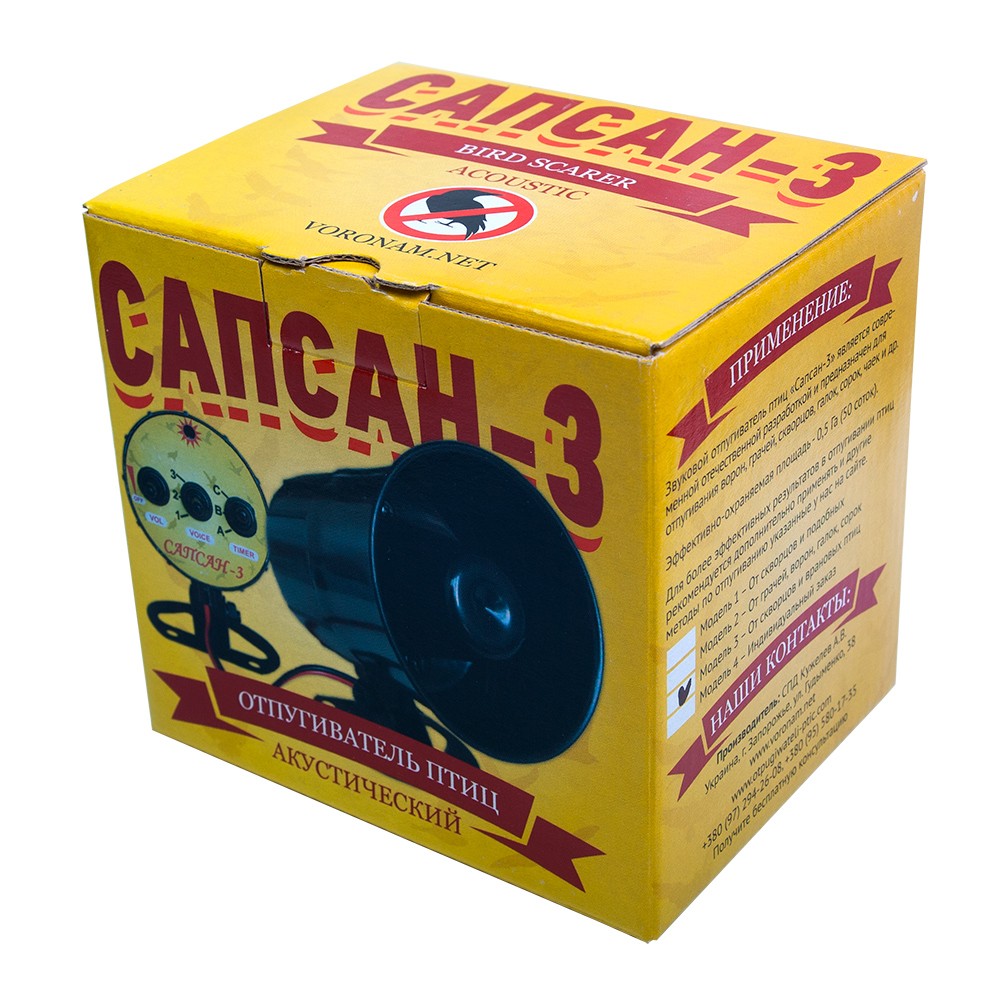
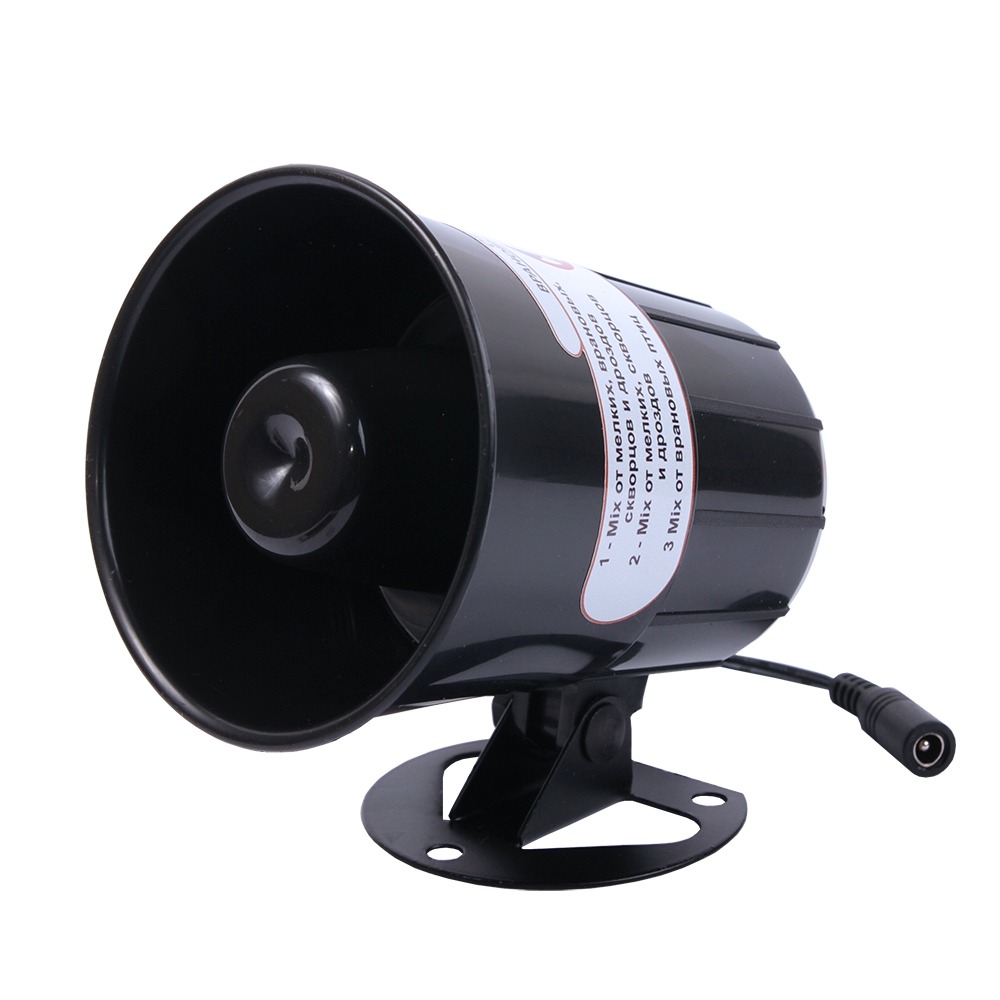
Sapsan-3 is a bioacoustic bird repeller for gardens, vineyards, berry patches, fields, apiaries, or farm areas. Instead of nets, traps, and constant monitoring, it cyclically plays special distress signals and calls that birds recognize as signs of danger. The device is primarily designed to deter starlings, thrushes, crows, rooks, jackdaws, magpies, gulls, and bee-eaters.
The claimed coverage area is up to 0.5 ha, or up to 5000 m². This isn't a magic dome: sound travels most effectively in front of the horn, with a clear line of sight. Trees with dense canopies, buildings, slopes, and other obstacles reduce actual coverage, so the direction of installation matters more than simply switching it on.
Three modes for different feathered intruders
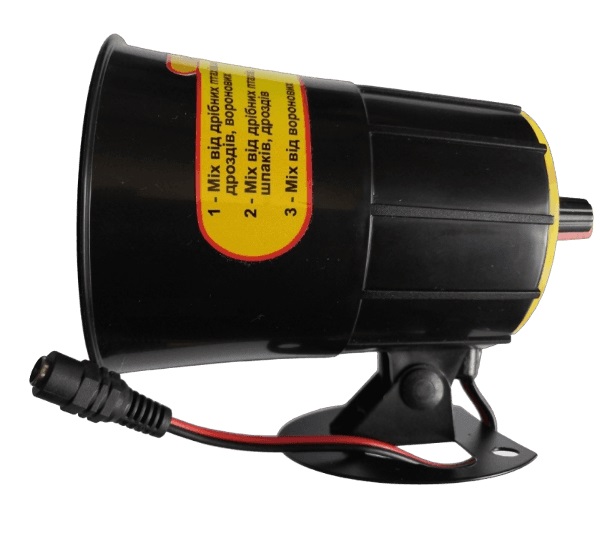
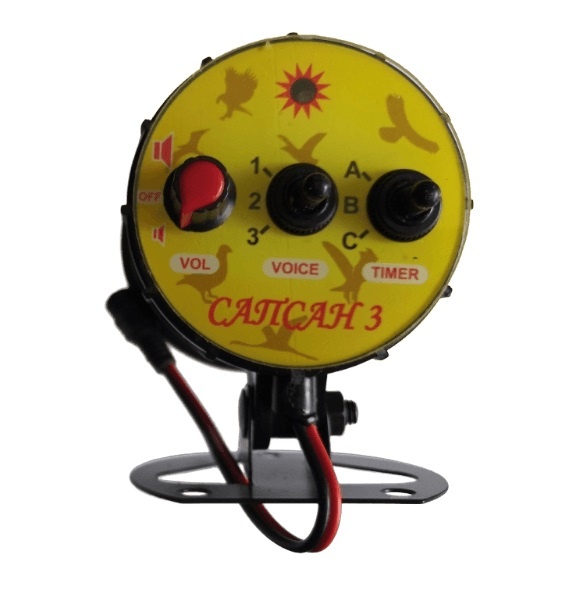
Three mechanical controls are located on the rear panel: volume, voice mix selection, and timer. The VOICE control lets you choose one of three signal sets: one for small birds such as starlings and thrushes, one for corvids, or a mixed option. This lets you avoid playing the same recording nonstop: birds, like people, quickly get used to overly predictable noise.
The signals play in cycles, with pauses between playback sessions. The TIMER switch sets the length of the pauses, with three positions: A, B, and C. This cyclic pattern reduces habituation without turning the garden into a round-the-clock soundtrack to a bird movie.
Works during the day, stays quiet at night
A built-in light sensor responds to natural light. In summer, the device switches on around dawn, approximately 04:30–05:00, and switches off at dusk, approximately 20:00–21:00. This is useful for two reasons: it saves energy when daytime birds have already settled down for the night, and owners and neighbors don't have to listen to the signals overnight.
The light sensor must not be covered by leaves, a canopy, or other objects. It's also important to remember that the device won't start in a dark room: this is normal operation of the dusk sensor, not a malfunction.
Installation: high, dry, and with the horn pointed in the right direction
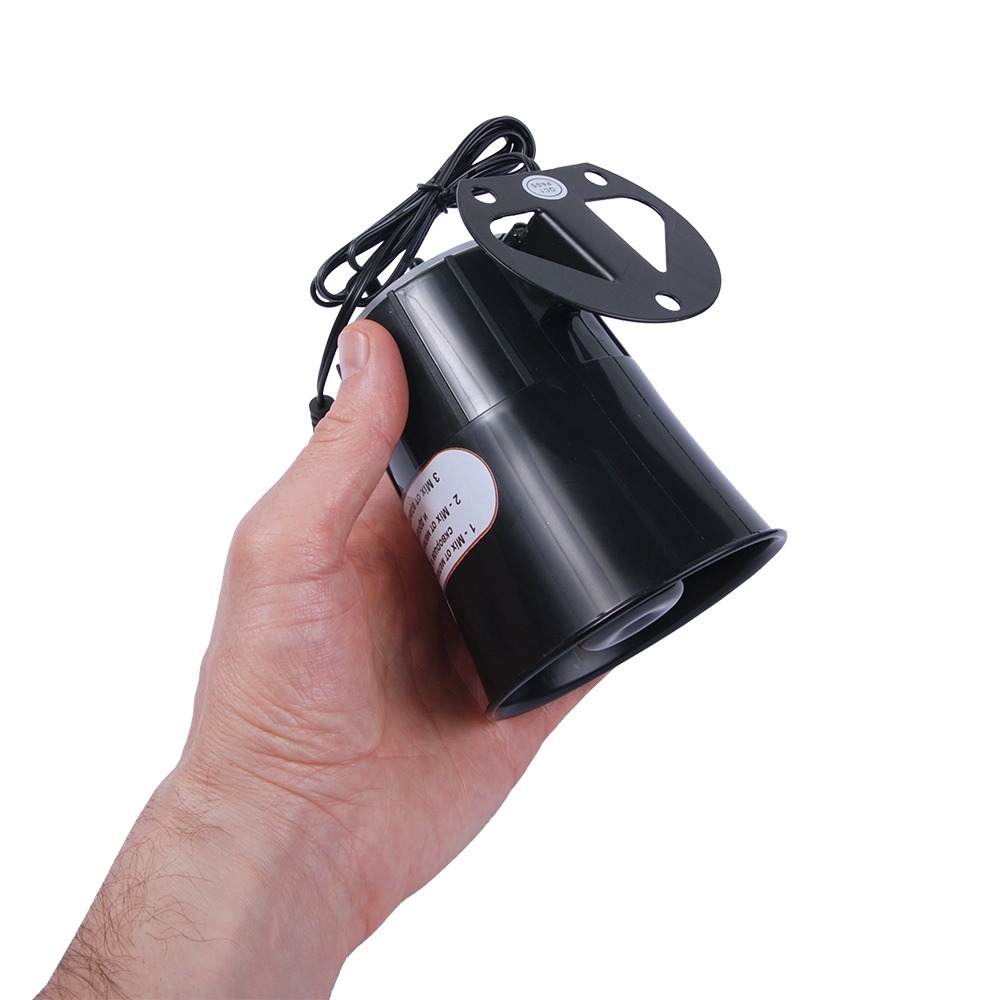
Sapsan-3 mounts to a wall, post, or mast using a metal bracket. The recommended installation height is 2–3 m above the ground. Point the horn toward the area that needs protection, not vertically upward: this directs the sound more precisely and prevents rainwater or snow from accumulating inside.
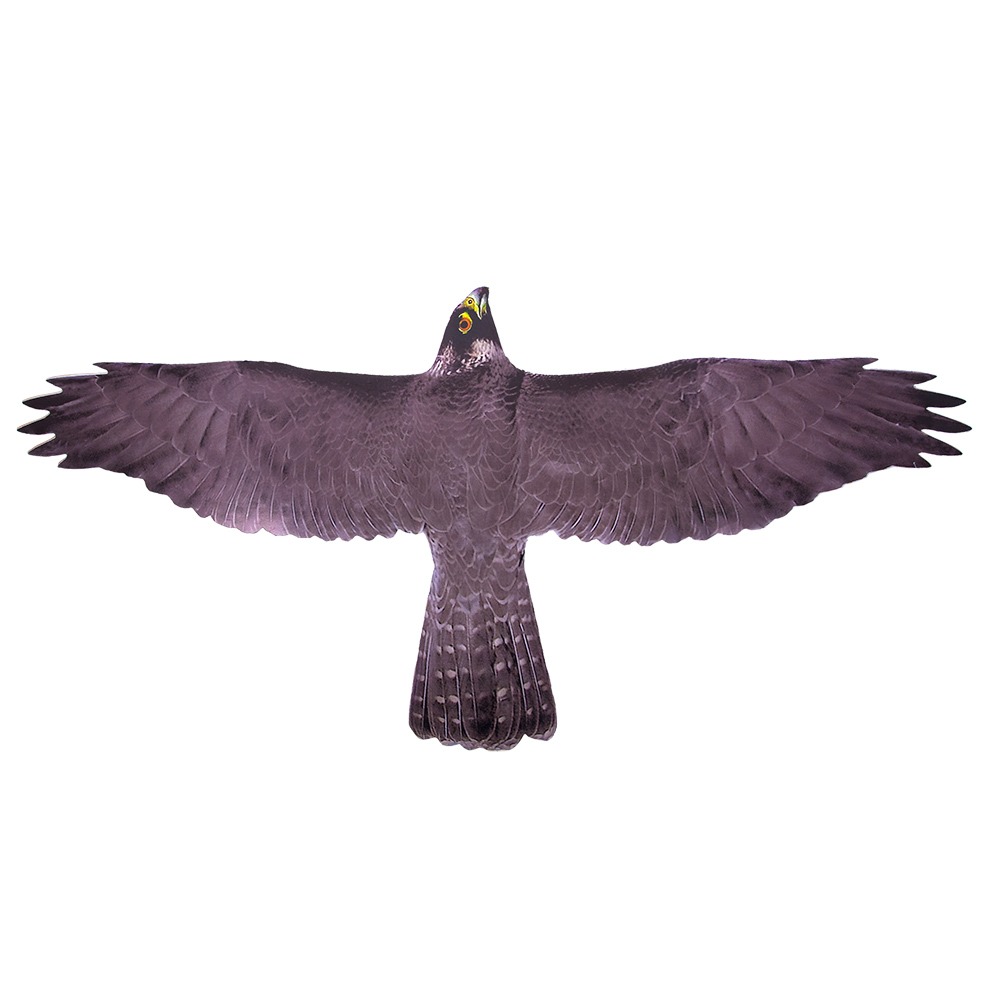
Although the plastic housing is protected from precipitation and direct sunlight, a hood or canopy is recommended for the horn when used outdoors. The device must be protected from moisture entering the housing and from direct splashes. For more challenging situations, such as a large sweet cherry tree, an open berry patch, or a field, it's a good idea to combine acoustic protection with visual deterrents such as tape, a scarecrow, or a model bird of prey.
Power without being tied to an outlet
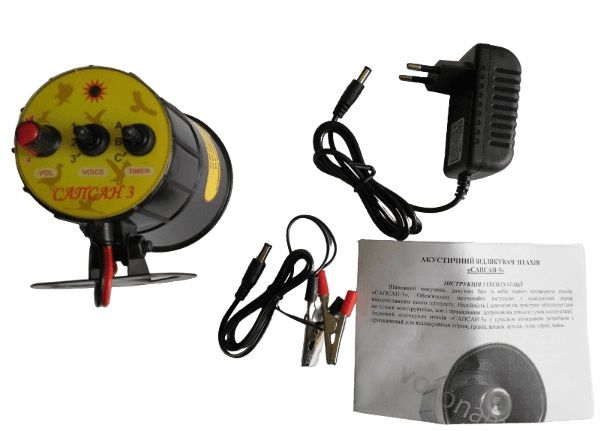
The repeller can be connected to 220 V mains power using the included adapter or powered by an external 12 V battery. The second option is especially practical for gardens, apiaries, fields, and plots where mains power is unavailable or running an extension cord is inconvenient. A cable with battery clamps is included, but the battery itself must be purchased separately.
The Sapsan-3 is loud, so it's best suited to remote or farm areas. Near a house, neighboring properties, or recreation areas, it's best to use moderate volume and longer pauses. The harvest matters, but good relations with the neighbors are a worthwhile investment too.