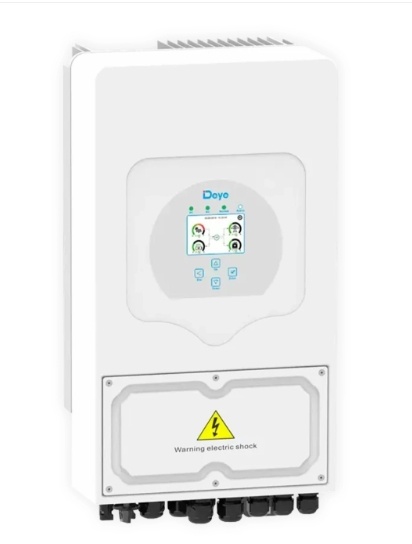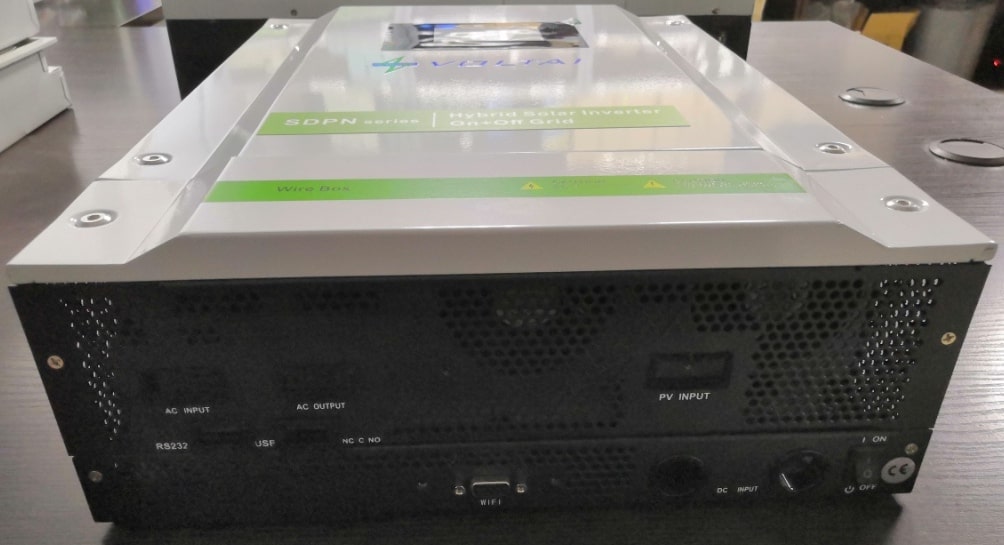
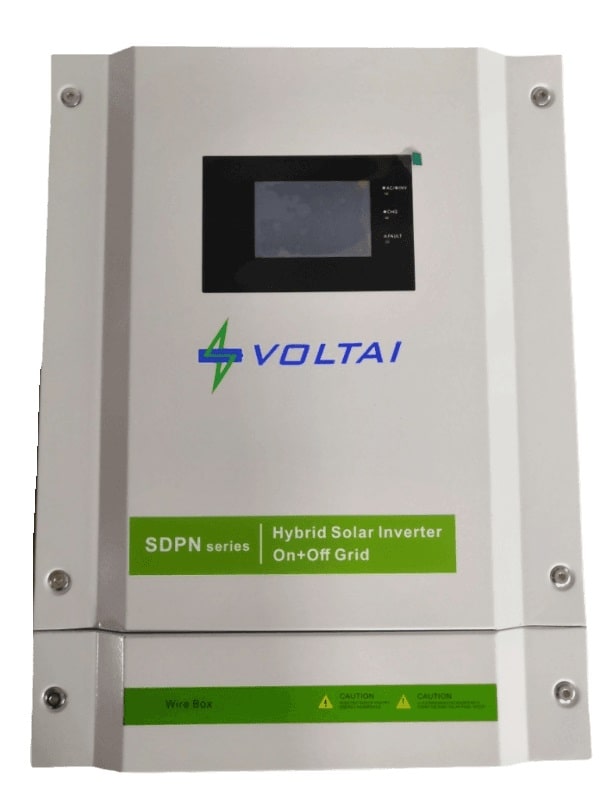
Voltai SDPN-3KW
Delivery and payment
Choose your city or town to see the price with delivery there and when you can get it.
Pickup points
- Branch
- Parcel locker
Pros
- 3 kW of power for basic needs
- Pure sine wave for sensitive electronics
- MPPT for solar panels up to 5.5 kW
- Fast transfer in less than 10 ms
- Supports parallel connection
Cons
- Requires a 24-volt battery system
- Not designed for high-power electric heaters
- Fans may be audible
Voltai SDPN-3KW: home power without the drama
The Voltai SDPN-3KW is a wall-mounted hybrid inverter for backup power in an apartment, small house, vacation home, or office. It combines a 3 kW inverter, a charger for a 24-volt battery, and an MPPT solar panel controller in one unit. It can draw power from the grid, batteries, and solar panels, automatically choosing an available source according to its settings.
The 3 kW rating is a real limit worth considering before you buy. The inverter is well suited to lighting, a router, laptops, a TV, a refrigerator, a circulation pump, a gas boiler, and moderate kitchen loads. At the same time, a kettle, water heater, electric stove, or several high-power appliances running at once will quickly use up all the available capacity. There is no magic here: 3 kW is 3 kW.
Backup power without restarting your equipment
When grid power goes out, the Voltai SDPN-3KW switches to battery power in less than 10 ms. For most home electronics and networking equipment, the interruption is practically imperceptible: the router doesn't have time to reboot, the computer stays on, and the boiler doesn't forget it's a boiler.
The inverter produces a pure sine wave at 220 V, making it suitable not only for chargers and lamps but also for equipment with motors, compressors, and electronic controls. Peak power of up to 6 kW helps handle the brief startup current of a refrigerator or pump, but it doesn't turn this model into a 6 kW inverter for continuous loads.
Solar panels: extra capacity for daytime use
The built-in MPPT controller works with a high-voltage string of solar panels in the 120–450 V range and accepts up to 5.5 kW of PV power. This allows you to install a panel array with more capacity than the inverter's rating: the extra capacity will be useful in cloudy weather, while on a bright day the unit will limit the excess automatically.
During sunny hours, energy can power loads directly and charge the battery. The battery is needed in the evening, at night, and during power outages; its capacity, not the “3 kW” printed on the case, determines how long the system can run independently. For example, a 24 V 100 Ah battery has a nominal capacity of about 2.4 kWh, of which less will be usable due to the allowable depth of discharge and conversion losses.
24 V: a compact system, but with thick cables
This model is designed for a battery system with a nominal voltage of 24 V. At full load, the current on the battery side will be high, so don't skimp on cable gauge, circuit breakers, fuses, or connection quality. An improperly assembled battery setup is more dangerous here than any settings menu.
Charging is possible from the grid and solar panels: the maximum grid charging current is 60 A, and the combined current from the grid and PV is up to 90 A. This is especially useful for systems with a sufficiently large battery, but charging settings must be matched to the battery type and its specified limits.
Controls, communications, and installation
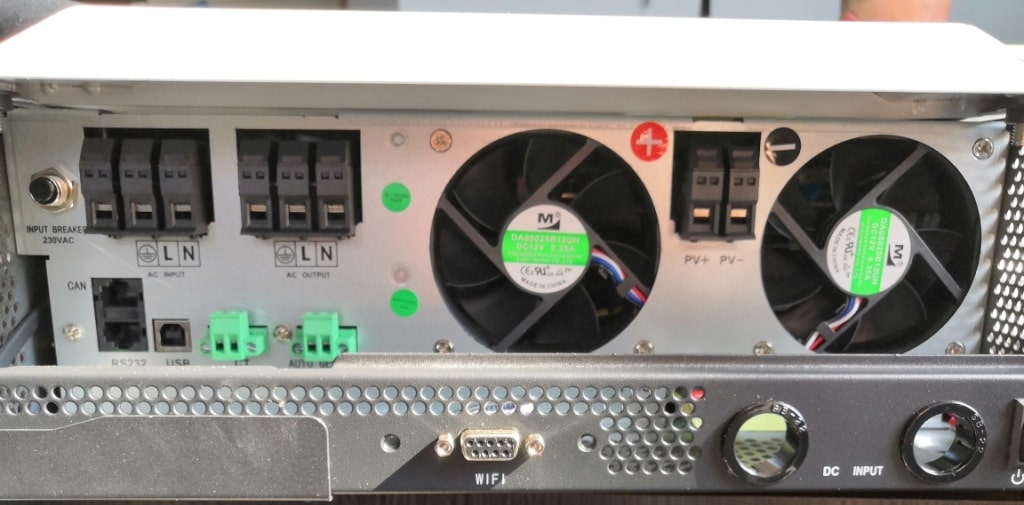
The front panel has a display for checking the operating mode, voltage, load, and system status. USB, RS232, Wi‑Fi, and a Generator Dry contact are provided for integration and monitoring. Parallel connection of inverters is supported, allowing you to scale up the system if 3 kW becomes insufficient later.
The unit measures 345 × 476 × 133 mm and weighs 12 kg, so it's easy to find a spot for it on a sturdy vertical surface. Active fan cooling helps it operate under load, but installing the inverter in a bedroom or a completely unventilated closet falls into the “you can, but why would you?” category.
Who is it for?
The Voltai SDPN-3KW is worth considering as the foundation of an affordable single-phase backup or solar system for essential household loads. It's a good choice if you want to keep the lights, internet, refrigerator, boiler, pump, and workspace running during outages, while gradually reducing grid consumption during the day.
For a home with electric heating, an induction stove, a water heater, or several air conditioners, it's better to consider a more powerful system with a 48-volt battery circuit from the start. A qualified electrician should connect the grid, battery, and PV string with proper protection: solar power calls for precise calculations, not bold experiments.