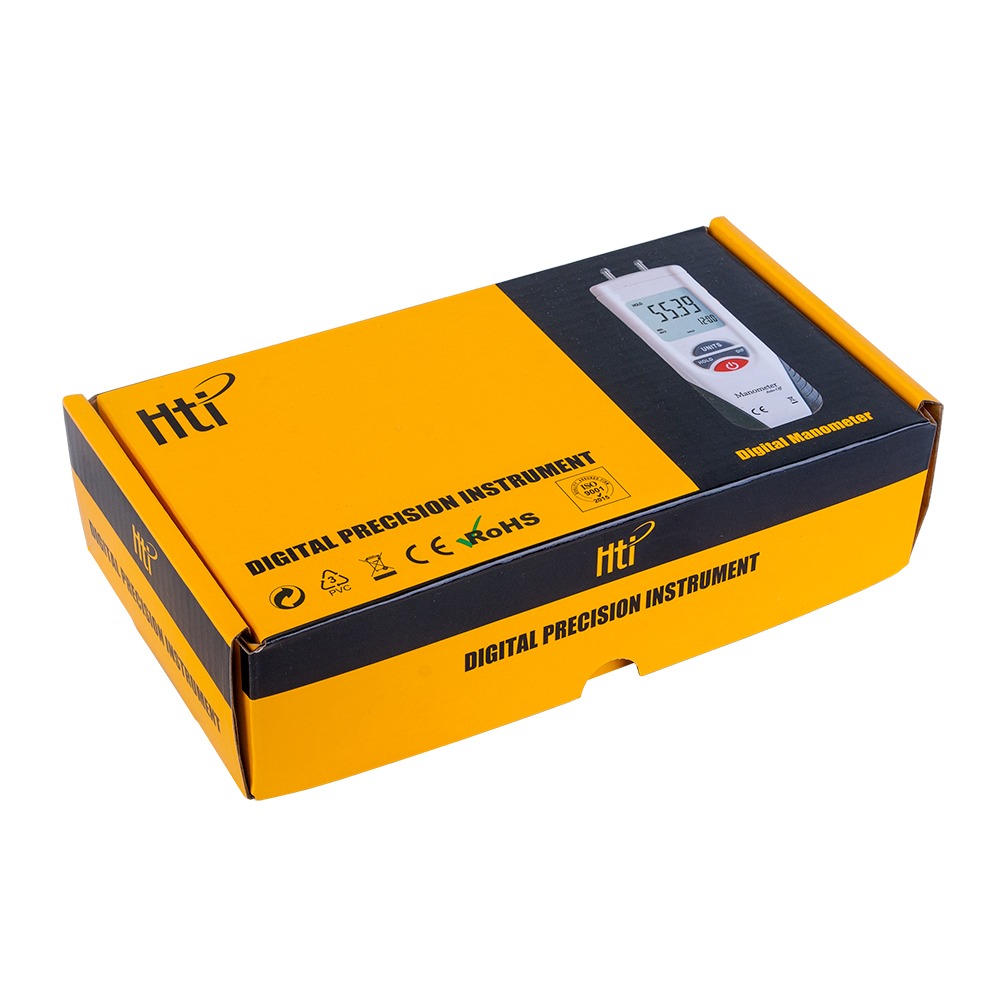
Xintest HT-1890
Pros
- Measures up to ±13.79 kPa
- 11 pressure units
- HOLD, DIF, MAX/MIN/AVG modes
- Large backlit LCD
- Case and tubes included
Cons
- Limited measurement range
- No data export or logging
- Runs on a 9V battery
A compact manometer for low pressure
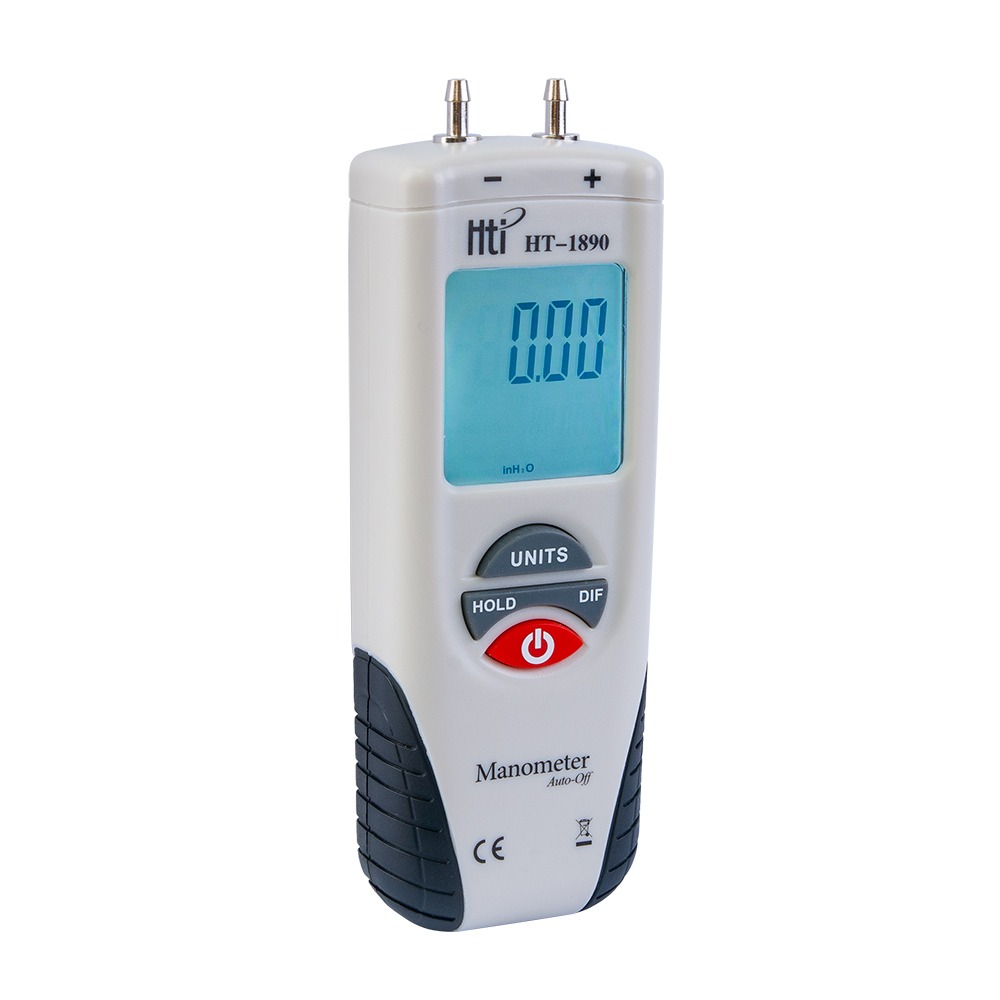
The Xintest HT-1890 is a pocket-sized digital manometer for measuring positive, negative, and differential pressure. It is suited to HVAC systems, ventilation, checking pressure drops across filters, pneumatic circuits, gas appliances, and other tasks where you need to see a small pressure difference without guessing at the reading on a liquid-filled U-tube manometer.
The instrument's main range is ±13.79 kPa, or ±2 psi. That provides ample range for this kind of work: you can check draft, duct pressure, filter condition, or the difference between two points in a system. But this is not the tool for hydraulics, compressors, or any high-pressure applications.
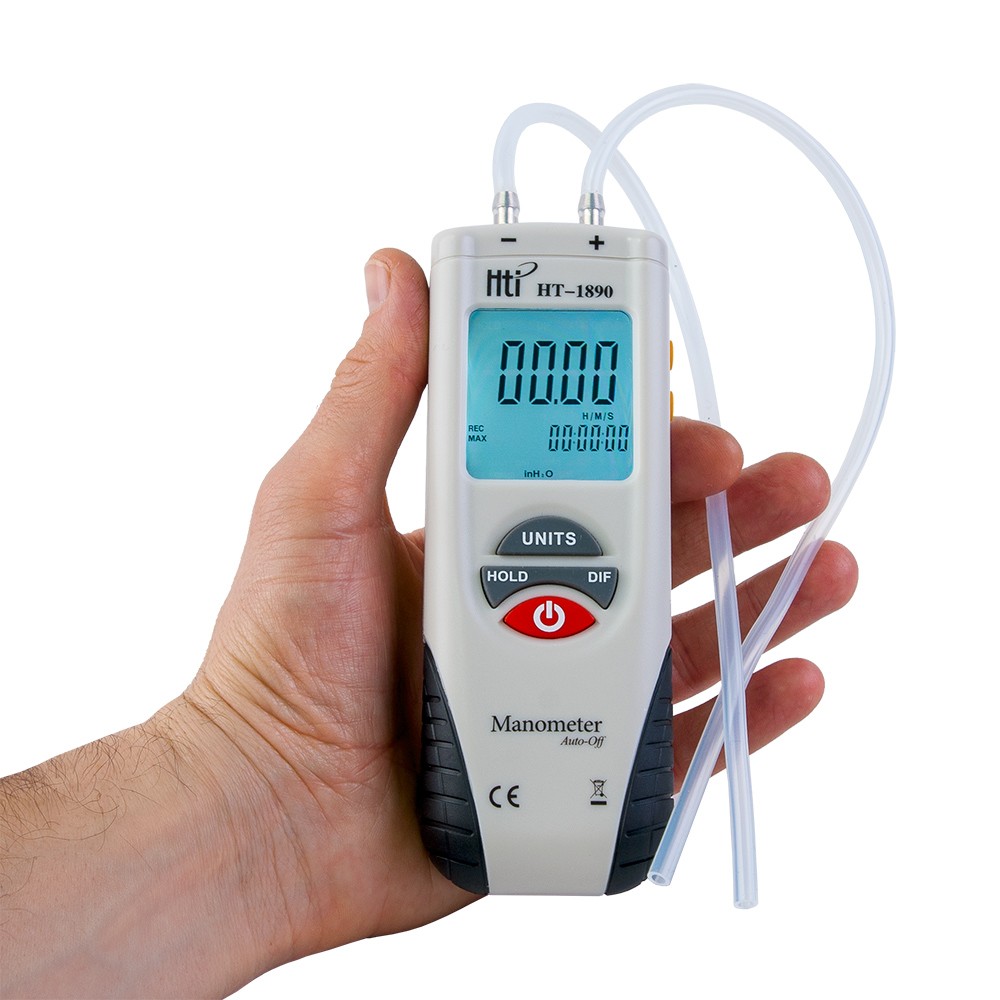
Two ports provide more useful information
The “+” and “−” fittings are located on the top panel. Connect one tube to the higher-pressure point and the other to the lower-pressure point, and the HT-1890 immediately shows the actual difference between them. To measure positive pressure, use the “+” port and leave the other open to the atmosphere; for negative pressure, use the “−” port instead.
Before taking a precise measurement, leave both inputs open and zero the instrument by pressing and holding HOLD. This simple step removes minor zero offset and helps prevent a “ventilation problem” from turning out to be an unzeroed manometer.
All common units at your fingertips
The UNITS button cycles through 11 units: kPa, bar, mbar, psi, mmHg, cmH₂O, and others. There's no need to convert readings in your head or reach for a calculator every time a boiler's documentation uses mbar and you're used to working in kPa.
The highest stated resolution is 0.001 psi or 0.001 bar in the respective modes, with an accuracy of ±0.3% of full scale at 25 °C. The typical response time is about 0.5 seconds, so readings keep up with actual pressure changes.
Functions that work in the field
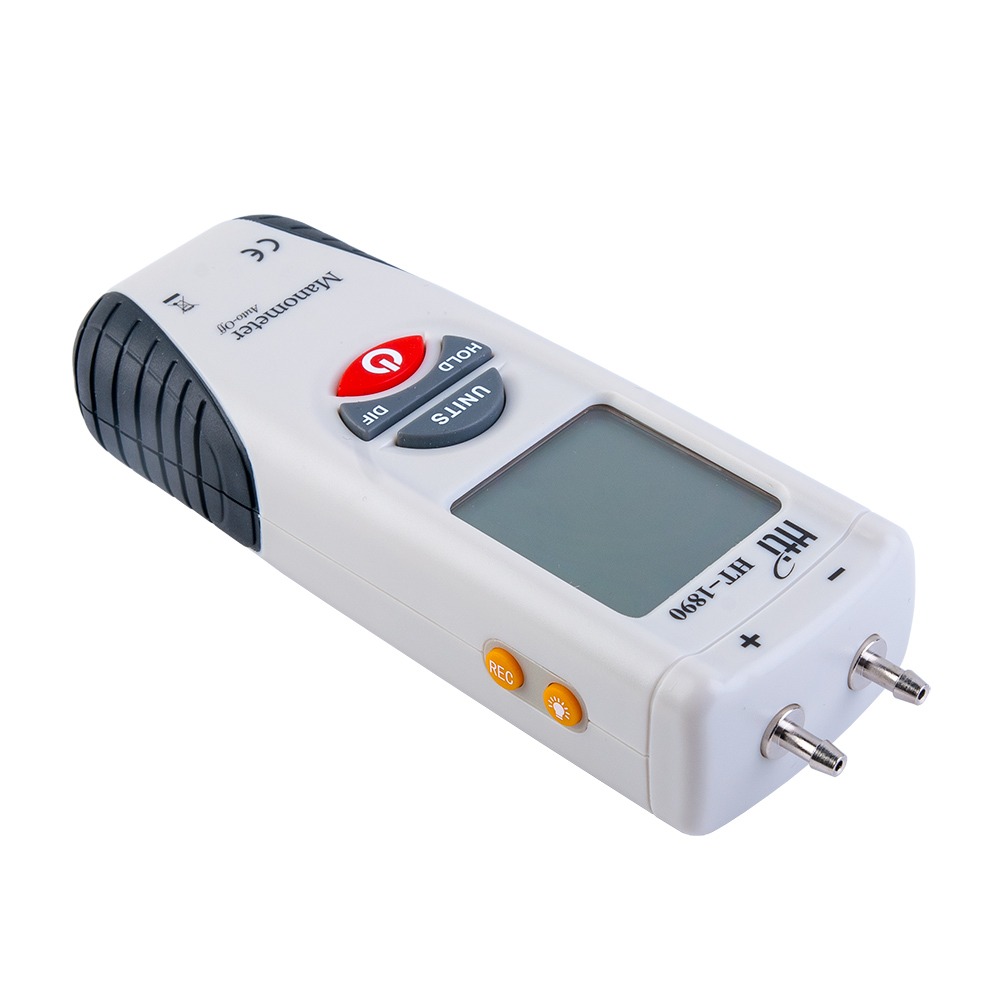
HOLD freezes the reading on the screen, which is useful when it's hard to see the display and the measurement point at the same time. The REC button displays the maximum, minimum, and average values for the current session. DIF mode shows the difference from the value displayed when it was activated, making it convenient for monitoring pressure changes after adjusting a damper, cleaning a filter, or starting equipment.
The large two-section LCD has a backlight and indicators for low battery, active recording, HOLD, and DIF. The instrument also powers off automatically to conserve its 9V battery. It doesn't export data or plot graphs; it's a meter for on-the-spot diagnostics, not a full-featured data logger.
Design and package contents
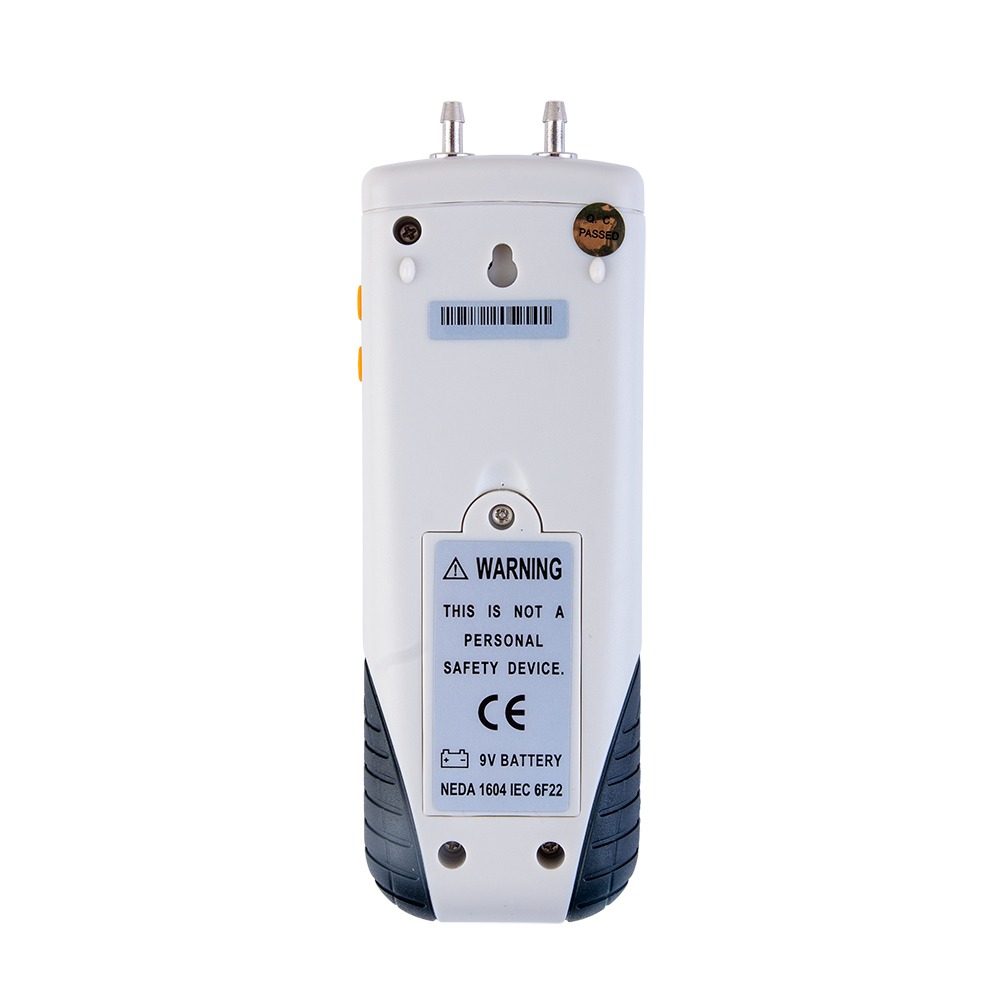
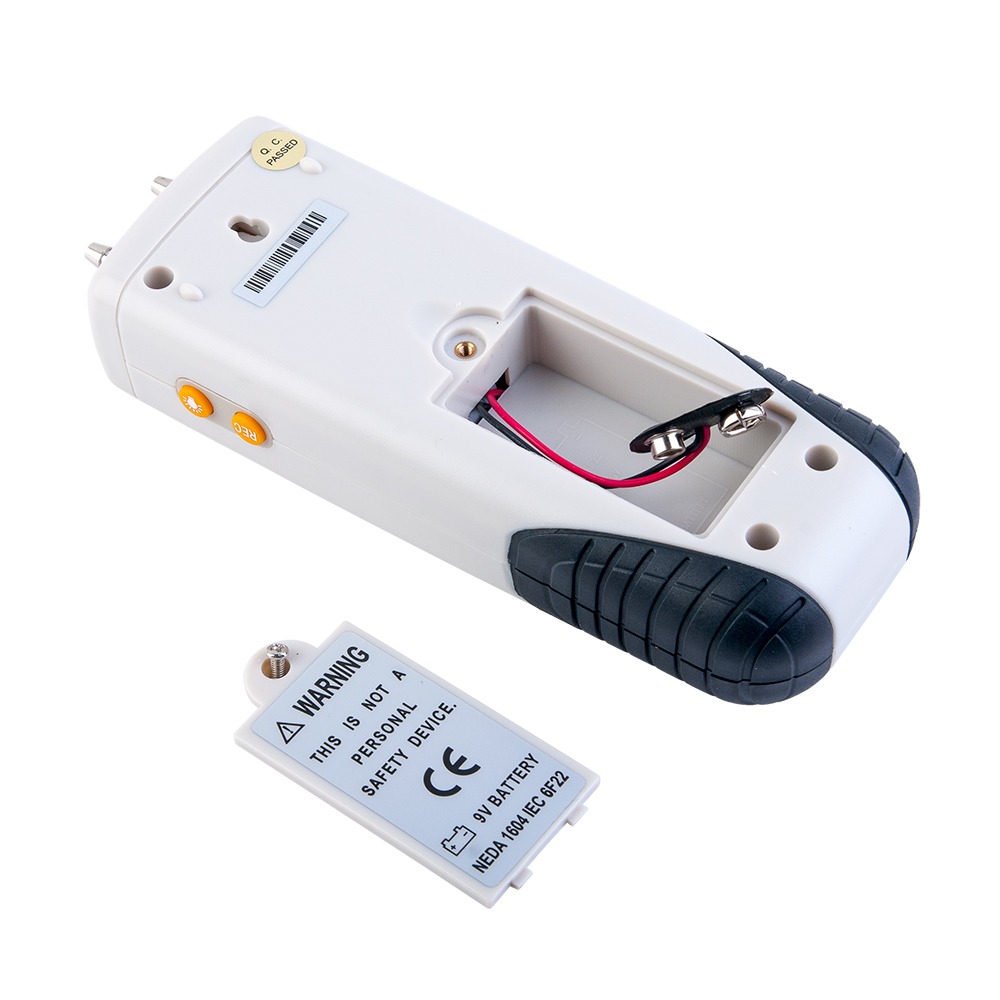
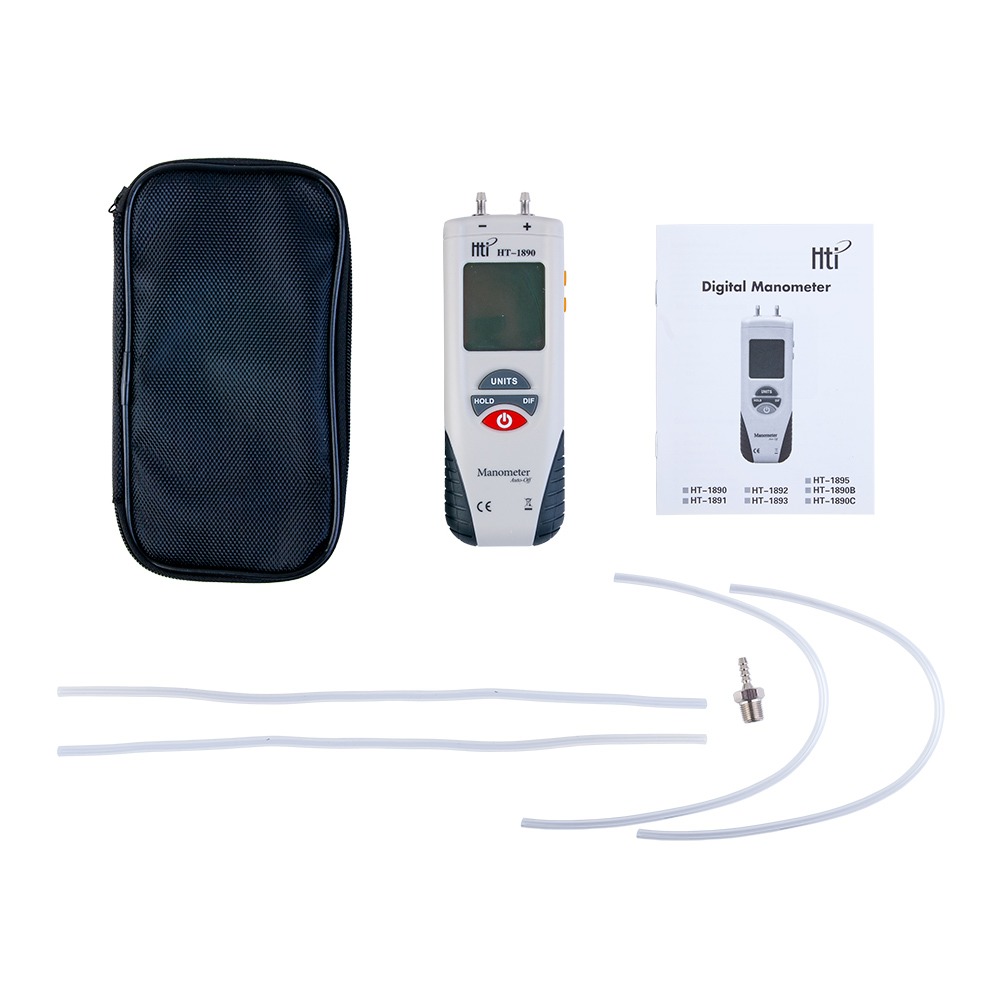
The body weighs about 180 g and sits comfortably in the hand, while rubberized sides improve grip. The back panel has a compartment for the 9V battery and a hole for wall mounting. The set includes a protective case, two pairs of tubes, an adapter with a 1/8" fitting, and documentation.
An important limitation: although the ports withstand up to 68.9 kPa (10 psi), the operating measurement range is much smaller, only ±13.79 kPa. Exceeding the range produces an error on the screen, and applying excessive pressure can damage the sensor. The HT-1890 is also not a personal safety device: its readings should not be the sole basis for critical safety decisions.
Conclusion
The Xintest HT-1890 is a capable basic digital manometer for technicians working in ventilation, heating, air conditioning, or gas equipment service. It's compact, easy to use, quick to respond, and has all the key modes for low-pressure diagnostics. If you need Bluetooth, long-term logging, or measurements in the tens of bar, consider a different class of instrument. For air systems and spot checks of pressure differentials, this model gets the job done without unnecessary electronic frills.