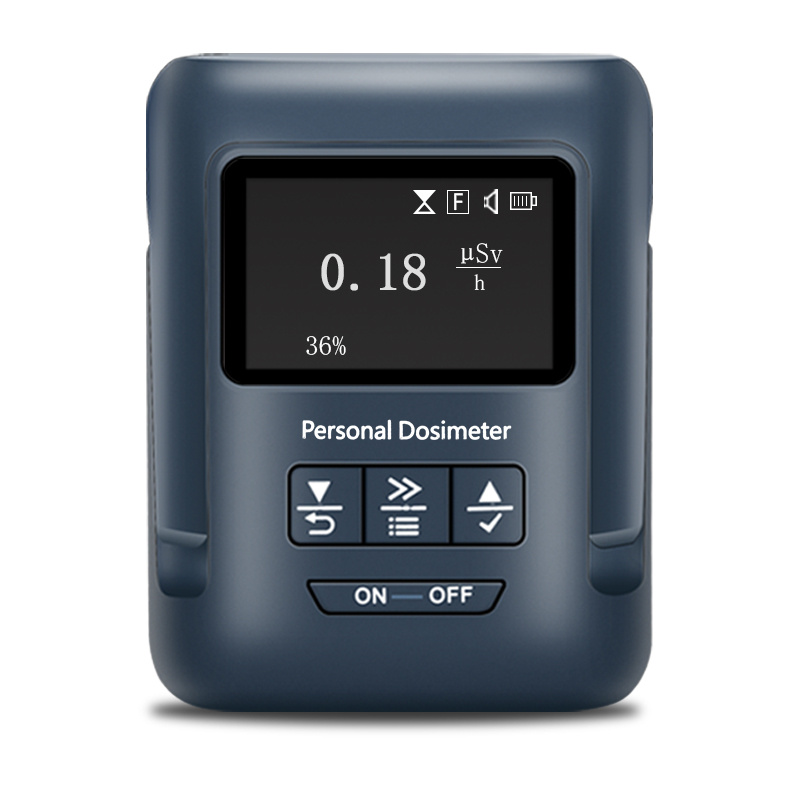
BOSEAN FS-1000
Delivery and payment
Choose your city or town to see the price with delivery there and when you can get it.
Pickup points
- Branch
- Parcel locker
Pros
- Energy-compensated Geiger-Muller tube
- Measures dose rate and accumulated dose
- Visual and audible alerts
- Data transfer to a computer
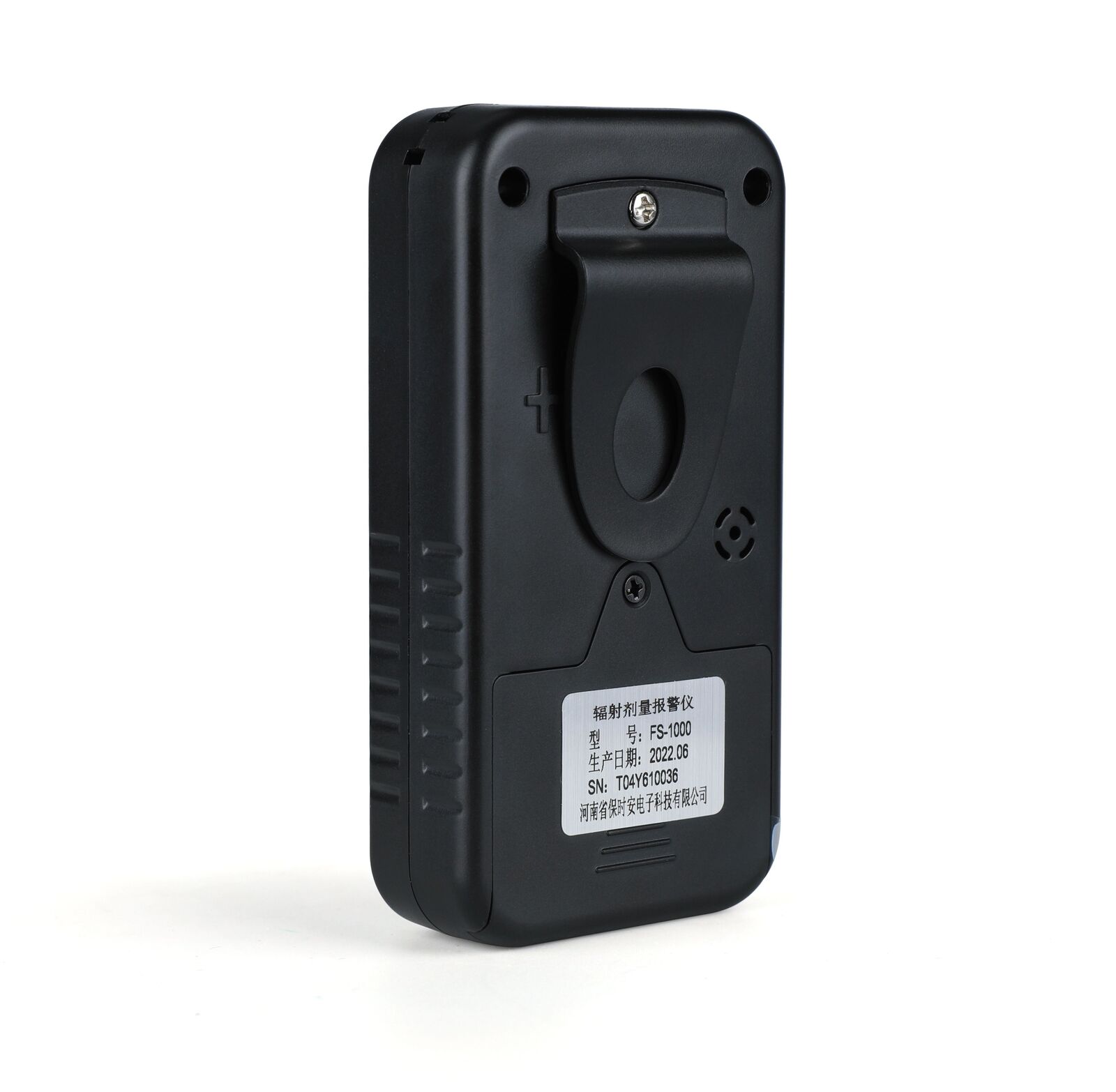
- Compact housing with a clip
Cons
- Alpha radiation detection is not specified
- Runs on three AAA batteries
- Monochrome screen with no color
BOSEAN FS-1000 for personal radiation monitoring
The BOSEAN FS-1000 is a compact dosimeter and radiation meter for quick checks of X-ray, beta, and gamma radiation. It shows the dose rate in real time while tracking the accumulated dose, so you can spot a sudden rise in background radiation and monitor your exposure throughout a work shift, trip, or inspection of a particular site.
Inside is an energy-compensated Geiger-Muller tube. The sensor is designed to measure from 0.1 µSv/h to 10 mSv/h, with a manufacturer-stated relative error of less than 5% at a dose rate of 1 mSv/h. It is a tool for quickly checking background radiation, belongings, building materials, scrap metal, work areas, and suspicious finds without the fuss of a laboratory.
Two key readings without mental math
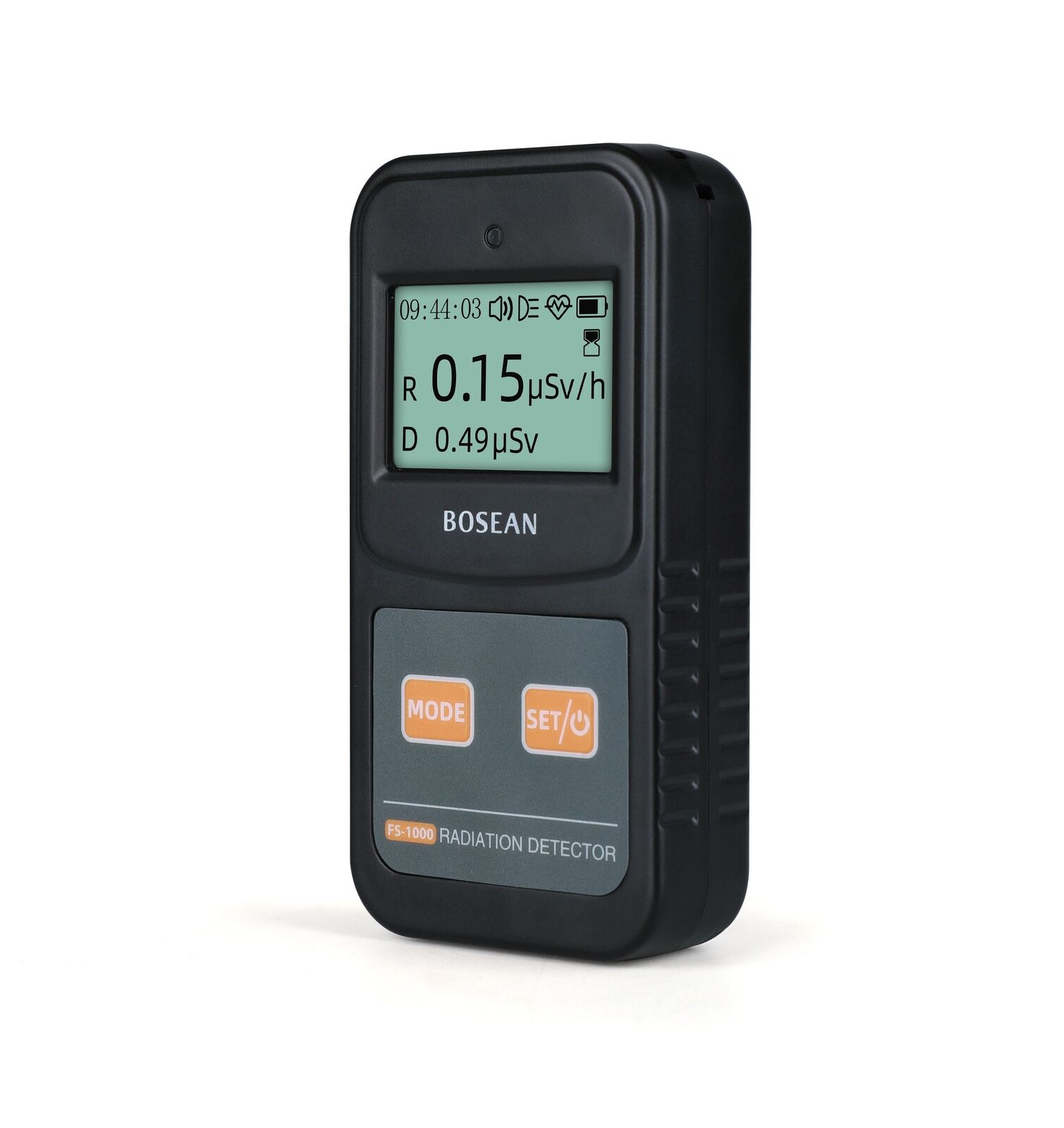
The FS-1000's large monochrome display shows dose rate and accumulated dose at the same time. The first tells you what is happening now; the second shows how much has accumulated. The screen also displays battery, active alert, timer, and time indicators.
The device has adjustable thresholds for dose rate and total dose. When a set value is exceeded, audible and visual warnings activate. You can choose to hear the characteristic crackle of detected particles, enable only the alarm, or work silently. If the level exceeds the upper measurement limit, the FS-1000 displays a 999MAX warning rather than pretending to know the exact value beyond its capabilities.
Timer, memory, and measurement log
A 1–99-hour timer is available for controlled measurements. It is useful when you need to record the dose over a specific period without manually resetting everything and trying to remember exactly when the measurement began.
The accumulated dose, set thresholds, and dose rate curve data are stored in internal memory and are not erased when the device is turned off. The device also shows the start date of the current accumulation and has a clock, calendar, backlight, and low battery indicator.
Type-C does more than provide power
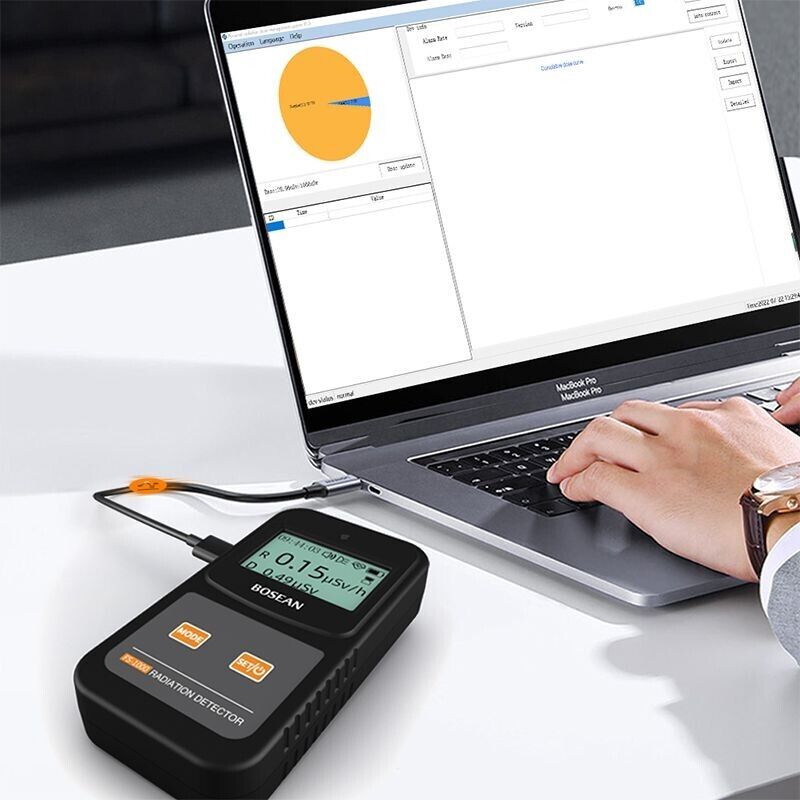
The side USB Type-C port lets you power the dosimeter from an external USB source and connect it to a computer to download, analyze, and manage data using compatible software. This is useful when a quick glance at the screen is not enough and you need a measurement log.
There is no built-in rechargeable battery: portable power comes from three AAA batteries. This is a simple, practical approach in the field, as a spare set is easy to carry. However, you should purchase batteries separately if the seller has not included them.
Pocket-sized for everyday carry
The ABS plastic housing measures 116 × 60 × 25 mm and weighs about 145 g without batteries. A clip on the back lets you attach the FS-1000 to a belt, pocket, or piece of gear. The device is designed to operate at temperatures from −10 to +50 °C and relative humidity up to 95%.
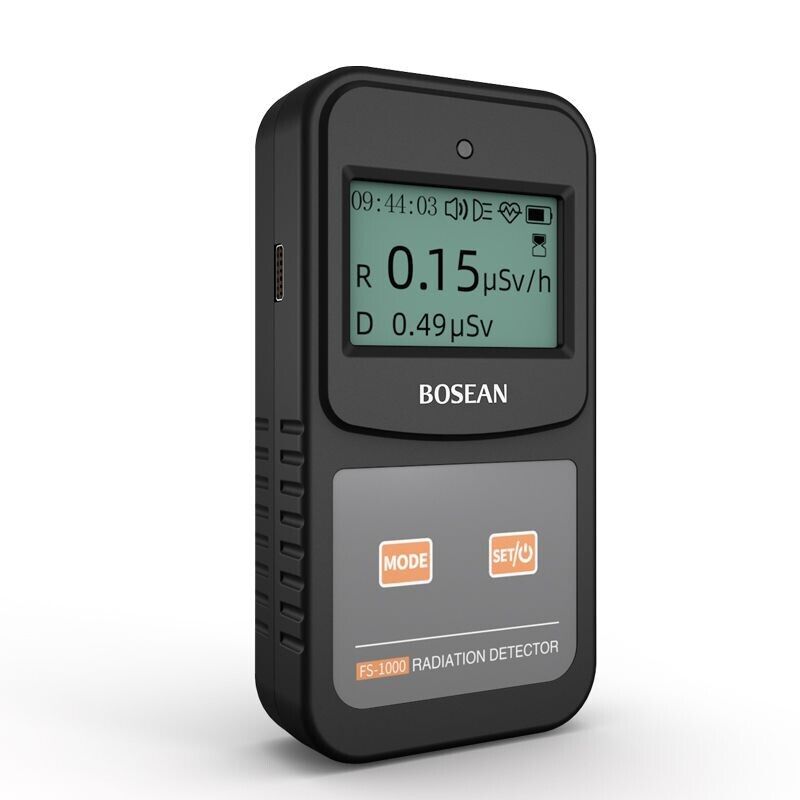
The controls are straightforward: two large buttons handle mode switching, power, and settings. The interface is available in Chinese and English. Rather than a gadget with a hundred menus, it is a practical instrument: turn it on, check the readings, and respond if needed.
Who is the BOSEAN FS-1000 for?
The FS-1000 is a good choice for quick household and professional monitoring of ionizing radiation: in a workshop or warehouse, when inspecting materials, on field trips, or as a personal dosimeter. Its strength is the combination of dose rate measurement, total dose tracking, flexible alerts, and PC data transfer in a compact housing.
However, it does not identify the type of radionuclide and is not a substitute for certified laboratory analysis. The manufacturer does not claim that it detects alpha radiation. If the device sounds an alarm, increase your distance from the source, reduce the time spent nearby, and contact the relevant services or specialists for confirmatory measurements.