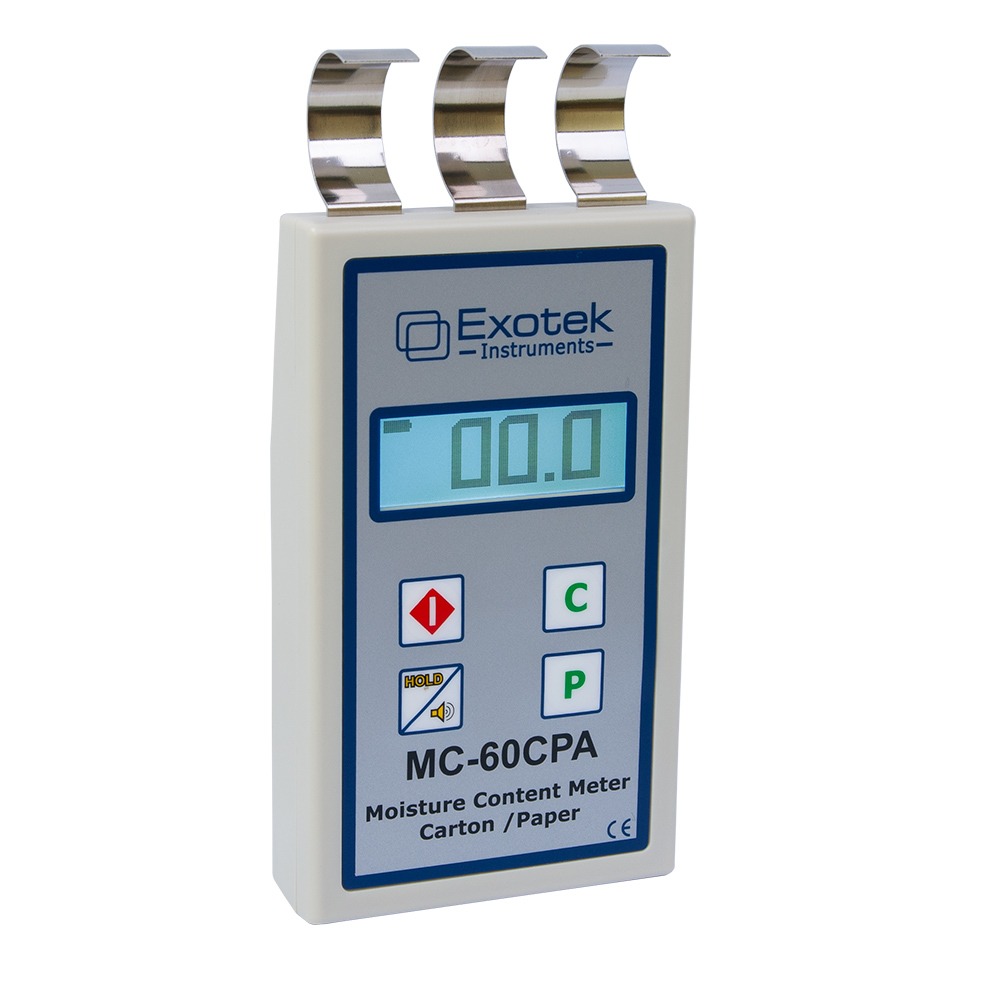
Exotek MC-60CPA
Delivery and payment
Choose your city or town to see the price with delivery there and when you can get it.
Pickup points
- Branch
- Parcel locker
Pros
- Pinless, with no punctures
- Fast measurements in seconds
- 12 material codes
- Backlight and Hold
- Adjustable audible alert threshold
Cons
- Less accurate on thin sheets
- Material group code must be selected
- No memory or USB
Exotek MC-60CPA Paper and Cardboard Moisture Meter Without the “Nails”
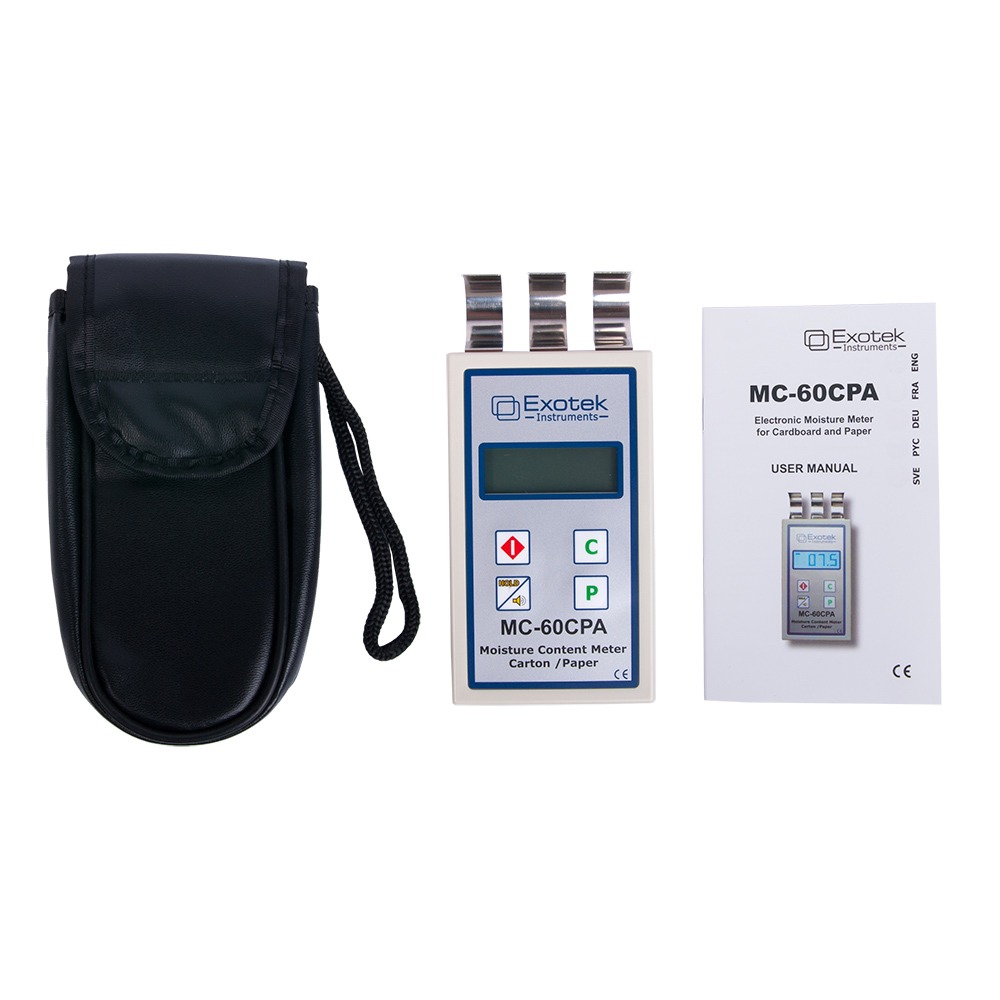
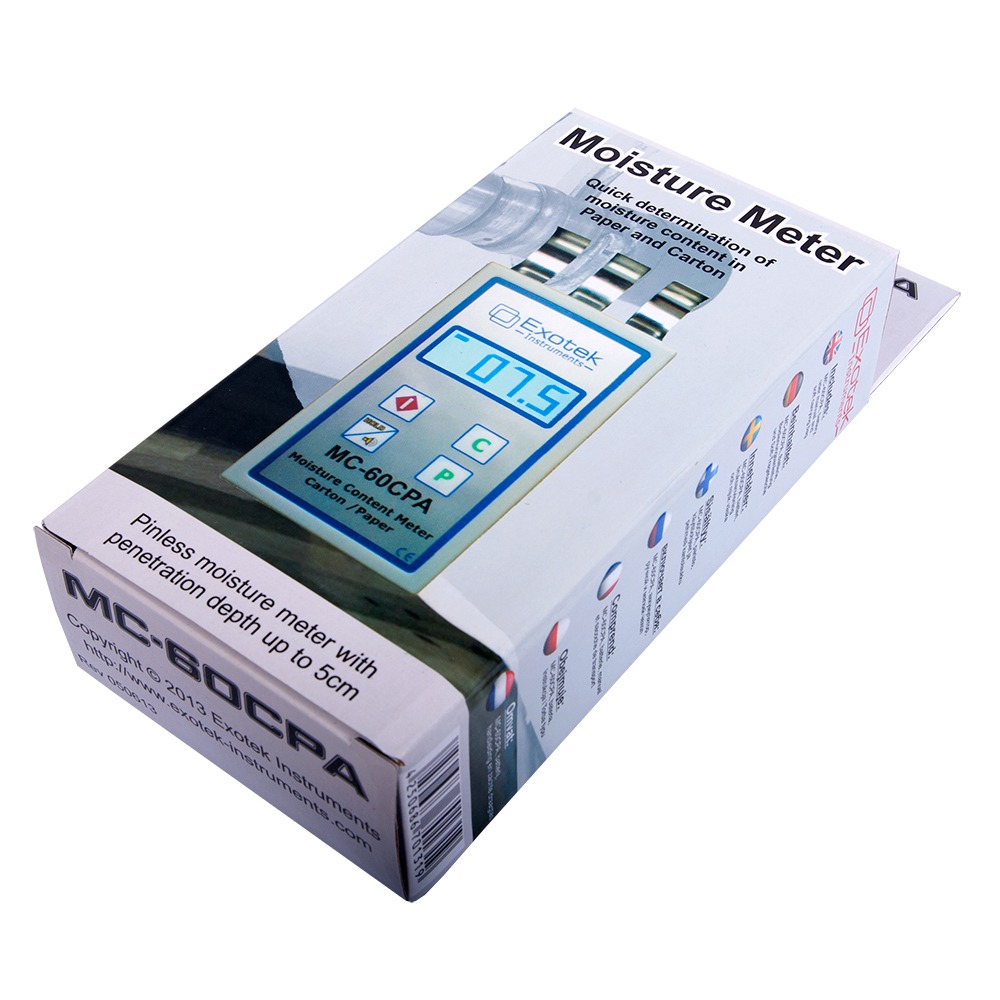
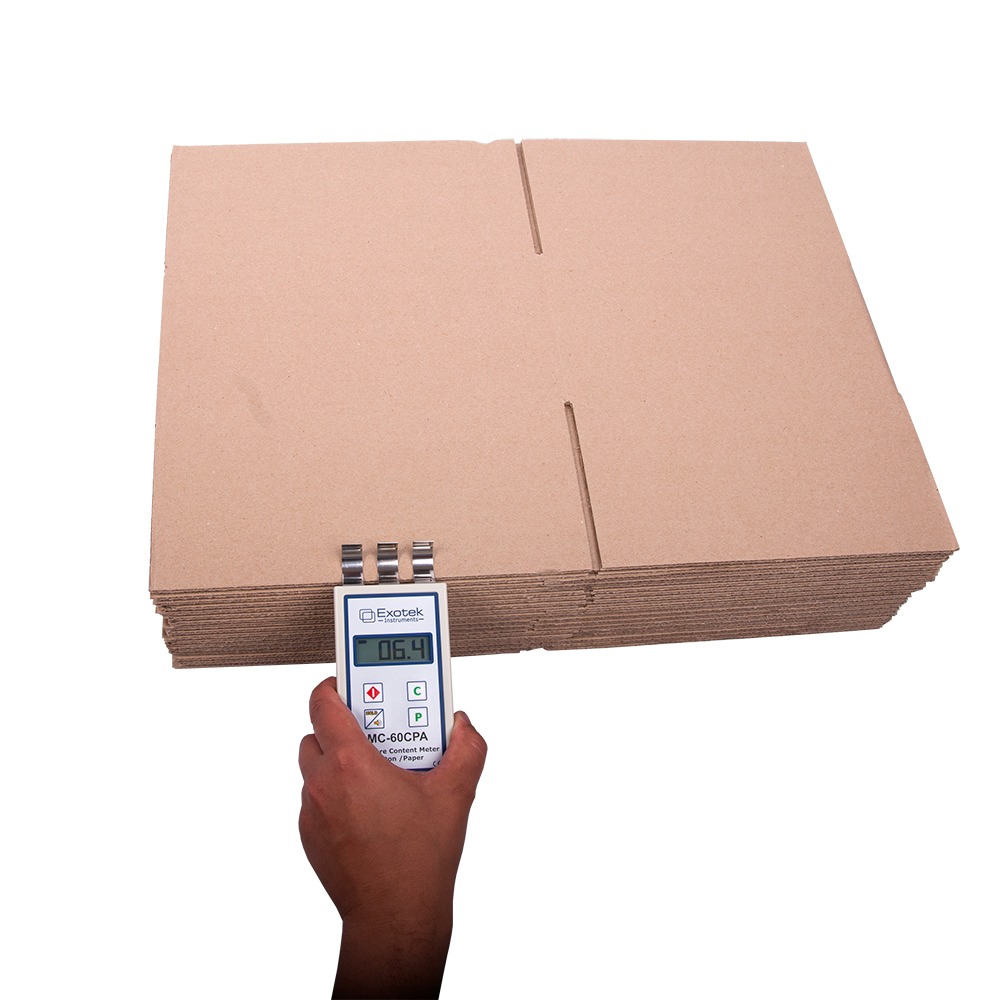
The Exotek MC-60CPA is a pocket-sized (but fully professional) moisture meter for paper, cardboard, and corrugated cardboard that measures moisture without punctures. That means no holes in sheets and no marks on rolls: press it against the material and get a reading in % H2O. It’s the kind of quality control that no longer feels like an interrogation under duress.
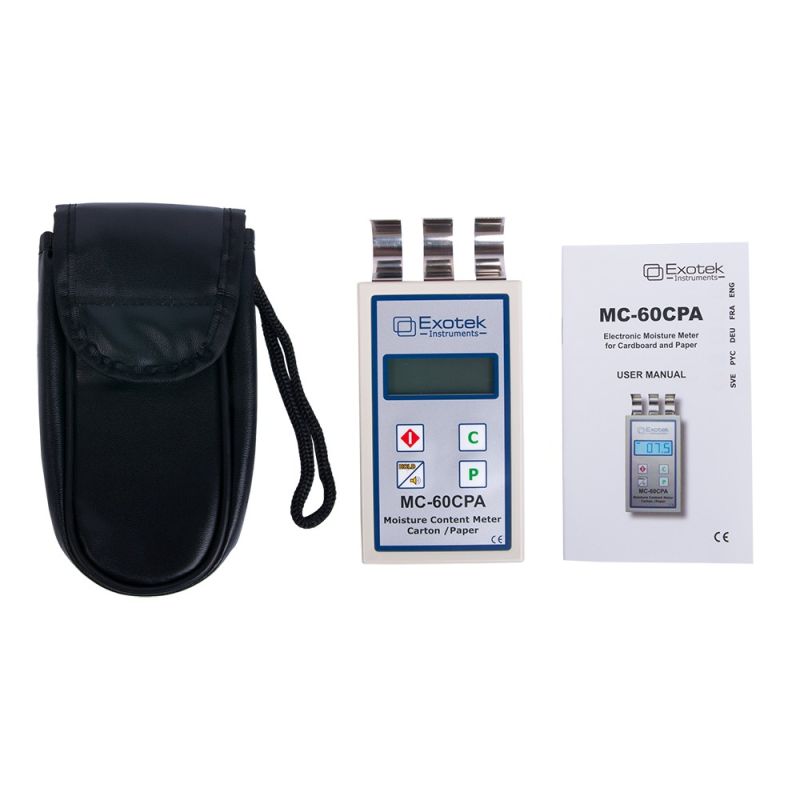
How it measures: the capacitance method and a depth of up to 50 mm
The MC-60CPA uses a capacitive method: the device creates a high-frequency electric field and “sees” changes in the material’s dielectric properties, which depend directly on its water content. In practice, this means:
- measurement does not damage the material or leave marks;
- readings are fast (the value stabilizes in seconds);
- you can work with stacks, bundles, and rolls as the device “scans” to a depth of up to 50 mm.
Ranges: one for paper, another for cardboard (and that’s normal)
Paper and cardboard differ in structure, density, and how they “behave” in the field, so their ranges differ too:
- Paper: 0–33% H2O
- Cardboard/corrugated cardboard: 0–175% H2O
The stated accuracy is approximately ±2%, and the resolution is 0.1%. For routine checks in production, warehouses, or print shops, that’s just what you need: fast, repeatable readings without stains or holes.
12 material codes: P1–P6 and C1–C6 for more representative readings
A key strength of the MC-60CPA is its 12 material groups (codes). These let you adjust the calibration for the type of paper or cardboard, including its density. In simple terms:
- P1–P6 are for different types of paper (lightweight, heavier, packaging, offset, etc.)
- C1–C6 are for cardboard and corrugated cardboard constructions
The logic is simple: choosing the “wrong” code won’t break the device, but the readings may be less representative. For consistent checks, it’s best to select the right code for your material once and then simply use it.
How to measure without fighting physics: a quick checklist
Here are practical rules that really affect the result:
- Zero correction before measurement: after selecting a group, hold the device in the air. It will automatically “zero” itself and be ready to use.
- Proper contact: the 3 spring-loaded electrodes should touch the surface firmly; no need to overdo it, but make sure contact is secure.
- Contact angle: aim for approximately 40° for more stable contact.
- Thin materials (<10 mm): sensitivity may not be sufficient for an “absolute” reading. The solution is to measure a stack without air gaps, preferably at least 20 mm thick in total.
- The surface underneath matters: metal or anything “suspicious” beneath the material can affect readings. It’s best to measure with the material suspended or on foam or foamed plastic approximately 50 mm thick.
- Very wet surfaces: a thin PVC film between the electrodes and the material can sometimes help eliminate the “wet skin” effect.
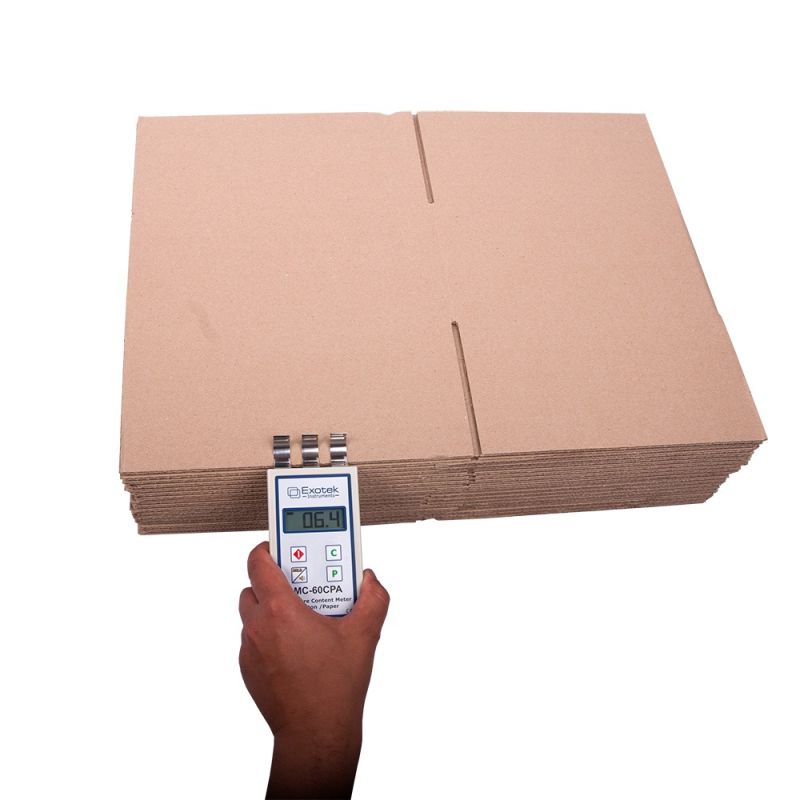
Features you’ll appreciate on the job
The MC-60CPA doesn’t try to be a “smart gadget,” but it has everything needed for routine checks:
- Hold keeps the reading on screen when you’re measuring in an awkward spot.
- Display backlight is useful on the production floor, in the warehouse, or near a machine.
- Audible alerts with an adjustable threshold make it easy to sort quickly by “within limits” or “over the limit.”
- Low battery indicator and auto power-off help keep the battery from unexpectedly dying.
Who it’s for
It makes the most sense wherever paper and cardboard are handled in large volumes and moisture affects quality or suitability:
- paper, cardboard, and corrugated packaging production;
- packaging lines and warehouses;
- print shops, publishers, and bookbinding operations;
- archives and libraries (monitoring material storage conditions).
Where to find official documentation
If you want to check the figures or show the technical specifications to your purchasing department, the official datasheet is handy to have: MC-60CPA Datasheet (EN).
Verdict
The Exotek MC-60CPA is a workhorse for fast, nondestructive moisture checks on paper and cardboard. It doesn’t collect statistics in the cloud or send you push notifications (thankfully), but it delivers what matters: fast results, material-specific settings, a backlight and reading hold, and the ability to work with stacks and rolls without damaging them.