Paper and cardboard moisture meters
How to choose
A paper and cardboard moisture meter is needed wherever it is important to quickly check the condition of material before storage, printing, packaging, or accepting a batch. When choosing one, look not only at whether it measures moisture, but also at which materials it is calibrated for, how accurate it is, and how convenient it is for daily use.
What materials the device is suitable for
First, check exactly which materials the moisture meter is designed for. In this category, paper and cardboard are key, so it is important that they are specifically listed among the target materials rather than merely assumed to be similar surface types.
The number of calibrations or curves shows how flexibly the device can adapt to different material types. This category includes a model with 12 calibrations and 12 material groups, making it more convenient for different grades of paper and cardboard than a single universal mode.
Measurement ranges for paper and cardboard
Check the moisture measurement range for paper separately from that for cardboard or corrugated cardboard. If you work with thin paper, packaging cardboard, and heavier sheets, it is more convenient when the manufacturer specifies separate ranges for each mode rather than only a general figure.
The general moisture measurement range is also useful for quickly comparing models. However, for a practical choice, it is more important that the material you need is specifically listed and has its own measurement mode.
Accuracy and reading consistency
Moisture resolution shows the increment at which the device displays the result. A value of 0.1% is convenient for control measurements when it is important to notice even small changes between batches or different storage conditions.
Typical moisture accuracy in this category is 2%, so assess it in the context of your task. This may be sufficient for quick process control, but if tracking minimal deviations is critical, also look at repeatability and whether user calibration is supported.
Convenience for daily use
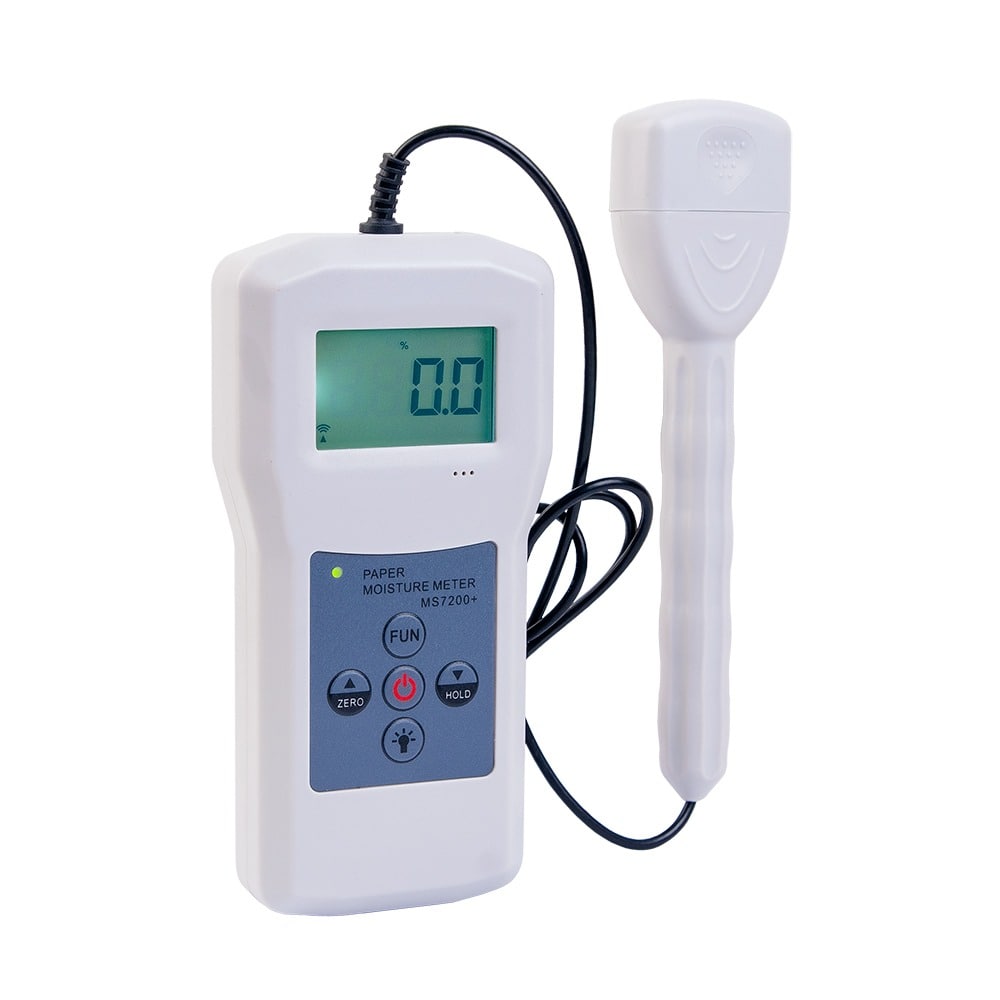
For daily use, it is important how easy it is to read and retain the result during measurement. An LCD display is a familiar and easy-to-understand option, while the reading hold function helps when you cannot record the value immediately or when it is inconvenient to look at the screen while taking a measurement.
If measurements are taken in a dim warehouse or near shelving, check whether there is a backlight. Audible alerts can also be useful if you want to notice events more quickly while working with the device.
Power and portability
If the device will be used in a warehouse, workshop, or while traveling between sites, pay attention to its power source and weight. This category includes a device powered by a replaceable 9V battery. It requires only one battery and weighs 150 g, which is convenient for carrying and quickly replacing the power source without an outlet.
This format is especially practical for spot checks in different locations where there is no reason to rely on mains power. If the device is intended for frequent travel, a lightweight design and simple power supply usually make the work noticeably easier.
Brand and warranty
When the selection in a category is limited, brand and warranty become even more important because they affect confidence in the purchase and peace of mind afterward. If the device is intended for ongoing work, it is best to check the manufacturer and the warranty period right away.
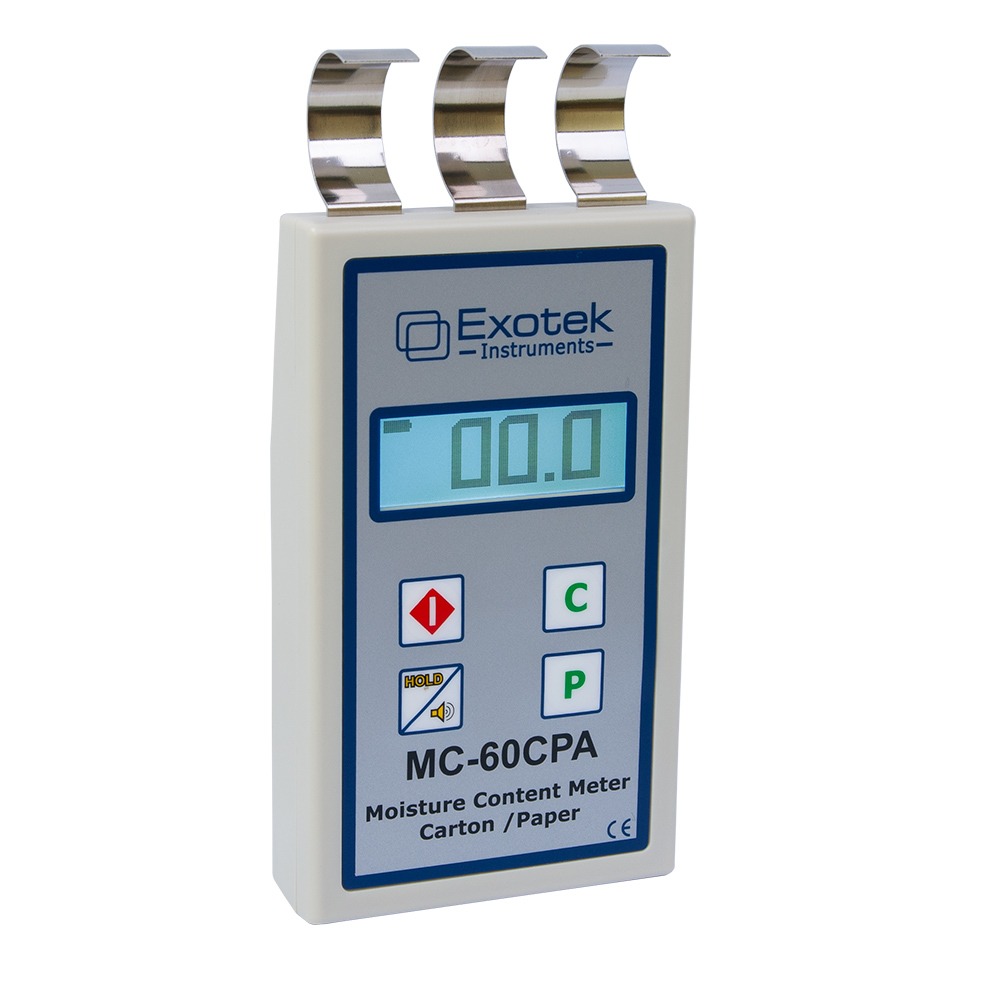
This category includes the Exotek brand, with a 24-month warranty. This does not replace evaluating the technical specifications, but it helps reduce risks with regular use.
Tips
- If you need measurements for both paper and cardboard, check not only the general moisture measurement range but also the separate modes for each material.
- For repeated checks, a device with 0.1% resolution and a reading hold function is more convenient.
- If you work with different grades or densities of material, pay attention to the number of calibrations and material groups.
- For field work, lightweight models with a replaceable 9V battery and simple battery replacement are more practical.
- Before buying, check the warranty: 24 months provides more coverage for regular use.