Flus ET-935
Pros
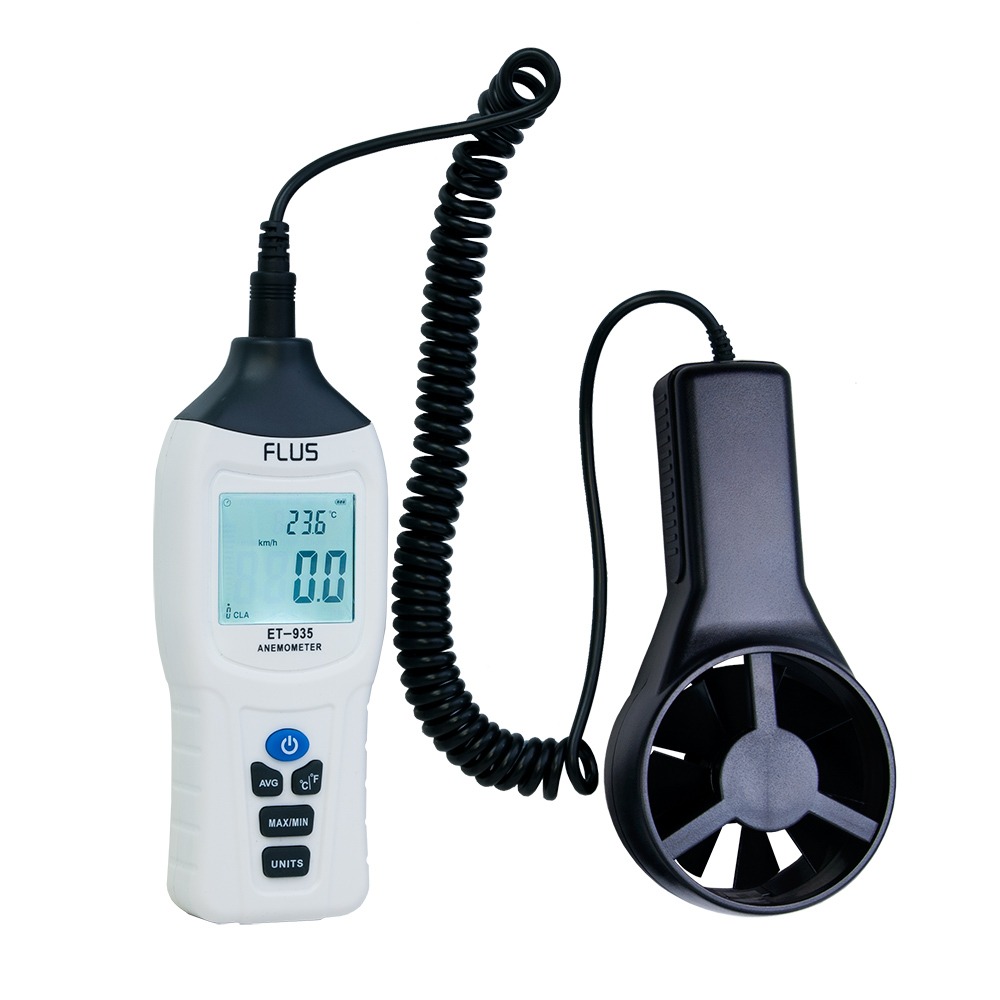
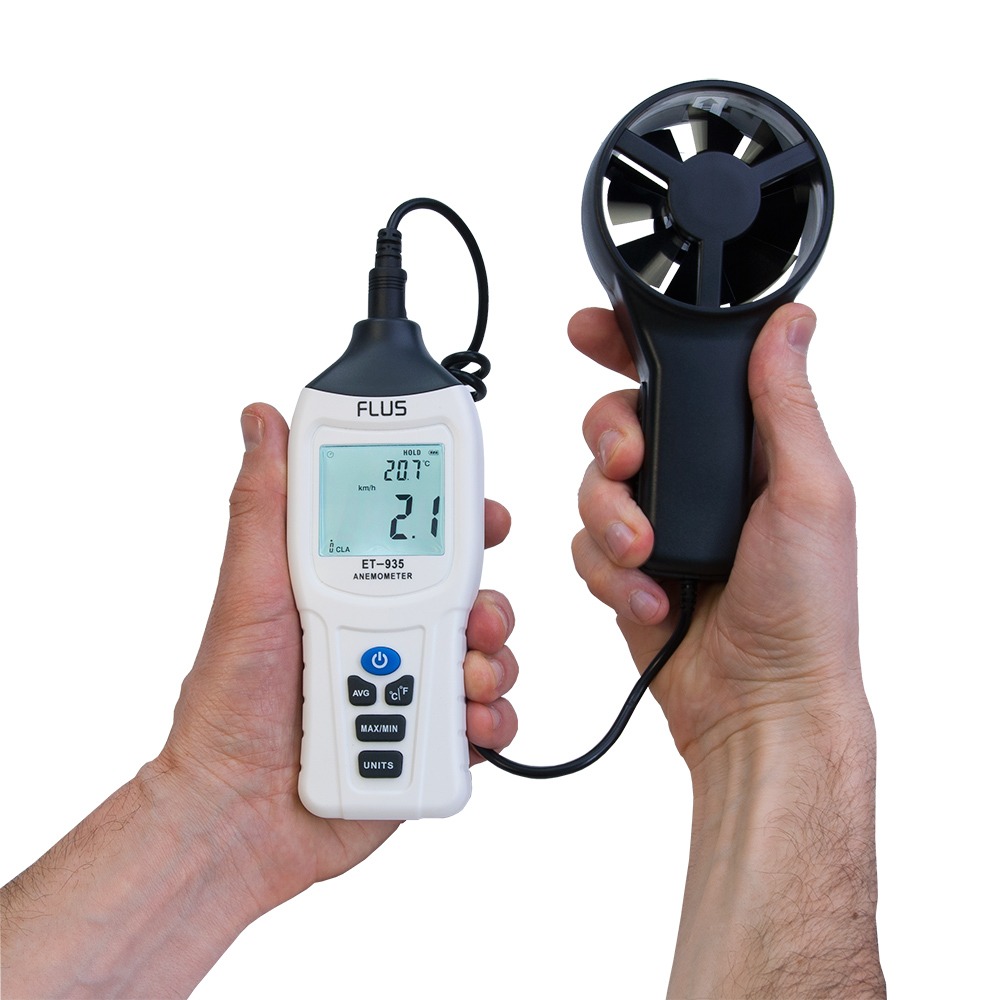
- Remote vane on a cable
- Speed and temperature displayed simultaneously
- Backlight and large digits
- Built-in MAX/MIN/AVG/HOLD functions
- Airflow calculation
Cons
- Accuracy depends on alignment
- Not for use in rain or condensation
- Flow mode has a “×100” quirk
Flus ET-935 is an anemometer that's easy to use in ventilation systems
The Flus ET-935 is a vane thermo-anemometer with a remote sensor. Its main advantage is simple: you can insert the vane into a duct, grille, or exhaust vent while keeping the display in your hand. For ventilation installers and HVAC professionals, that's often more useful than any marketing “pro” on the box.


What it measures
The ET-935 measures air speed (0.4–30 m/s) and air temperature (-30…+60 °C). It also displays the speed “level” on a bar graph (0–16), so you can see at a glance whether the flow is barely moving or surprisingly strong.
Another bonus is the volumetric airflow calculation (CMM: m³/min). The device asks you to enter the cross-sectional area, then multiplies the speed by the area and displays the flow rate. It's handy for a quick ventilation check without doing the math in your head.
How to measure airflow correctly (and get realistic results)
1) Select the speed units (preferably m/s) and turn on AVG if the flow “pulses”.
2) Enter the cross-sectional area (in cm² or m²). For a round duct: A = π·(d/2)². For a rectangular duct: A = a·b.
3) Keep the vane aligned with the airflow. This is critical for vane anemometers: tilt it a few degrees and the readings can already drift.
4) When measuring in a duct, take readings at several points across the cross-section (a so-called “traverse”) and average them. A single reading in the center is quick, but not always representative.
An important detail: the “×100” indicator in flow mode
In Air Flow/Volume mode, the device may display a “×100” icon. This means the actual flow rate equals the value on the screen multiplied by 100. For example, if the display shows “12.34” with “×100”, the actual value is 1234 (in the selected flow units). A simple recommendation: take the first few measurements as a test and check them against the expected order of magnitude so you don't confuse the scales.
Functions you'll actually use
There are no surprises here, and that's a good thing: HOLD (data hold), MAX/MIN, AVG (averaging the last 10 values), backlight (with auto-off after approximately 30 seconds), low battery indicator, and auto power-off after approximately 15 minutes of inactivity.
Power and practicality
The ET-935 runs on one 9V battery (6F22/IEC6F22). The stated battery life is at least 30 hours. That's convenient for fieldwork: the battery is compact, quick to replace, and there's no need to look for a charger.
Who should buy it, and who shouldn't
Choose the Flus ET-935 if you need a portable device for ventilation systems, exhaust vents, ducts, draft or airflow checks, and HVAC system adjustments, and you value a remote vane more than “smart” features.
Don't expect a “weather station”, app logging, or protection for use in the rain. This is a working airflow meter: its accuracy depends on how well you align it and take the measurement.