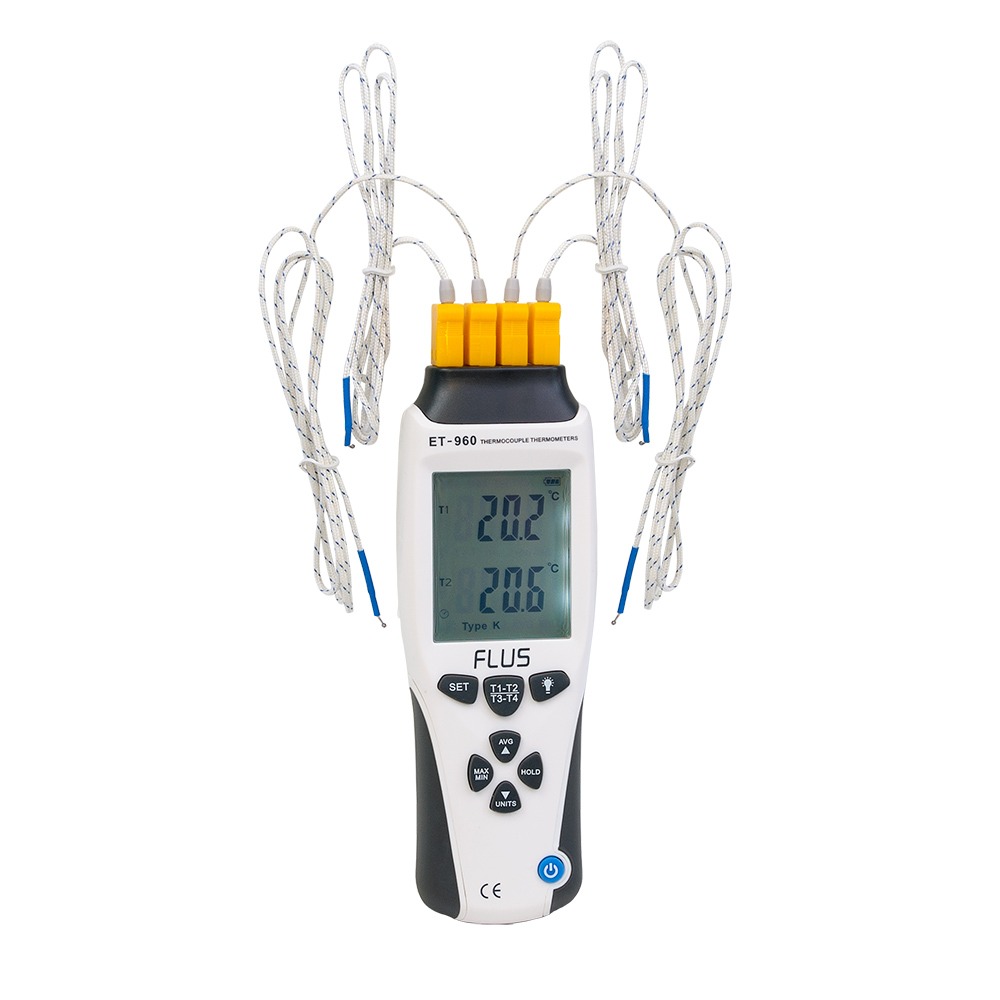
Flus ET-960
Pros
- 4 thermocouple channels
- Supports K and J types
- Displays temperature differences
- MAX/MIN/AVG and HOLD
- Backlit screen
Cons
- No USB or data logging
- Accuracy depends on the thermocouples
- Auto power-off is fairly aggressive
ET-960: a “multimeter” for temperature
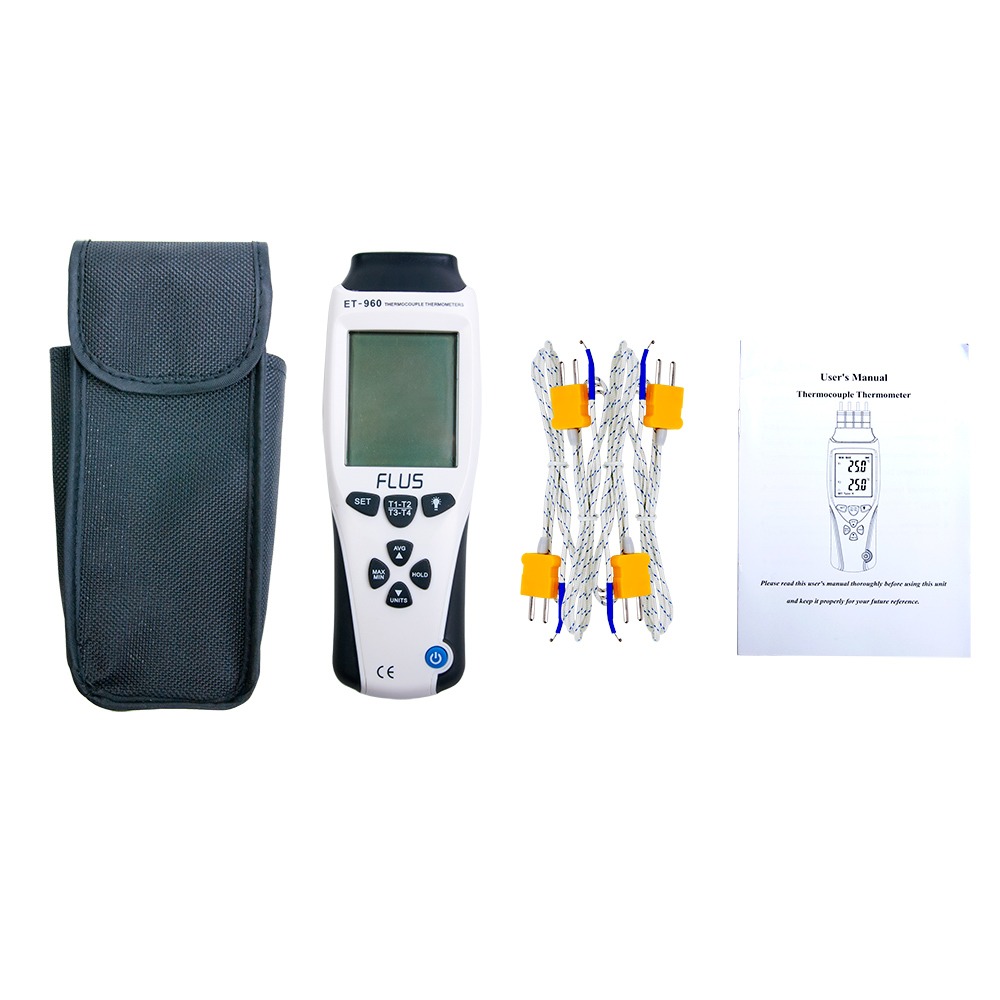
The ET-960 is a contact thermometer for thermocouples: connect the probes, place or insert them at the desired points, and get the actual temperature of the material, surface, or air around the probe. Unlike an infrared thermometer, there are no surprises caused by emissivity, shiny foil, or “I was measuring the pot but got a reflection instead.”
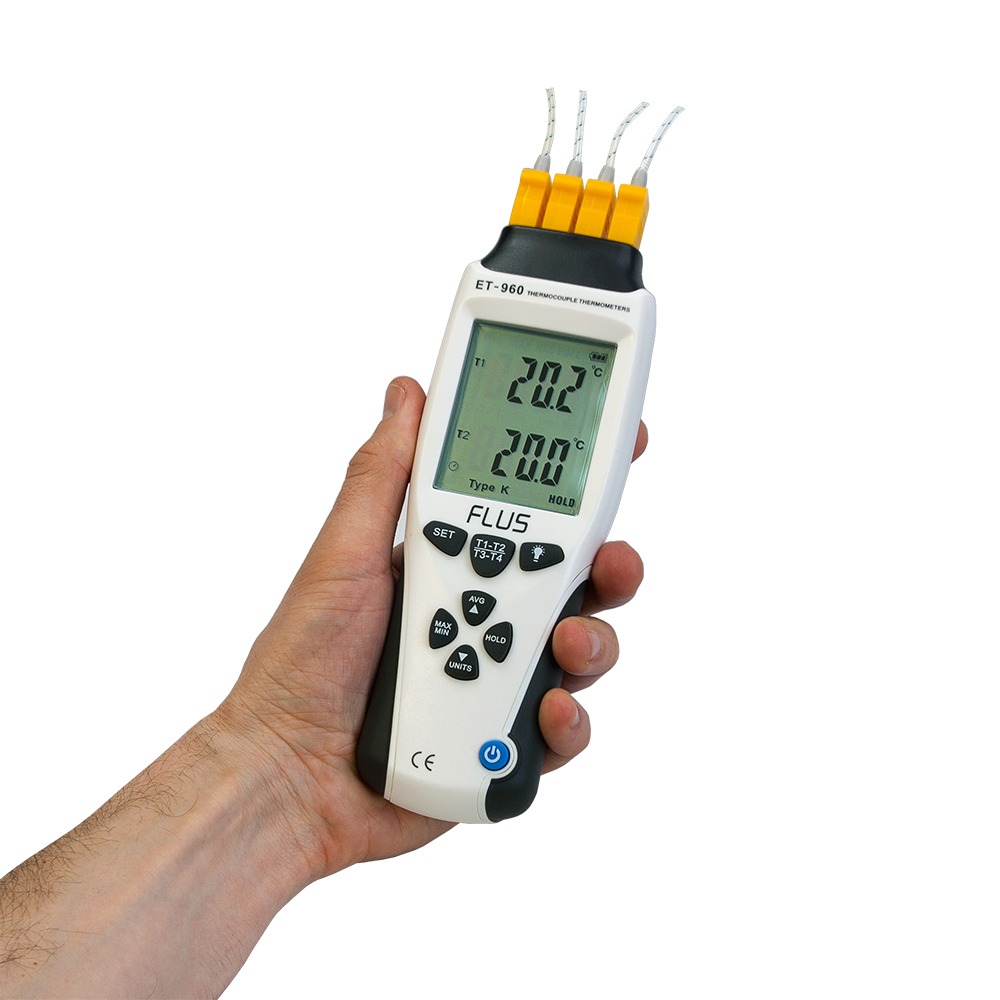
The model’s key feature is 4 inputs (T1–T4) and convenient display modes: you can see a pair of channels at once and quickly switch between T1/T2 and T3/T4, as well as view ΔT (the difference) for T1–T2 or T3–T4.
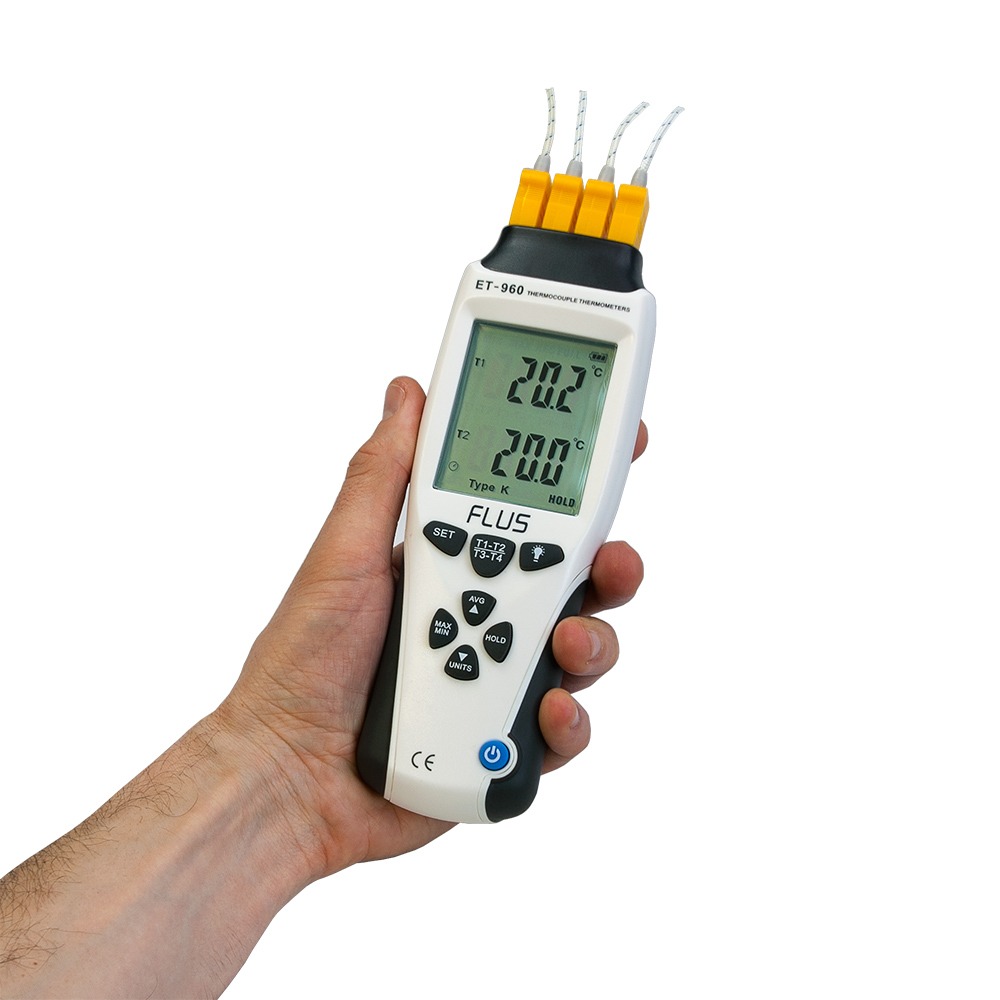
Channels, pairs, and temperature differences: how they work in real life
The ET-960 is useful when you need to see temperatures at multiple points or a temperature gradient:
- coffee roasting or smoking: “beans vs. exhaust” or multiple zones;
- workshop or 3D printing: monitoring heat, air inside an enclosure, and surfaces;
- HVAC or boiler room: supply and return, heat exchanger;
- laboratory work: stabilizing temperatures in components.
Use the switch button to choose what to display: T1/T2 (two temperatures), Δ(T1–T2) (the difference), and then the same options for T3/T4. It’s a simple but very practical tool: the temperature difference is often more important than the absolute number.
K- and J-type thermocouple support: don’t mix up the letters
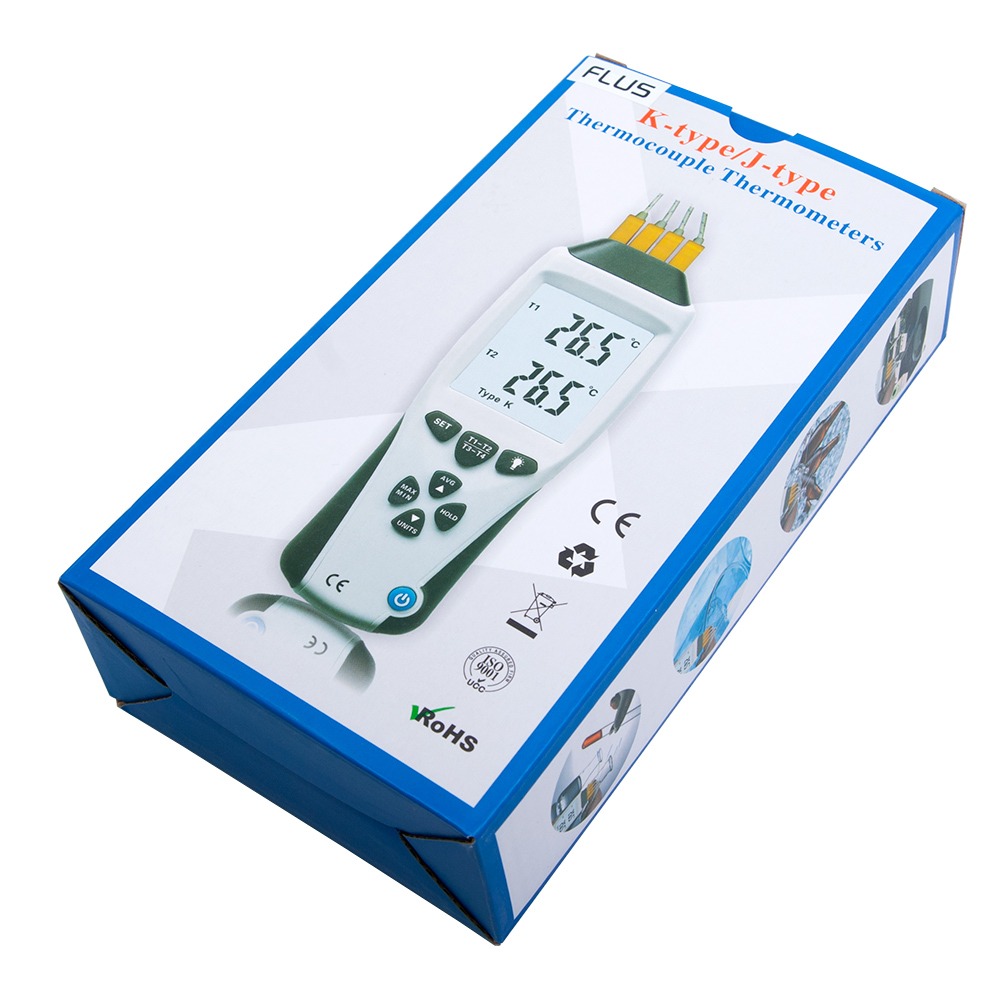
The device works with Type K and Type J thermocouples (hold down the corresponding button to switch types). This matters: if you connect a J-type thermocouple while K is selected on the device, or vice versa, the readings will be incorrect, and you may spend a long time blaming physics.
For a quick sanity check, the room temperature reading should be reasonably close to the actual temperature, and the probe should read about 0 °C in ice water after it stabilizes. If not, check that the correct thermocouple type is selected.
Accuracy and resolution: what you should know without fooling yourself
The ET-960 has a resolution of 0.1 °C up to 1000 °C and 1 °C above 1000 °C. The device itself has the following accuracy specifications, excluding probe error:
- -200…0 °C: ±(0.5% of reading + 2 °C)
- 0…1000 °C: ±(0.15% of reading + 1 °C)
- above 1000 °C: ±(0.5% of reading + 1 °C)
Most importantly, thermocouples have their own error, which can be significant. So if you need laboratory-grade accuracy of 0.2 °C, this isn’t the tool for you. But if you need reliable, stable, and repeatable process monitoring, the ET-960 fits the bill.
For reference and thermocouple calibration tables, the NIST database can be handy: ITS-90 Thermocouple Database.
Controls: MAX/MIN/AVG, HOLD, backlight
Everything is straightforward: HOLD freezes the reading, MAX/MIN shows the extremes, and AVG shows the average of the last 10 measurements. There’s a backlight, useful in electrical panels, boiler rooms, and anywhere else where “there was a light bulb somewhere, but not here.”
You can switch between °C and °F (°C is usually enough for our purposes, but the option is there).
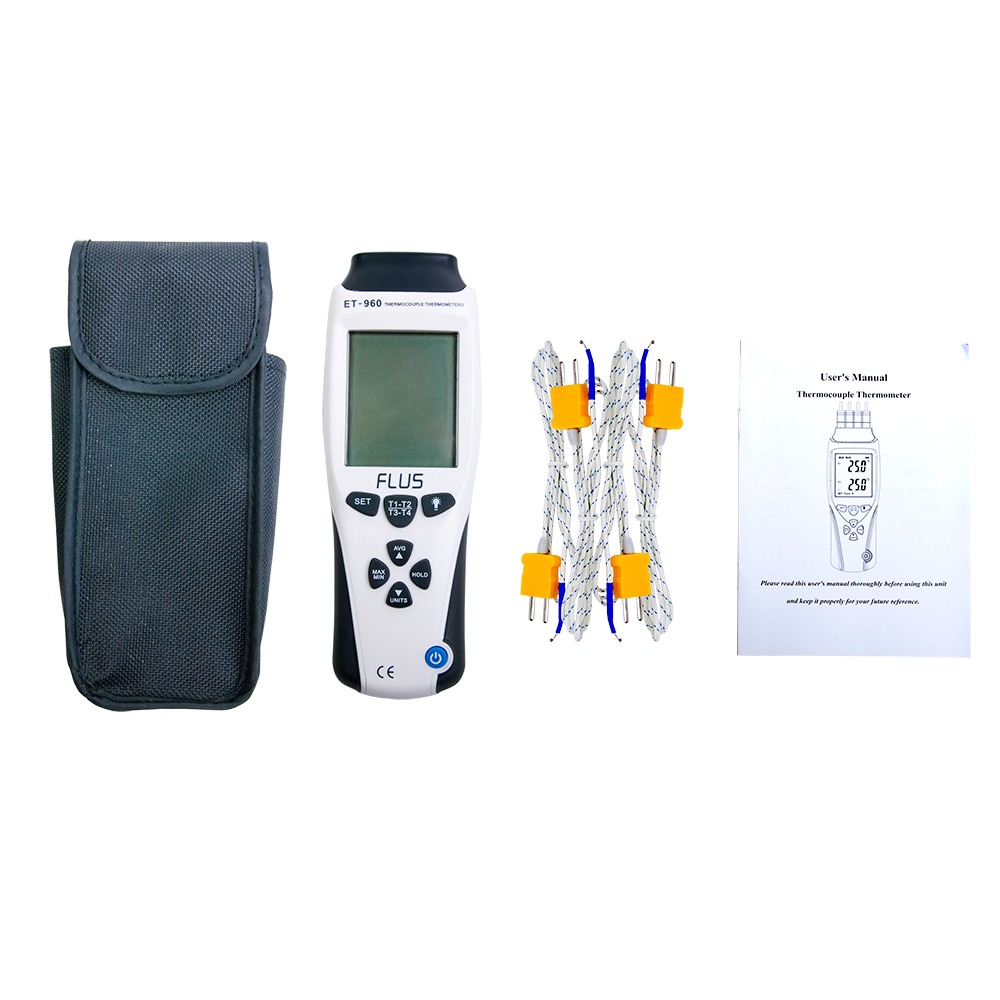
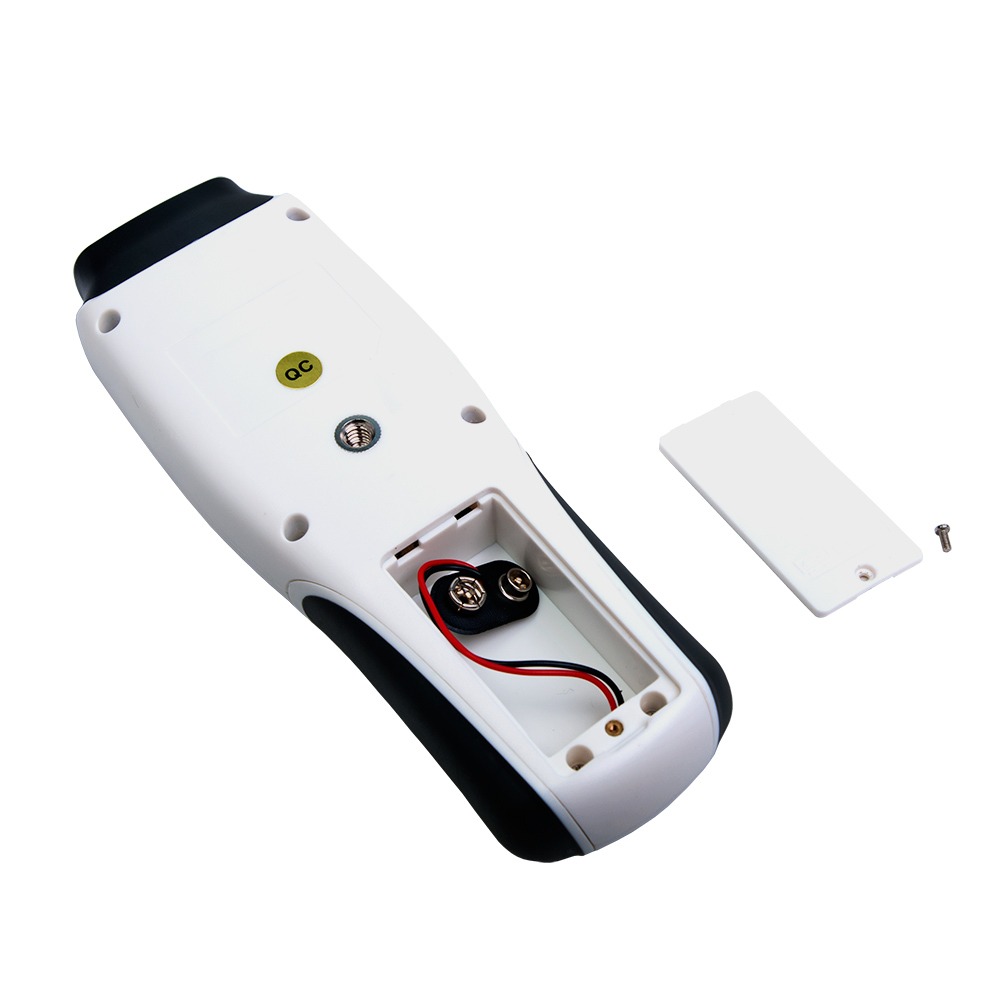
Power, dimensions, and everyday details
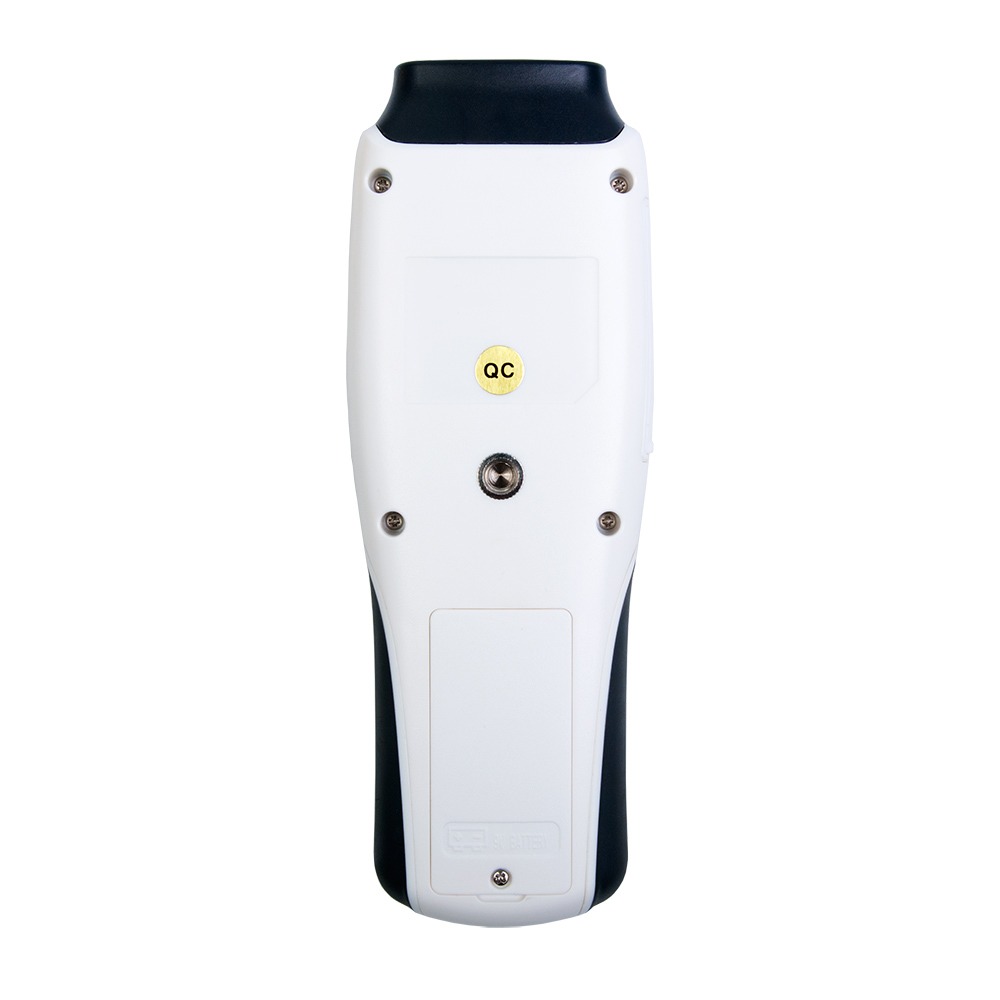
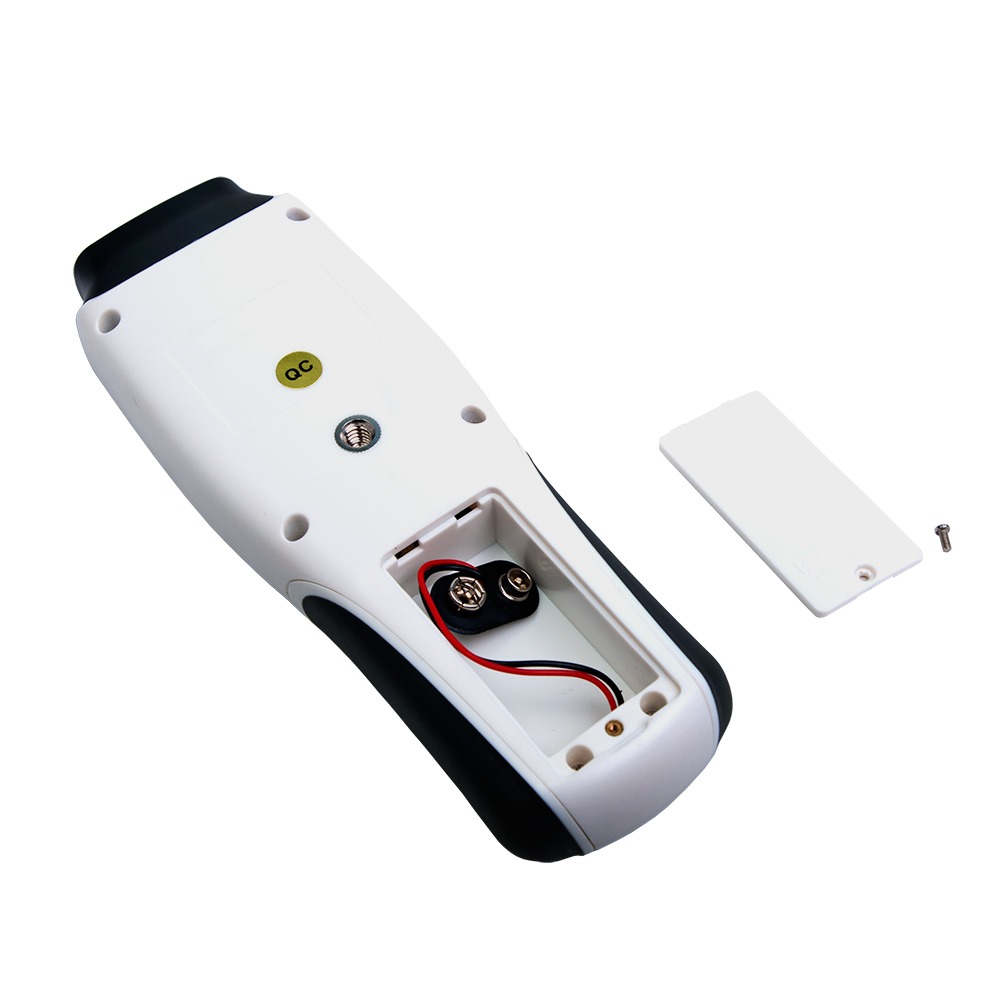
It runs on 1 9 V battery, with a stated battery life of at least 30 hours. The body is compact and comfortable to hold. There’s a 1/4" tripod thread, surprisingly useful when you need to set the device up at your workstation instead of juggling thermocouples in midair.
It has auto power-off, and it feels like it’s designed more to save the battery than to spare your feelings. If you plan on long monitoring sessions, just keep that in mind.
Who the ET-960 is right for, and who it isn’t
Choose the ET-960 if you need 2–4 measurement points, temperature differences, process monitoring, simple controls, and an easy-to-read screen.
It’s not for you if you need PC/USB data logging, graphs out of the box, or metrological accuracy with documentation without additional probes and calibration.