Thermocouple thermometers
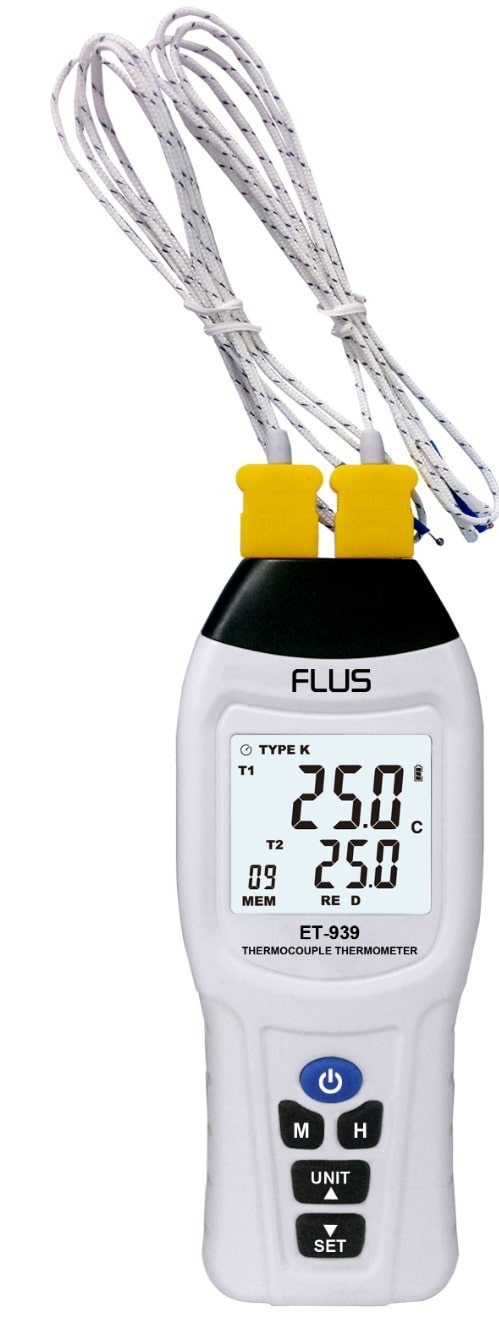
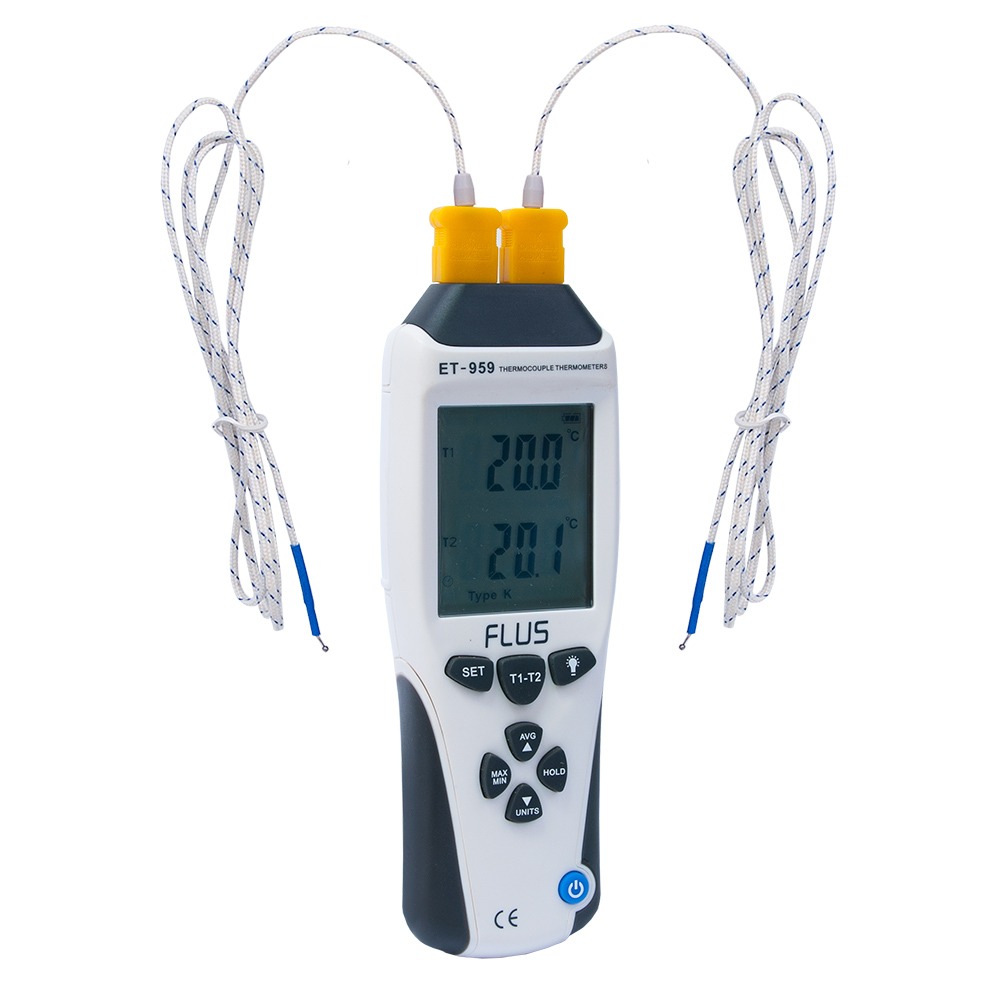
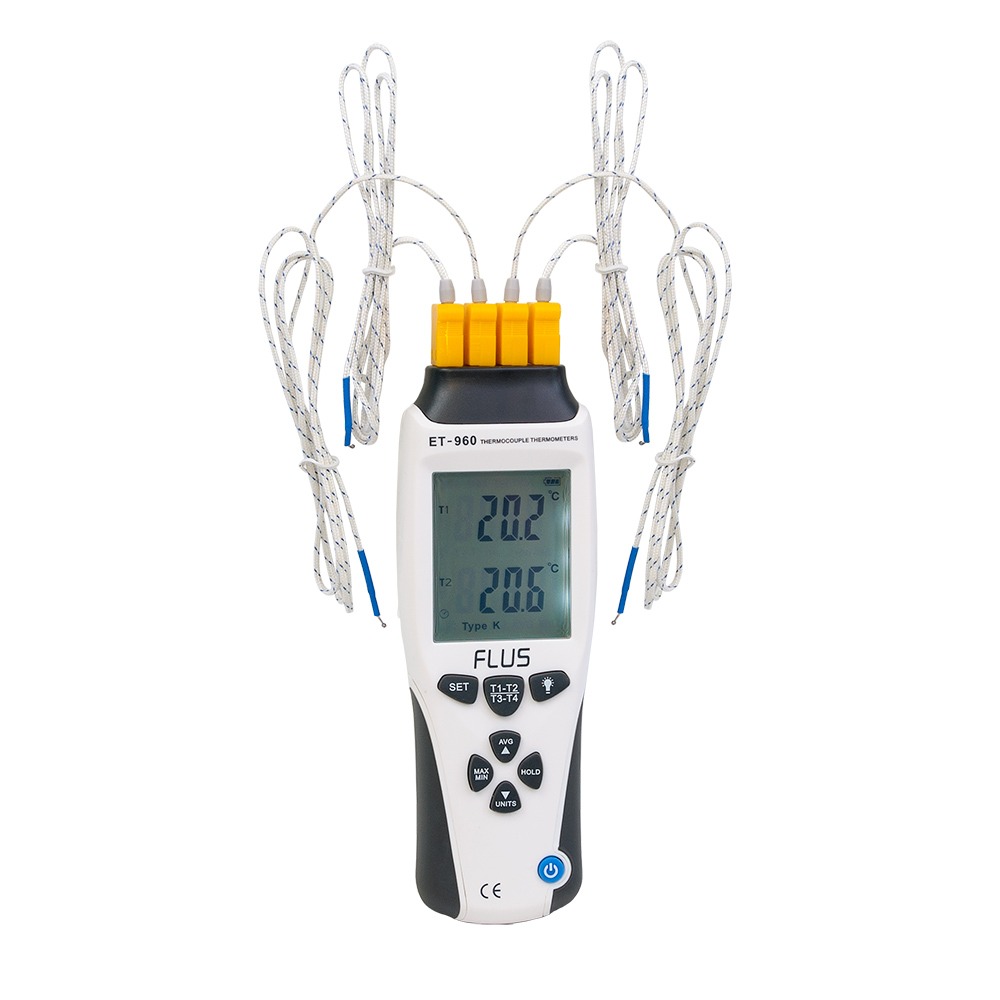
How to choose
A thermocouple thermometer is needed wherever it is important to monitor temperature quickly and accurately at different points. Before choosing one, check compatibility with the required thermocouple types, the number of channels, reading accuracy, and ease of everyday use.
Thermocouple compatibility
First, check which thermocouples the device works with. The catalog lists support for J-type and K-type thermocouples, so this matters if you already have your own probes or are choosing them for a specific task.
Also check the temperature measurement range for each thermocouple type. The range for K-type and J-type is specified separately, so when choosing, compare which type is needed for your operating temperatures.
Multiple channels and temperature comparison
If you need to monitor several points rather than just one at the same time, pay attention to the number of thermocouple inputs. There are 4 channels here, which is convenient for taking parallel measurements in different locations without constantly moving the probe.
For tasks where not only the absolute temperature but also the difference between two points matters, the ΔT measurement function will be useful. The specifications separately list the T1–T2 and T3–T4 channel pairs, as well as AVG, MAX, and MIN modes, which help you see the average, maximum, and minimum while monitoring a process.
Accuracy and reading resolution
If accurate readings matter to you, look not only at whether the thermometer measures temperature, but also at the accuracy specification for different thermocouple types. The accuracy specifications for J-type and K-type are listed separately, and they vary by temperature range: within 0…1000 °C, the stated accuracy is ±(0.15% of reading + 1 °C), while the tolerance is greater at lower and higher temperatures.
Temperature resolution also affects ease of use. Up to 1000 °C, it is 0.1 °C, and above 1000 °C, it is 1 °C, so readings will be more detailed for tracking small changes in the lower range.
Ease of reading measurements
For everyday use, it is important how easily you can see the result on the screen. The specifications list an LCD display, and it is also worth considering whether you need backlight and the HOLD function if you often need to take readings in poorly lit areas or hard-to-reach locations.
Another practical consideration is the supported temperature units. If you work with different instructions, equipment, or standards, it is convenient to be able to switch between °C and °F.
Power and battery life
If you need the thermometer for field work or extended checks, assess the power setup. The specifications list replaceable batteries, one 9V battery, and a stated battery life of 30 hours, so the device is convenient to take where quick battery replacement matters.
This format is especially practical when there is no way to recharge the device on site. Before buying, consider how easy it will be for you to keep a spare battery on hand.
Tips
- If you already have thermocouples, start by checking compatibility with J-type or K-type.
- For monitoring several points at once, a 4-channel model is more convenient, especially if you need to compare temperatures.
- When small changes in readings matter, look not only at accuracy but also at the 0.1 °C temperature resolution in the lower range.
- For work in dark or inconvenient locations, display backlight and the HOLD function are useful.
- If the device will often be on the road, check in advance whether a 9V battery is readily available and whether the stated 30 hours of battery life will be enough for you.