Flus IR-813
Delivery and payment
Choose your city or town to see the price with delivery there and when you can get it.
Pickup points
- Branch
- Parcel locker
Pros
- Measurement range up to 580 °C
- Fast 0.5-second response
- Adjustable emissivity
- Color-coded monitoring against a set temperature
- Laser targeting and backlight
Cons
- Cannot measure temperature inside objects
- Accuracy depends on the surface material
- No smartphone or PC connectivity
Flus IR-813: a pyrometer for hands-off temperature checks
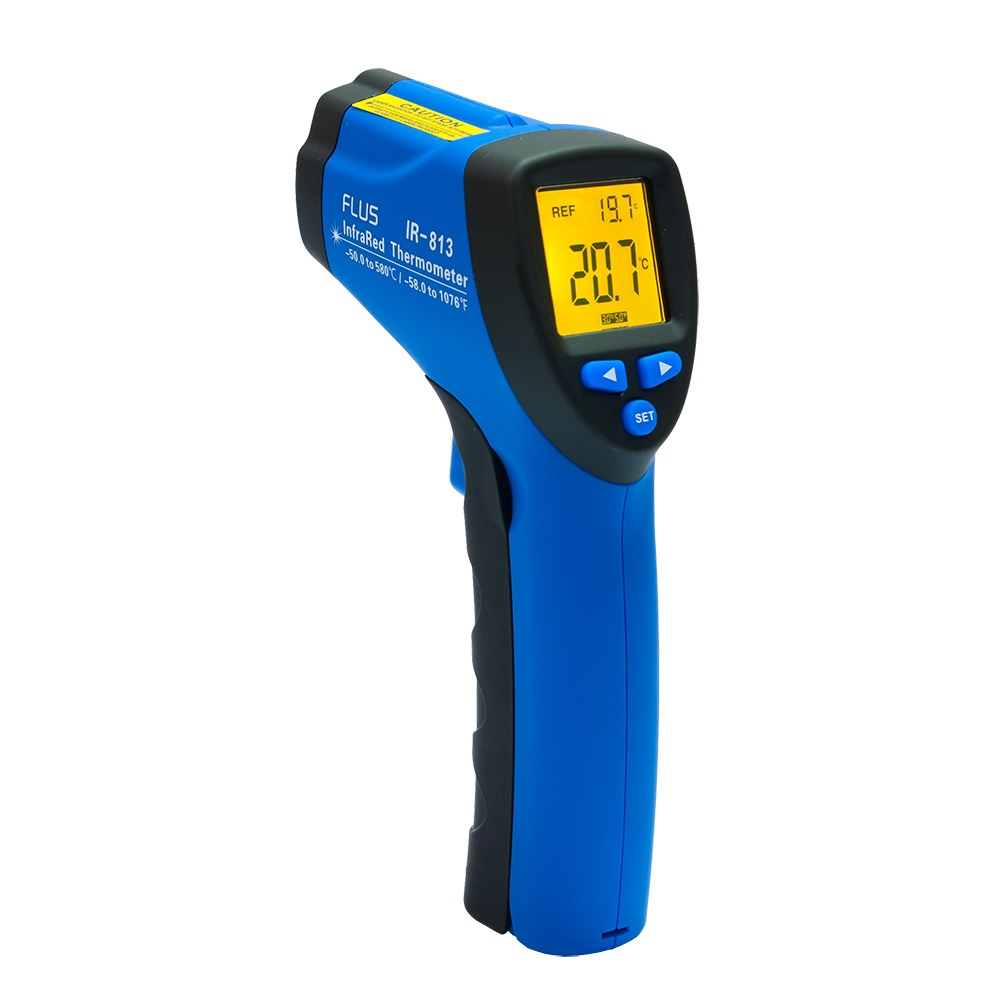
Flus IR-813 is a non-contact infrared thermometer, or pyrometer, for measuring surface temperatures from −50 to +580 °C. It is a practical tool for the workshop, garage or kitchen, as well as for equipment servicing, checking heating and electrical systems, and finding heat loss. Pull the trigger and aim the laser to see the result in half a second. No probes, waiting or heroic attempts to get your hand close to a hot pipe.
A wide temperature range for home and work
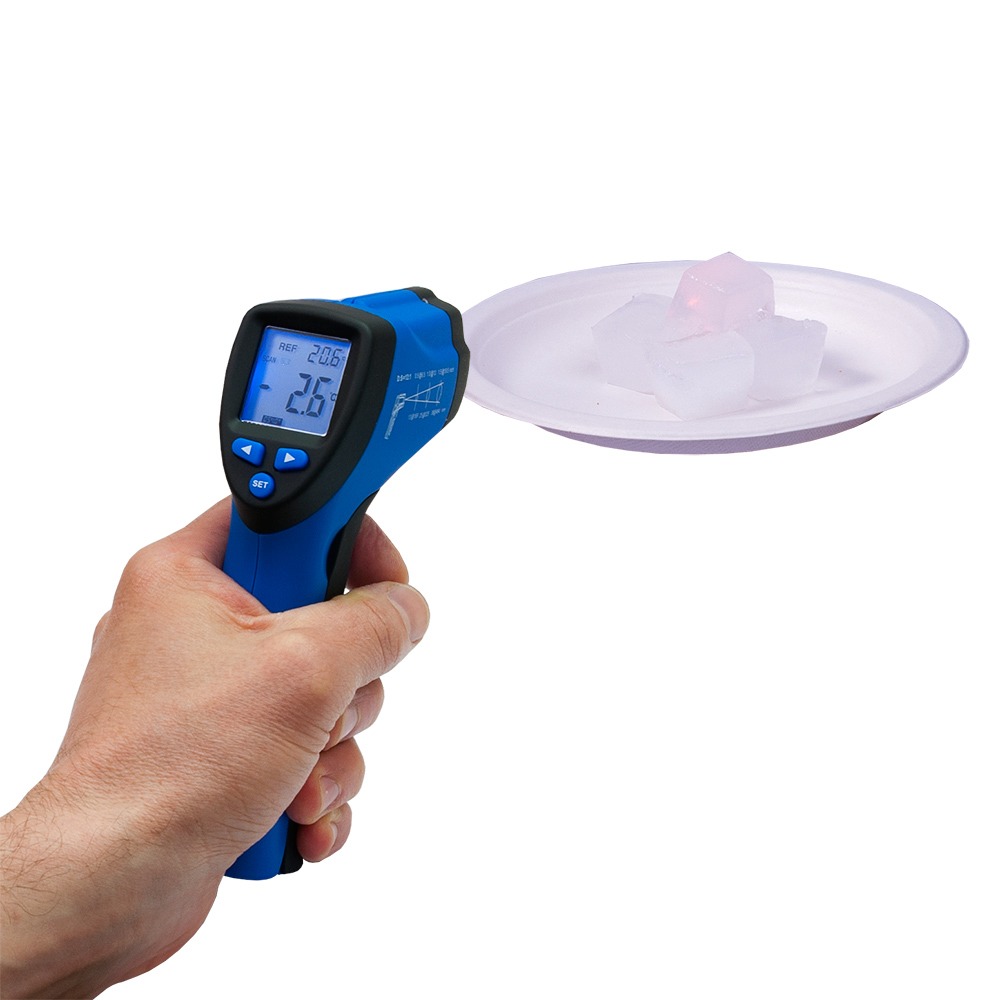
The device measures surfaces from −50 to +580 °C, making it equally useful for checking a freezer, radiator, heated floor, engine, electrical panel, chimney, grill or heated metal part. With a response time of up to 500 ms, the IR-813 is easy to move along a pipe, engine housing or row of electrical connections to quickly find unusually cold or hot areas.
The pyrometer measures surface temperature, not the temperature inside an object, in the air or in a liquid beneath a layer of steam. It is not intended for measuring body temperature either.
13:1: keep the right distance
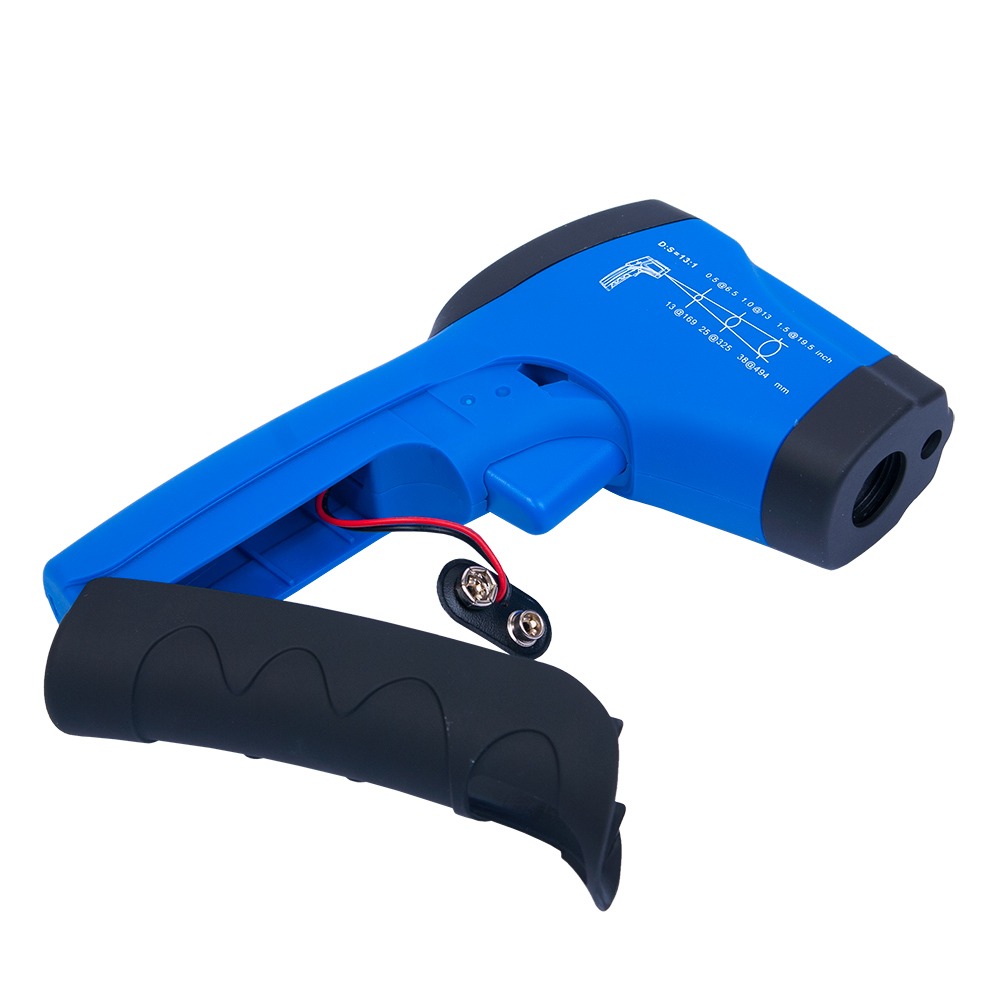
The distance-to-spot ratio (D:S) is 13:1. This means that from a distance of 130 cm, the device measures an area approximately 10 cm in diameter. The farther the IR-813 is from the target, the larger the area included in the measurement. For a small bolt, contact or spot on a wall, it is best to move closer; for a large pipe, stove or radiator, distance will not be a problem.
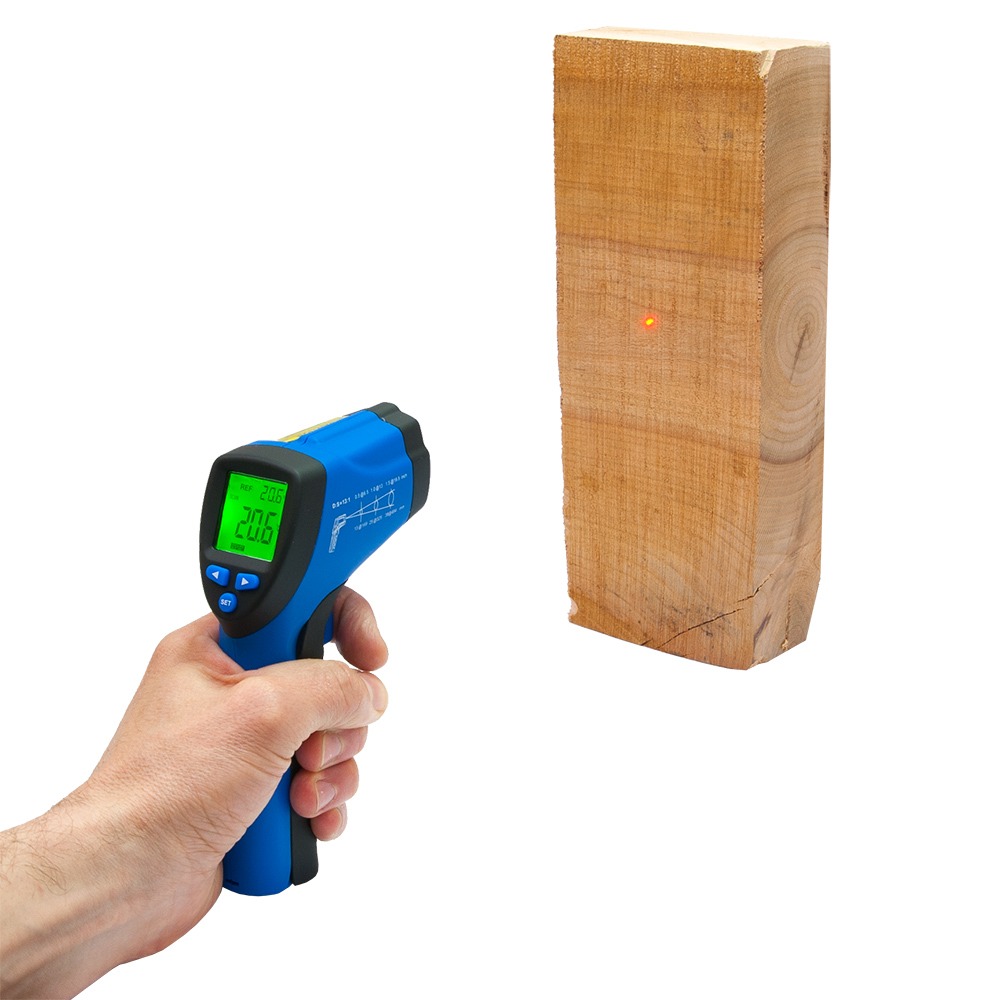
A single-beam laser helps you aim at the center of the measurement area. It is useful for aiming, but remember that the laser dot does not show the exact size of the entire measurement spot.
More than a number: a quick comparison with the set temperature
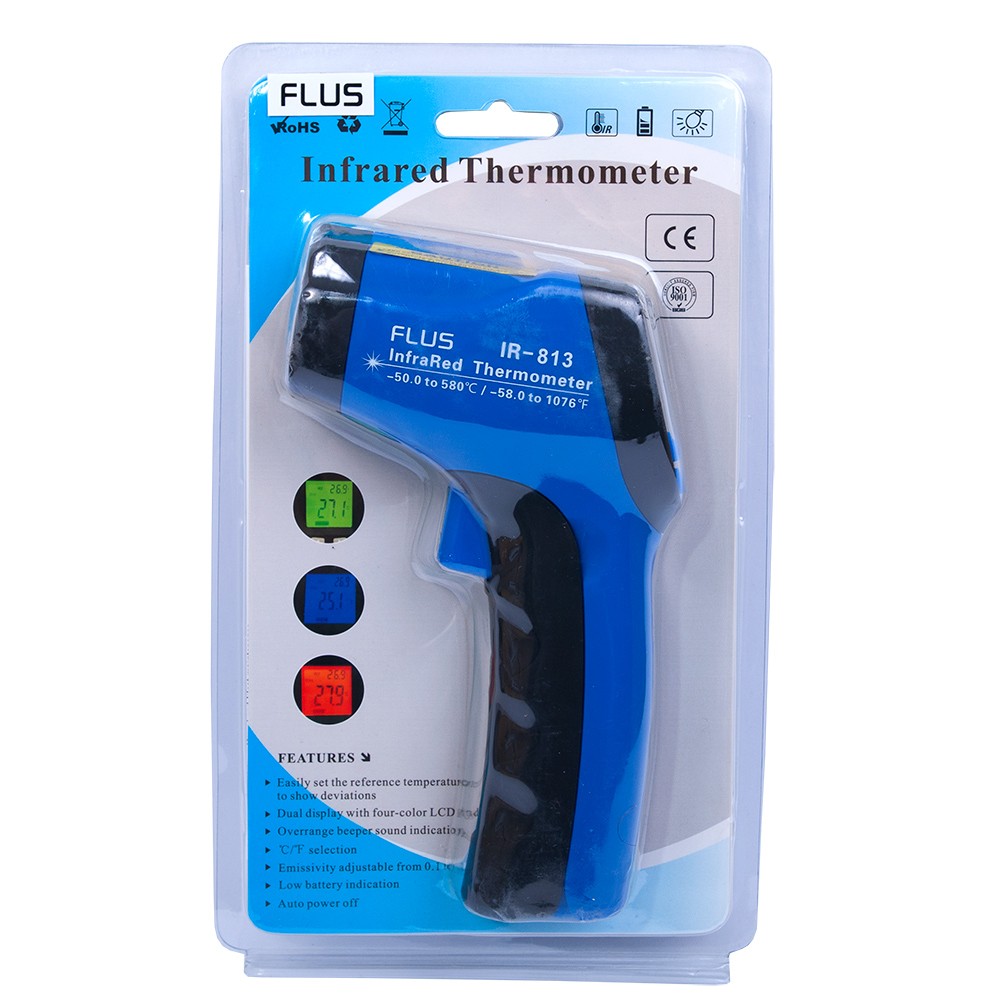
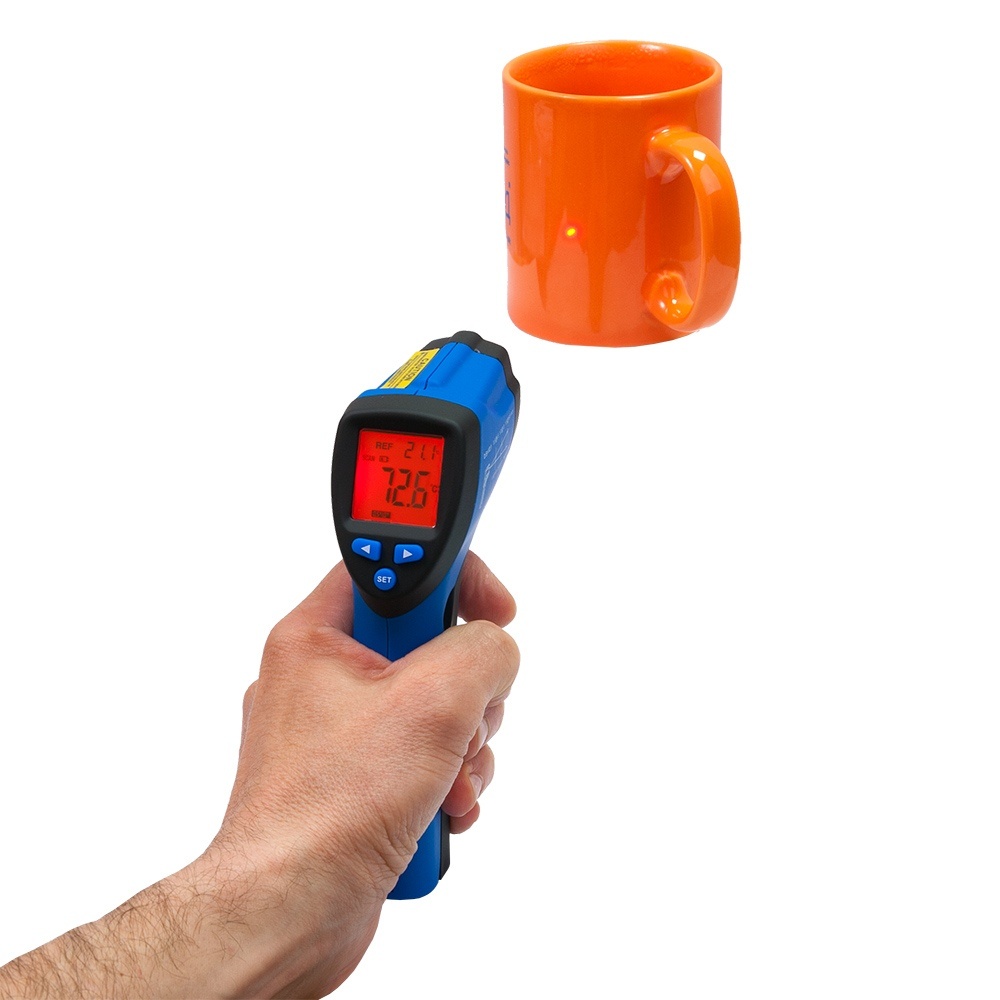
The key feature of the Flus IR-813 is its mode for monitoring deviations from a set temperature. You can set a reference value, and the device will show the difference between it and the current reading. The LCD backlight changes color, and an audible alert draws attention when the reading falls outside the set range.
This is especially useful when checking multiple items, such as finding an overheated contact in an electrical panel, a cold area near a window, an unevenly heated radiator or a part that differs from the others. There is no need to keep asking yourself, “Was it 62 or 72?” The device will let you know when something is off.
Adjustable emissivity: an important detail for accurate results
Emissivity can be adjusted from 0.1 to 1.0. This lets you better adapt measurements to different materials, including painted metal, wood, plastic, ceramics and matte surfaces. For most household materials with matte surfaces, measurement error will be more predictable than with shiny steel, polished aluminum, mirrors or clear glass.
That is why you should not blindly trust the reading on the screen when aiming the pyrometer at a chrome-plated kettle or shiny metal. In such cases, the surface may reflect heat from surrounding objects. A practical way to avoid surprises is to measure a matte area or apply a piece of matte tape to the spot and let it reach the surface temperature.
A convenient design for everyday checks
The Flus IR-813 weighs just 167 g and has a pistol-grip shape, making it comfortable to hold. The large LCD screen displays temperature with a resolution of 0.1 °C, supports °C and °F, and offers MAX and MIN modes. After a measurement, the device holds the last reading, has a low battery indicator and switches off automatically to conserve the 9-volt battery when stored in a case or drawer.
Who is it for?
The IR-813 is a good choice for DIYers, car owners, electricians, heating installers, service technicians and small-scale manufacturing workers. It is not intended as a laboratory instrument and does not replace a contact thermometer where absolute accuracy is critical. For quick surface diagnostics, finding temperature deviations and safely checking hot objects, however, it is a functional, easy-to-use and very useful pyrometer.