Infrared pyrometers
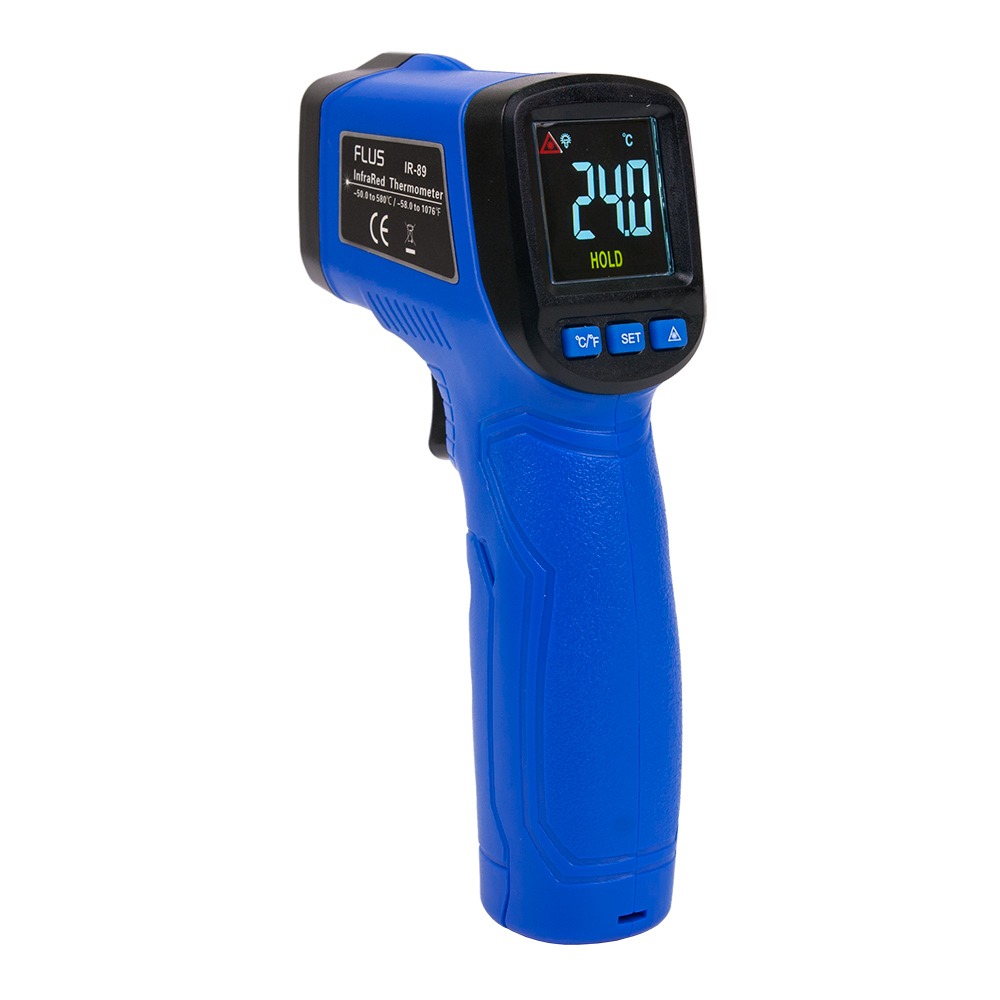
Flus IR-89
1099 ₴
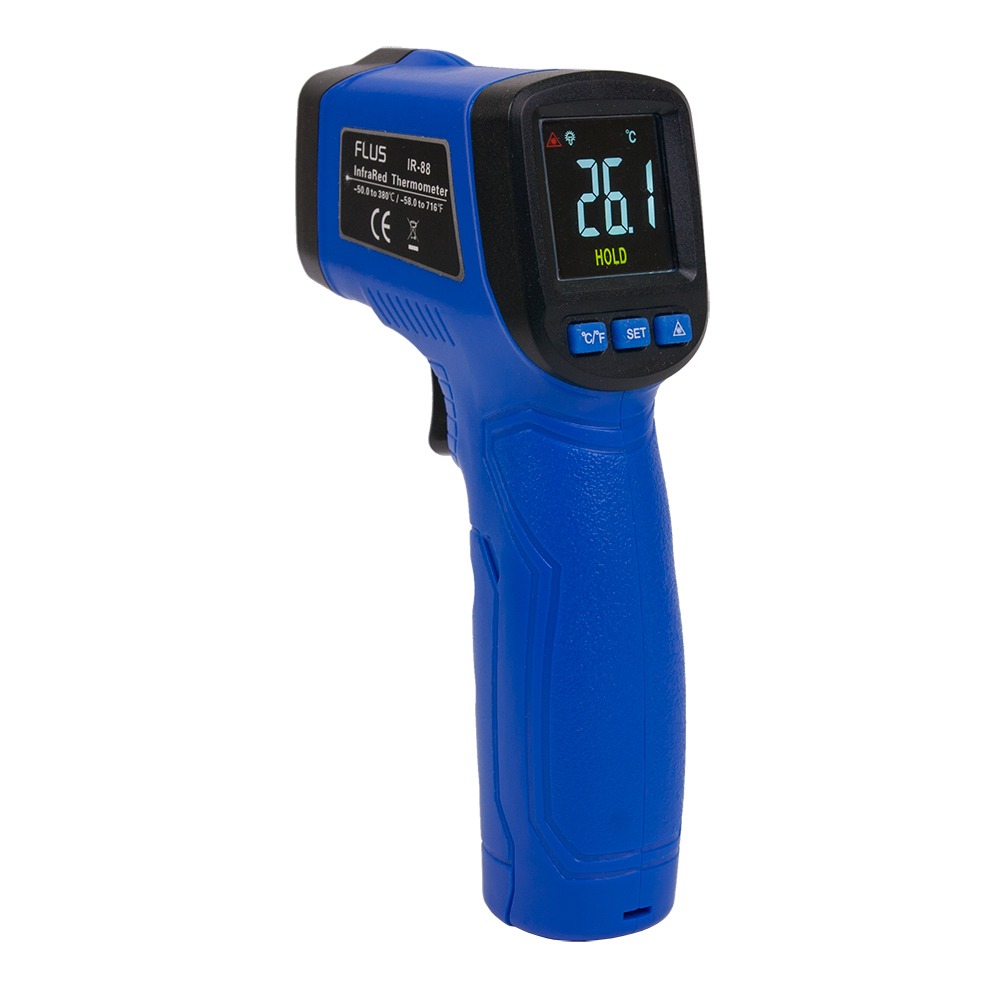
Flus IR-88
899 ₴
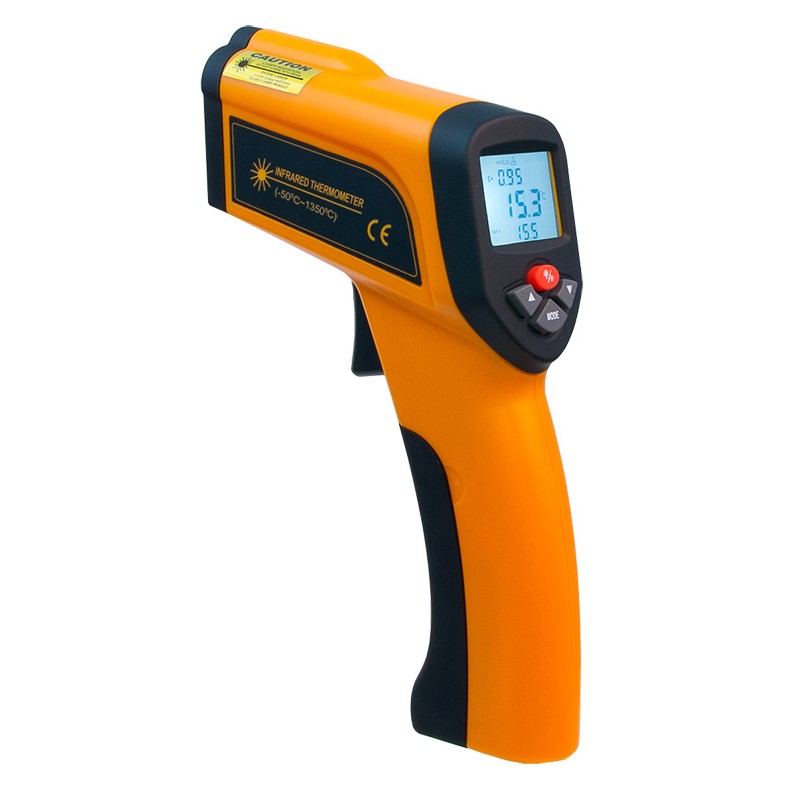
Xintest HT-6896
3099 ₴
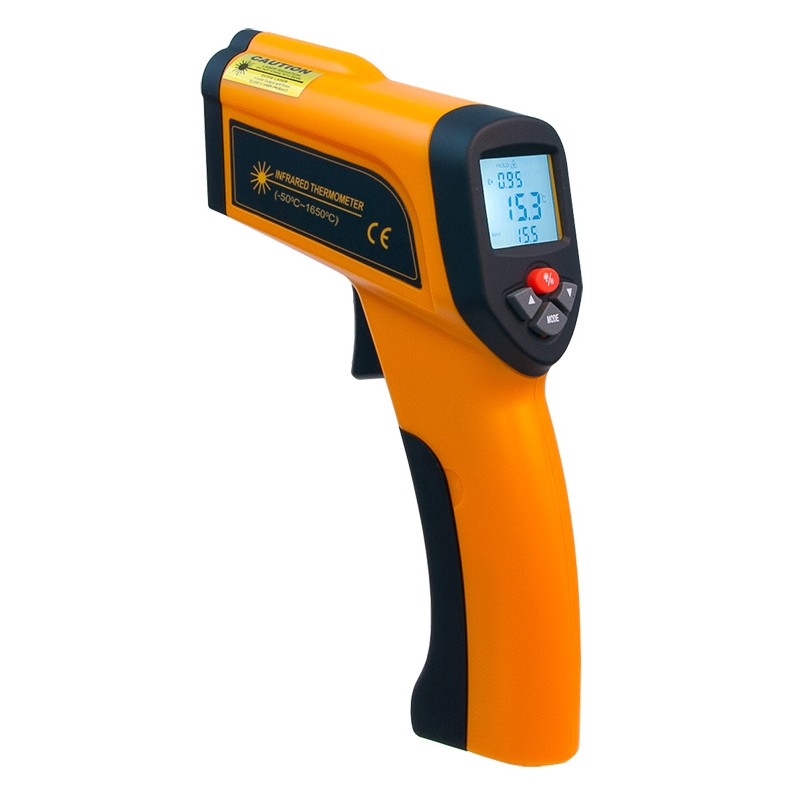
Xintest HT-6897
3199 ₴
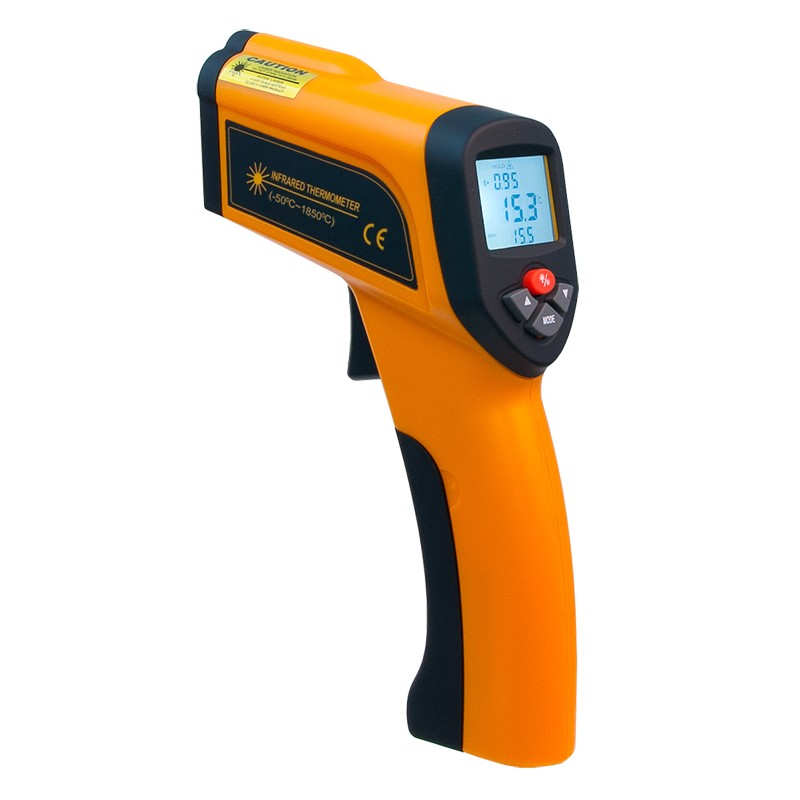
Xintest HT-6898
3399 ₴
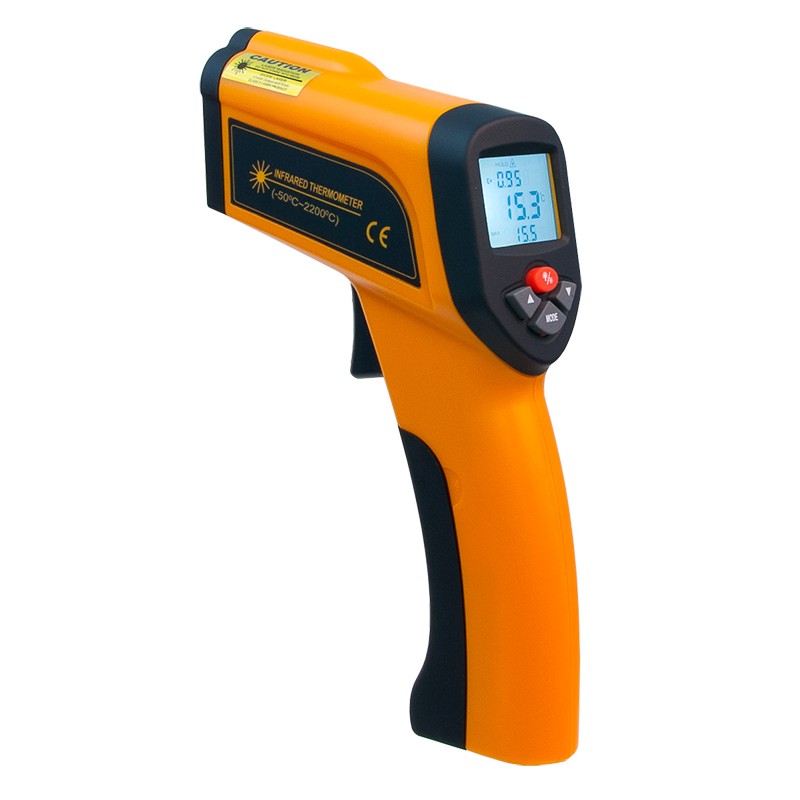
Xintest HT-6899
3699 ₴
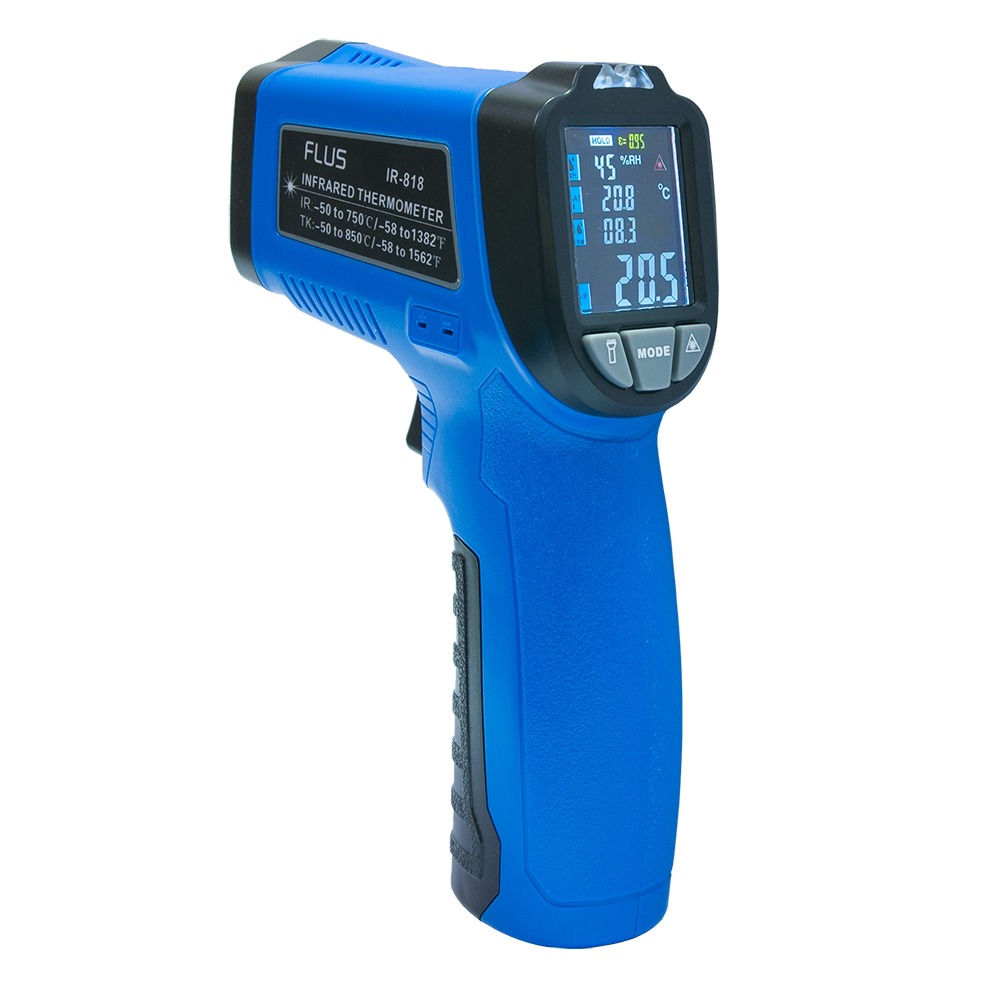
FLUS IR-818
2799 ₴
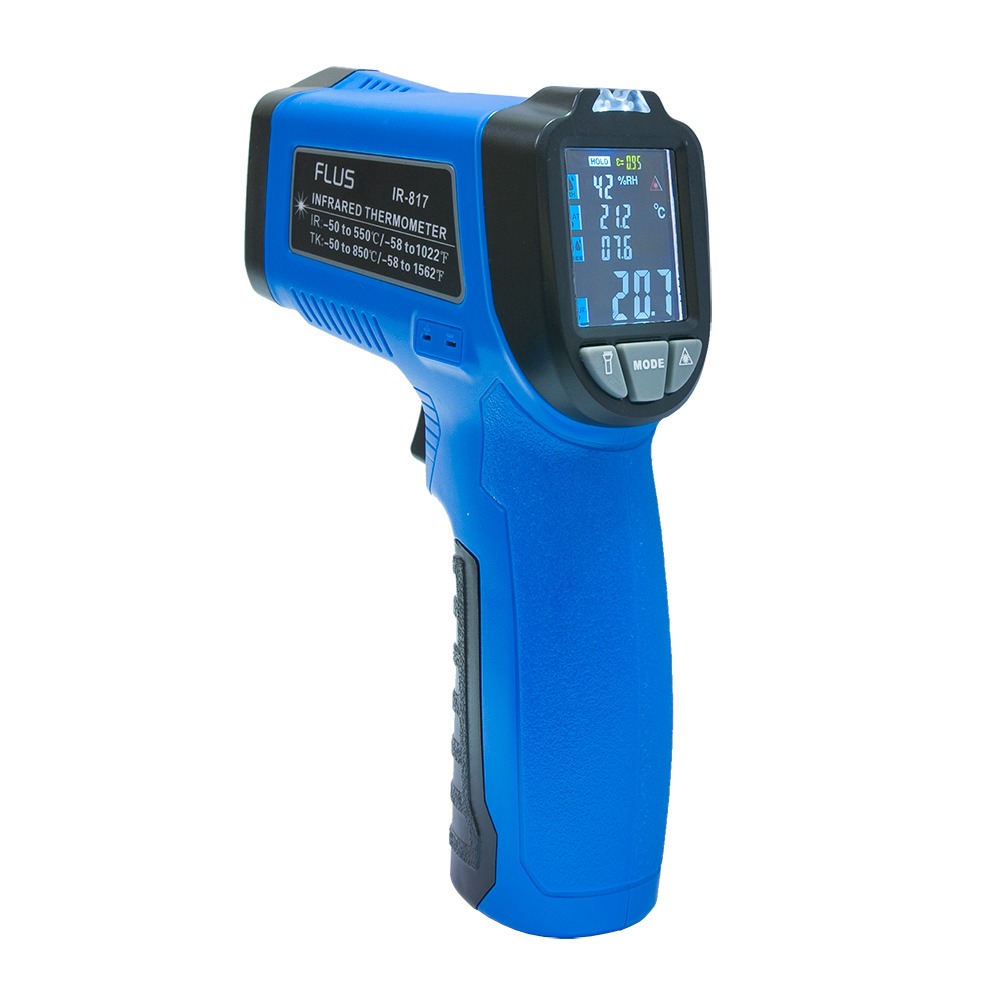
FLUS IR-817
2599 ₴

Flus IR-802H
1499 ₴
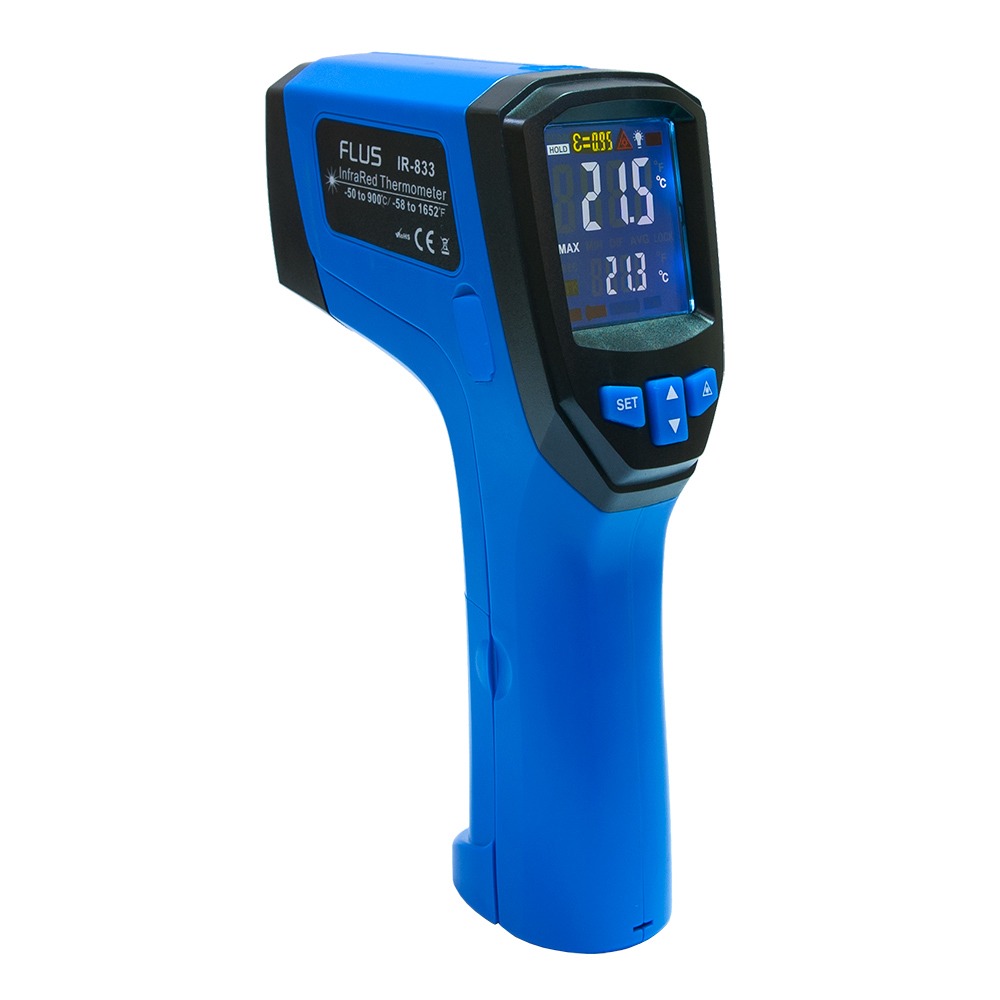
Flus IR-833
4499 ₴
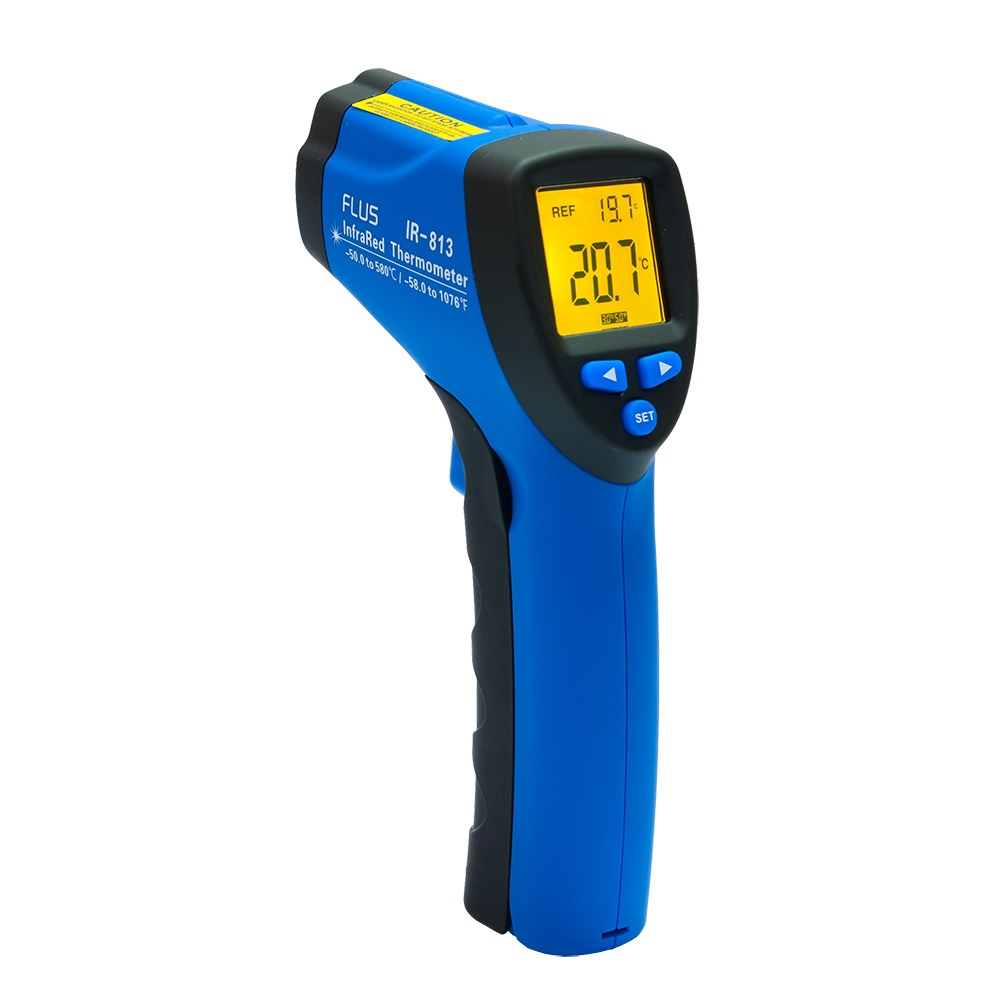
Flus IR-813
1399 ₴
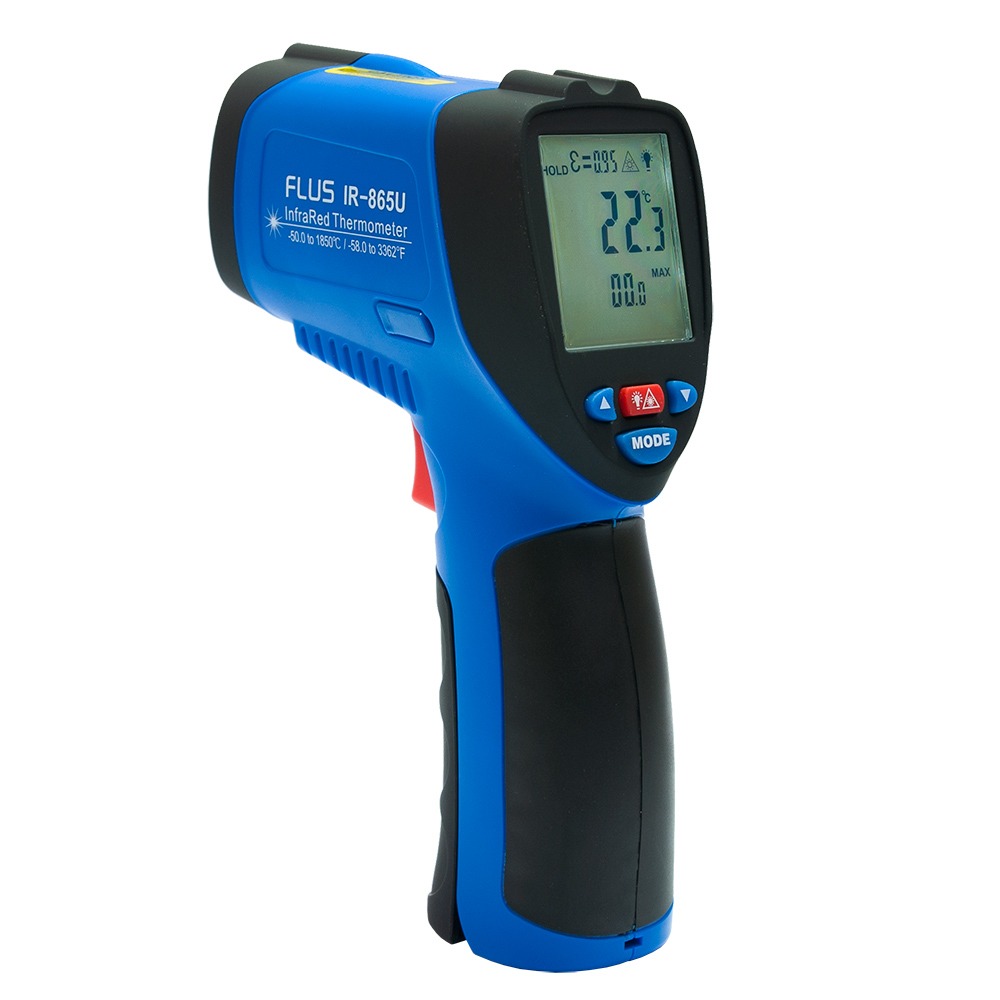
FLUS IR-865U
11099 ₴
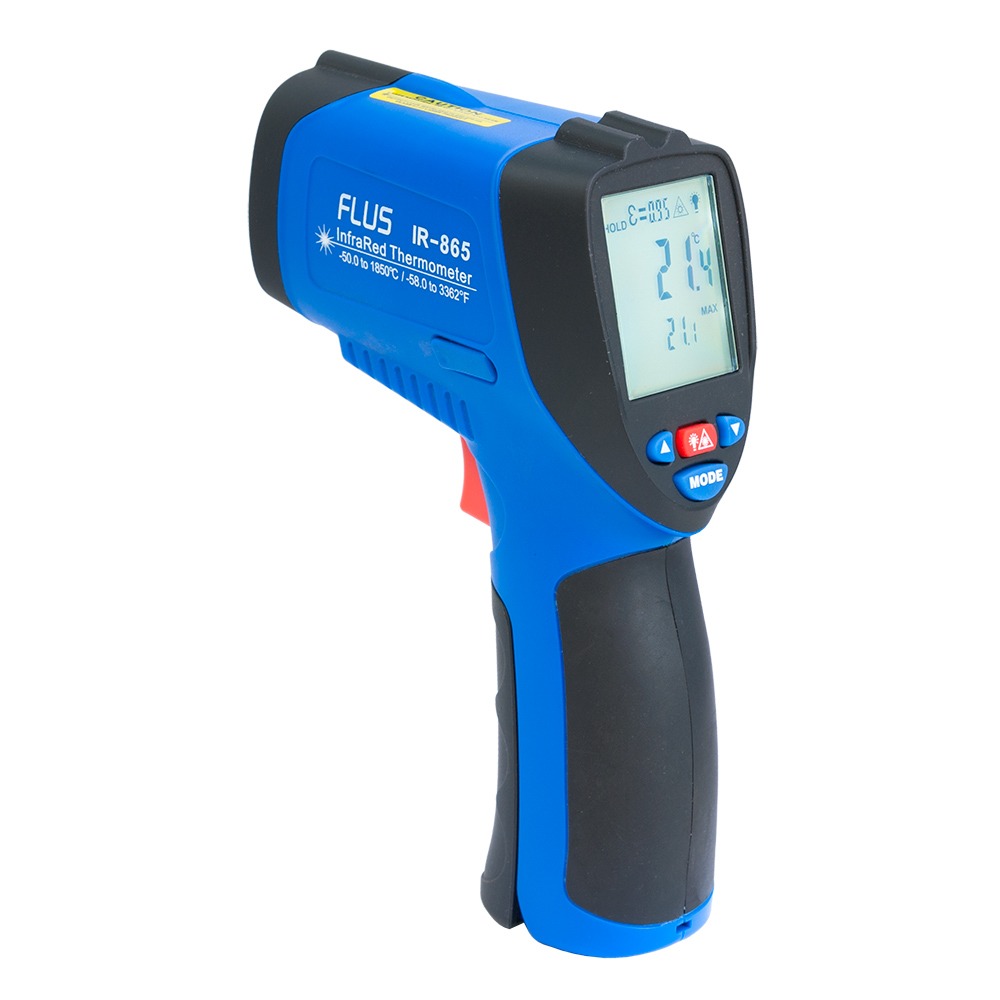
FLUS IR-865
10899 ₴
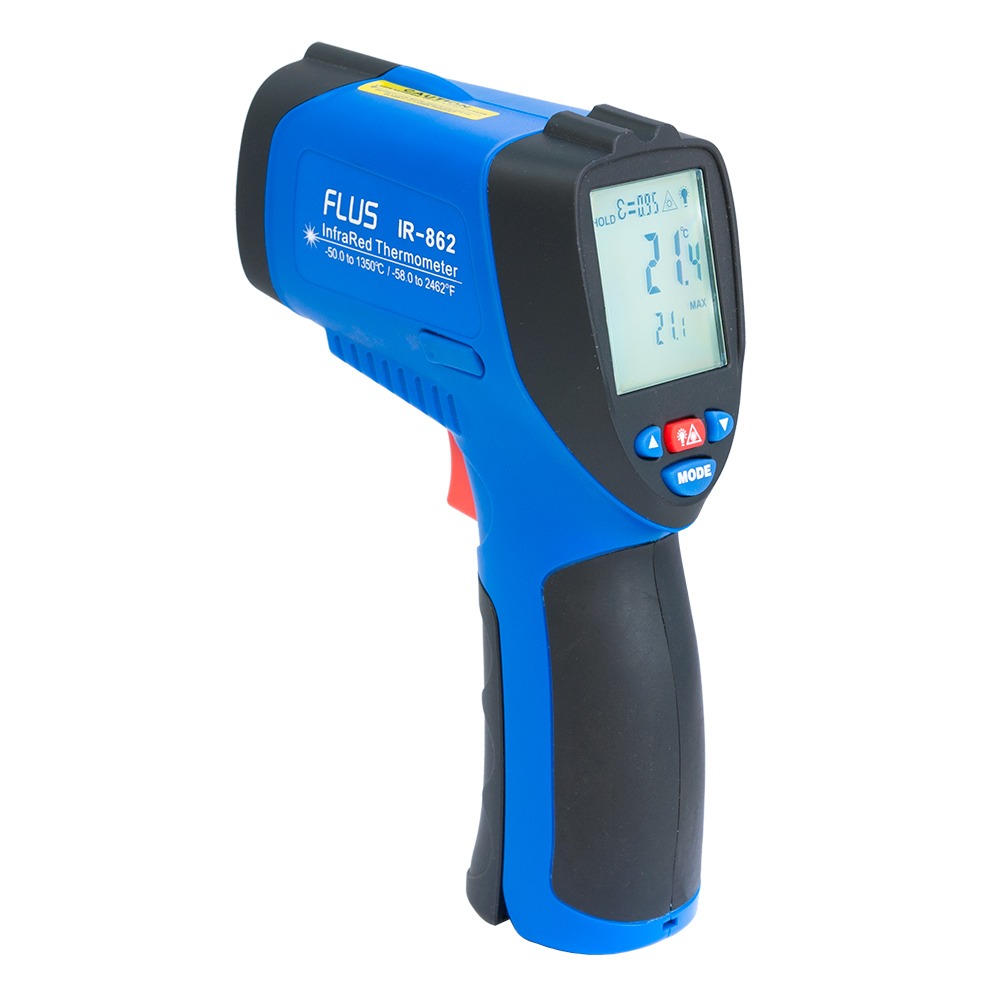
FLUS IR-862
9899 ₴
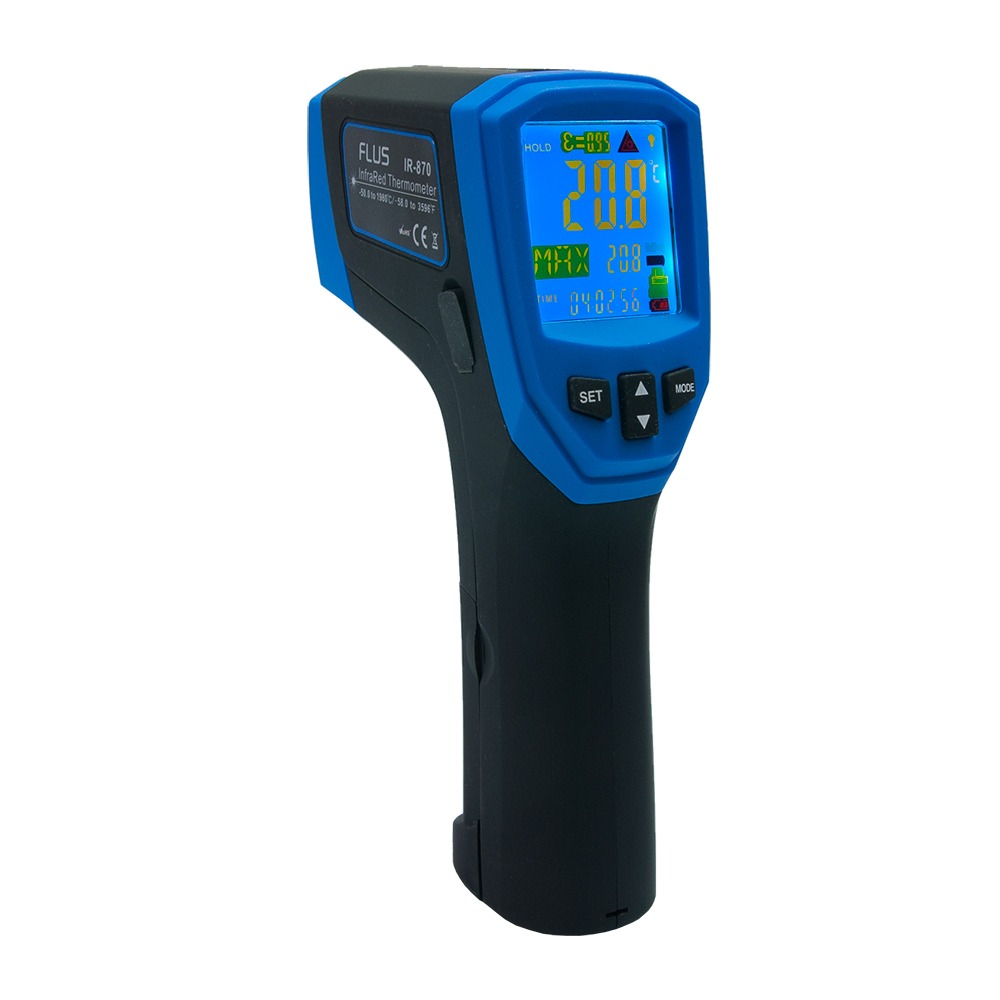
FLUS IR-870
13599 ₴

FLUS IR-869
12899 ₴
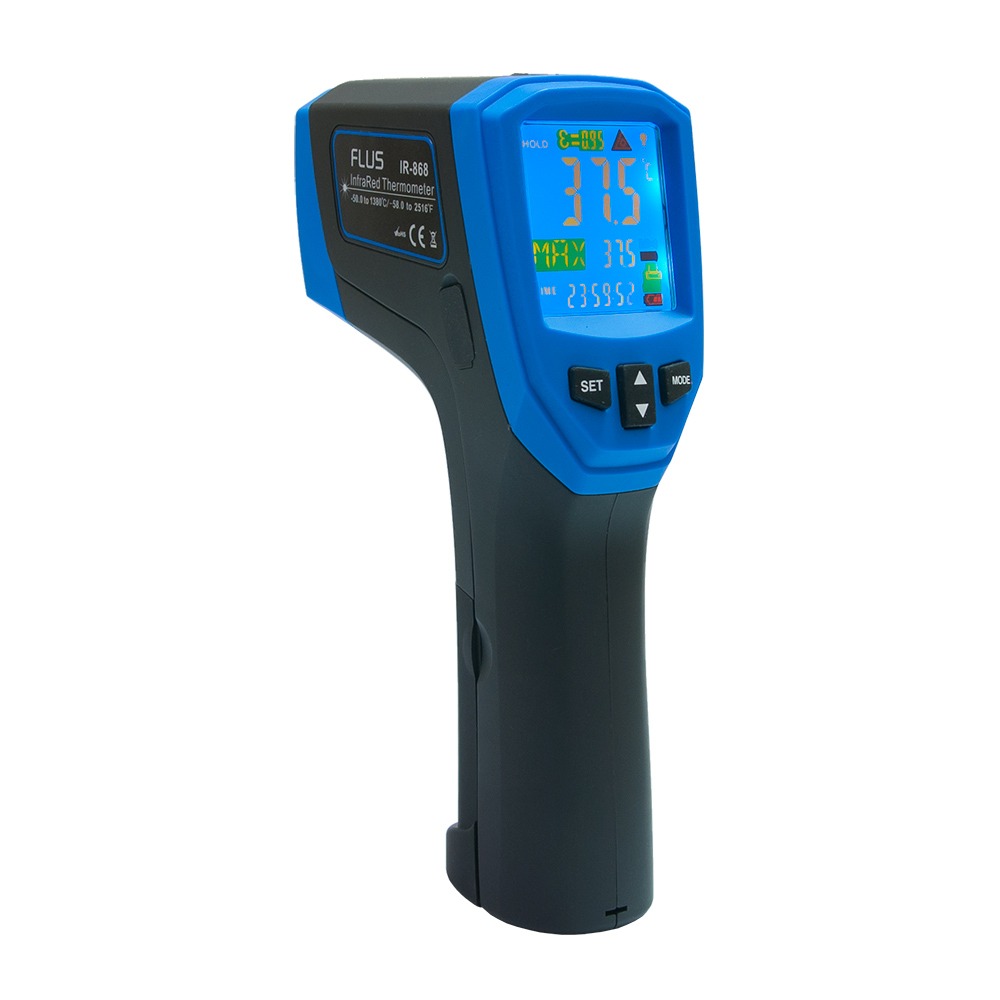
FLUS IR-868
11799 ₴
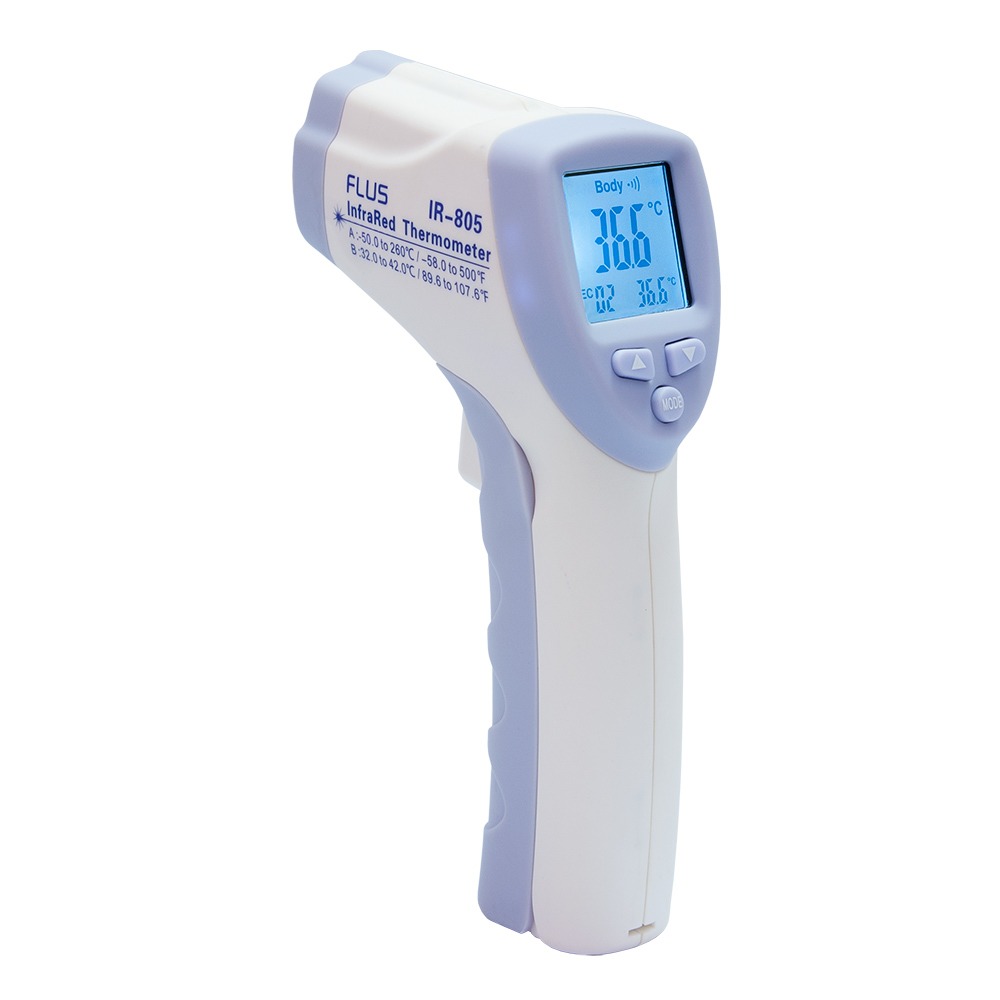
FLUS IR-805
1499 ₴
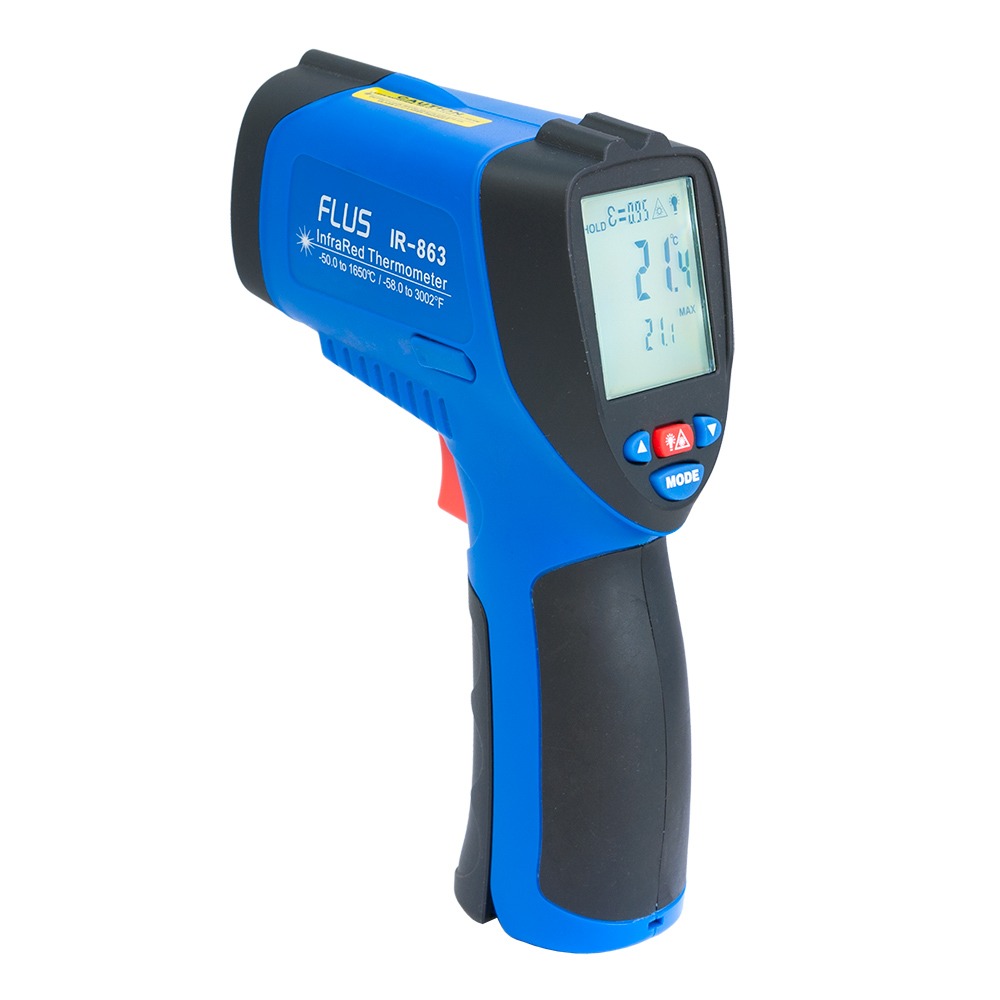
FLUS IR-863
10399 ₴
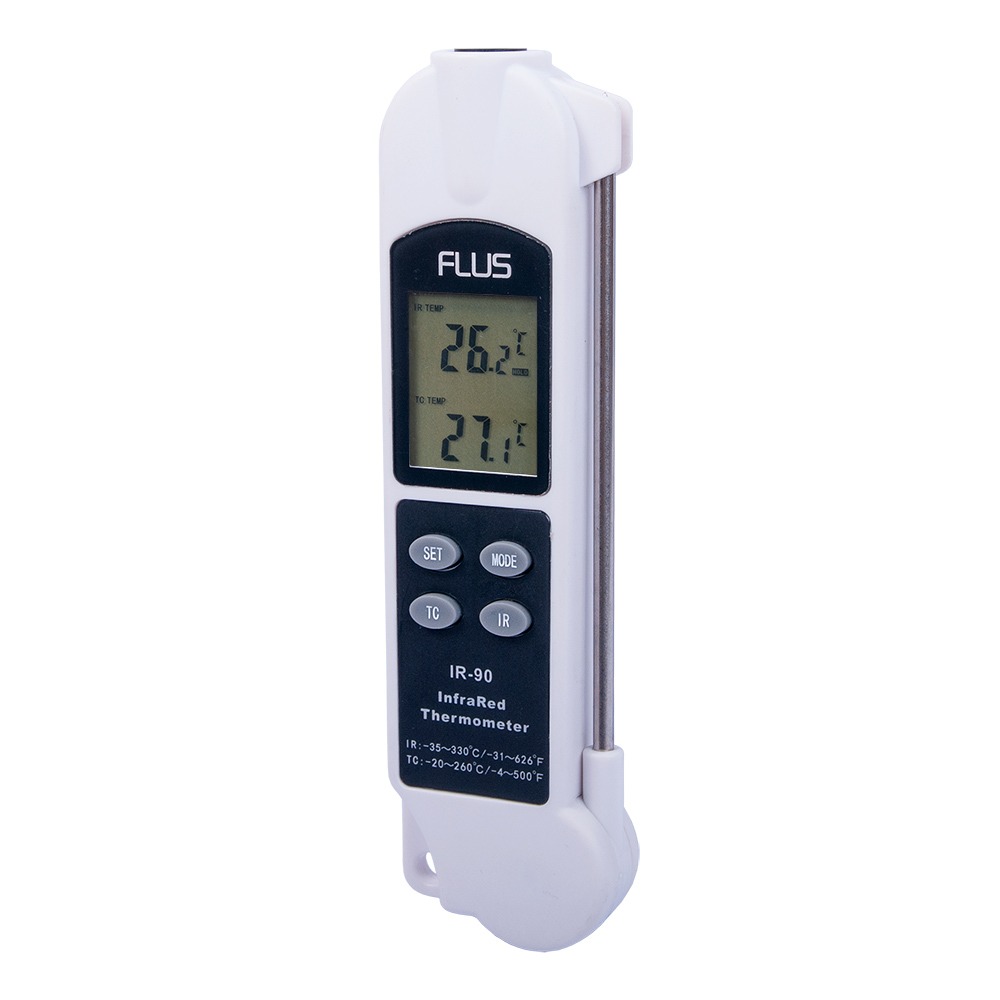
Flus IR-90
1899 ₴
How to choose
An infrared pyrometer is used for fast non-contact surface temperature measurement when you do not want to or cannot touch the object with a sensor. This type of instrument is useful for household checks, maintenance, and monitoring the heating of different materials, but it is important to choose a model for your working distance, accuracy requirements, and use case.
What you will be measuring
First, look at which measured parameters the instrument supports and which measurement method it uses. This category includes models for measuring temperature and surface temperature, with non-contact measurement methods that are convenient for hot, moving, or hard-to-reach objects.
The second key point is the IR temperature measurement range. The wider the working range you need, the more versatile the instrument will be, but for simple household tasks there is no need to pay extra for a range you will not use.
Accuracy, resolution, and speed
If it is important for you to see small temperature changes, pay attention to temperature resolution. The catalog lists 0.1 °C as the best temperature resolution, meaning readings are displayed in fairly small increments, while some models use a 1 °C increment at high temperatures.
Also assess the IR accuracy specification. It is presented differently for different instruments: options include ±(1.5%+2°C), ±(2%+2°C), ±3°C, or accuracy depending on the temperature range. One level may be sufficient for a rough check, while for verification measurements it is better to compare this specification carefully.
Response time in the catalog ranges from 0.25 to 0.5 s. For quick checks while moving or a series of consecutive measurements, it is more convenient when the result appears as quickly as possible.
Distance to the object and targeting convenience
For non-contact measurement, the distance-to-spot ratio (D:S) is very important. The catalog includes values from 1 to 50: the higher the number, the smaller the area that can be measured more accurately from the same distance. If you often work with small parts or cannot get close, a higher D:S will be more useful.
Laser targeting also helps in practice. Single, dual, multi-beam, and multi-point options are available, so basic targeting is enough for simple tasks, while more advanced types are more convenient for more precise positioning. Laser specifications may also list Class 2 and a power of 1 mW, helping you understand the targeting system's level of equipment.
Different surfaces and a contact option
Not all surfaces are equally suitable for infrared measurement, so the ability to adjust emissivity can be useful. If you work with different materials, pay attention to the available emissivity adjustment range and adjustment step: for some models in the catalog, the step is 0.01, allowing finer adjustment.
A thermocouple input is another advantage. If it is available, you get not only non-contact monitoring but also the option to check temperature using a contact method. The available models list K as the supported thermocouple type, which is convenient for those who need an additional check or measurements in conditions where the IR method is less reliable.
Memory, alerts, and working with data
If you are not just checking temperature once but monitoring it over time, look at the built-in measurement functions. The catalog includes MIN, MAX, AVG, DIF, and HOLD modes, as well as high and low alarms. These are convenient for finding overheating, comparing results, and holding a reading on the screen.
To record results, pay attention to stored readings memory. Available products may store from 0 to 12 readings, so a basic level is enough for occasional use, while a larger capacity is better for a series of checks.
If results need to be transferred to a computer, USB, real-time monitoring, data logging, visualization, or included software can be useful. If viewing readings once on site is enough, you can choose a model without PC connectivity.
Power and everyday convenience
For everyday use, it is important to consider the power source and how many batteries are needed. The catalog includes options with replaceable batteries and a 9V battery, while the number of batteries can range from 1 to 2. This affects both replacement convenience and operating costs.
It is also worth looking at the low battery indicator, auto power-off, and weight. The indicator lets you know when it is time to replace the battery, auto power-off helps prevent unnecessary battery drain, and a weight ranging from 176 to 290 g gives an idea of how comfortable the pyrometer will be to hold during longer checks.
Tips
- For small or distant objects, choose a model with a higher D:S, otherwise the instrument may capture too large an area.
- If you plan to measure different materials, look for emissivity adjustment, because without it the error on challenging surfaces may be more noticeable.
- For regular temperature monitoring, models with MIN, MAX, HOLD, and alarm functions are convenient; for reporting, choose one with USB and data logging.
- If you need an additional way to verify a result, look for a K-type thermocouple input to combine non-contact and contact measurement methods.