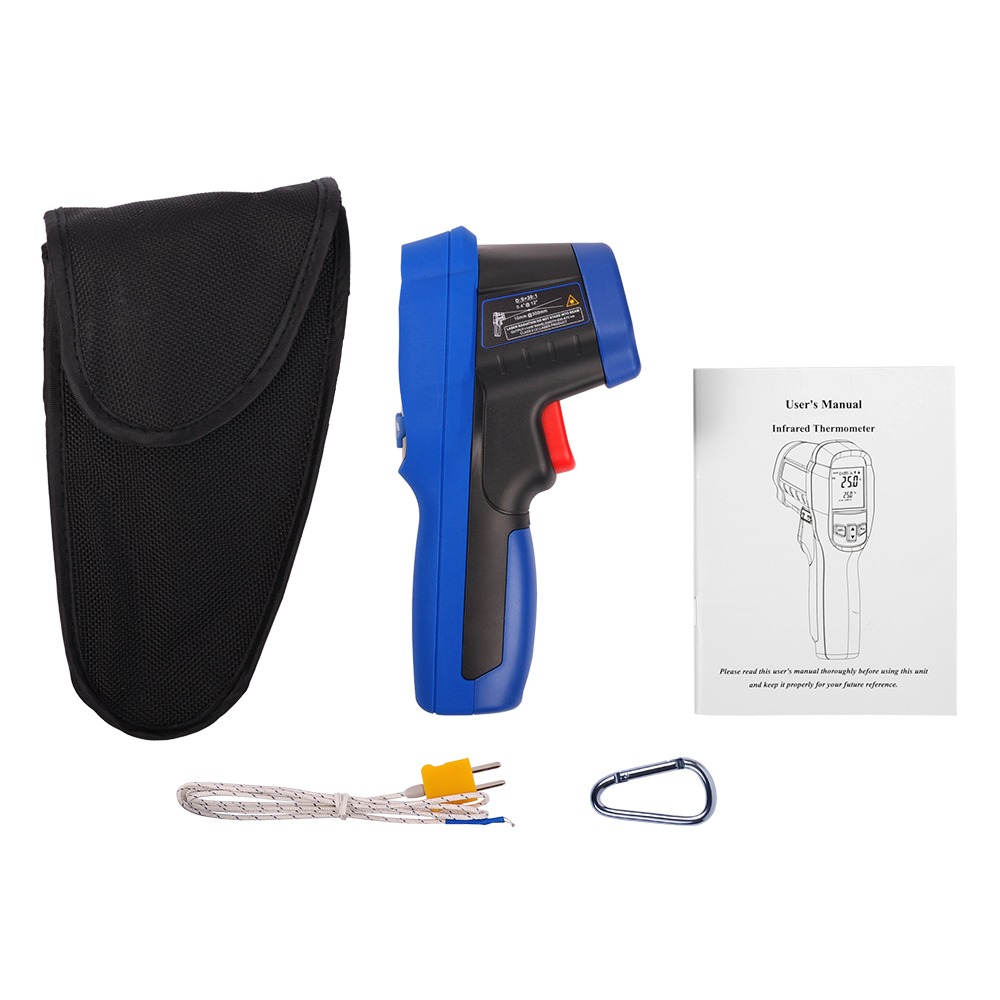
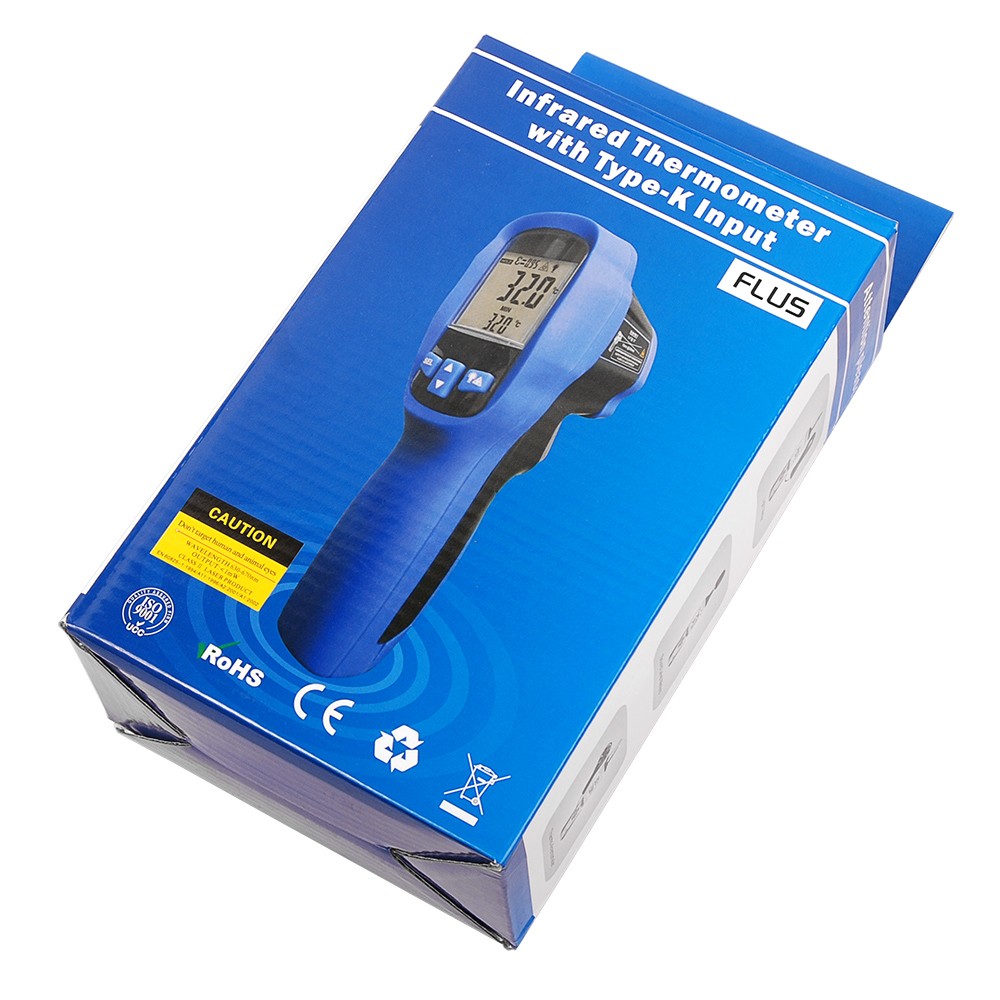
Flus IR-821
Delivery and payment
Choose your city or town to see the price with delivery there and when you can get it.
Pickup points
- Branch
- Parcel locker
Pros
- IR + thermocouple included
- 30:1 optics for distance measurements
- Adjustable emissivity from 0.1–1.0
- Fast 0.25 s response time
- MAX/MIN/AVG/DIF and alarm
Cons
- Memory for only 12 readings
- No PC connection
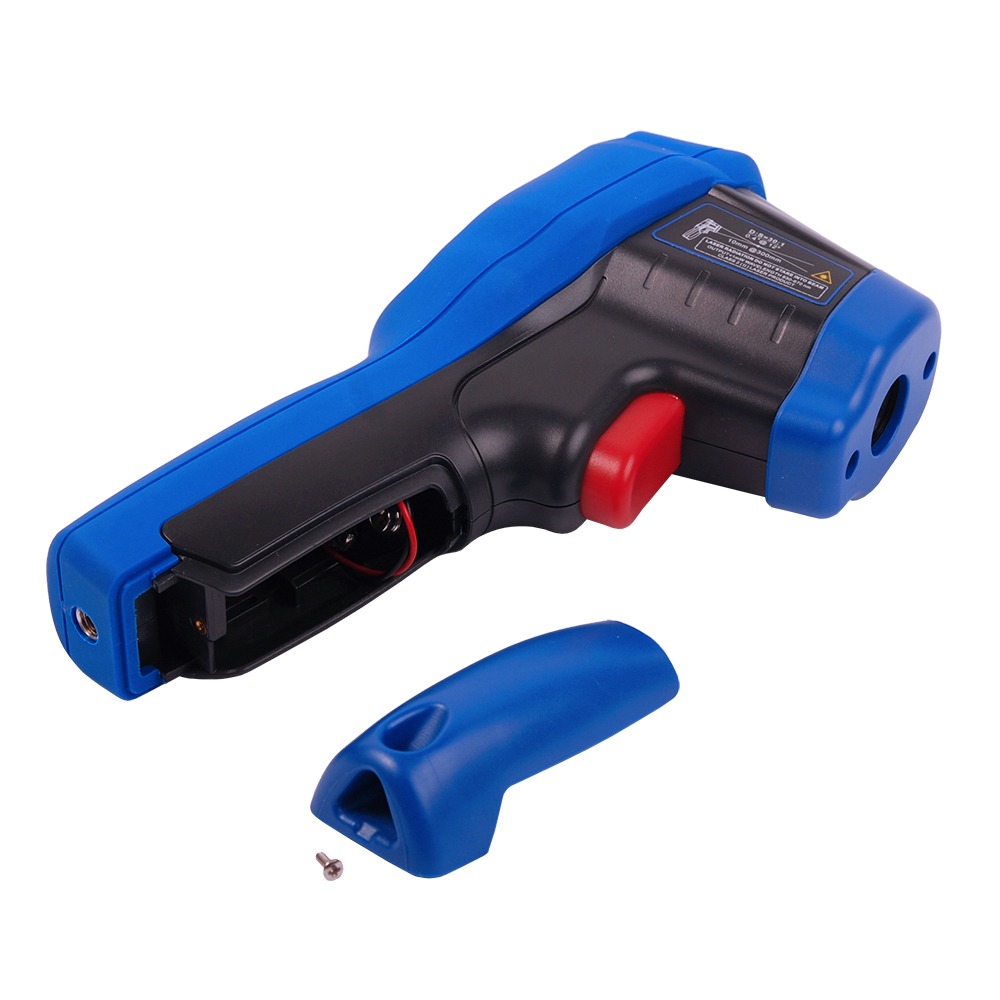
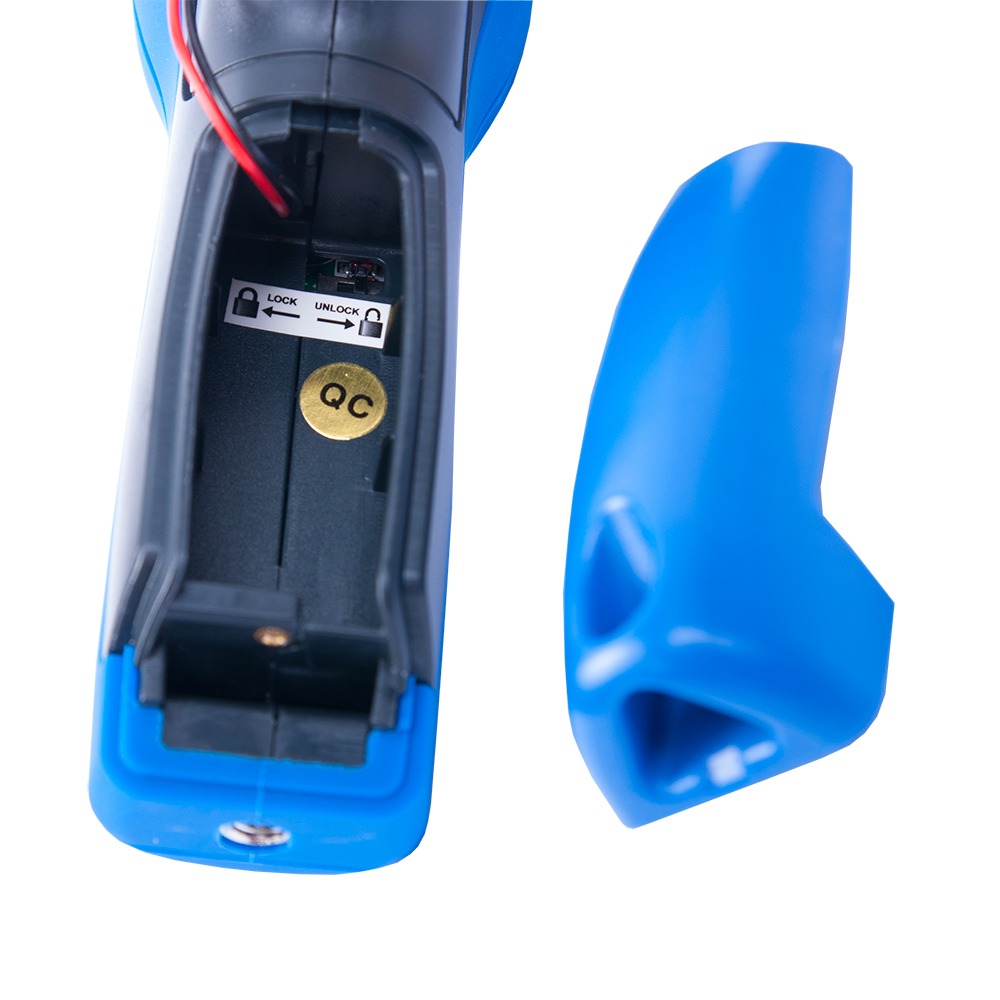
- 9V battery isn't everyone's favorite
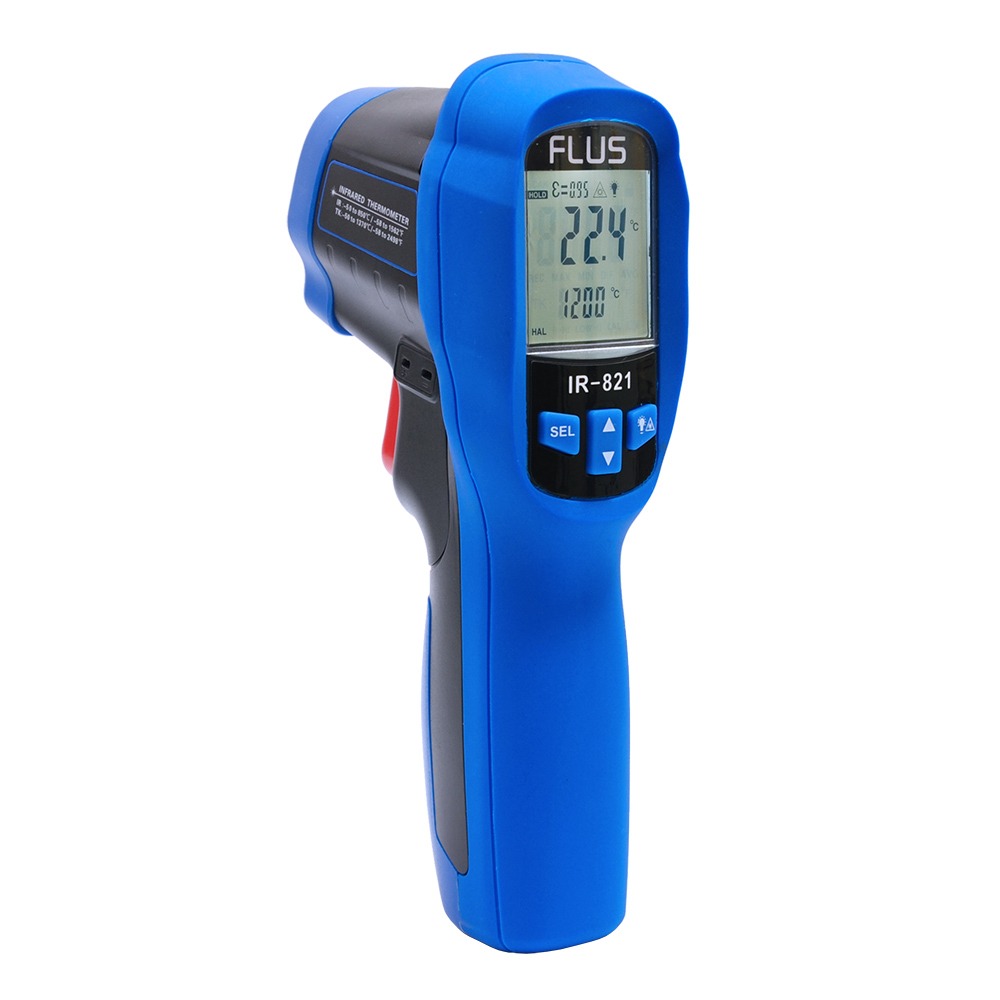
FLUS IR-821 is a pyrometer that doesn't pretend one mode does it all
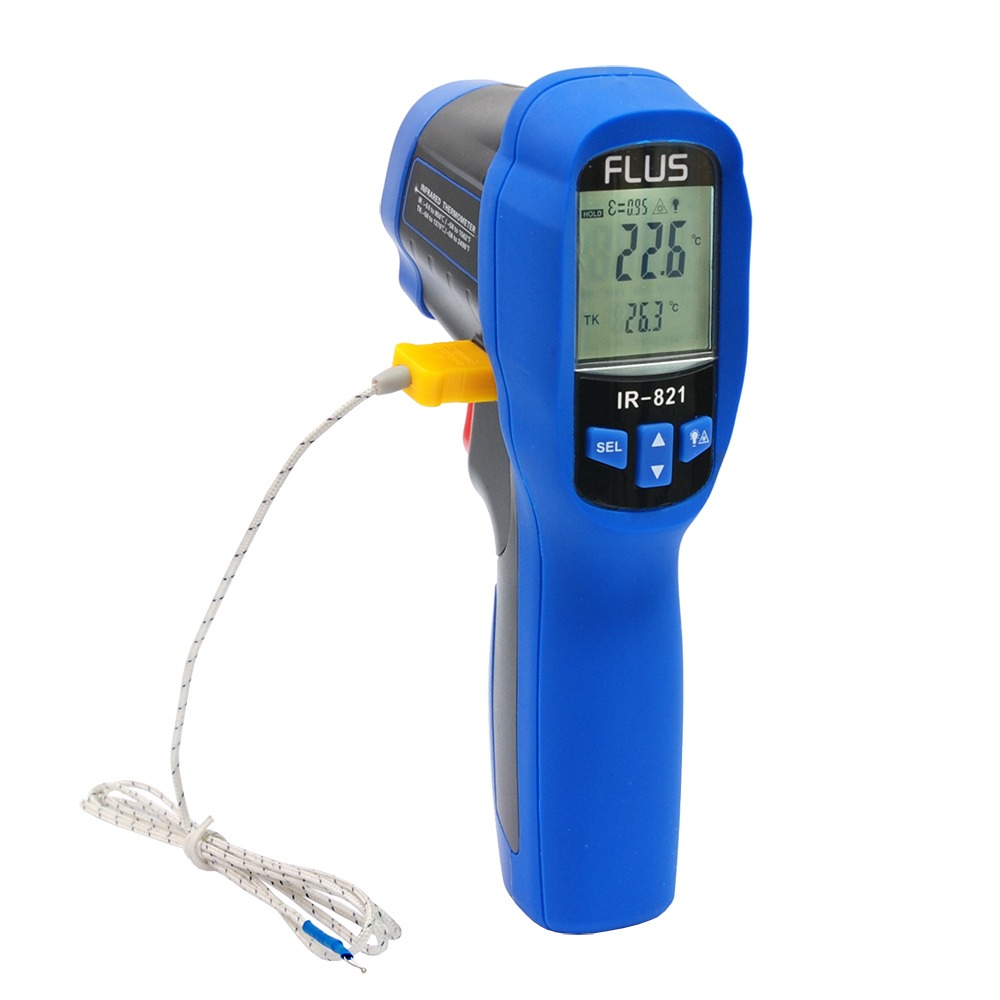
The FLUS IR-821 is an industrial infrared thermometer (pyrometer) with a very practical bonus: a K-type thermocouple input. That gives you two ways to measure: quickly take a non-contact reading of a surface or use the probe to make proper contact where IR readings can become unreliable (shiny metal, small parts, internal temperatures, airflow, and so on).

Two measurement methods: non-contact IR and contact (thermocouple)
In non-contact mode, the IR-821 measures surface temperatures in the range of -50…+850 °C. It's ideal for quick checks of motors, bearings, heaters, terminals, transformers, pipes, radiators, molds, furnaces, and anything else you don't want to touch.
When you need to know what's really going on, there's a second mode: a K-type thermocouple with a range of -50…+1370 °C. Contact measurement is your plan B for difficult surfaces and situations where IR readings depend heavily on emissivity settings.
30:1 (D:S): why it matters and how to hit your target
The optical ratio of D:S = 30:1 means that the farther away you are, the larger the measurement spot. As a guide, at a distance of ~30 cm, the measurement spot is about ~1 cm in diameter; at ~3 m, it's about ~10 cm. So if your target is small (say, a circuit board trace or a thin wire), move closer. Otherwise, the instrument will faithfully average the target's temperature with that of the background.
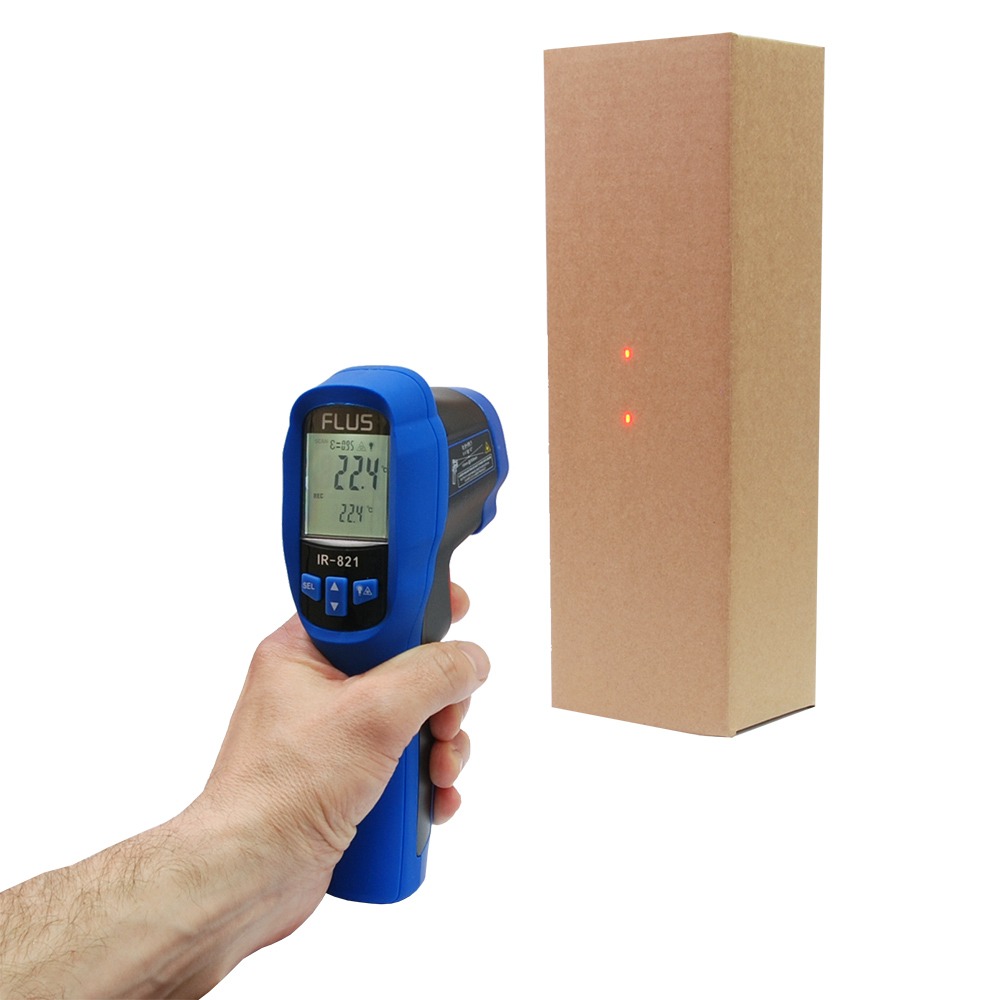
The two laser beams aren't just for looks: they help you see where you're aiming and roughly how much area the optics cover.
Emissivity (ε) 0.1–1.0: the key to accurate readings
The IR-821 has an adjustable emissivity of 0.1…1.0. Without exaggeration, this is its most important feature for working with different materials. Matte paint, brick, and concrete are usually easier to measure, while polished aluminum or shiny stainless steel can produce all sorts of readings if the emissivity setting is inappropriate.
A useful tip: if possible, stick a piece of matte tape or electrical tape onto the metal, let it warm up, and measure the tape. Or choose ε using a materials table. For a quick reference to typical values, use the emissivity table (PDF).
Features you'll actually use, not just find in the menu
The FLUS IR-821 can display MAX/MIN/AVG and calculate DIF (the temperature difference). It also has a backlight, HOLD, an audible alarm when readings fall outside the set range, and internal memory for 12 readings. It also features automatic shutoff to help conserve battery power.


Accuracy and common sense: where the IR-821 shines and where a thermocouple is better
The stated IR accuracy is up to 0 °C: ±4 °C, and above 0 °C: ±1.5% of reading ±2 °C. For the thermocouple, it's ±1.5% ±1 °C (and much depends on the thermocouple itself and its contact with the surface).
A practical rule: use IR for quick diagnostics. If you need a reading for documentation or calibration, or the surface is problematic, confirm it with a thermocouple. And no, a pyrometer won't measure the temperature inside a burger patty, no matter how nicely you ask.
Who the FLUS IR-821 is for
This is a good option for electricians, HVAC and service technicians, repair professionals, production facilities, labs, and workshops with both hot surfaces and situations where a probe needs to make contact. The range up to +850 °C is sufficient for many industrial tasks, while the K-type range up to +1370 °C provides plenty of headroom for contact measurements.