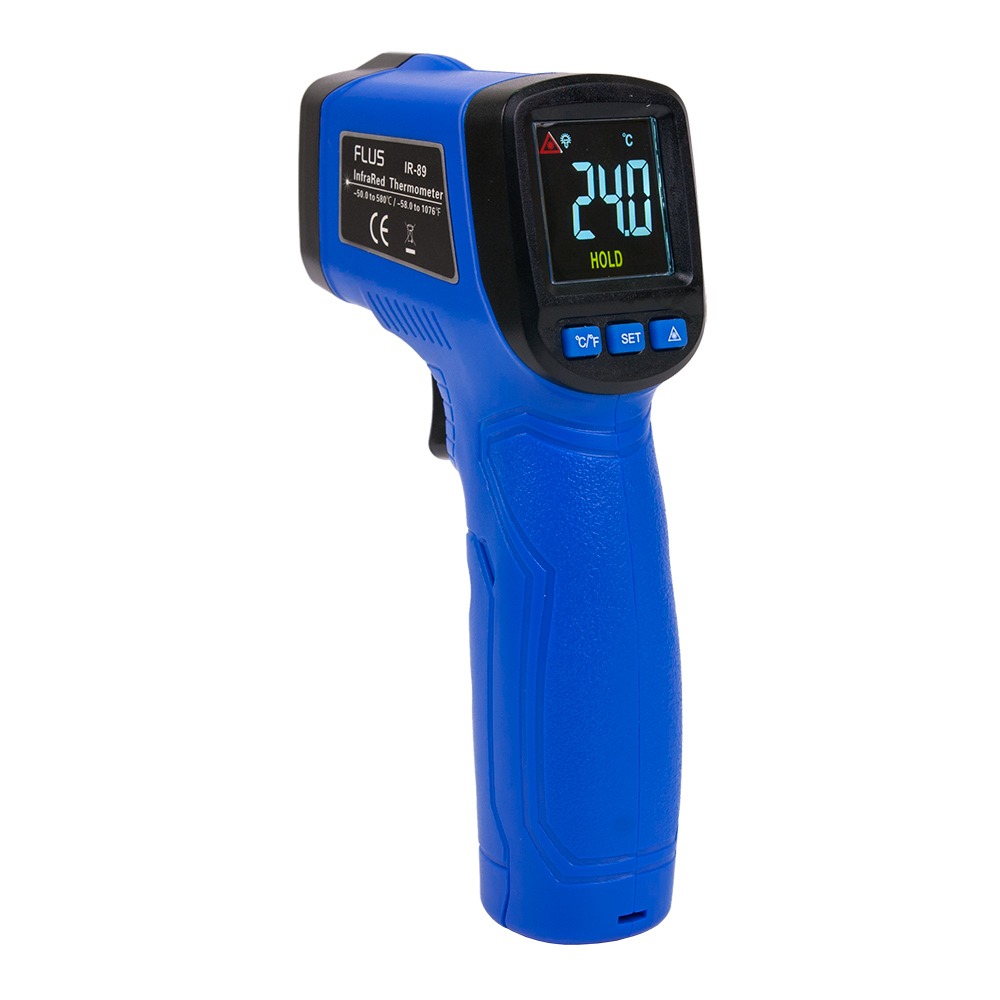
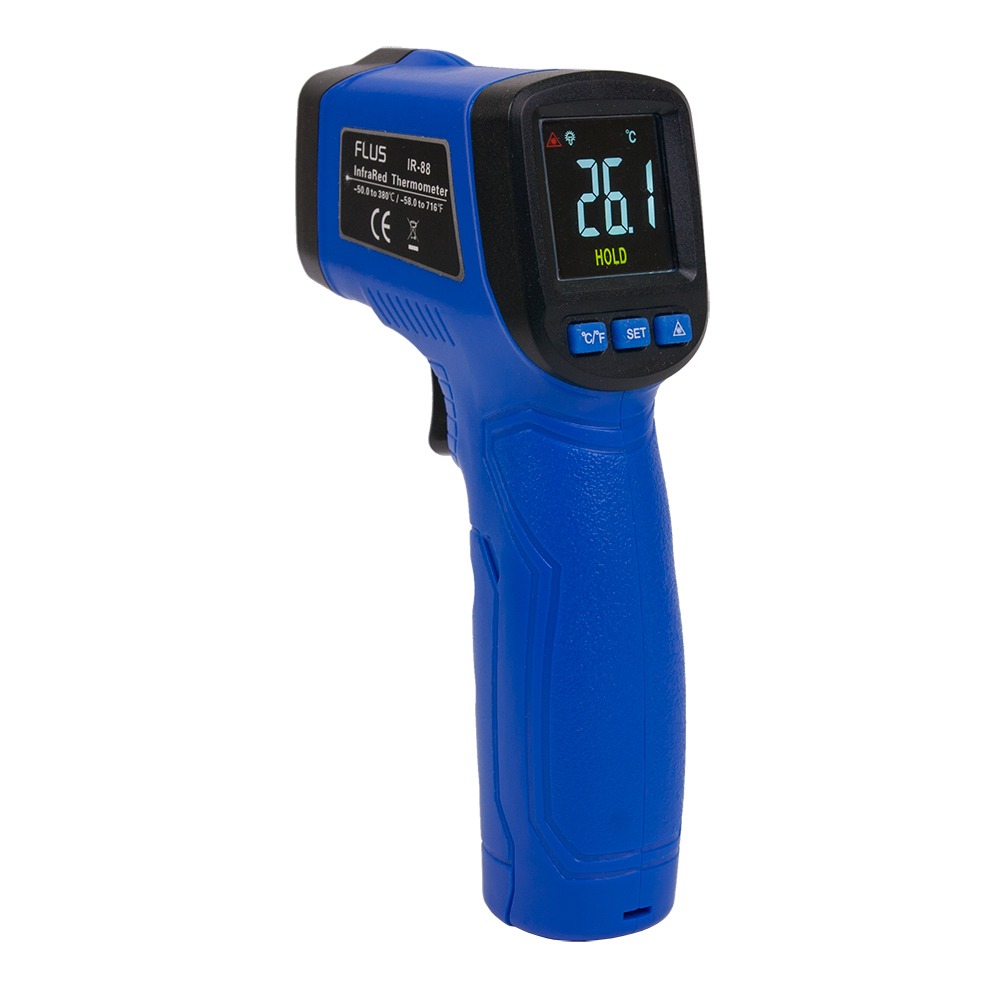
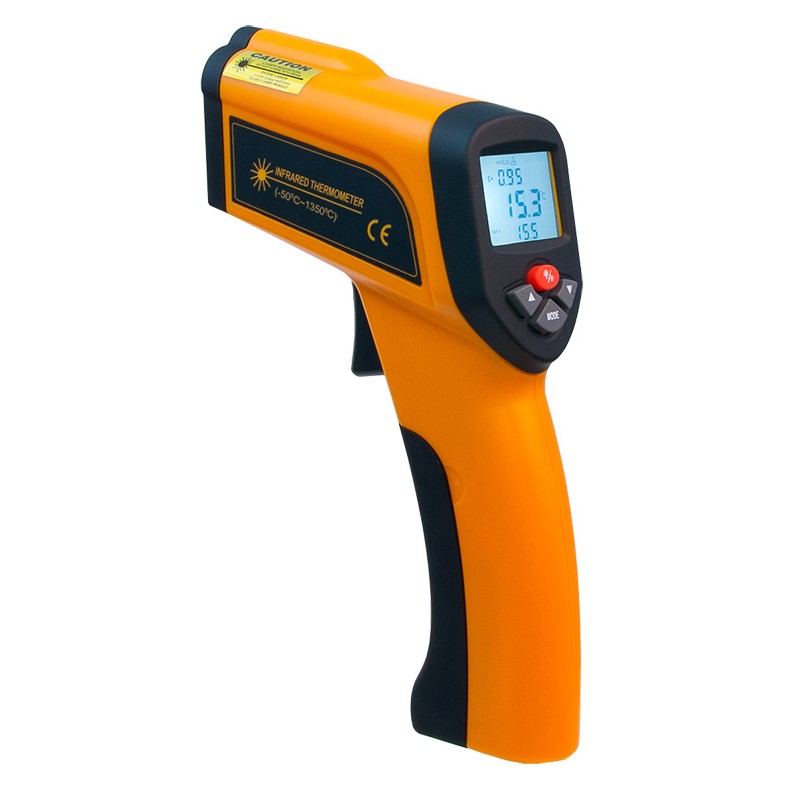
Flus IR-828
Delivery and payment
Choose your city or town to see the price with delivery there and when you can get it.
Pickup points
- Branch
- Parcel locker
Pros
- Wide range up to +850 °C
- Adjustable emissivity from 0.10–1.00
- 12:1 optics for measuring at a distance
- Fast 0.5 s measurement
- Backlight and MAX/MIN
Cons
- Not for measuring body temperature
- Shiny metal gives misleading readings without emissivity adjustment
- Measures only the surface
IR-828 is a “temperature gun” for surfaces, not people
The IR-828 infrared thermometer (often called a pyrometer) comes in handy when you need a temperature reading but don't want to touch something hot or dangerous. It measures surface temperature using thermal radiation in the 8–14 µm range, and it does so quickly, in about 0.5 seconds.
This is not a medical thermometer: foreheads, ears, children and cats are not its specialty. But ovens, radiators, engines, bearings, heated floors, electrical panels, heat exchangers, pipelines, and “what's heating up and why?” are right up its alley.
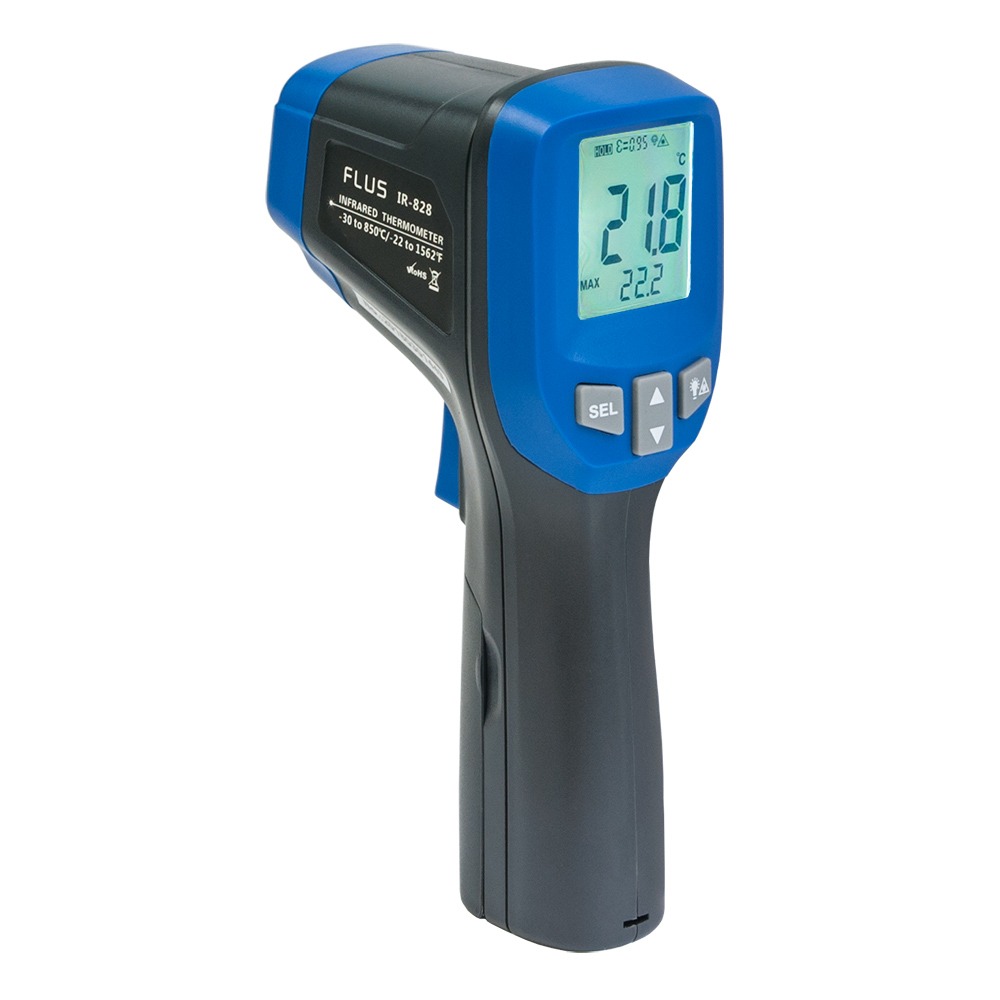
12:1 optics: the key to accuracy (the spot matters more than the laser)
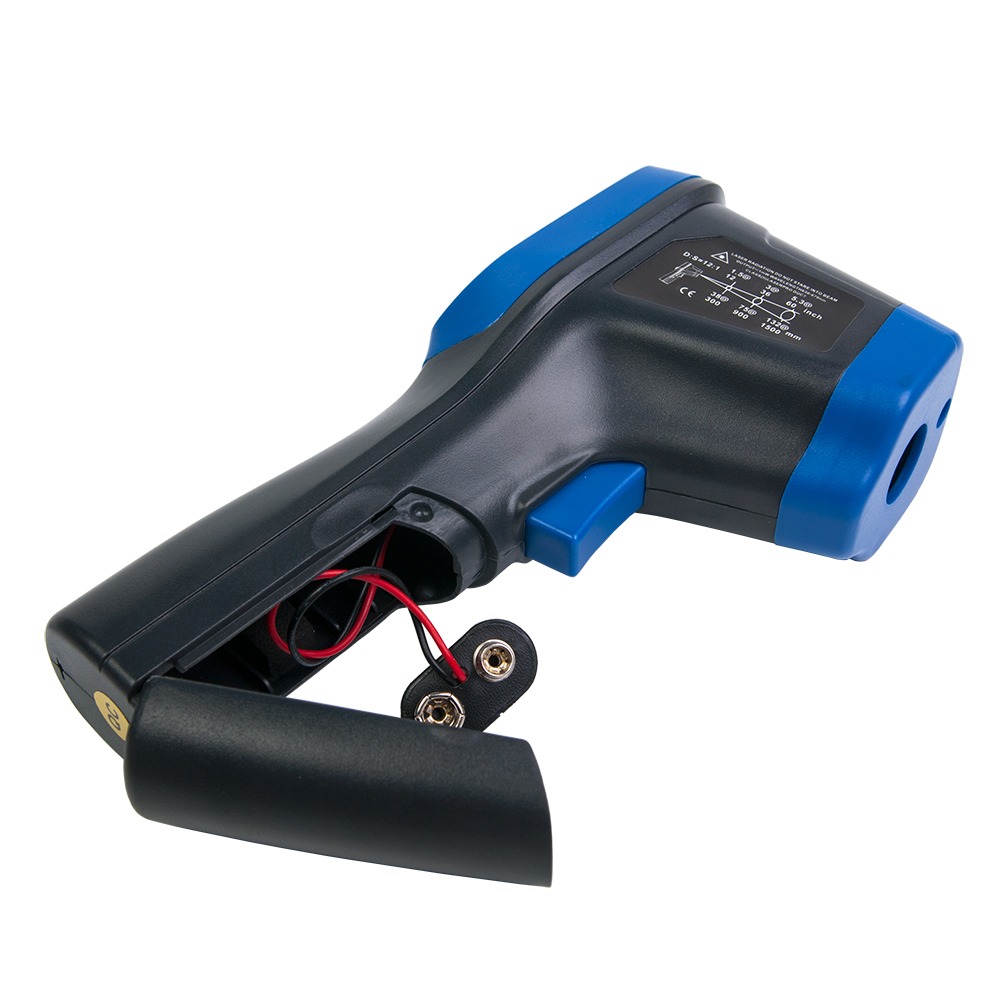
A key feature of the IR-828 is its 12:1 distance-to-spot ratio (D:S). Simply put, the farther away you stand, the larger the surface “spot” the device averages into a single reading.
As a guide: spot diameter ≈ distance / 12.
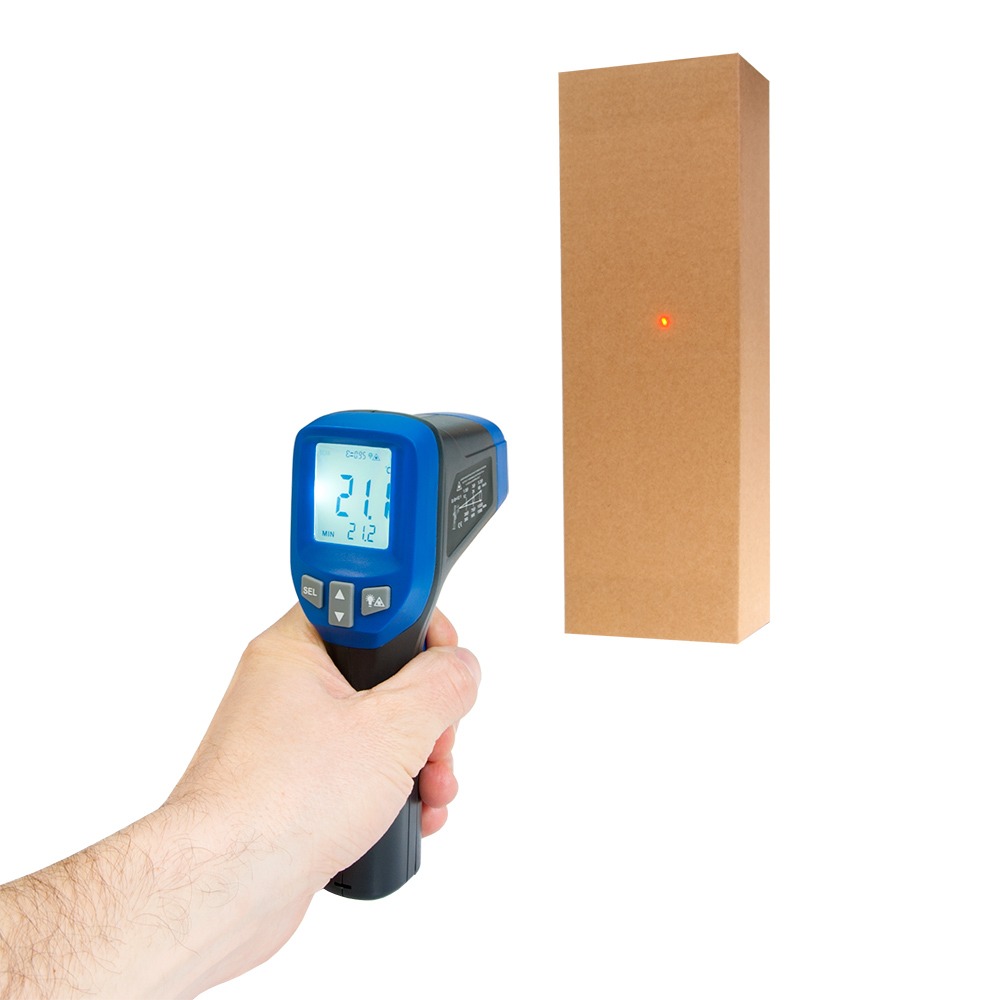
For example, from 60 cm away, you're reading a circle approximately 5 cm in diameter. If you need to measure a small terminal or a thin tube, you'll have to move closer; otherwise, the surrounding background will be mixed into the reading.
The laser is only an aiming guide (a single point), not the “measurement point.” The device always measures an area, not the red dot.
Emissivity 0.10–1.00: an “honesty setting” for different materials
The most common reason people are disappointed with IR thermometers is not a “bad device,” but an incorrect emissivity setting (a measure of how well a surface emits radiation). The IR-828 lets you adjust emissivity from 0.10 to 1.00, a major advantage over models fixed at 0.95.
In practice, it's simple:
— Painted, matte and oxidized surfaces usually measure well (emissivity around 0.95).
— Polished or shiny metal often gives a low temperature reading (low emissivity + reflection). A handy trick: apply a piece of painter's tape or matte black electrical tape, let it warm up, and measure the tape (an emissivity of ~0.95 is often used for tape).
For a quick reference, keep a material emissivity table handy (such as the one at Engineering ToolBox).
Everyday features
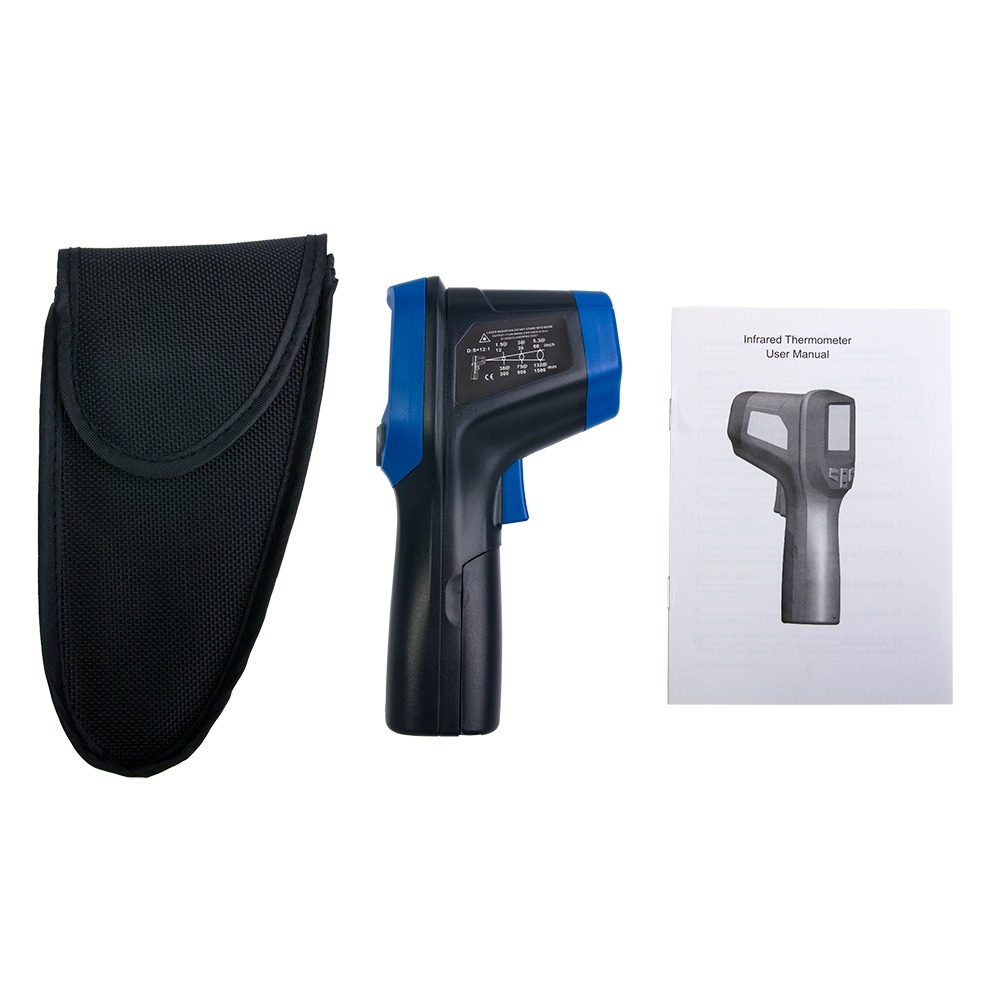
The IR-828 has a backlit display, ℃/℉ switching, and battery status and out-of-range indicators. Useful modes include MIN/MAX memory, handy for catching heating peaks or comparing “before and after.”
There's auto power-off too, so the device won't drain the battery if real life distracts you.
Who will find it most useful
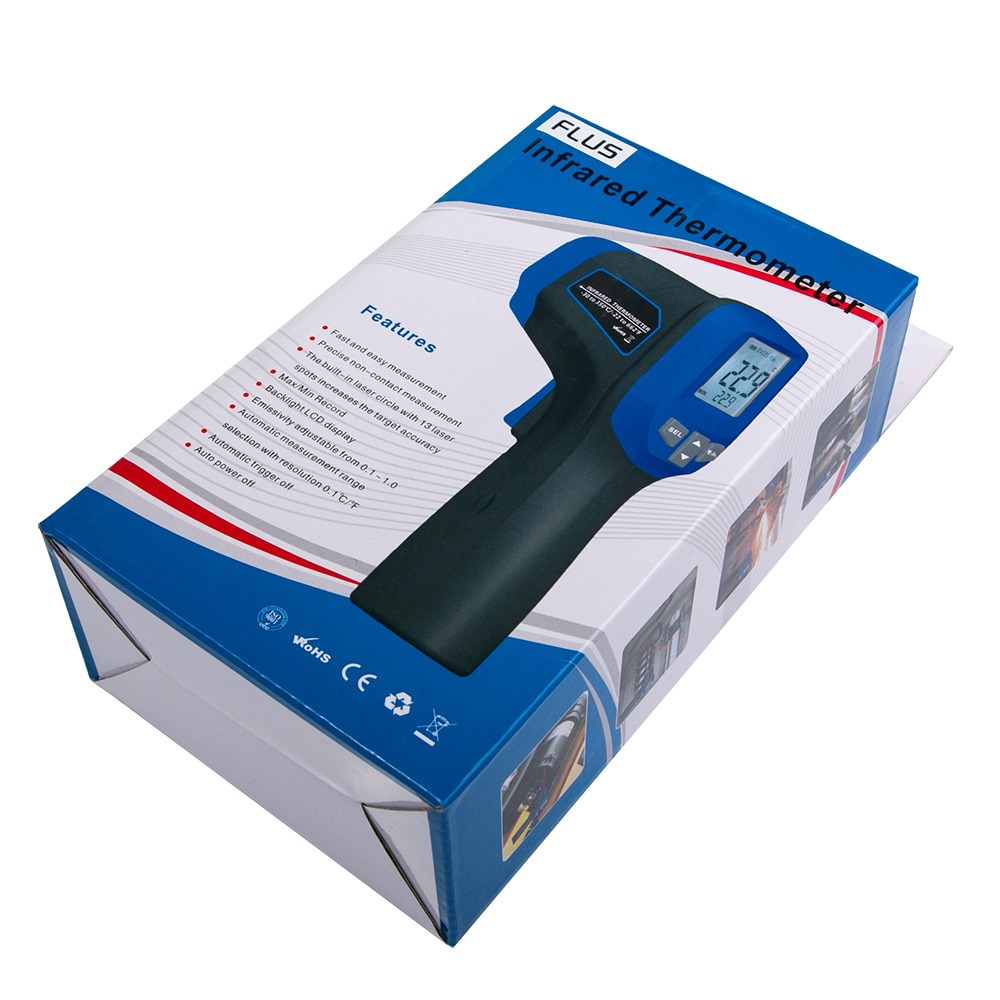
The IR-828 is a good working tool for a technician, auto mechanic, electrician, HVAC specialist, or anyone who loves measuring everything in sight (and has every right to do so).
It's especially useful for:
— checking terminals, circuit breakers and contacts for overheating without touching them;
— monitoring the temperature of radiators, pipes and heated floors;
— diagnosing engines, bearings and brake discs;
— measuring ovens, grills and heating surfaces (accounting for emissivity).
Accuracy cheat sheet (so you don't have to argue with physics)
1) Move closer if the object is small (remember 12:1).
2) Set the emissivity for the material or use tape or paint to get a “normal” emissivity.
3) Don't measure through glass or film: the device doesn't see “through” them; it sees what emits radiation.
4) Let the device and object acclimate if they've been brought in from freezing temperatures (sudden environmental changes increase measurement error).