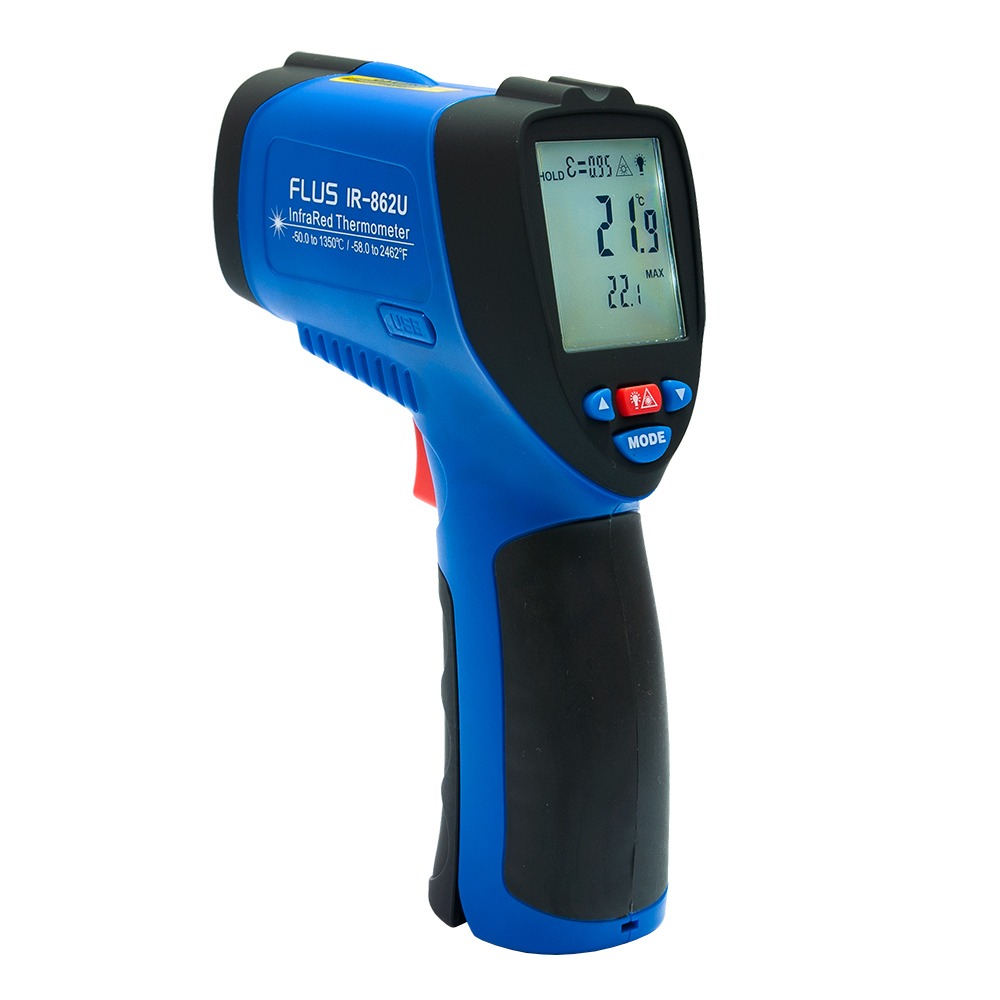
Flus IR-862U
Delivery and payment
Choose your city or town to see the price with delivery there and when you can get it.
Pickup points
- Branch
- Parcel locker
Pros
- Range up to 1350 °C
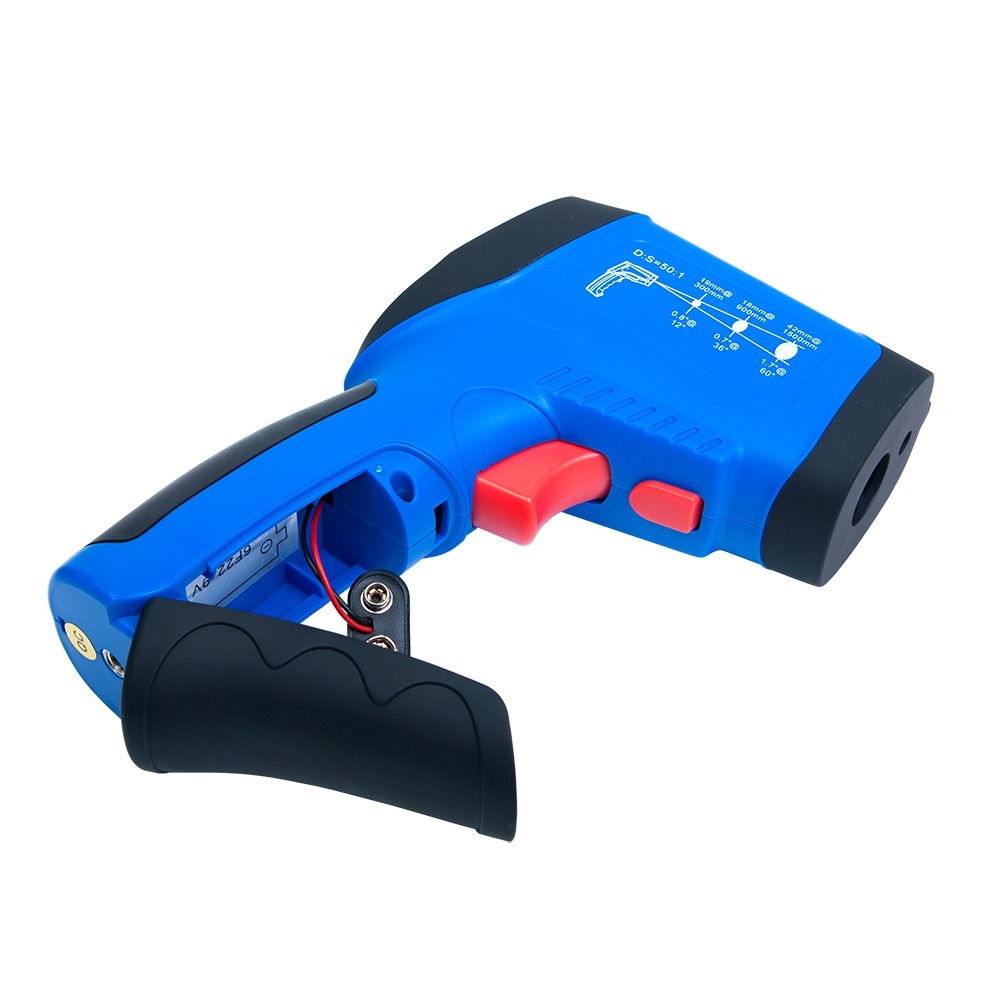
- 50:1 optics for measurements at a distance
- Adjustable emissivity from 0.10–1.00
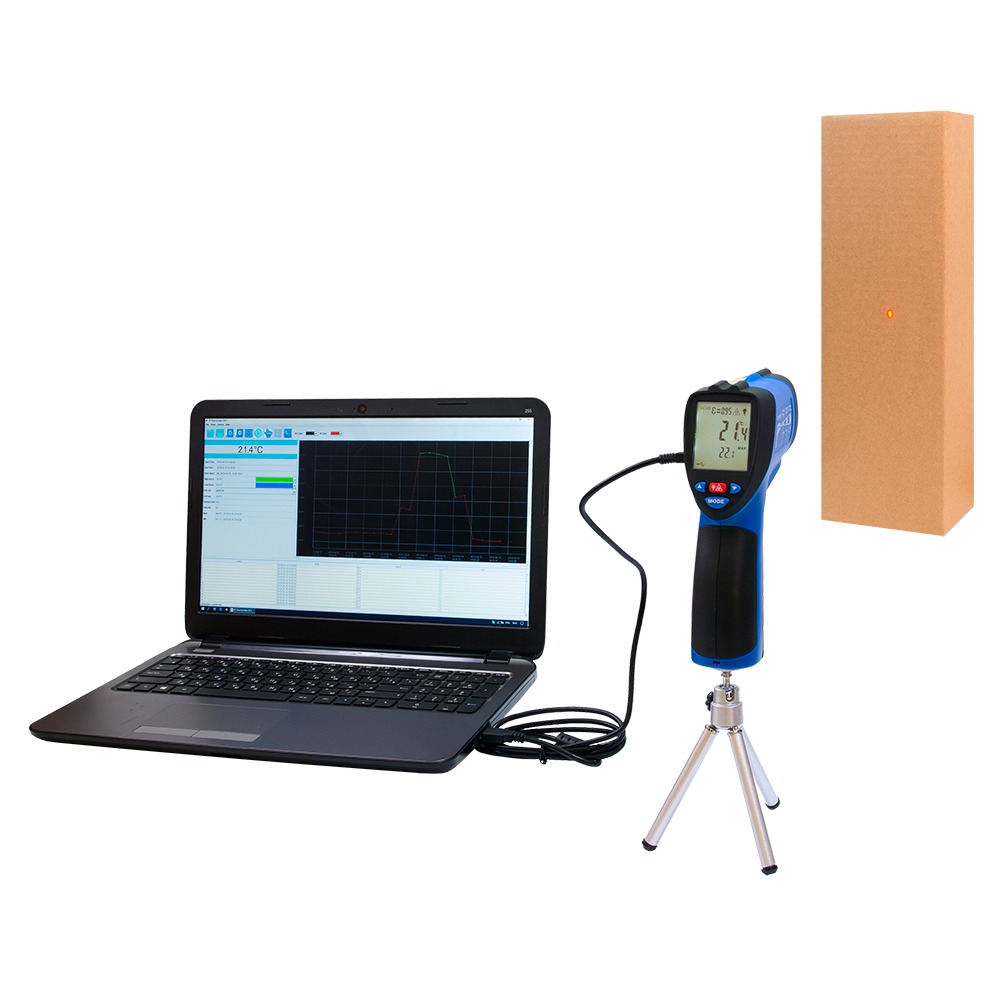
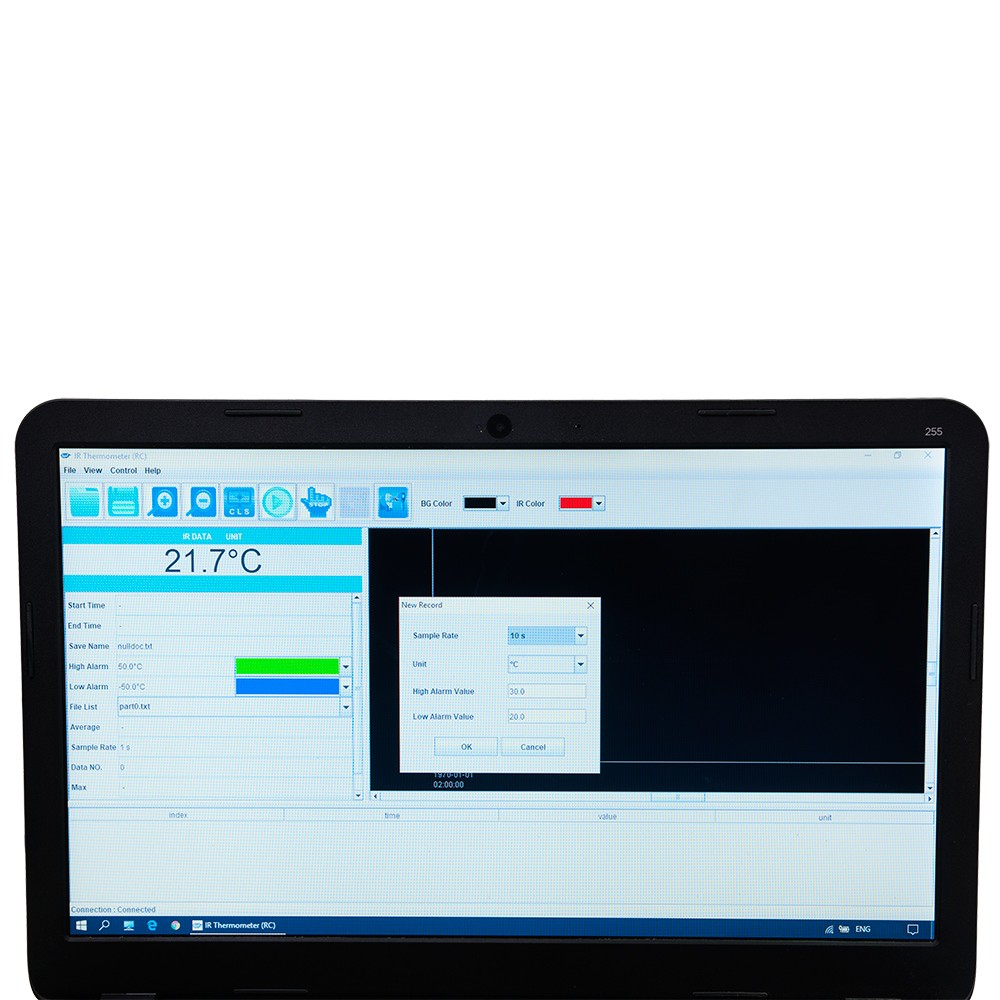
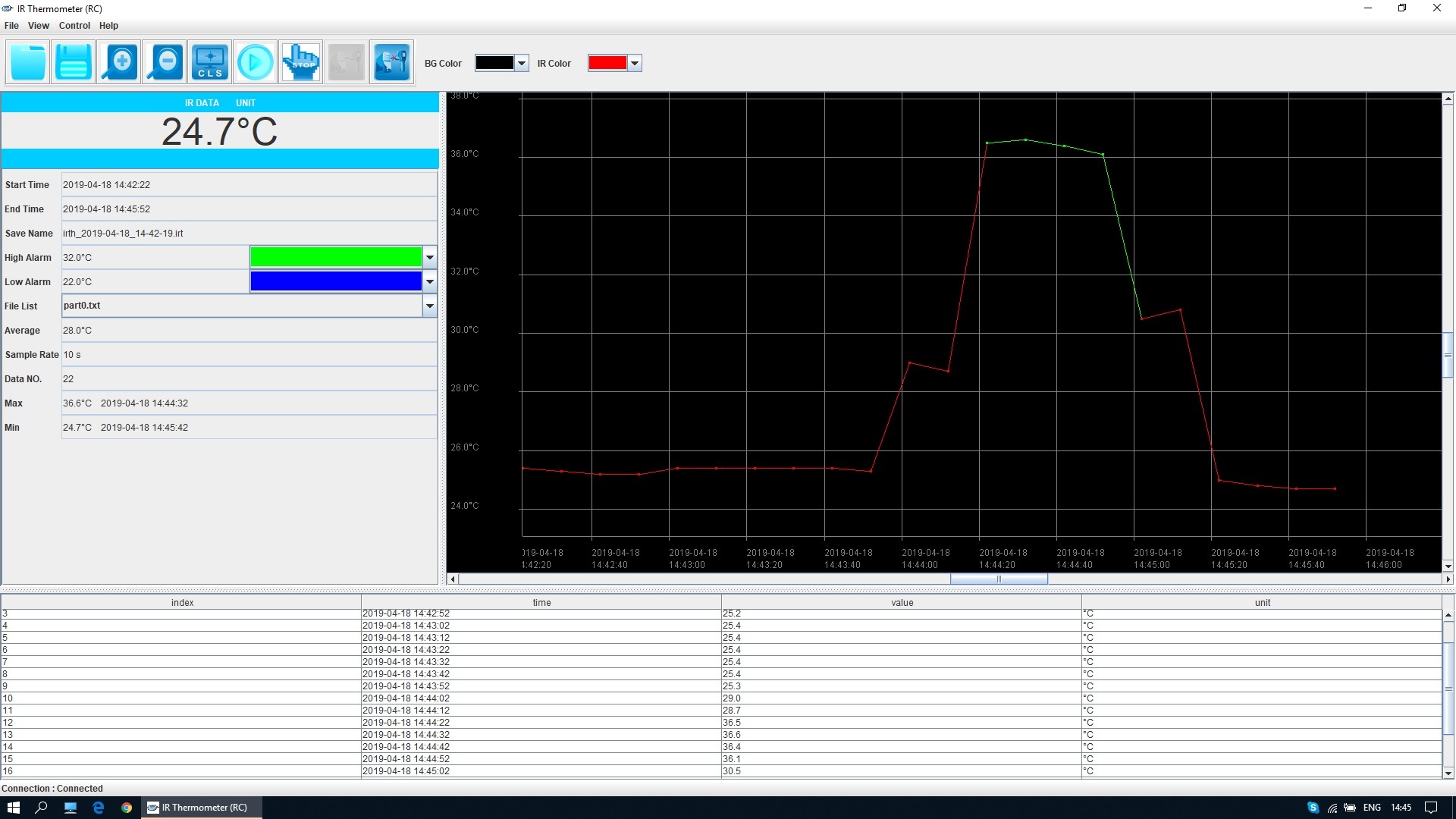
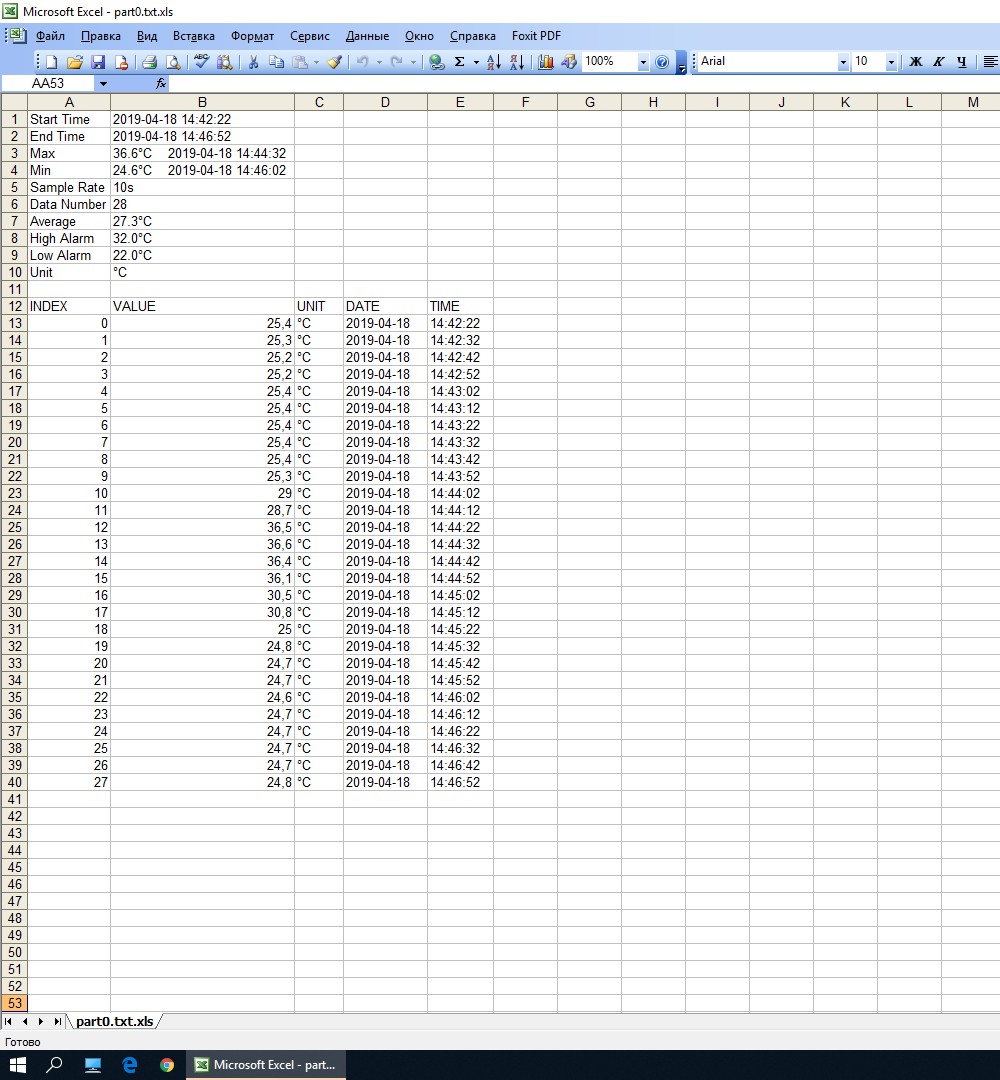
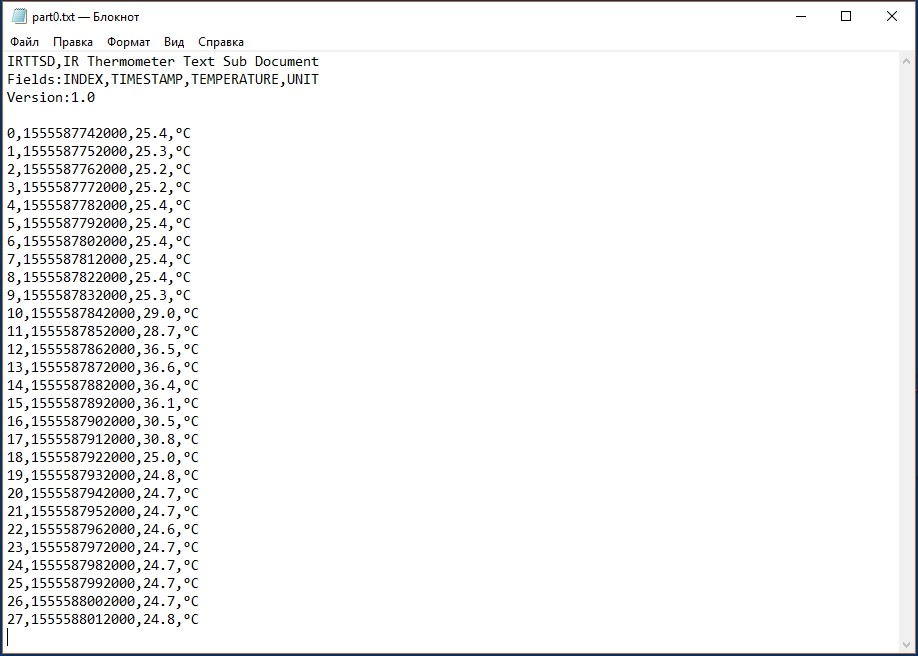
- USB data logging: graphs on a PC
- Fast response <250 ms
Cons
- Surface temperature only
- Metals give misleading readings without emissivity adjustment
- Power: 9V battery
What is the FLUS IR-862U and who really needs it?
The FLUS IR-862U is a high-temperature non-contact pyrometer (an infrared “gun”) that measures surface temperatures from -50 to +1350 °C and connects to a computer via USB to work as a simple temperature recorder/logger. This is not a tool for “measuring a remote control battery,” but one for technical processes: furnaces, heating elements, boilers, bearings, gearboxes, electrical panels, and hard-to-reach or live areas where touching is dangerous or impractical.

The main feature: 50:1 is about targeting accuracy, not showing off
With pyrometers, it is not just the maximum temperature that matters. The D:S (Distance to Spot) ratio, which compares the distance to the diameter of the measurement spot, is important too. Here it is 50:1. In practical terms, this means:
At 1 m, you measure a spot approximately 2 cm across;
At 5 m, the spot is approximately 10 cm across;
At 10 m, the spot is approximately 20 cm across.
This matters: if the target is small and the spot includes the background, you will get the temperature of a mixture of the target and its surroundings. The IR-862U is therefore well suited to measuring from a distance and/or measuring smaller objects than budget 12:1–20:1 models allow.
Accuracy and speed: how it performs
The pyrometer responds quickly (less than 250 ms) and has a backlit display and a laser pointer for aiming. Its accuracy depends on the range. As is typical at high temperatures, the hotter the surface, the more the percentage error matters.
It also offers useful display and statistics modes such as MAX/MIN/AVG/DIF (maximum/minimum/average/difference). These are handy for industrial diagnostics: aim at a component, scan it, and see the peaks and variation immediately.
Emissivity (ε): why hot metal can suddenly read “cold”
The IR-862U lets you manually set emissivity from 0.10 to 1.00 in small increments. This matters because an infrared thermometer does not “see” temperature directly; it interprets the infrared radiation emitted by the surface.
Two practical tips for getting realistic readings:
1) Shiny or polished metals are notorious for reading too low. For greater accuracy, apply matte black heat-resistant tape or paint at the measurement point (or use a soot or oxide layer if available).
2) Measure at an angle as close to perpendicular as possible, and avoid catching reflections of hot furnaces or burners on glossy surfaces. The pyrometer may accurately measure the reflection instead.
USB and logger mode: when you need to monitor, not just measure once
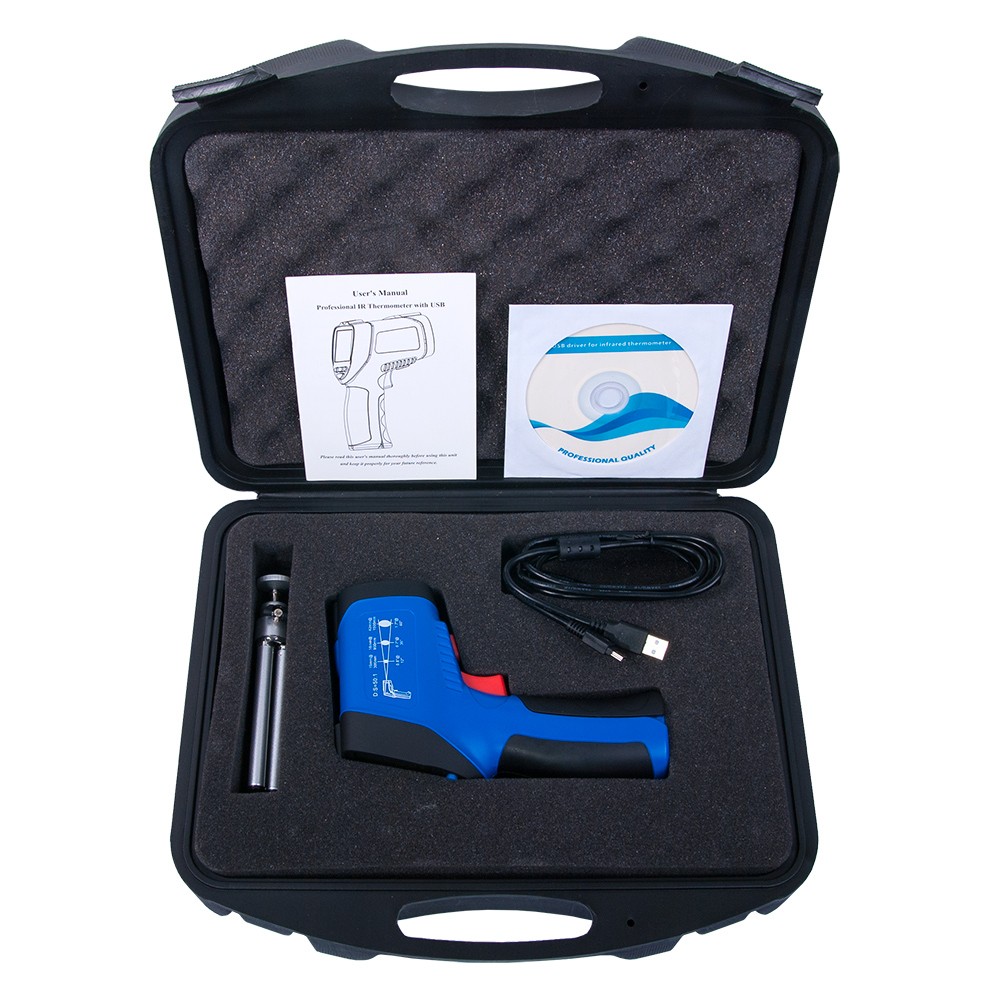
One reason to choose the IR-862U is its ability to connect to a PC via USB and monitor and record temperature over time. This is useful for tests (heating and cooling), selecting operating settings, checking stability, or documenting results with a graph. A USB cable and software are usually included.
A tripod is more than just an accessory for photos here; it is genuinely useful. If you need to log for 30–60 minutes, holding the device by hand can get tiring.


A quick, painless guide to measuring correctly
Step 1: Set ε for the material, or mark the surface with matte tape or paint and set ε closer to 0.95–1.00.
Step 2: Move close enough that the measurement spot fits entirely within the target (remember the 50:1 ratio).
Step 3: Turn on the backlight if it is dark and scan the area while watching MAX/MIN to make hot spots easier to find.
Step 4: If you need to track changes over time, connect via USB and log at an interval suited to the process: seconds for rapid changes, tens of seconds for slow ones.
Summary
The FLUS IR-862U is a dependable workhorse when you need high-temperature measurement, capable 50:1 optics, and computer recording. It is not a medical thermometer or a kitchen toy, but a tool for technical tasks. If you often work with heated surfaces, look for overheating in equipment, or want to log temperature conditions, this model handles most typical scenarios without fuss (apart from the ever-present issue of emissivity, which applies to any pyrometer).