FLUS IR-863
Delivery and payment
Choose your city or town to see the price with delivery there and when you can get it.
Pickup points
- Branch
- Parcel locker
Pros
- Measurement range up to 1650 °C
- 50:1 distance-to-spot ratio for measuring from afar
- Adjustable emissivity from 0.10–1.00
- Fast 250 ms response time
- Case and tripod included
Cons
- Laser does not outline the measurement spot
- No memory or USB
- Accuracy depends on the surface
A pyrometer for temperatures where an ordinary thermometer is best left in the drawer
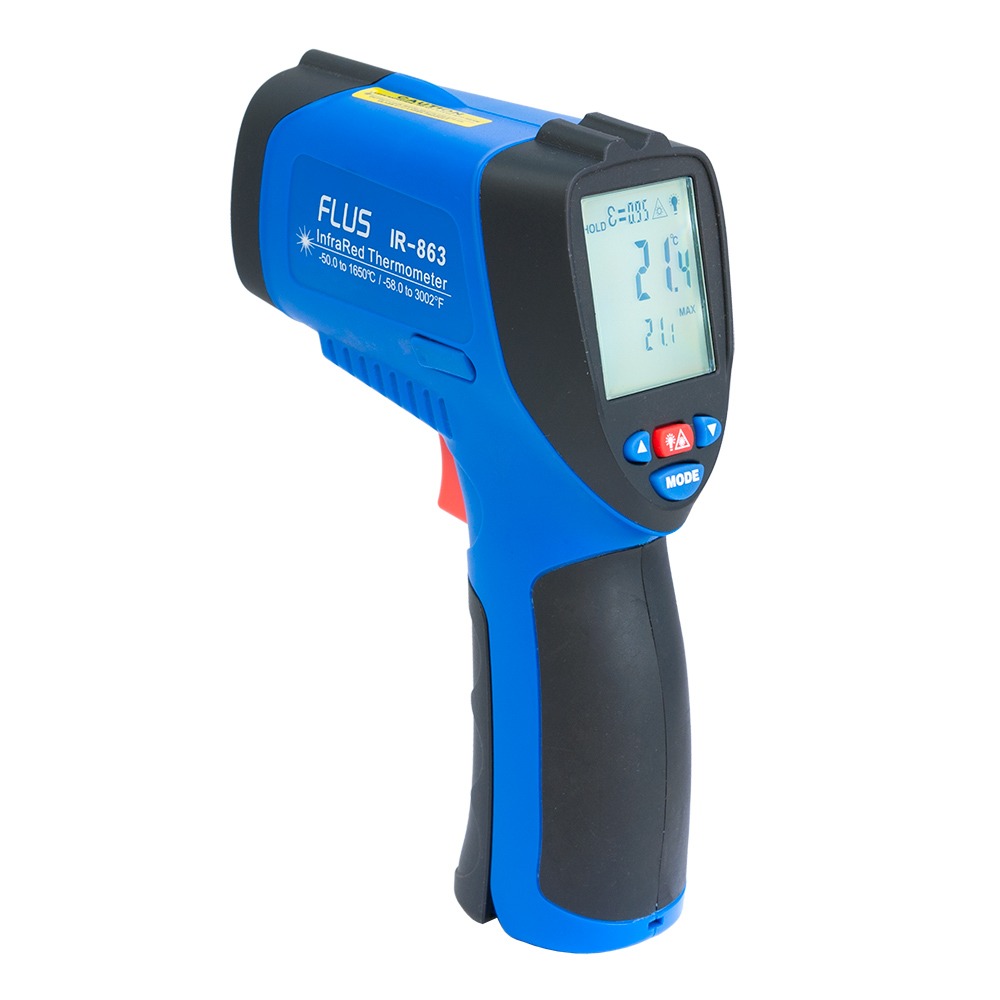
The FLUS IR-863 is an industrial infrared pyrometer with a pistol-grip housing, designed for remote monitoring of hot surfaces. Its operating range is -50 to +1650 °C, making it suitable for foundry work, metal heat treatment, furnaces, boilers, chimneys, heated machine components, and other processes where getting too close is a bad idea.
This is a surface temperature meter. It does not measure the temperature inside a material or the air temperature, and it is not intended for medical measurements. It can, however, quickly show how hot an object, part, or section of equipment is from a safe distance.
Long-distance measurement without losing control
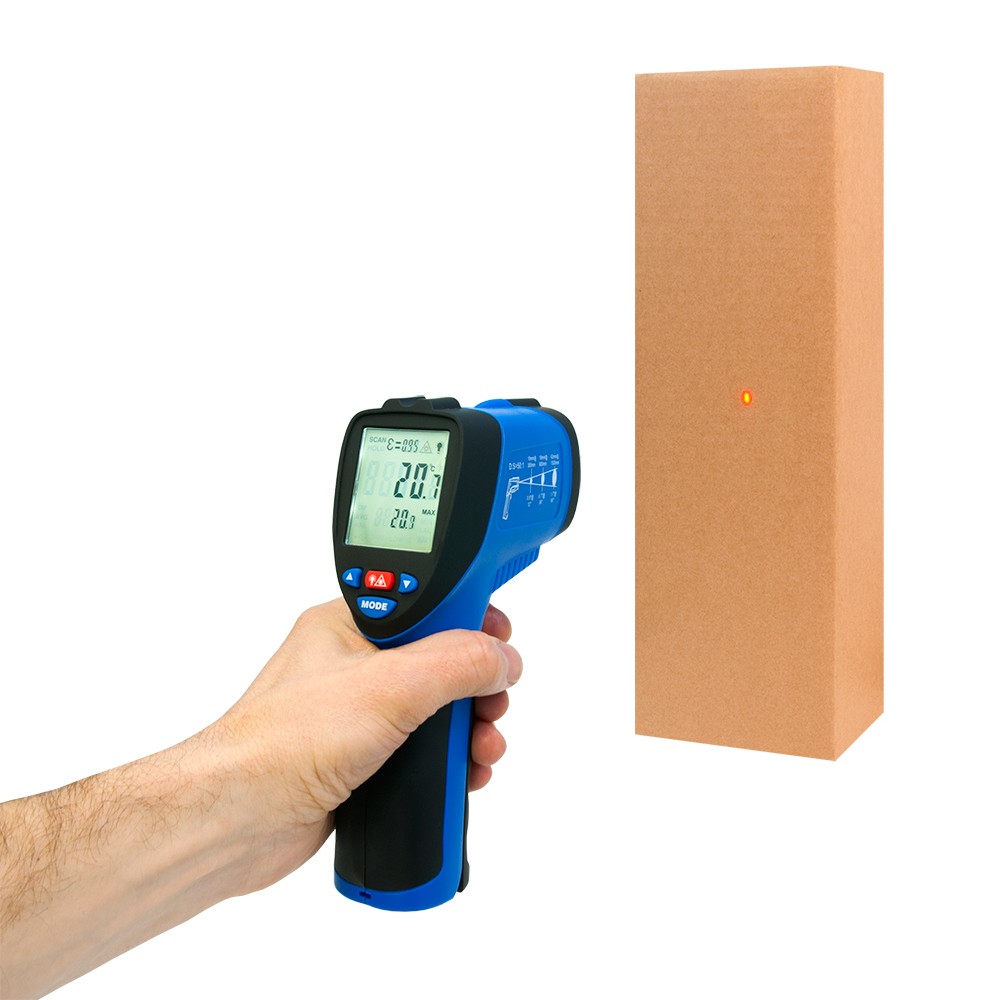
The model's main strength is its 50:1 distance-to-spot ratio. This means that at a distance of 5 m, the device measures a spot approximately 10 cm in diameter, and at 10 m, a spot about 20 cm in diameter. The farther away the operator stands, the larger the area measured; the object or hot section of interest must fill the entire spot.
The single-beam laser helps aim at the center of the target, but it does not show the actual diameter of the measurement spot. For small parts, it's better to shorten the distance than to assume the red dot measures everything around it. The pyrometer operates in the 8–14 μm spectral range and updates its readings in approximately 250 ms.
Emissivity: the setting that separates measuring from guessing
The IR-863 lets you manually set the emissivity coefficient from 0.10 to 1.00. This matters when working with different materials: matte paint, concrete, brick, and oxidized metal emit heat differently than polished steel, aluminum, or shiny foil. Choosing the correct value is especially important for glossy metals, as they readily reflect thermal radiation from their surroundings.
The stated accuracy depends on the temperature range and is specified at an ambient temperature of 23–27 °C: ±3 °C from -50 to 0 °C; ±(1% of reading + 1 °C) from 0 to 500 °C; ±(1.5% of reading + 2 °C) from 500 to 1000 °C; ±(2% of reading + 2 °C) above 1000 °C. Resolution is 0.1 °C up to 1000 °C and 1 °C above that threshold, but a fine display increment does not override the physics of emissivity.
Display, functions, and everyday use
The backlit three-line LCD is well suited to a workshop, boiler room, or dimly lit technical space. The main temperature reading appears in large digits, while the device also shows the selected emissivity coefficient, laser status, battery level, and results from the auxiliary modes.
The model can capture maximum, minimum, and average values, as well as the difference between readings, using MAX, MIN, AVG, and DIF modes. It also has adjustable upper and lower alarm limits, °C and °F switching, an overrange indicator, and automatic shutoff after 20 seconds of inactivity. There is no internal memory or computer connection: the FLUS IR-863 is designed for quick checks, not for logging measurements.
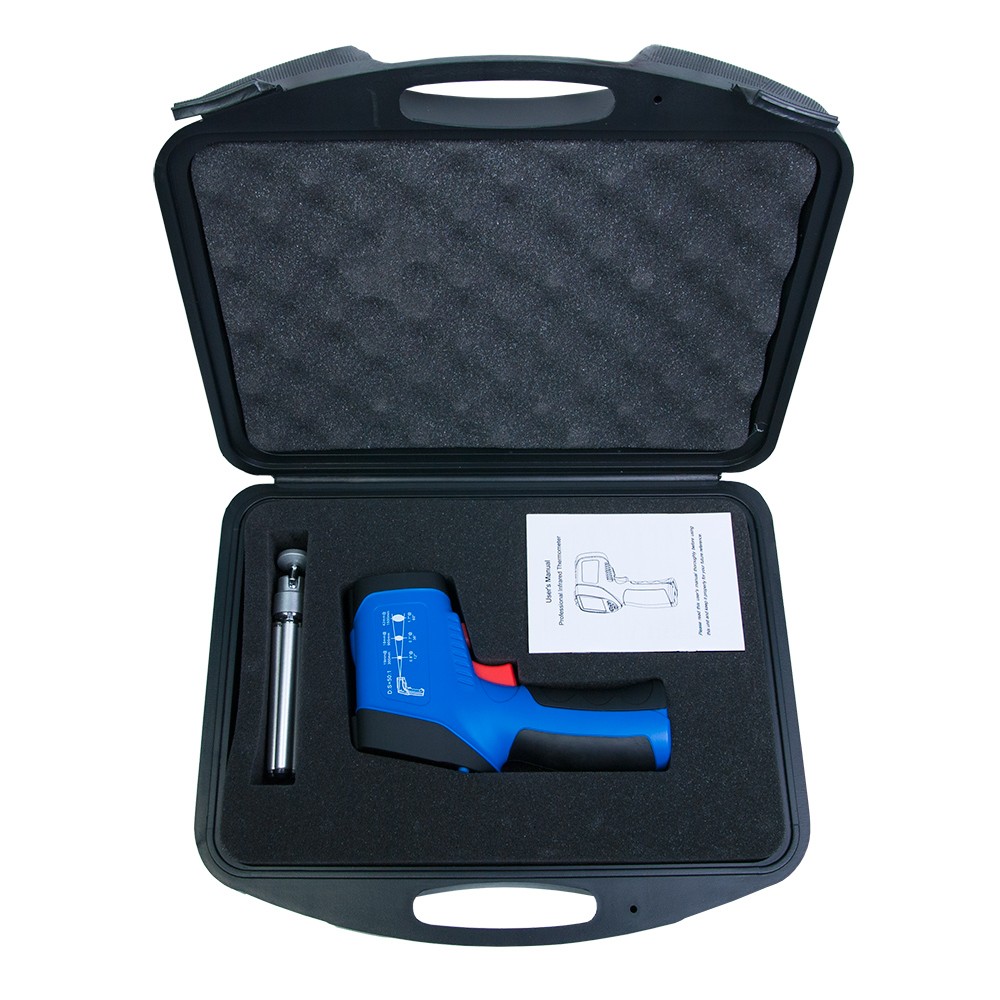
Housing and included accessories
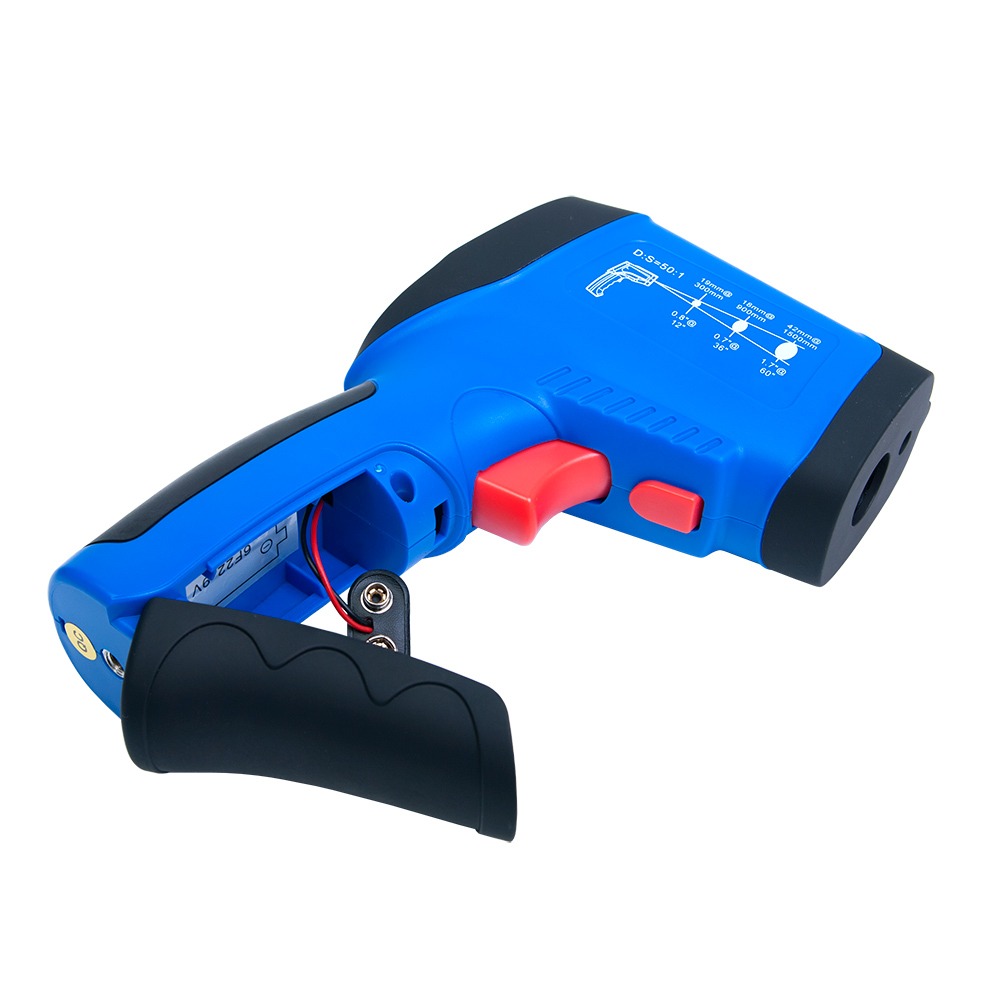
The housing weighs approximately 290 g and measures 19.15 × 12.6 × 6 cm. The grip has rubber inserts and sits comfortably in the hand, while the trigger allows you to take measurements with a series of quick presses. It is powered by one 9-volt battery.
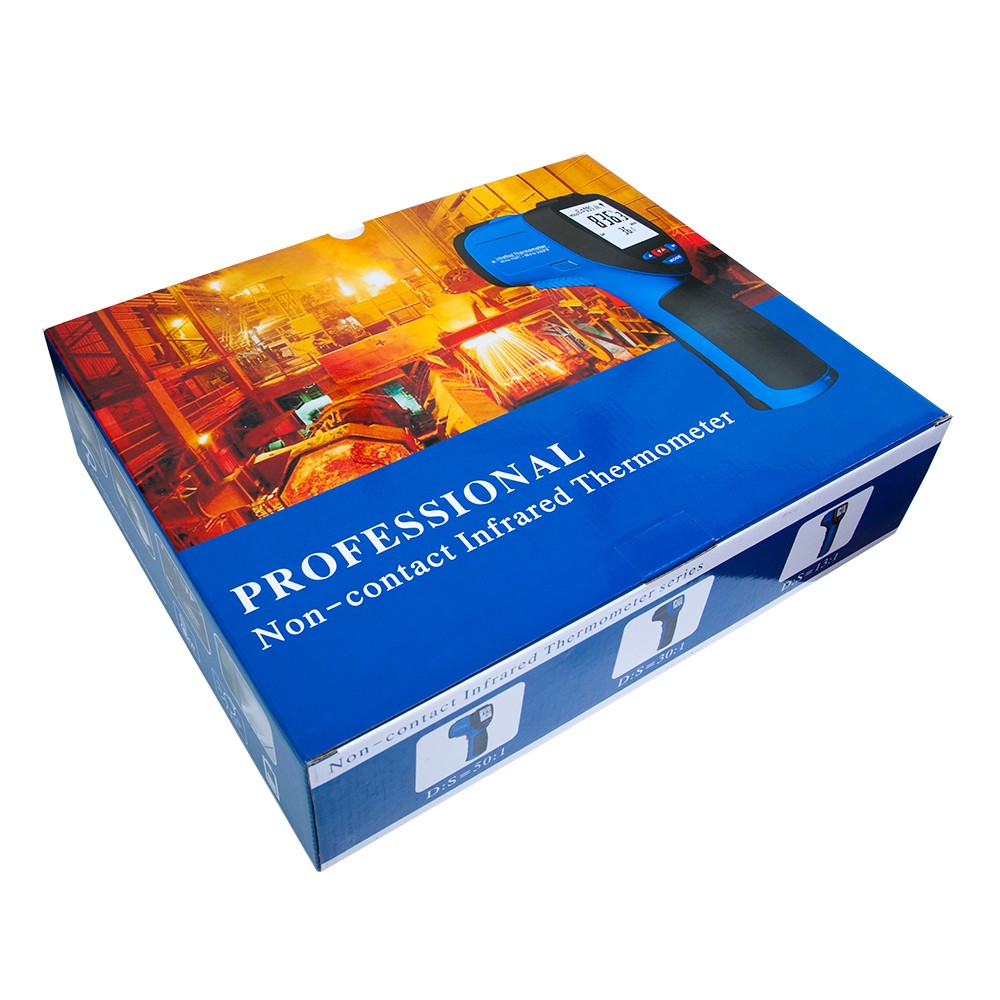
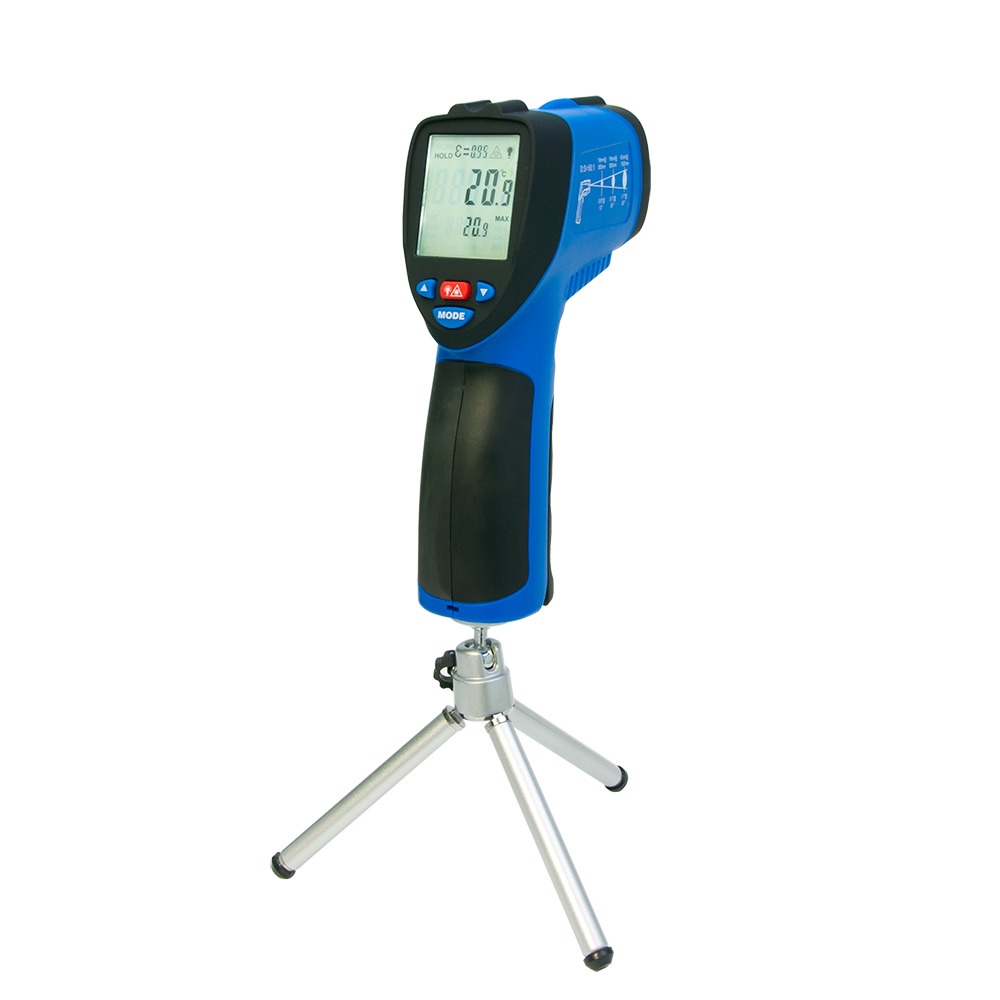
The package includes the pyrometer, a 9-volt battery, a manual, a compact tripod, and a carrying case. It's a practical kit for on-site diagnostics: there's no need to find separate protection for the device or prop it up with whatever is at hand when monitoring from a fixed point.
Conclusion
The FLUS IR-863 is a solid choice for professionals who need to regularly check very high temperatures without contact from a considerable distance. Its range up to +1650 °C, 50:1 optics, adjustable emissivity, and MAX/MIN/AVG/DIF modes make it a working tool, not just a “laser thermometer.” The key is to remember the spot size and set the emissivity correctly: the pyrometer measures confidently, but it can't read the mind of shiny metal.