Flus IR-863U
Delivery and payment
Choose your city or town to see the price with delivery there and when you can get it.
Pickup points
- Branch
- Parcel locker
Pros
- Range up to 1650 °C
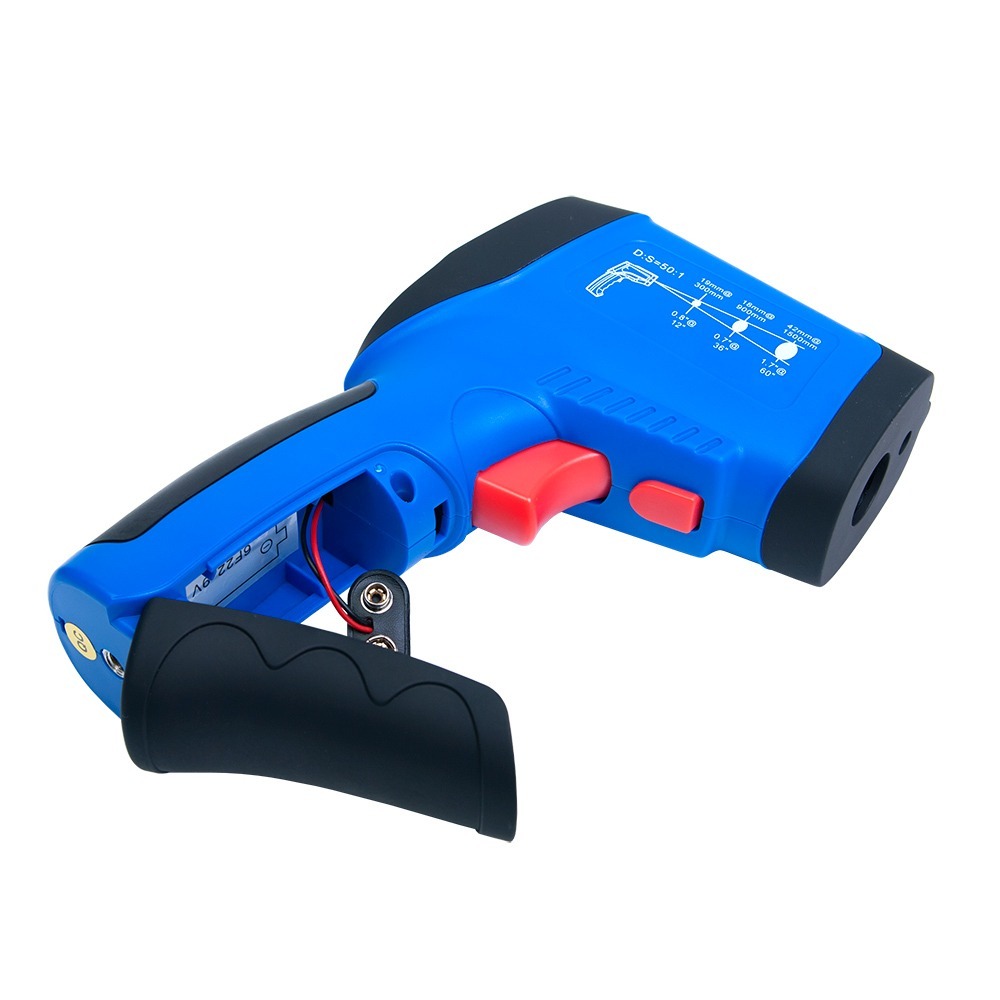
- 50:1 optics for accurate readings from a distance
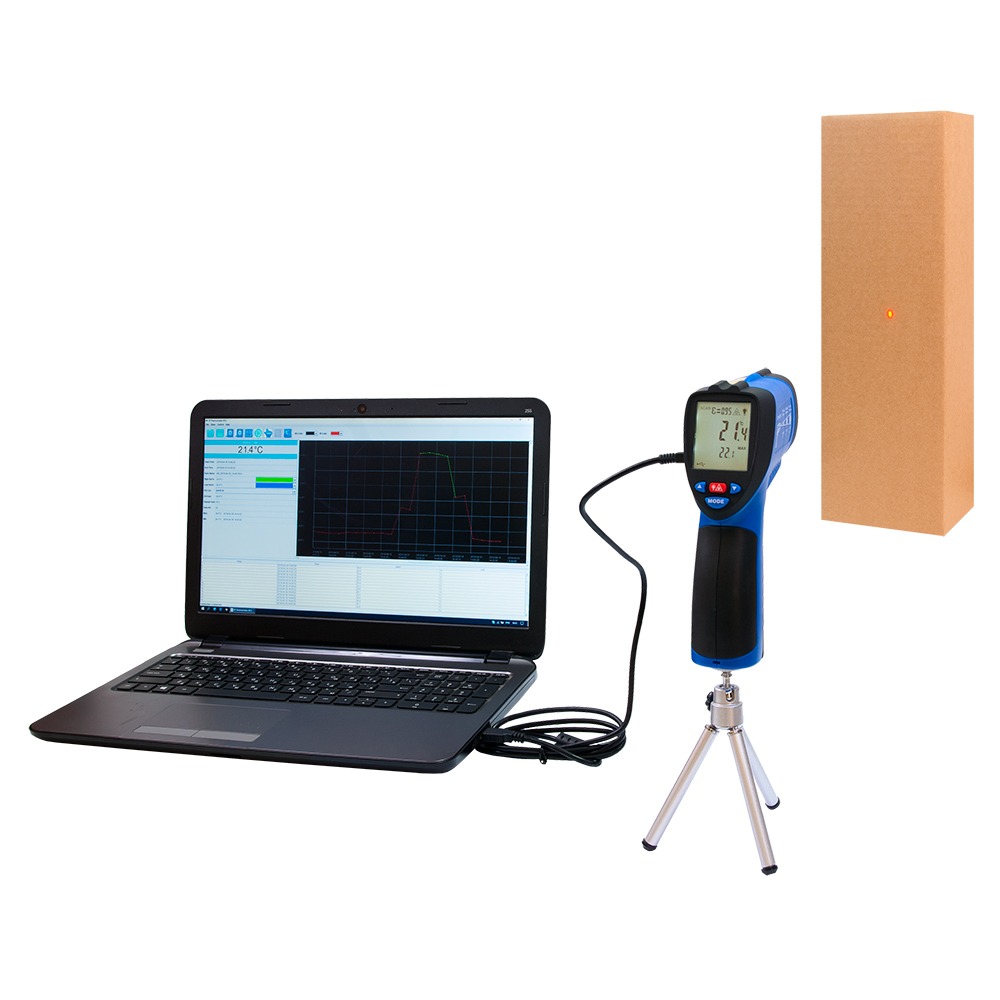
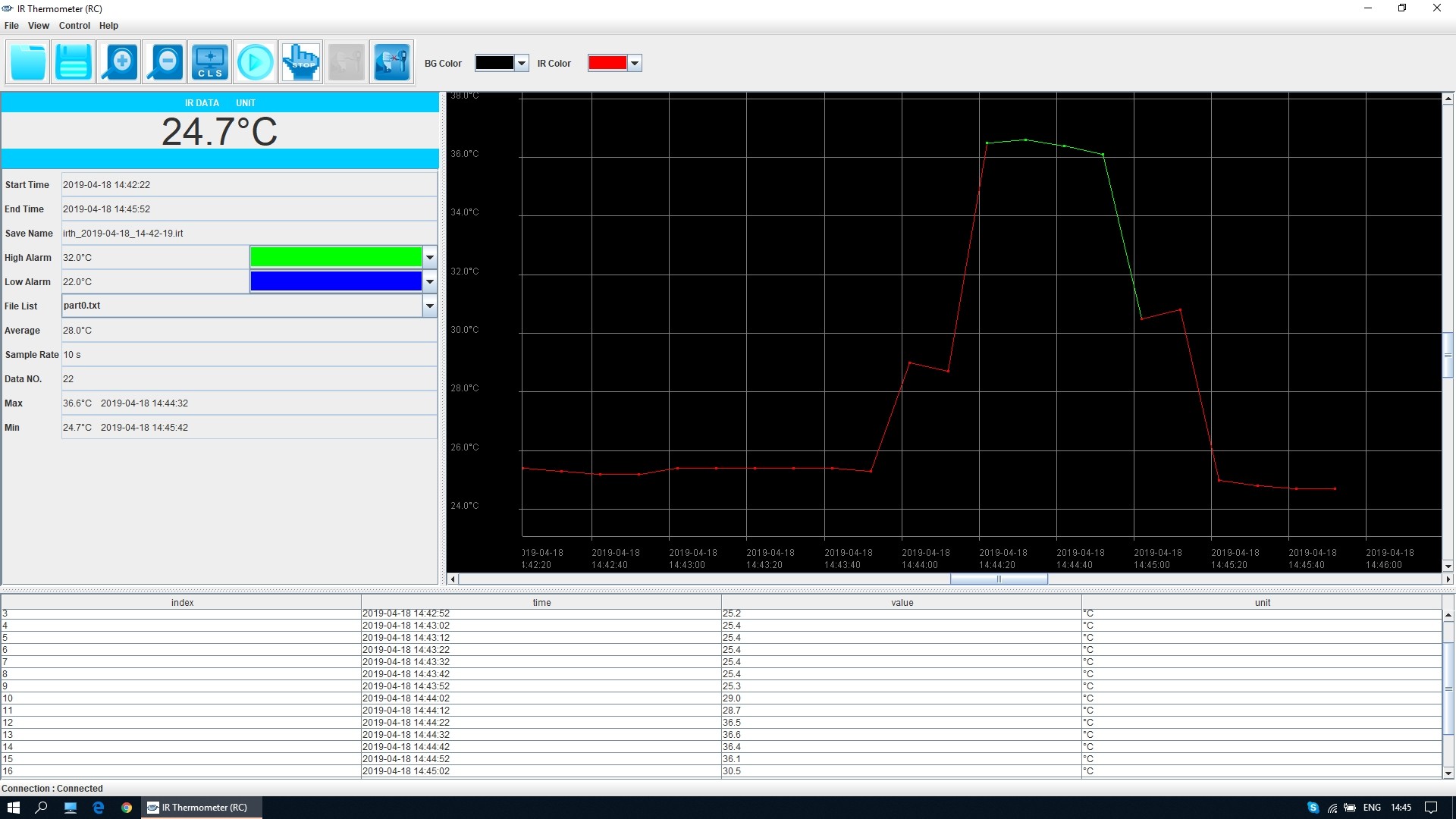
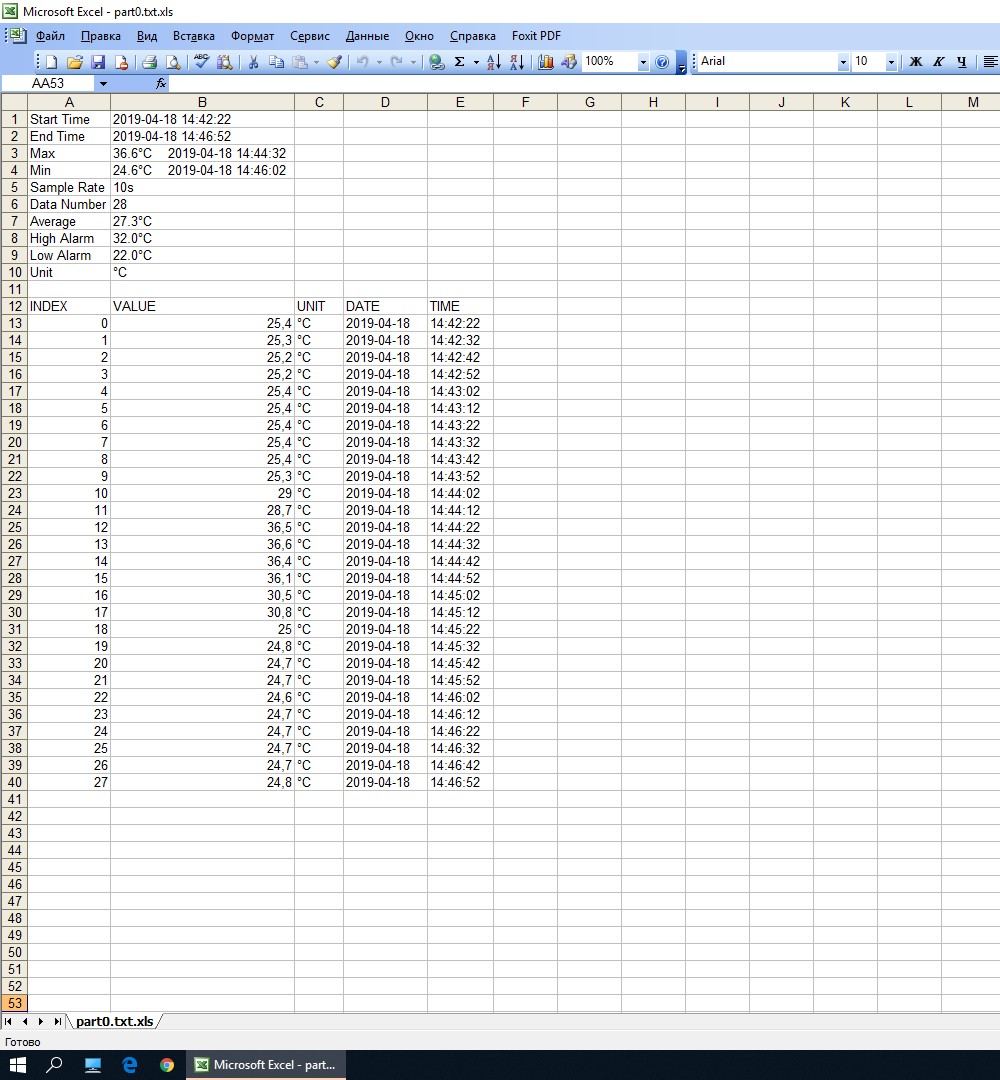
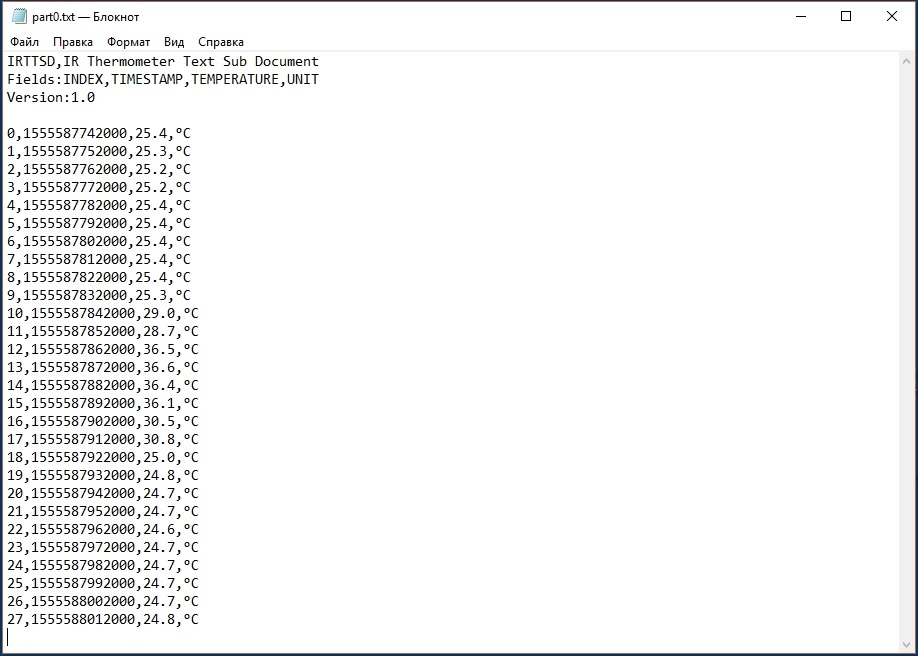
- Real-time data logging to a PC via USB
- Emissivity of 0.10–1.00
- Fast response time <250 ms
Cons
- Auto power-off after 20 s
- Powered by a 9V battery
- Shiny metal requires adjustment
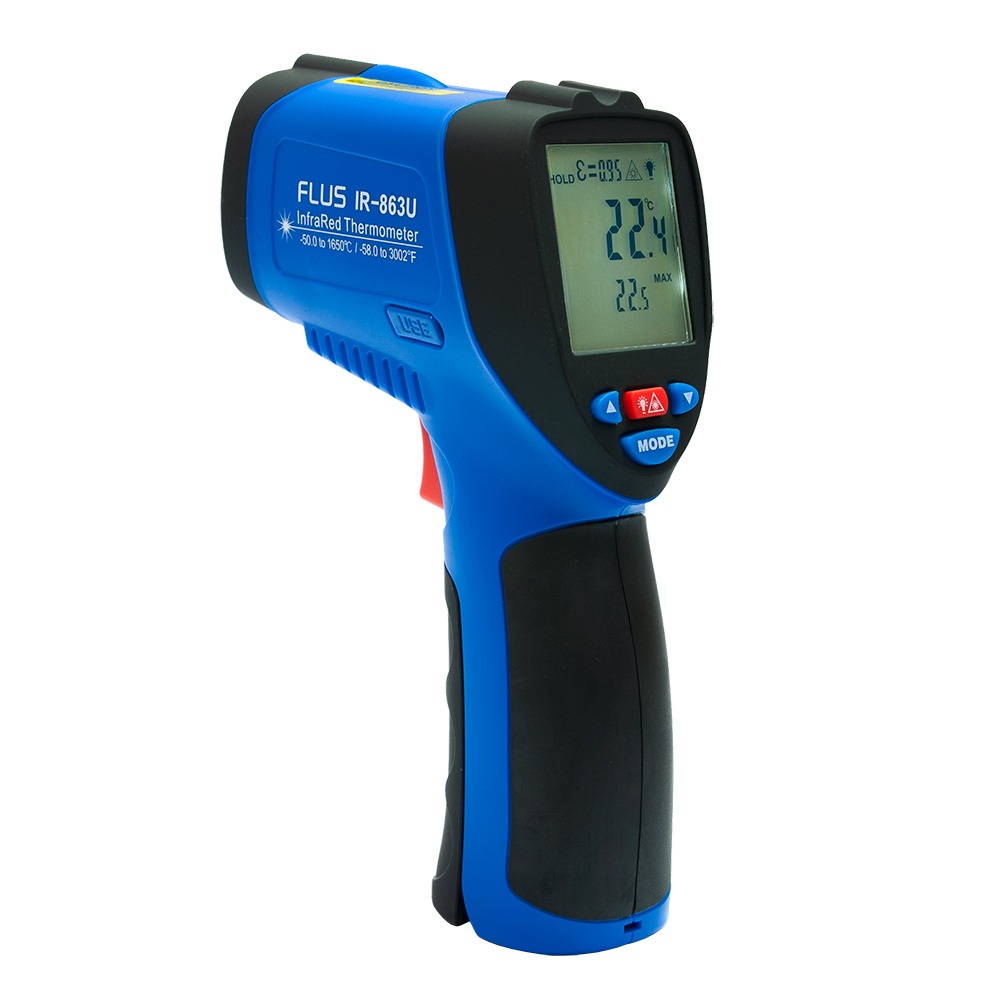
What is the FLUS IR-863U, and why is it a “high-temperature” model?
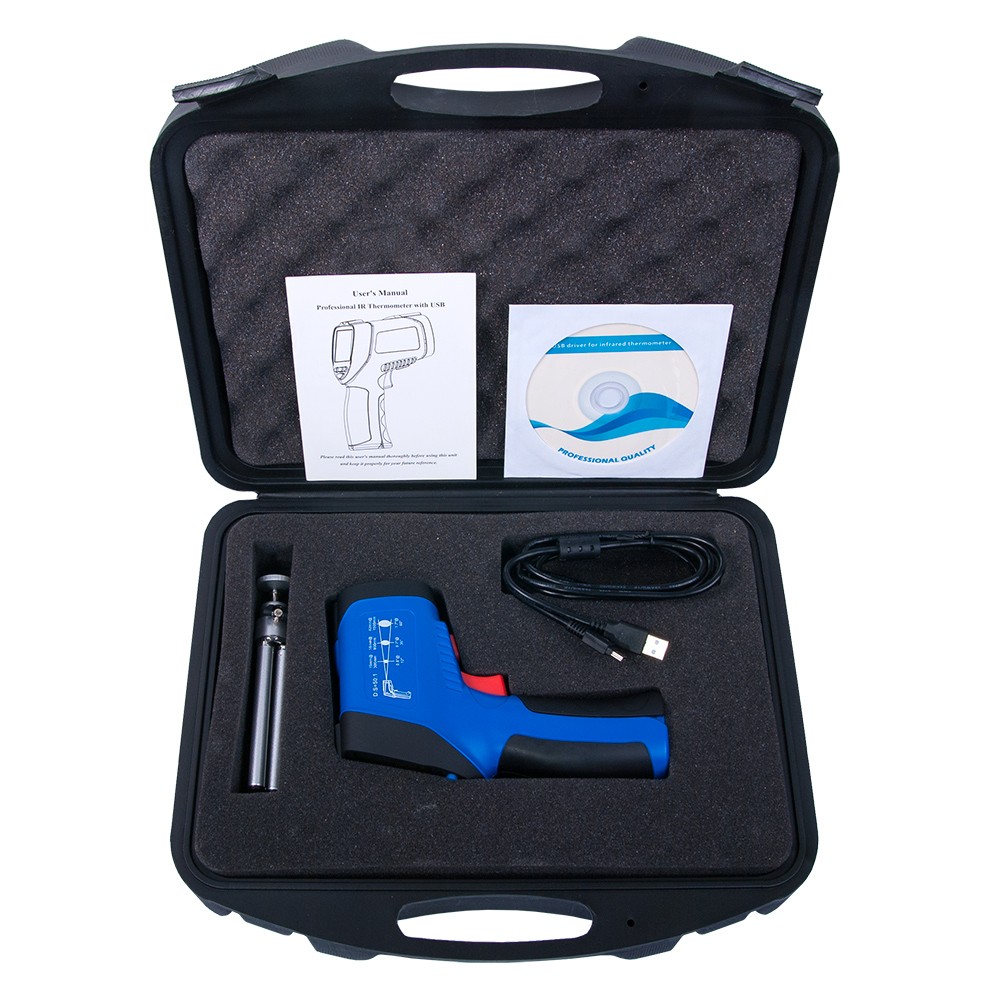
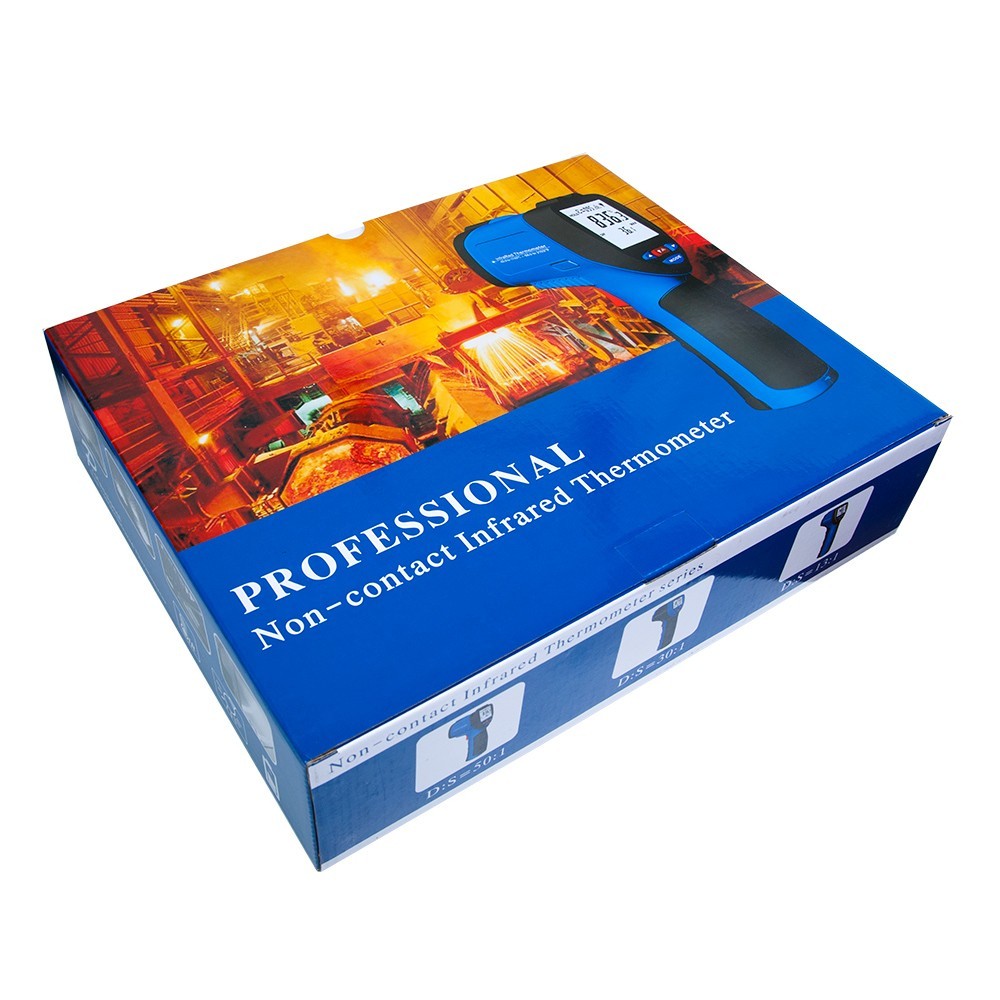
The FLUS IR-863U is a non-contact infrared pyrometer in a pistol-style form factor that measures surface temperatures over a very wide range: from -50 to +1650 °C. That makes it equally suitable for checking bearings or cables for overheating and monitoring hot components in furnaces, dryers, and production lines.
The U in the name is more than just a letter: connect the device to a computer via USB, and it becomes a temperature logger that plots graphs and records measurements.

Key feature: USB logging and real-time monitoring
In normal mode, the IR-863U works like a conventional IR thermometer: aim, pull the trigger, and get a temperature reading. Connect it via USB, though, and it opens up a more advanced use: long-term monitoring with recording to a file and a real-time graph.
This is useful when a single reading “here and now” matters less than changes over time: a part heating up or cooling down, temperature stability during a cycle, peak monitoring, or finding moments of overheating.
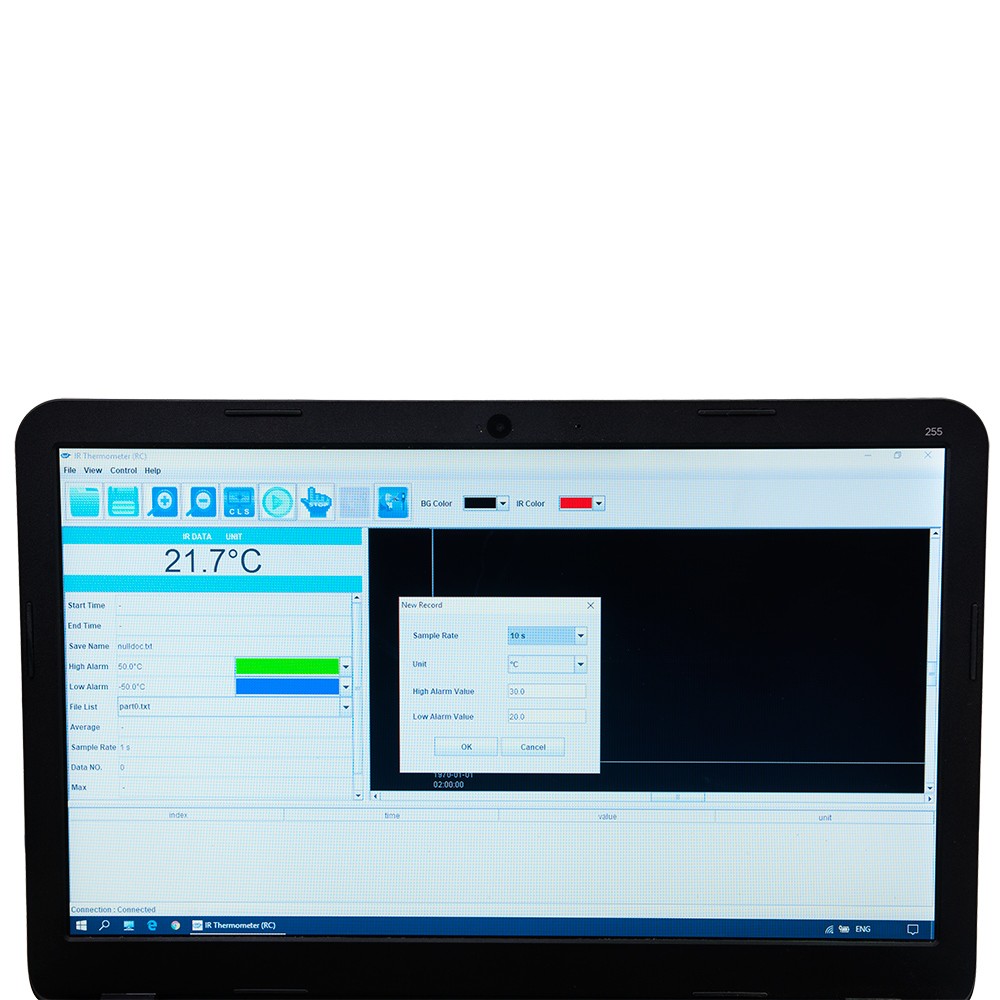
In typical software, you can set the sampling interval, specify limits (Hi/Lo), and save results for later analysis, including opening them in Excel. There is no magic involved, just data files.


50:1 optics: how to get the measurement spot right
A D:S = 50:1 ratio means that the diameter of the measurement area is approximately the distance divided by 50. Put simply:
At 1 m, the spot measures ~2 cm
At 2.5 m, the spot measures ~5 cm
At 5 m, the spot measures ~10 cm
This is critical in production: if a part is small and you are standing far away, weaker optics will include the surrounding background and give you a misleading average. Here, the 50:1 ratio lets you work farther away and more safely while maintaining reasonable targeting accuracy.
Emissivity of 0.10–1.00: the truth about shiny metal and why it gives misleading readings
An IR pyrometer does not see “temperature in general”; it detects infrared radiation from a surface. Different materials therefore require an adjustment to the emissivity coefficient. On the FLUS IR-863U, it is adjustable from 0.10 to 1.00.
Practical tips that can save you a lot of frustration:
1) Matte or painted surfaces usually work well.
2) Readings on shiny metals (polished steel, aluminum) can fluctuate considerably.
3) For a quick, reasonably reliable reading, place a piece of matte black tape at the measurement point, set the emissivity for the tape, and measure it.
4) Do not try to measure the “temperature inside” through glass or a screen: the device works in the 8–14 µm spectral range and generally sees surfaces, not what is behind the window.
Speed, accuracy, alarms, and useful modes
The device is fast: a response time of <250 ms is useful when an object is moving or when you are taking a series of readings at different points. There is a display backlight for dark workshops or electrical panels, as well as useful calculations: MAX / MIN / AVG / DIF.
The IR-863U also supports High/Low Alarm, which signals when the temperature goes outside the set limits. In production, this is often more important than “perfect laboratory accuracy”: what matters is not missing an overheating event.
Power and everyday usability
The pyrometer is powered by a 9V battery (the classic rectangular type). Auto power-off (approximately 20 seconds according to the specifications) saves the battery, but can sometimes be annoying if you take a long time to aim or work with pauses. When connected to a PC, though, the expectation is simple: connect the USB and you do not want it going to sleep in the middle of a recording.
The laser pointer is Class 2. It is not a lightsaber, but do not point it at anyone's eyes. It is intended for aiming at the measurement point or area, not for “toasting the enemy.”
Who is it for?
The FLUS IR-863U is a good choice if you need a combination of a high upper temperature limit, decent 50:1 optics, and USB logging without moving up to the expensive class of stationary pyrometers. It is especially useful for diagnosing overheating, monitoring process conditions, servicing industrial equipment, electrical work, and “let's see how it heats up” experiments.
If you need accurate measurements on polished metal without preparing the surface, you will need a specialized solution or preparation of the measurement point. The IR-863U gives you fair warning: emissivity is your friend. Or your enemy, if you ignore it.