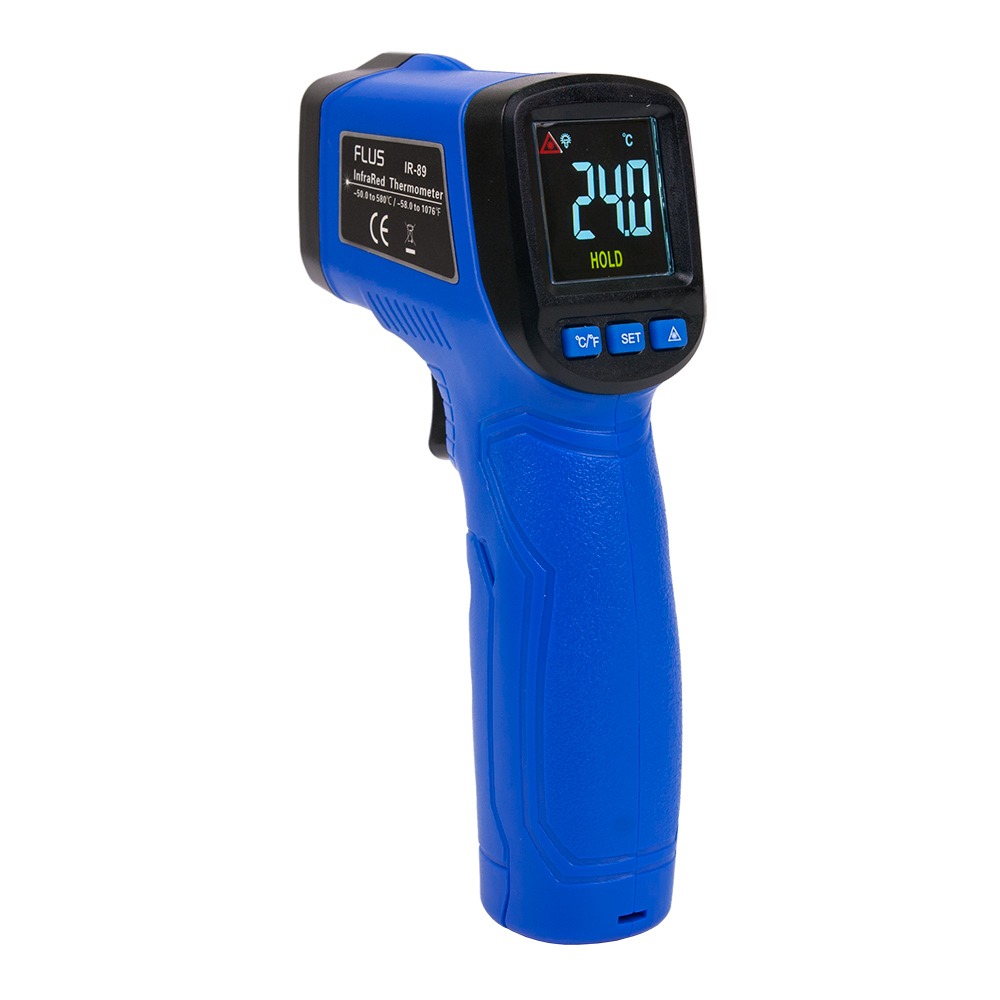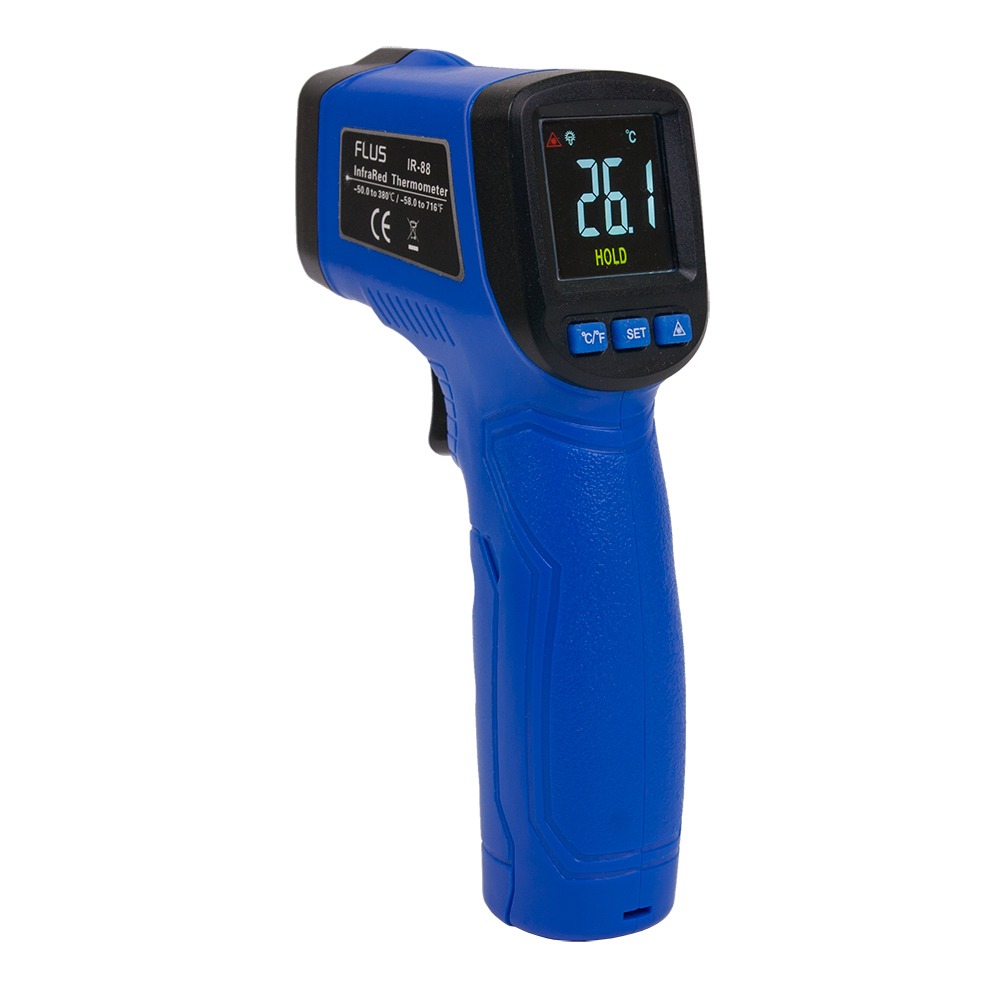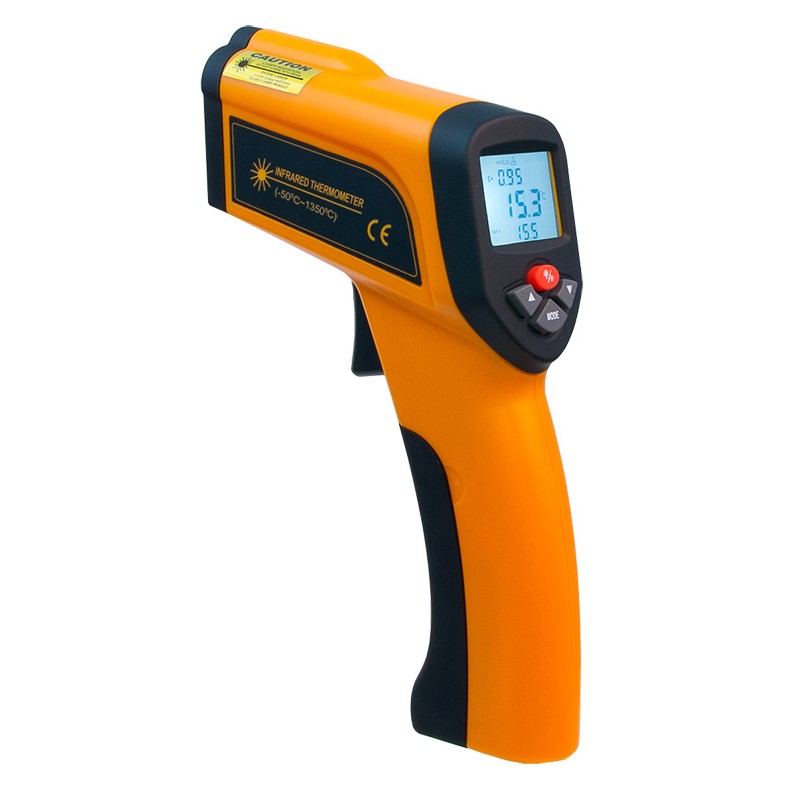
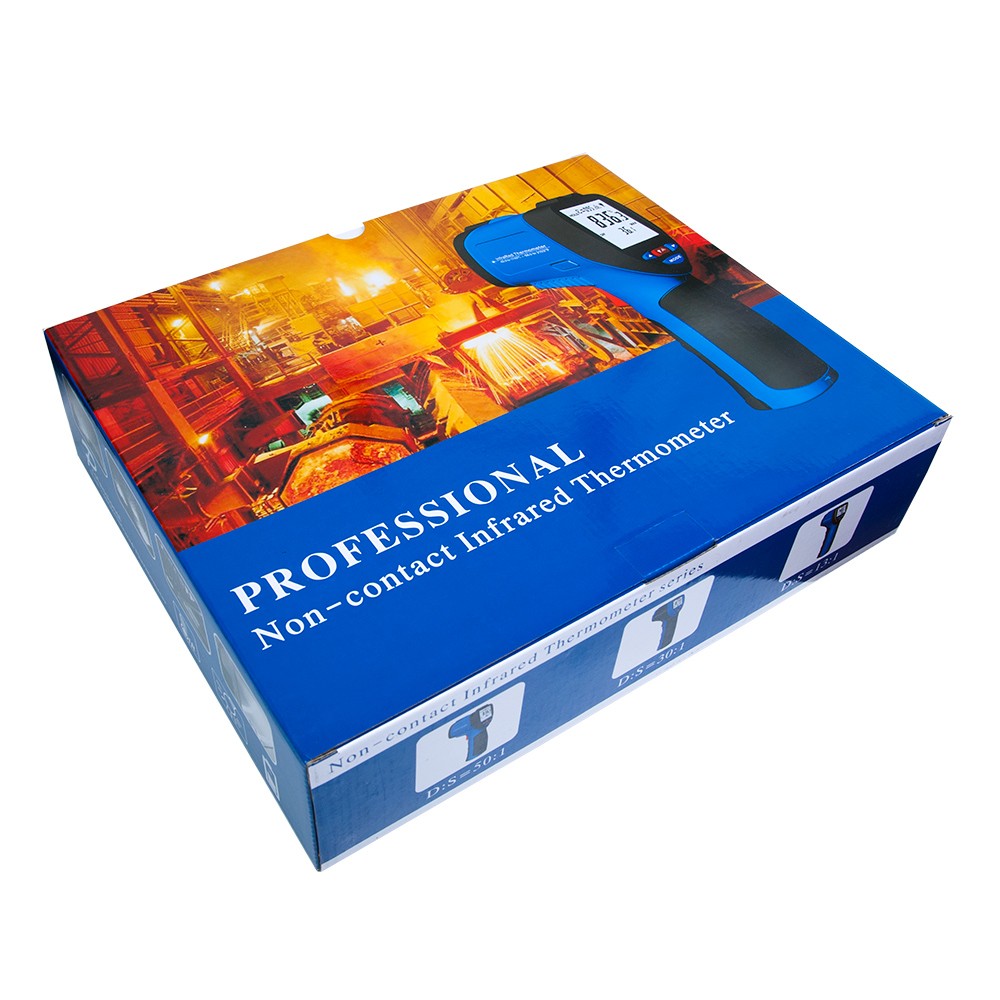
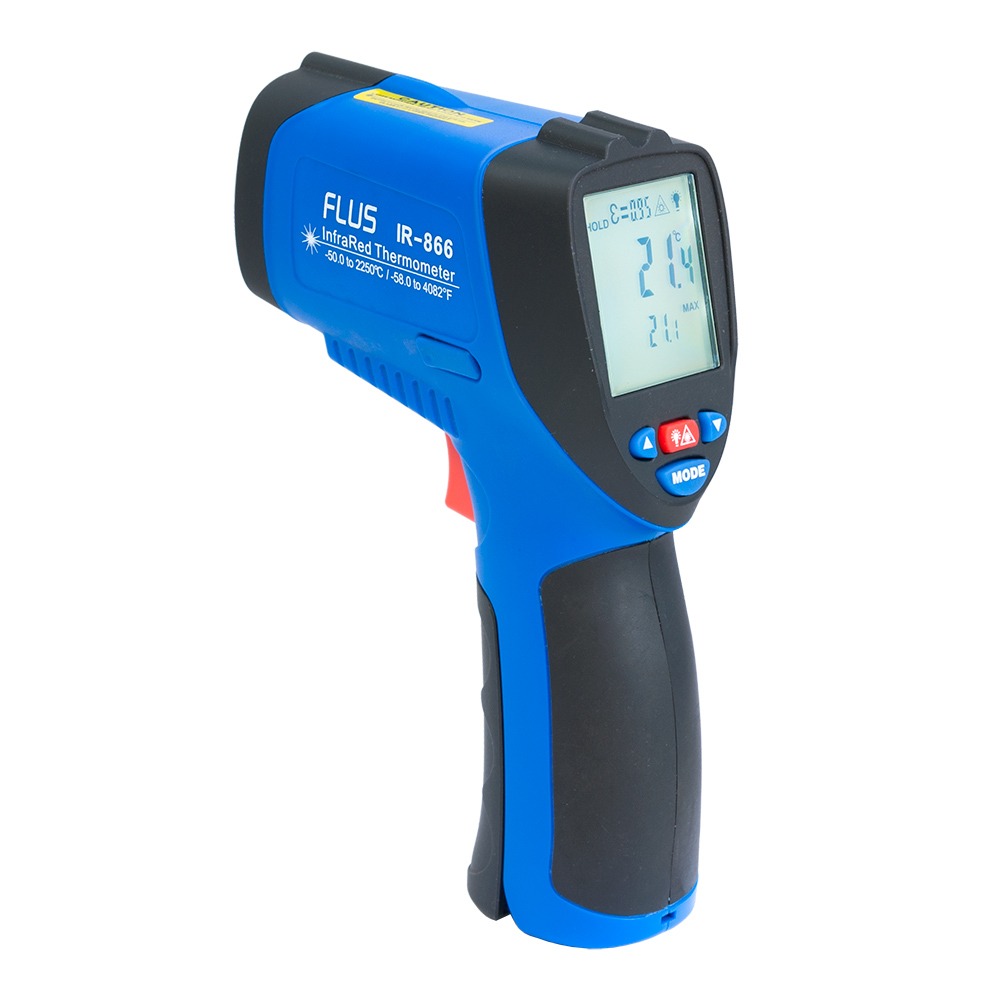
Flus IR-866
Delivery and payment
Choose your city or town to see the price with delivery there and when you can get it.
Pickup points
- Branch
- Parcel locker
Pros
- Measurement range up to 2250 °C
- 50:1 optics for measuring from a distance
- Adjustable emissivity from 0.10–1.00
- Alarms, MAX/MIN/AVG/DIF and hold function
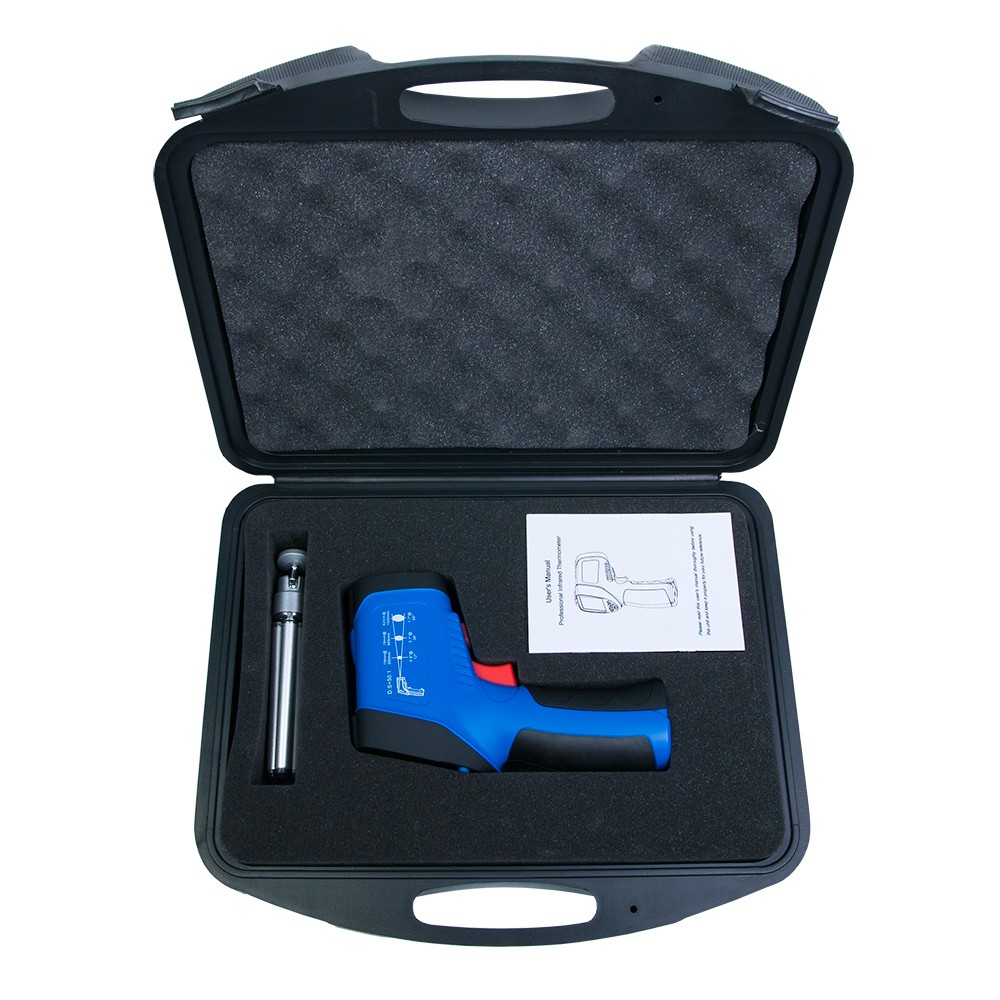
- Tripod and protective case
Cons
- Does not measure temperature inside a material
- Shiny metals require the correct settings
- No data export to a PC
For molten metal, not tea
The FLUS IR-866 is a professional non-contact pyrometer for measuring surface temperatures over an exceptionally wide range: from -50 to +2250 °C. It is a tool for manufacturing, metallurgy, heat treatment, glassmaking, ceramics, furnaces, heated parts and industrial processes where bringing an ordinary thermometer close to an object would be inconvenient or a little too daring.
The device reads infrared radiation from a surface, so it works without touching the object. It does not determine the temperature inside a workpiece, liquid or furnace wall, only the temperature of the area its optics can “see.” That makes it ideal for checking hot, moving, hazardous or hard-to-reach objects.
Long distances without a large spot
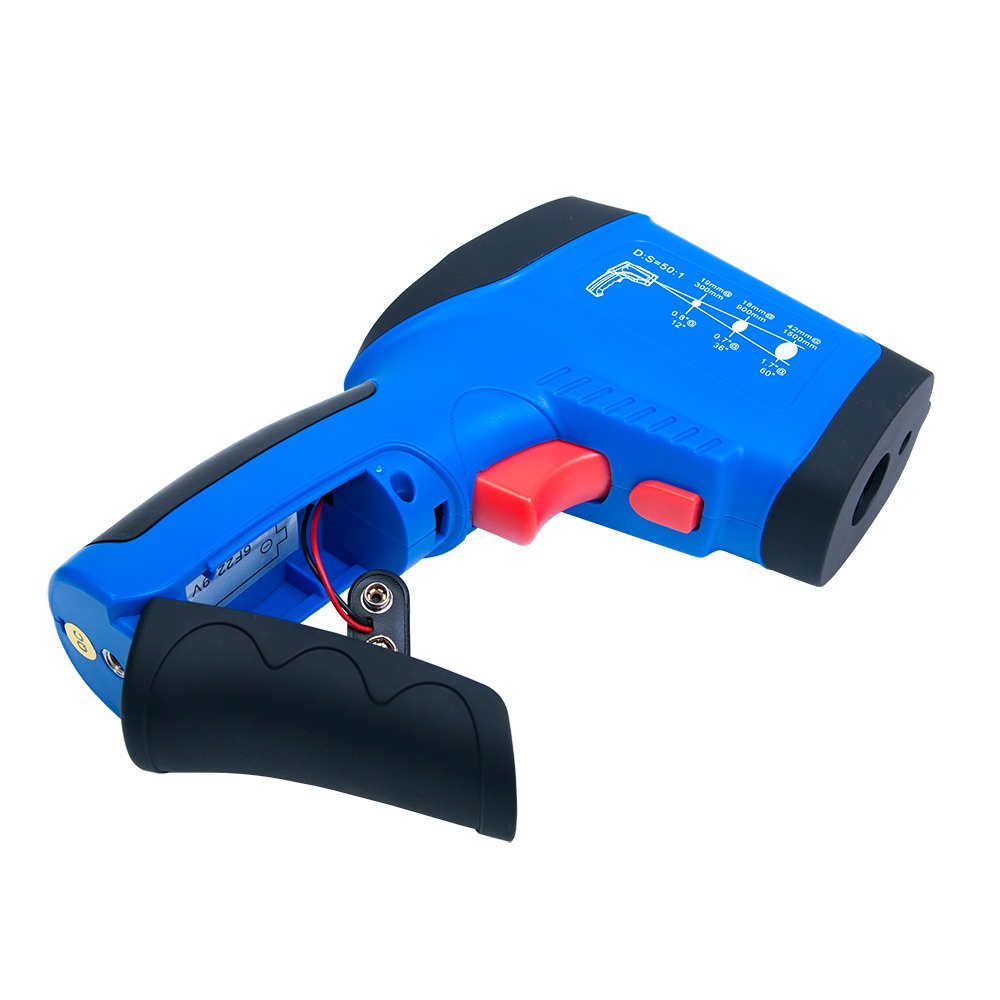
The FLUS IR-866's main strength is its 50:1 distance-to-spot ratio (D:S). Simply put, from a distance of 1 m it measures the temperature of a spot approximately 2 cm in diameter, and from 5 m, a spot approximately 10 cm in diameter. This lets you stay at a safer distance from hot equipment without including neighboring cooler or hotter elements in the measurement.
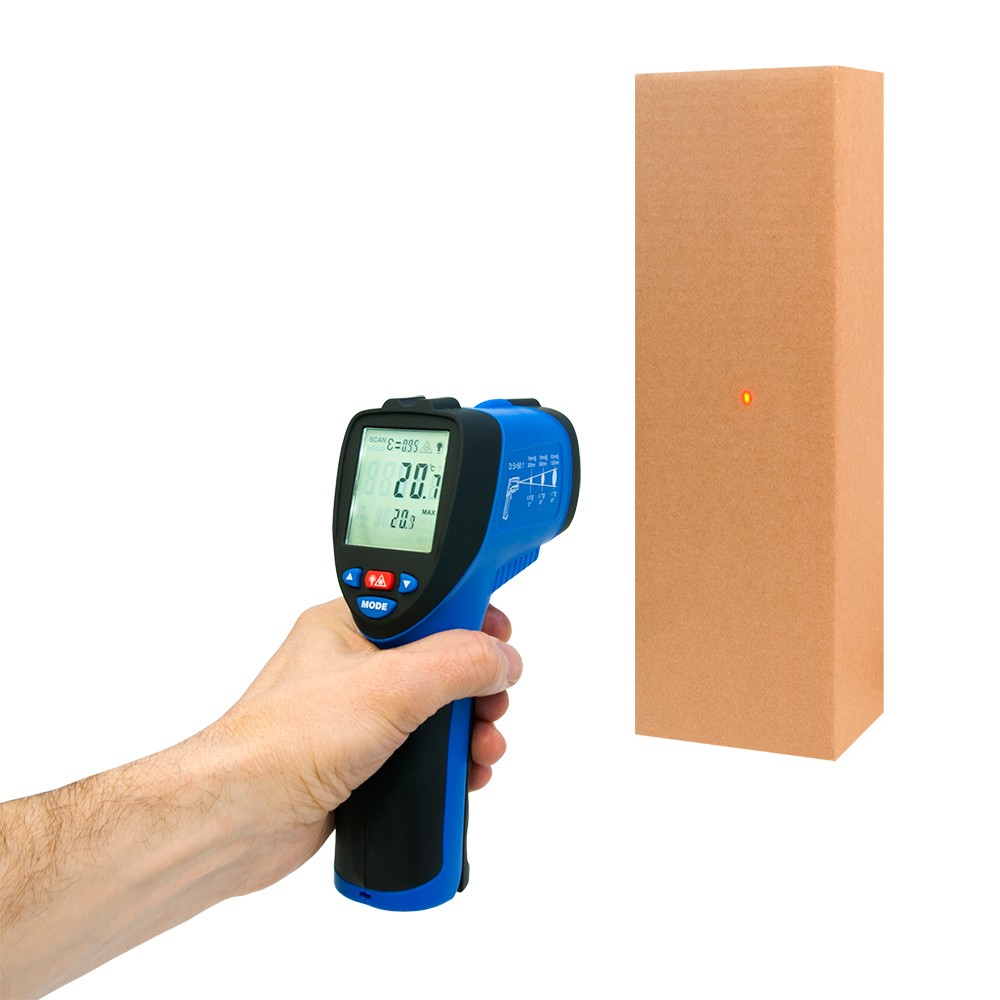
A single-beam laser pointer helps aim the device at the desired area. The laser is only a guide, however, and does not mark the actual boundaries of the measurement area, which grows wider at greater distances. For an accurate result, the object must be larger than the measurement spot.
Emissivity: a setting worth paying attention to
Emissivity is adjustable from 0.10 to 1.00, allowing you to adapt the pyrometer to different materials and surface types. Matte, painted, oxidized and polished surfaces emit heat differently, so the same setting will not always be right for steel, aluminum, brass, ceramics or glass.
Shiny metals require special attention: they reflect ambient thermal radiation well and can therefore “fool” any infrared thermometer. For critical measurements, check the result against a reference method and adjust the emissivity to match the actual surface condition and process temperature.
Fast measurements and limit monitoring
The response time is less than 250 ms, making the FLUS IR-866 convenient for quickly checking a series of parts or monitoring heating during a process. Values are displayed at a resolution of 0.1 °C up to 1000 °C and 1 °C at higher temperatures.
In addition to the current reading, MAX, MIN, AVG and DIF modes show the maximum, minimum and average temperatures and the difference between the extremes. You can set upper and lower limits and receive an alert when a reading falls outside the specified range. There is also automatic reading hold, a continuous measurement mode with a trigger lock, a backlight for the three-line display and automatic shutoff after 20 seconds of inactivity.
A well-designed working kit
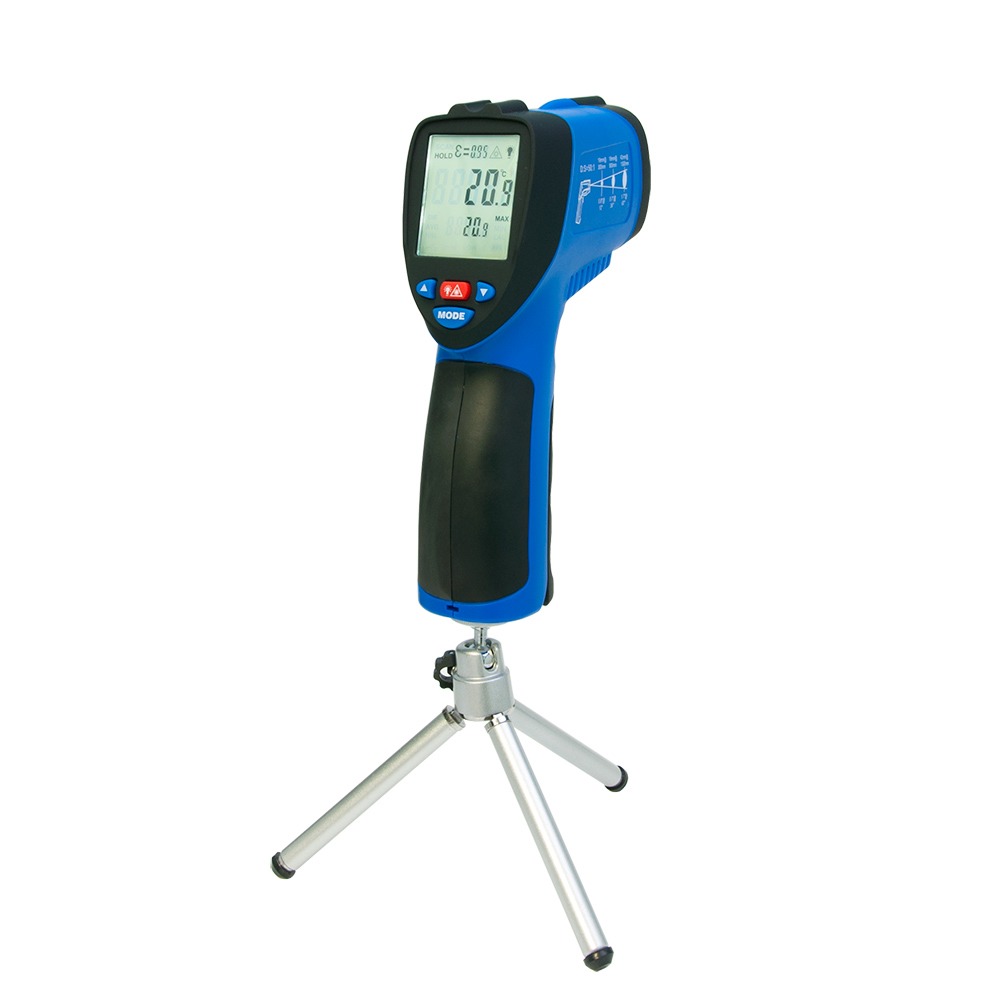
The pistol shape and rubberized grip are well suited to one-handed measurements. The device weighs approximately 290 g, runs on one 9 V battery and has a 1/4-inch thread for mounting on the included mini tripod. This is useful when you need to monitor temperature stability at a single point rather than hold the trigger manually.
The kit includes a mini tripod, a manual and a hard plastic case. The FLUS IR-866 is designed for quick on-site temperature checks: it is not intended to transfer readings to a computer or keep a measurement log. If you need to document the process, look for a model with a data logging function.
Who is the FLUS IR-866 for?
It is a good choice for a technician, process specialist or engineer who needs to measure surface temperatures from a distance and work with very hot objects. The wide range, 50:1 optics, fast response, adjustable emissivity and alarms make the FLUS IR-866 a practical working instrument, not just a laser “toy” with numbers on a screen.
It should, however, be used for its intended purpose: not for measuring body temperature, not for determining the temperature inside a material and not as a replacement for a contact thermocouple where maximum measurement accuracy is required.