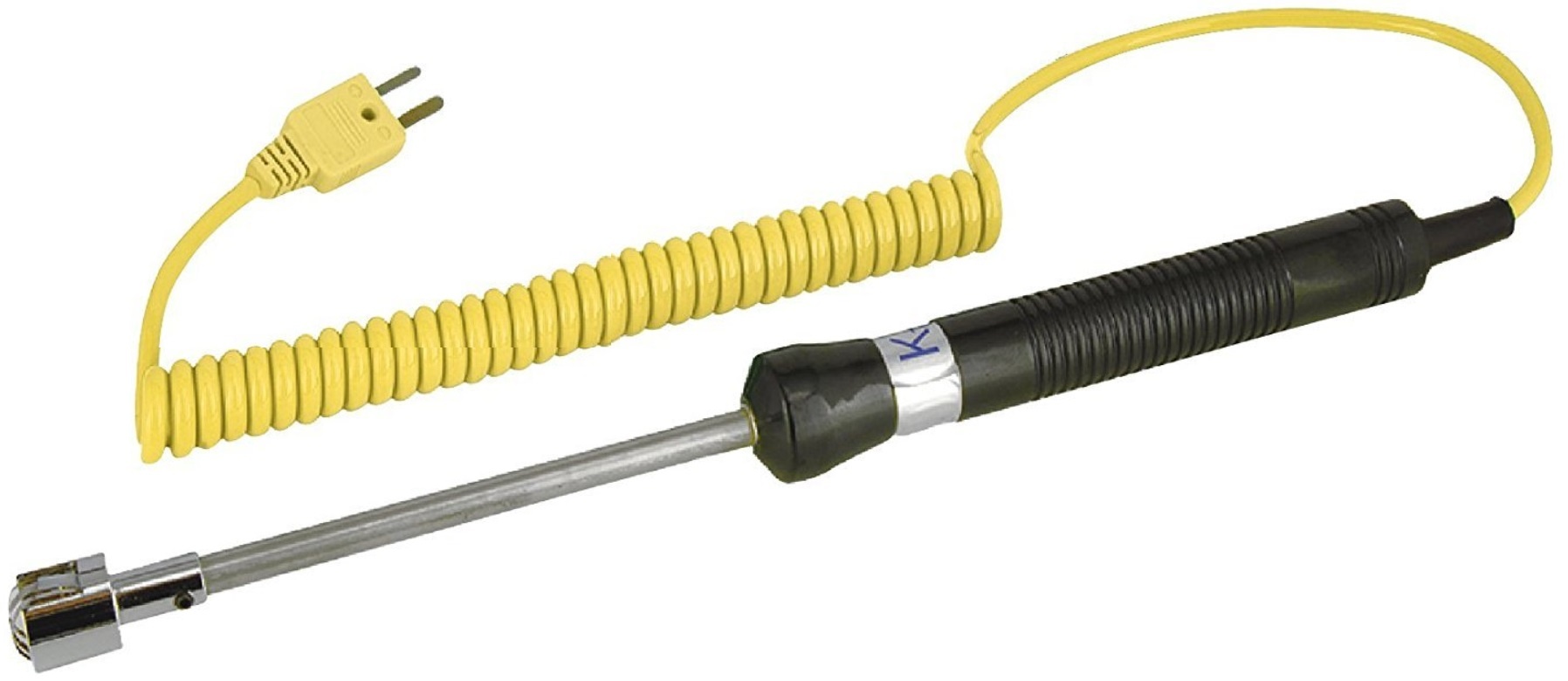
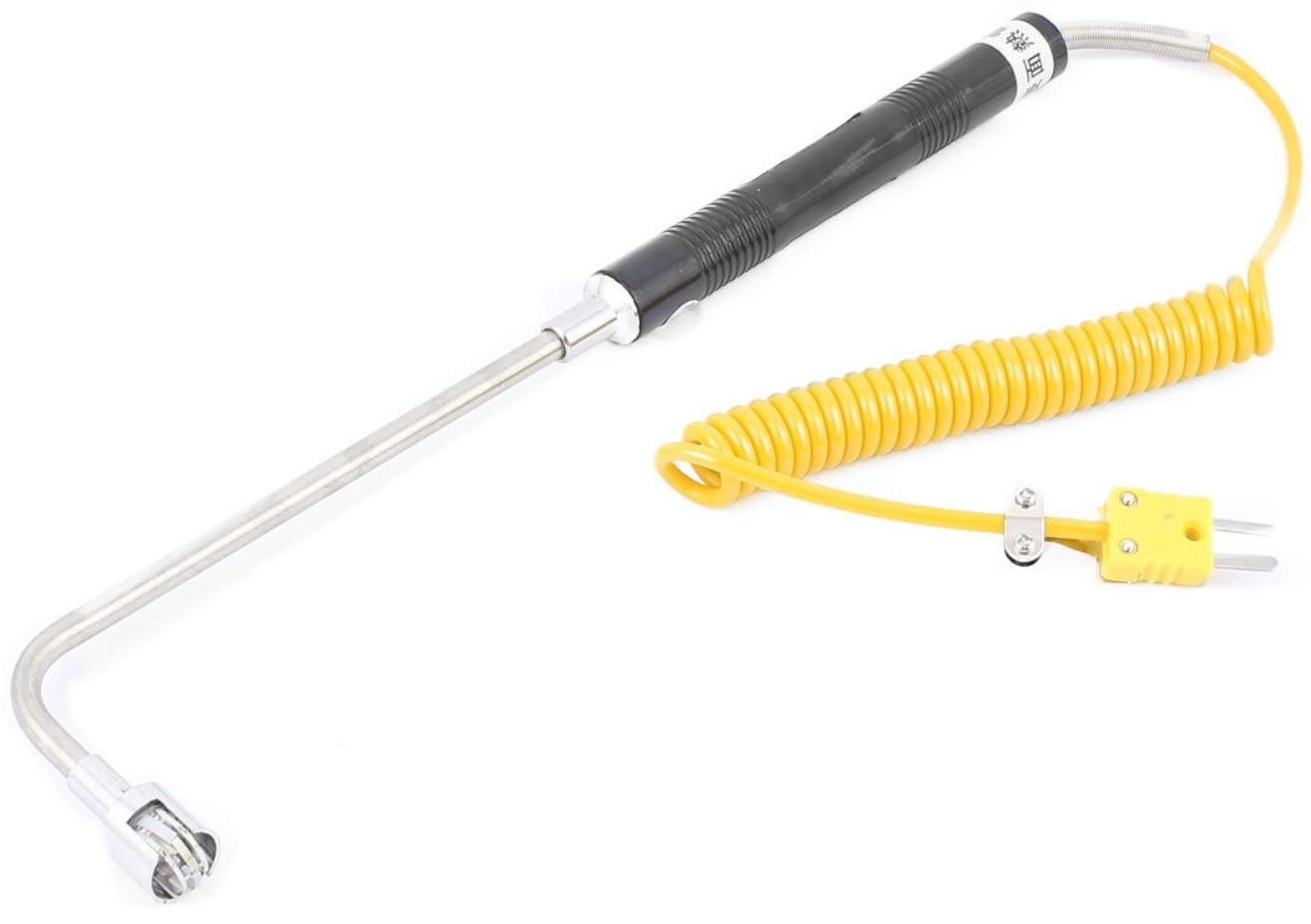
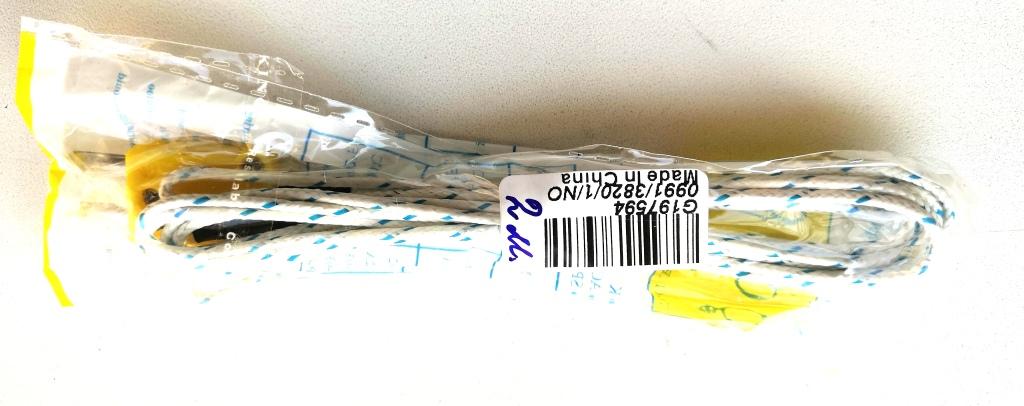
K-type flexible thermocouple with 2-meter lead wire
Delivery and payment
Choose your city or town to see the price with delivery there and when you can get it.
Pickup points
- Branch
- Parcel locker
Pros
- Type K is the most common standard
- Flexible 2 m lead wire
- Responds quickly to heat
- Works with many temperature controllers
- Easy to install in tight spaces
Cons
- Cold junction compensation is required
- Easy to damage near the tip
- Accuracy depends on the measuring device
What is it and what is it for?
This flexible Type K thermocouple with a 2-meter lead wire is a simple, inexpensive and highly versatile temperature sensor. It's useful wherever you need to actually measure the temperature rather than “guess by touch”: ovens and dryers, heaters, temperature controllers, homemade controllers, electronics experiments, 3D projects, smokers and more.
How a Type K thermocouple works, in plain English
A thermocouple consists of two different metal conductors joined at the tip to form a “hot” junction. When the junction heats up, it produces a very small voltage (thermoelectric EMF). For Type K, this is approximately 41 µV per 1 °C around room temperature.
One important point: a thermocouple doesn't “see” absolute temperature on its own. It measures the difference between the hot junction and the connection point. That's why a proper measuring device or temperature controller needs cold junction compensation (CJC), which nearly all decent controllers have.
Why the flexible design is useful
Instead of a long, rigid probe that keeps getting in the way, a flexible thermocouple has a wire you can route neatly:
- through gaps, access holes and door seals;
- along the wall of a chamber or enclosure to avoid accidentally measuring “hot spots”;
- to a measuring point where a rigid sensor simply won't fit.
The 2 m length is usually enough to place the indicator or controller somewhere safer, farther from the heat, without adding extension wires.
Compatibility: what works and what can cause trouble
Type K is the most common thermocouple standard, so compatibility is good: most temperature controllers, indicators, data loggers, multimeters with a “K” input and popular thermocouple modules for DIY controllers accept it without problems.
Point #1: polarity matters. In Type K, the positive leg is Chromel (NiCr) and the negative leg is Alumel (NiAl). If you reverse them, the temperature reading may move in the wrong direction as it heats up.
Point #2: don't extend the thermocouple with ordinary copper wire just to make it reach. If you need an extension, use compensation or thermocouple wire specifically for Type K, or place a converter closer to the sensor.
Temperatures and realistic expectations
As a thermocouple element, Type K can operate over a very wide range, theoretically reaching high temperatures. But in practice, the tip construction and wire insulation set the upper limit: flexible versions often have lower limits than sensors in a metal sheath.
A practical rule: if you plan to operate it for long periods under “red-hot” conditions, check whether your particular insulation and tip are rated for them. For most heating control tasks involving ovens, hot plates, air ducts and the like, this type is usually more than sufficient.
Installation tips for a longer service life
- Don't bend the wire sharply right next to the junction; it's the most vulnerable point.
- Secure the wire so it doesn't rub against sharp edges or hang under tension.
- Avoid electrical noise: a thermocouple produces microvolts, so strong interference nearby can sometimes affect the readings.
- If accuracy matters, assess the whole system: sensor + mounting method + controller/ADC.
Who should buy it?
If you need a versatile temperature sensor with plenty of flexibility and lead wire length, this is one of the simplest and most practical purchases in the “heating control” category. Install it, connect it to a Type K input, and finally start measuring instead of guessing.