KRUK Bird Repeller Visual
Delivery and payment
Choose your city or town to see the price with delivery there and when you can get it.
Pickup points
- Branch
- Parcel locker
Pros
- Requires no electricity or batteries
- Moves in a light breeze
- Visible from a distance above the property
- Safe for birds
- Operates silently
Cons
- Effectiveness depends on the wind
- Requires an open area
- Birds may gradually become accustomed to it
KRUK, an airborne guardian for gardens, roofs, and fields
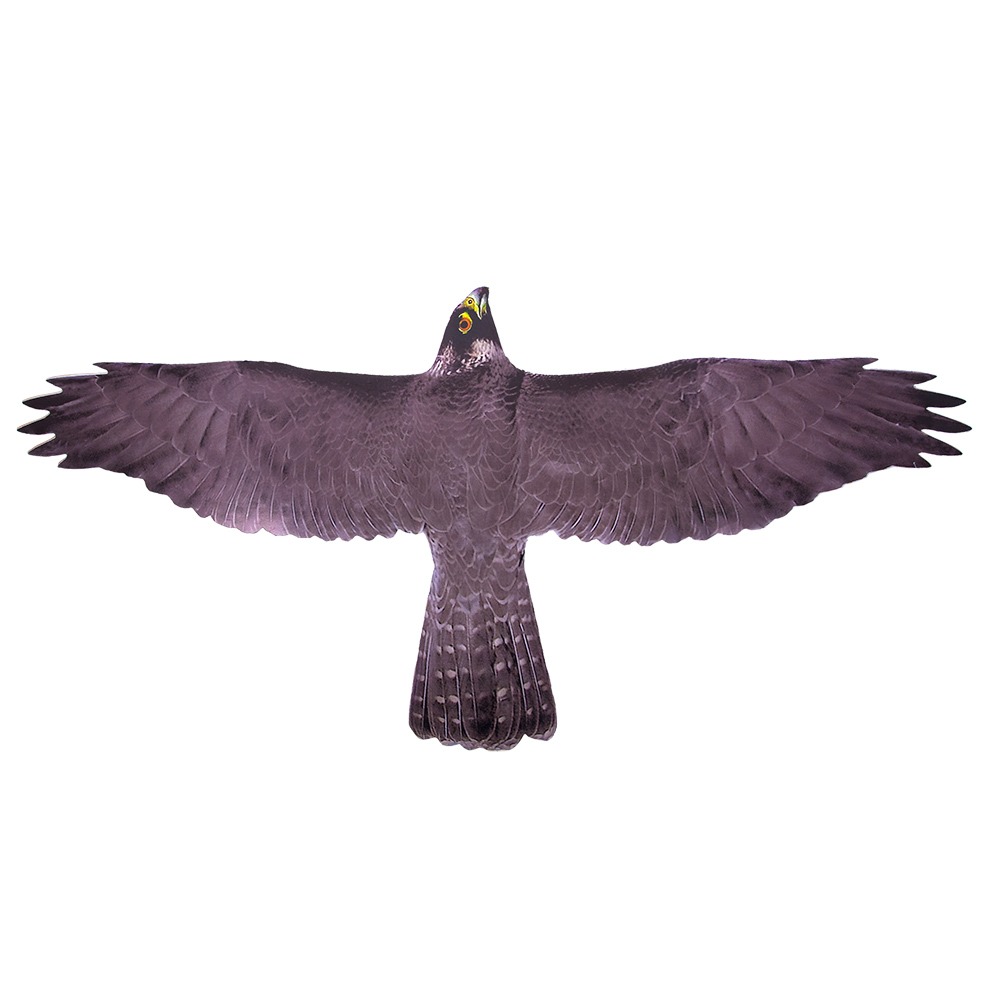
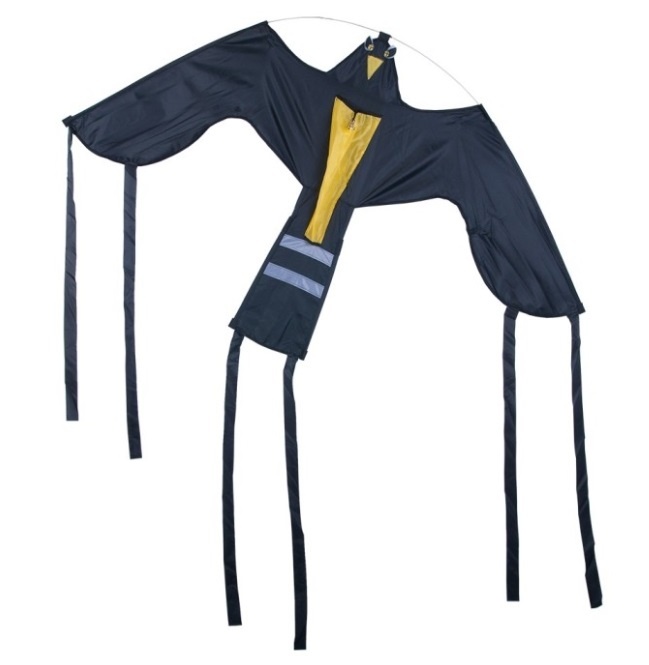
The KRUK Bird Repeller is a large kite shaped like a black bird, with a “wingspan” of 140 × 80 cm. It rises above the property, moving and fluttering in the wind to provide an ongoing visual warning to unwanted birds. No speakers, ultrasound, wires, or batteries: the wind does all the work.
This method of protection is useful in gardens, vineyards, vegetable gardens, yards, and on roofs, as well as near ponds, docks, and agricultural and industrial sites. KRUK is designed primarily to repel pigeons, sparrows, starlings, crows, rooks, jackdaws, magpies, gulls, and other birds that shouldn't linger near crops or buildings.
One principle, two configurations
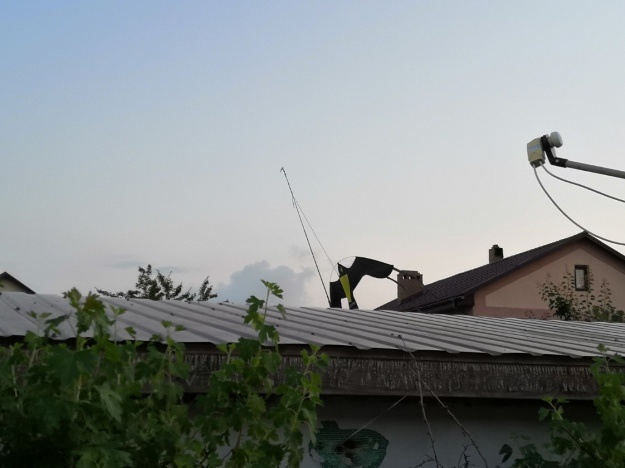
Both KRUK versions work the same way: the silhouette on a flexible frame is held by a rope and brought to life by air currents. The difference is not in how they repel birds, but in how ready they are to install.
The Visual version is a complete kit with a telescopic extension pole and a metal tube for installation in the ground. It is a good choice if there is no existing mast, tall pole, or other secure attachment point on the property. The Dynamic version is the repeller kite alone, a more economical choice for those who already have a suitable mast, fishing rod, or attachment point.

How to install it for effective operation
The key to effectiveness is not the magic of a black wing, but the right height. Place the repeller above trees, greenhouses, fences, or roofs, ideally on a mast approximately 4–6 m high. Leave at least 1.5–2 m of clearance above plants so the bird can be seen from a distance and has enough wind to move.
A light breeze of approximately 2–3 m/s or more is enough to get it flying. In very strong, gusty winds, an elastic cord is recommended instead of an ordinary rope: it softens the jerks and helps keep the structure from tipping over. The mast can be tilted slightly toward the prevailing wind to reduce twisting of the rope.
What to expect in practice
KRUK works best in open areas where its silhouette moves constantly and does not blend into branches, walls, or roofs. This is a humane method: it does not injure birds or create noise for people, pets, or neighbors.
It is not an absolute barrier, however. The kite does not fly when there is no wind, and birds may become accustomed to an unchanging object over time. It is therefore helpful to occasionally change the installation location, height, or direction of the mast. Over large areas, it makes sense to supplement KRUK with netting, shiny tape, or an acoustic repeller, making it harder for birds to realize that the “predator” operates on the wind's schedule.
Who it's for
KRUK is a good choice for owners of gardens, berry patches, vineyards, and vegetable gardens who need simple seasonal crop protection without electricity. The complete Visual kit is convenient for installation directly in the ground, while the Dynamic version is a practical choice if you already have a mast or tall support. The key is to give this “raven” height, wind, and good visibility.