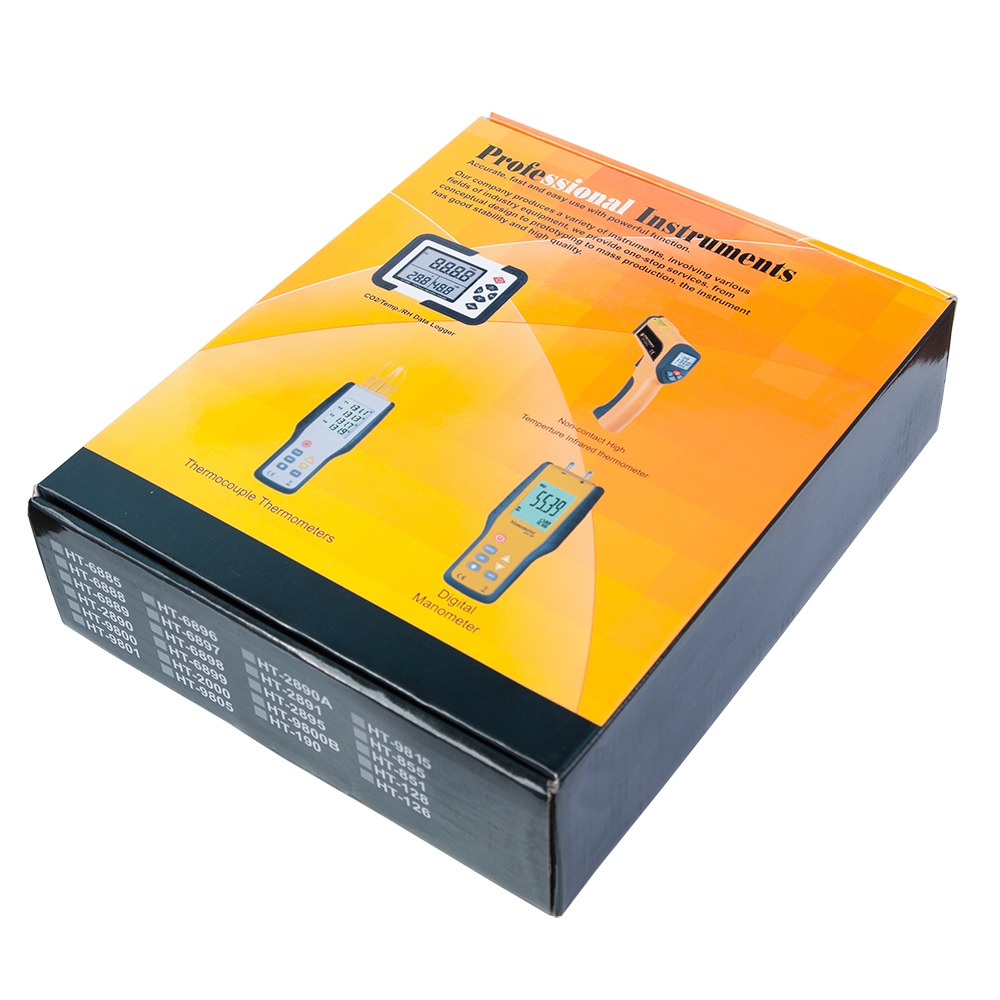
Xintest HT-6897
Delivery and payment
Choose your city or town to see the price with delivery there and when you can get it.
Pickup points
- Branch
- Parcel locker
Pros
- IR measurement range up to 1650 °C
- Type K thermocouple included
- 50:1 optics for measurements at a distance
- Memory for 100 measurements
- Tripod and hard case
Cons
- Emissivity adjustment required
- Does not measure air temperature
- Does not replace a thermal imaging camera
Xintest HT-6897: a pyrometer for seriously hot jobs
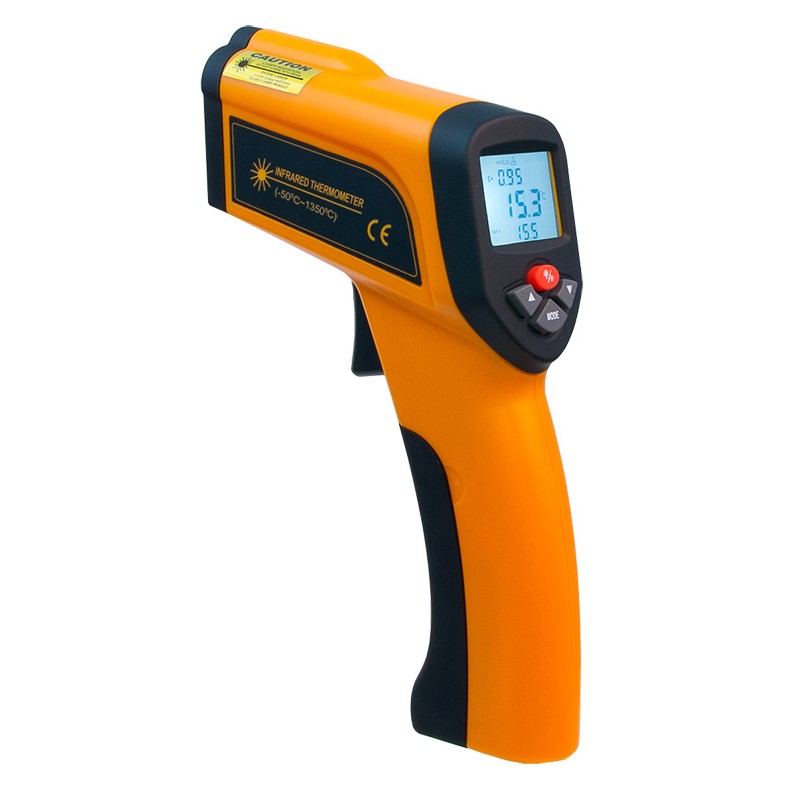
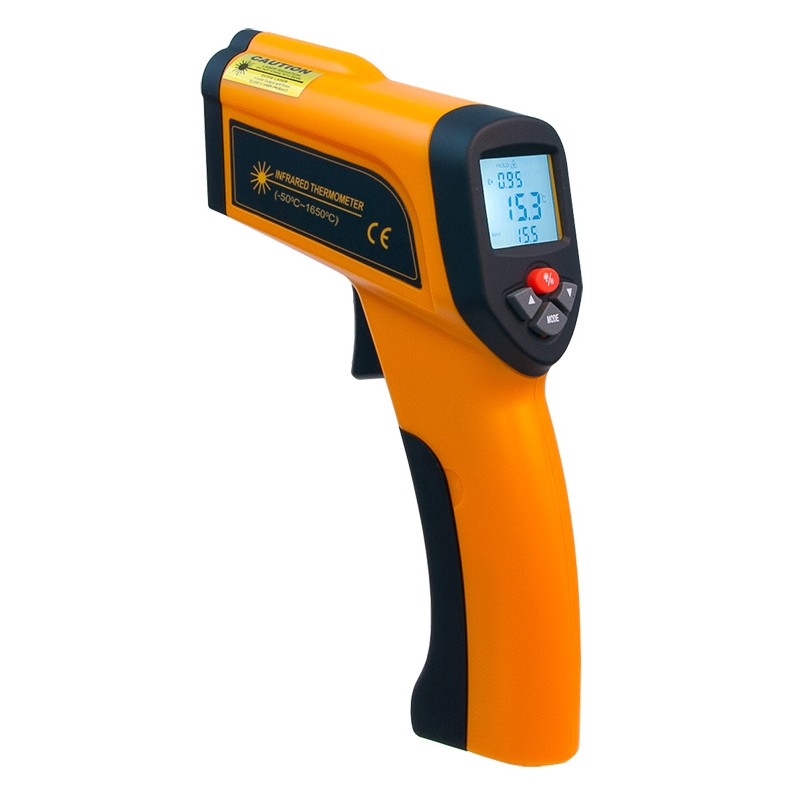
The Xintest HT-6897 is an industrial infrared thermometer, or pyrometer, for noncontact measurement of surface temperatures from -50 to +1650 °C. This is not a household temperature gun, but a tool for manufacturing, workshops, electrical maintenance, and measuring furnaces, boilers, heated workpieces, equipment components, and other places where reaching in with a thermometer would be a very bad idea.
The model’s main advantage is its combination of long-range IR optics, contact measurement via a Type K thermocouple, and features for regular monitoring. The HT-6897 does more than show a single number when you pull the trigger: it can scan temperatures continuously, store results, and calculate the minimum, maximum, average, and difference between the extremes.
Two ways to measure: noncontact and contact
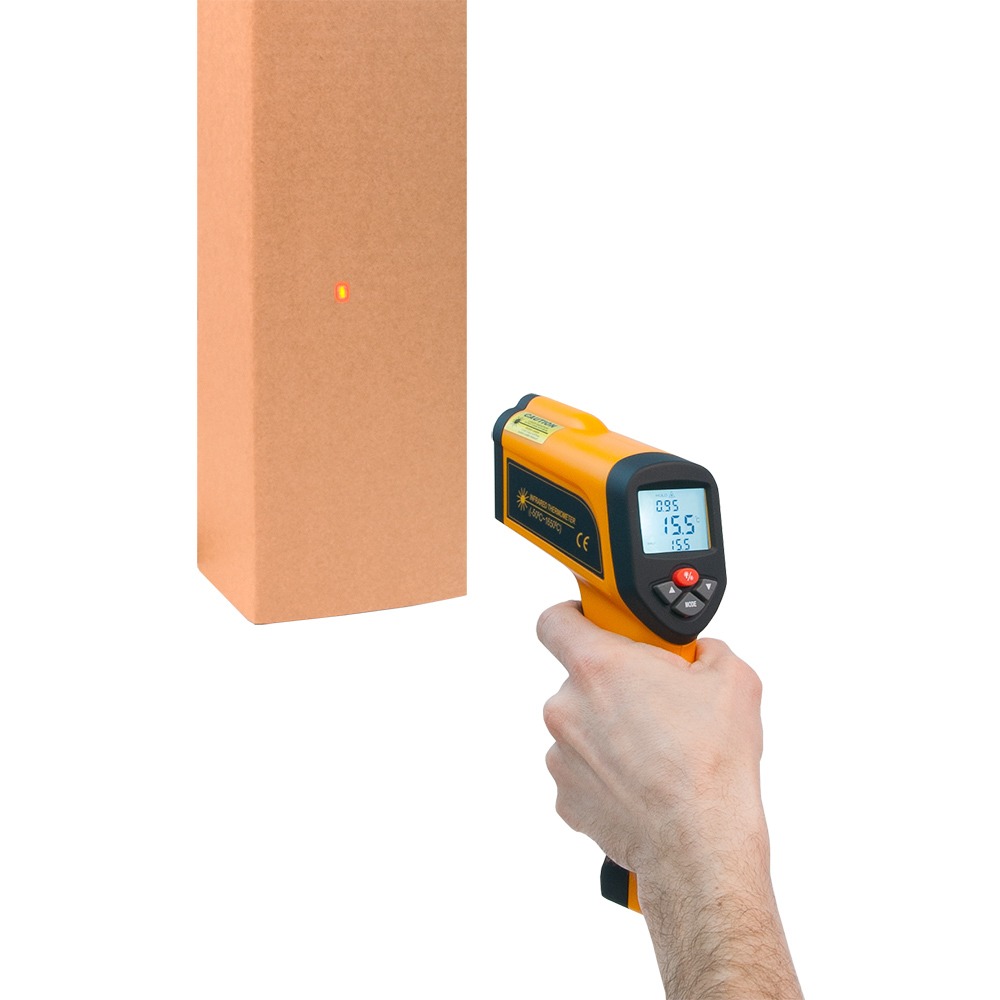
The HT-6897’s primary mode is infrared. Simply point the device at a surface, pull the trigger, and read the temperature. Laser targeting helps you see where the device is aimed, but it is important to remember that the laser indicates direction, not the actual diameter of the measurement area.
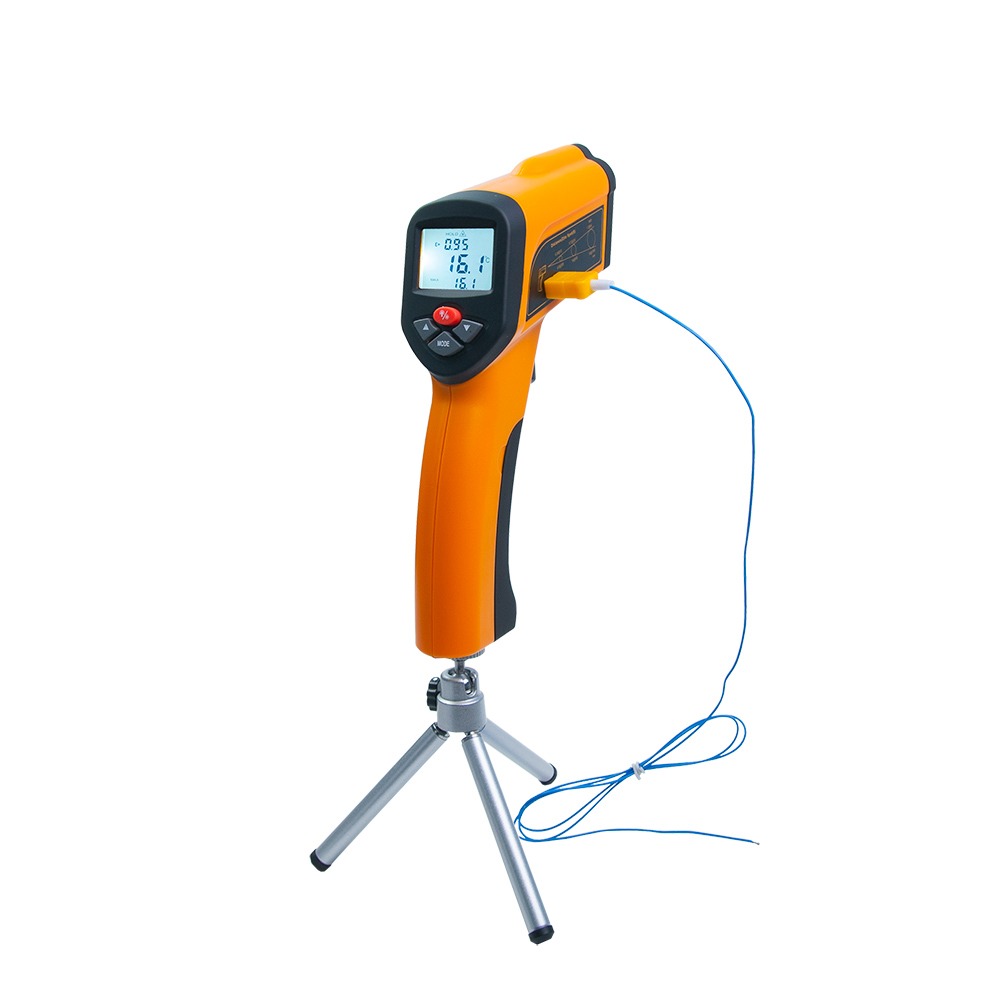
The second method is contact measurement using a Type K thermocouple connected to the port. Use it on accessible surfaces, to check the pyrometer’s readings, or to adjust the emissivity setting for a specific material. The Type K measurement range is -50 to +1370 °C.
This combination is especially useful when working with metals. Polished steel, aluminum, copper, and other shiny surfaces readily reflect thermal radiation from their surroundings, so an IR measurement can be far from the actual temperature without the correct emissivity setting. The thermocouple lets you check the reading, while emissivity adjustment from 0.10–1.00 lets you adapt the pyrometer to the material.
50:1 optics let you keep your distance
The 50:1 distance-to-spot ratio means that at a distance of 1 m, the device measures an area approximately 2 cm in diameter. This lets you measure the temperature of distant objects without getting unnecessarily close to a hot zone. When checking heated parts, energized equipment, or furnace chambers, this is not just convenient, but a matter of safety.
Still, the basic rule of pyrometry remains unchanged: the object must be larger than the measurement spot. If you aim the device at a small bolt from several meters away, it will “see” not only the bolt but also its hot or cold surroundings. The smaller the target, the closer you need to get, while observing safety requirements.
Monitor the process, not just a single reading
The HT-6897 has a continuous scanning mode that holds readings. During measurement, the device automatically calculates MAX, MIN, AVG, and DIF: the maximum, minimum, and average temperatures, and the difference between the maximum and minimum. This is useful when you need to find the hottest point on a component, assess heating uniformity, or track temperature changes while equipment is running.
Up to 100 results can be stored in the internal memory. Add adjustable upper and lower thresholds with an audible alert, and the pyrometer becomes a practical tool for an operator who does not want to guess each time whether something is already “too hot.”
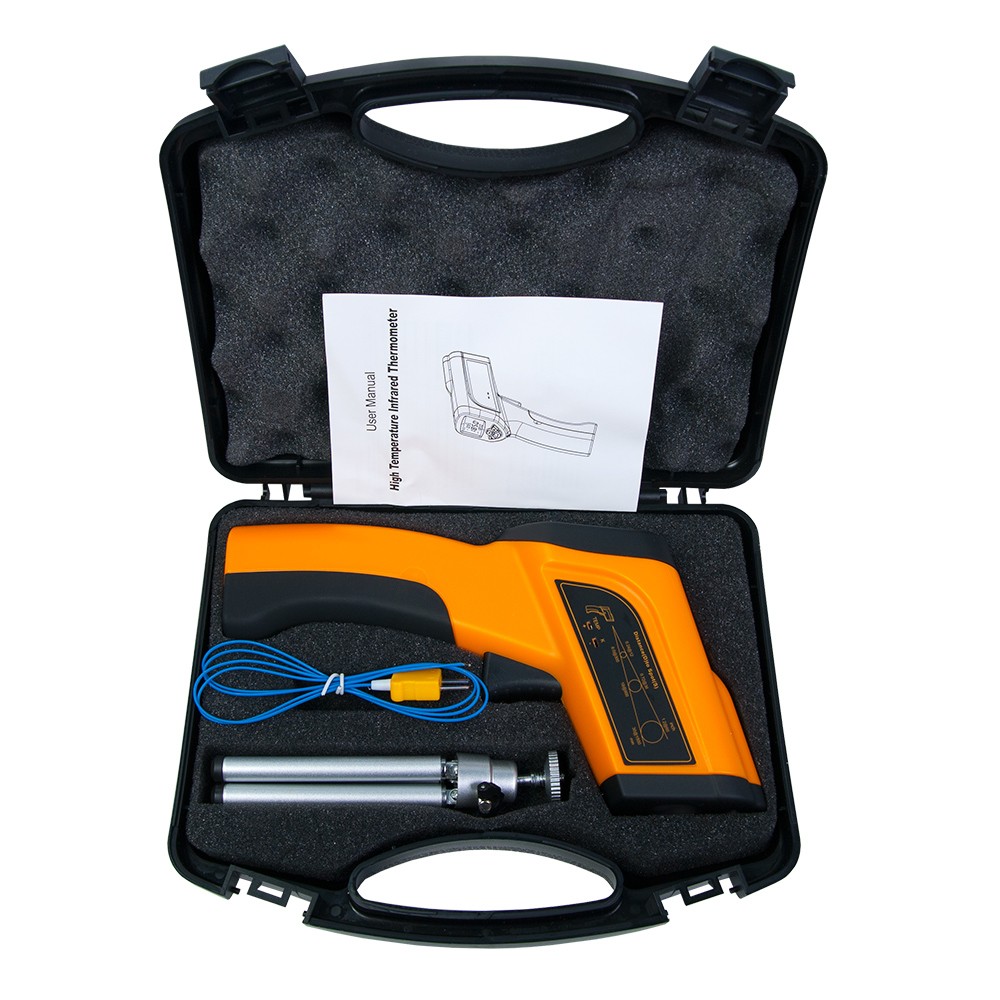
Display, power, and included items
The device has a backlit four-line LCD that shows the main reading and operating parameters at the same time. It offers switching between °C and °F, a low battery indicator, an out-of-range indicator, and auto power-off. For extended monitoring, a continuous measurement hold mode is available.
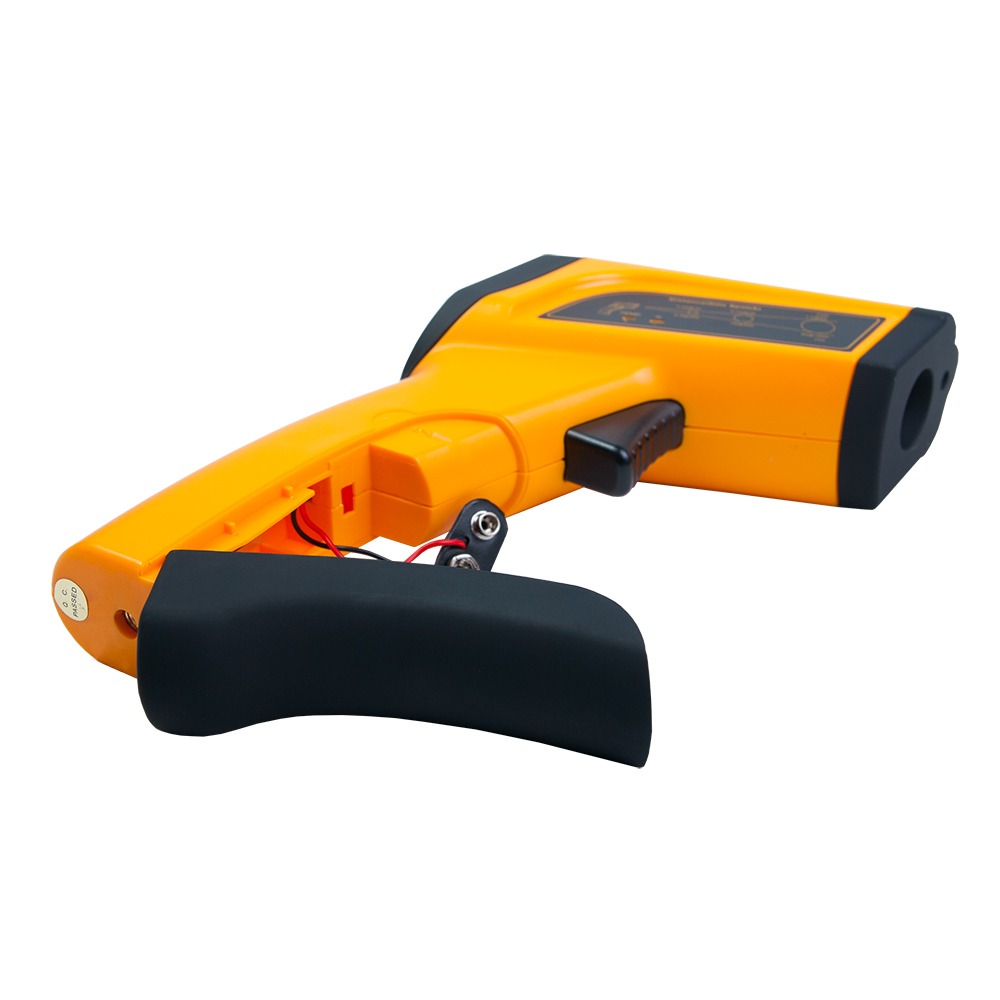
The Xintest HT-6897 runs on a standard 9V battery. The kit includes a Type K thermocouple, tripod, battery, manual, and hard plastic case. You can take the tool straight to the job site without separately looking for a way to carry or mount it.
What to know before buying
The IR sensor measures surface temperature, not the temperature of air or flames, or the internal temperature of an object. The pyrometer also cannot “see” an object through glass; it will mostly read the temperature of the glass itself. Do not use the HT-6897 as a medical thermometer either: it is intended for technical surfaces and industrial temperatures.
Noncontact mode works most predictably on matte painted, oxidized, or dark surfaces. Shiny, mirror-like, very small, or irregularly shaped parts require the correct emissivity setting, a shorter distance, and, when needed, a thermocouple check. This is not a flaw specific to the HT-6897, but the physics of infrared measurement, and no one has managed to argue with that yet.
Conclusion
The Xintest HT-6897 is suited to tradespeople, technicians, and manufacturing professionals who need more than a wide temperature range: they need a tool that gives them control over their measurements. It offers IR measurement up to +1650 °C, 50:1 optics, a Type K contact thermocouple, memory, threshold alerts, and a complete kit with a tripod and case. It is a good choice for jobs where the surface is hot, access is difficult, and a rough visual estimate could prove too costly.