Saphymo AASKRO SkyLINK / ShortLINK Radiation Monitoring System
Pros
- Private network with no subscription fees
- Range up to 100 km (LOS)
- Low power consumption, up to 10 years
- Scalable to 1000 sensors
- Works without GSM infrastructure
Cons
- Requires line of sight
- Low transmission speed
- Frequencies may require approvals
What is AASKRO SkyLINK / ShortLINK?
AASKRO SkyLINK / ShortLINK is a modular, autonomous radiation monitoring system built around its own radio link: ShortLINK for short-range telemetry and SkyLINK for long-range telemetry. Its strength is simple: when cellular service is overloaded, down, or unavailable, the system still transmits measurements to a central station.
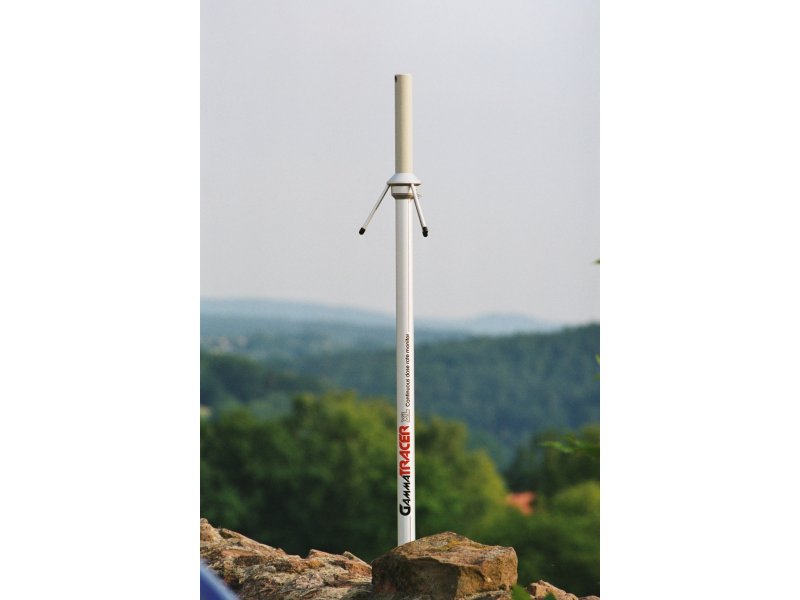
The most typical setup consists of a network of autonomous sensors (such as GammaTRACER gamma probes) + a receiving station + software for collecting and visualizing data.


SkyLINK vs ShortLINK: what's the difference?
Both systems operate in the 400–500 MHz UHF band, transmit data one way (from sensor to receiver), and use ultra-low power of 10 mW. The difference lies in the receiver's sensitivity to weak signals and, as a result, the range:
ShortLINK reaches up to 5 km (line of sight). It is a logical choice for industrial sites, perimeters, and local monitoring zones.
SkyLINK reaches up to 100 km (line of sight). It is suited to wide-area monitoring, including areas around facilities, large territories, and widely separated stations.
Private radio link: why it matters
SkyLINK / ShortLINK is a user-operated private network that does not depend on operators or their maintenance, outages, or network congestion. Another advantage is that there are no data transmission costs as there are with GSM/GPRS/4G setups.
Data is transmitted in compact packets with error correction (FEC) and integrity checks (CRC). The speed is modest at 150 Bd, but it is sufficient for telemetry (dose/dose rate, system parameters, and weather data). The system is not designed for video or streaming, but for reliably communicating the essential information accurately.
System architecture: what connects where
A typical configuration is built around:
- autonomous sensors/probes (often GammaTRACER) with a radio module and transmitter;
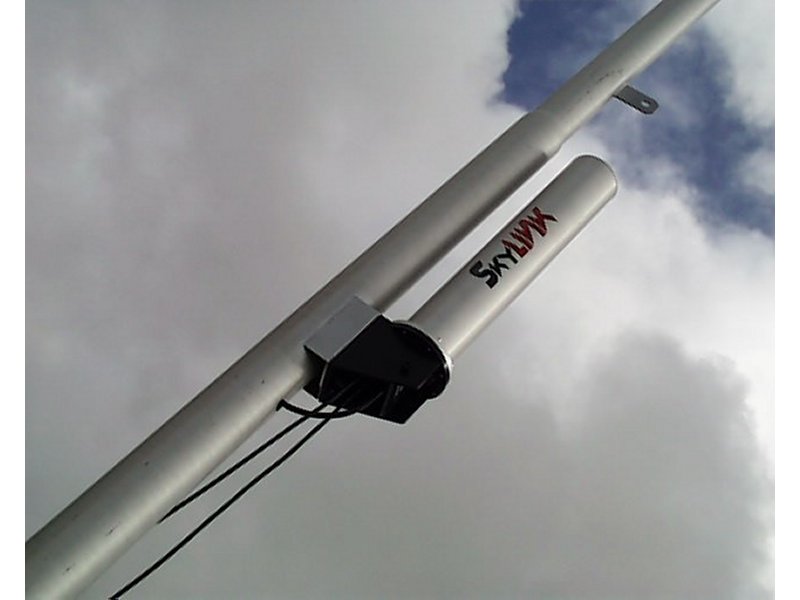
- a receiving antenna (sometimes with an RF unit/converter as part of the receiving equipment);
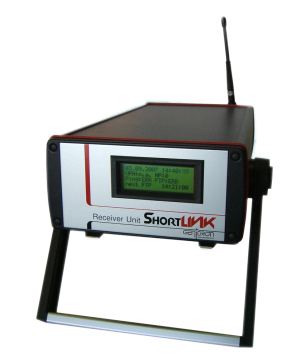
- a receiver (ShortLINK or SkyLINK);
- a central PC/server with software for collecting, processing, archiving, and displaying data (depending on the project).
One advantage is that the system scales: a typical network can range from a few stations to a very large number (on the order of hundreds) within a single receiving infrastructure.
Range, terrain, and honest advice before buying
The specified “5 km” and “100 km” ranges assume LOS (line of sight). In practice, mast height, forests and buildings, changes in terrain, radio interference, and the choice of receiving site all matter.
So the practical advice is to allow time for radio planning before purchasing or deployment (or better yet, a test installation of one station). This is cheaper than trying to fix coverage later with tall masts and “magic” settings.
Who is it for?
- critical infrastructure facilities where independence from public networks is important;
- civil protection and emergency response services (for deployment during an incident);
- radioecological monitoring stations and research programs;
- businesses that require regular, documented radiation monitoring;
- applications that need weather data alongside radiation data for forecasting and risk assessment.
Conclusion
SkyLINK / ShortLINK provides reliable telemetry communication through a quiet, energy-efficient private network. It is a good fit if you need a system that does not rely on 4G at the most critical moment and has no subscription fee for each station.
Proper antenna placement and the choice between ShortLINK for local coverage and SkyLINK for wide-area coverage matter more than any marketing figures. But when everything is properly configured, the system delivers exactly what an AASKRO should: data on time.