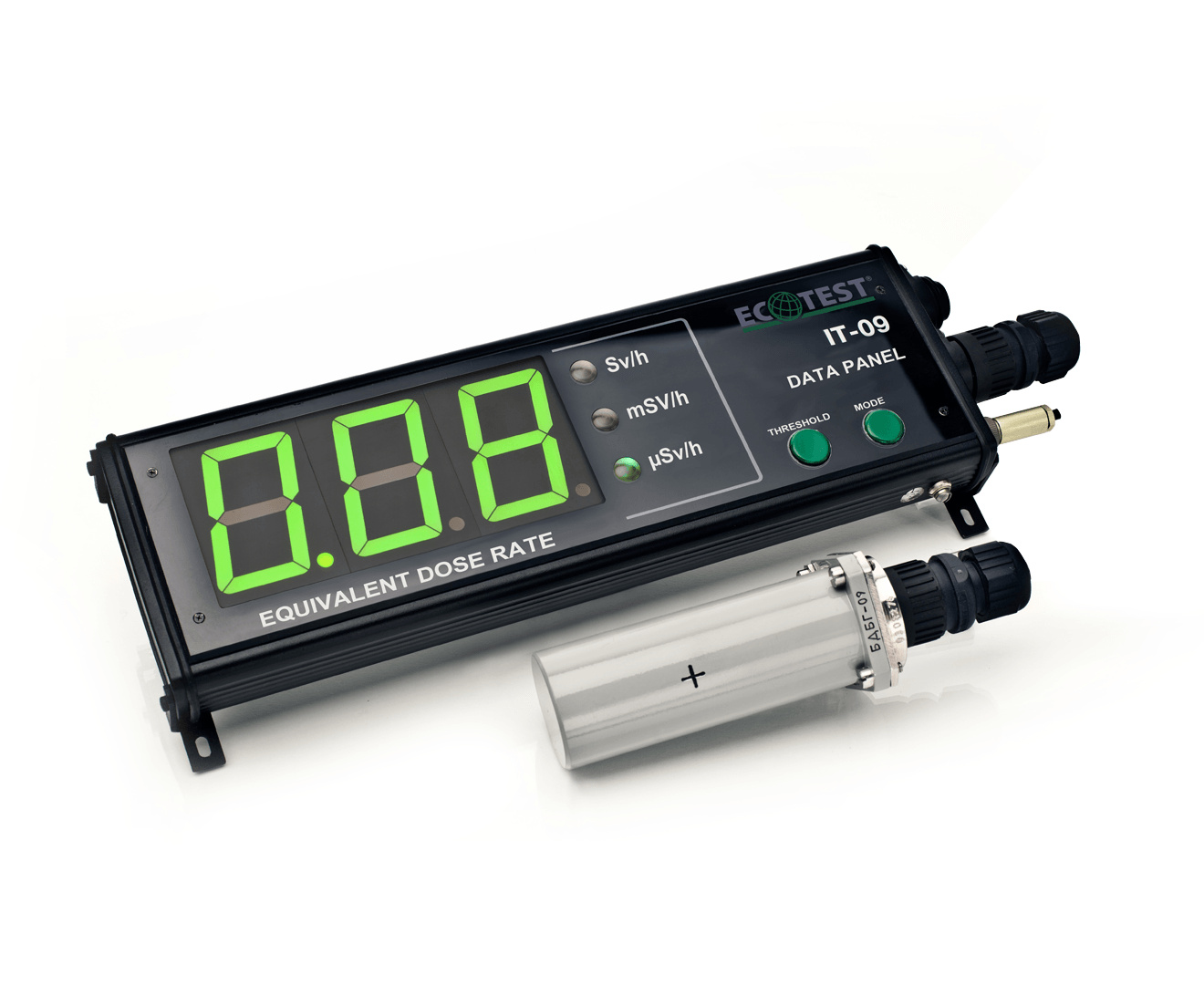
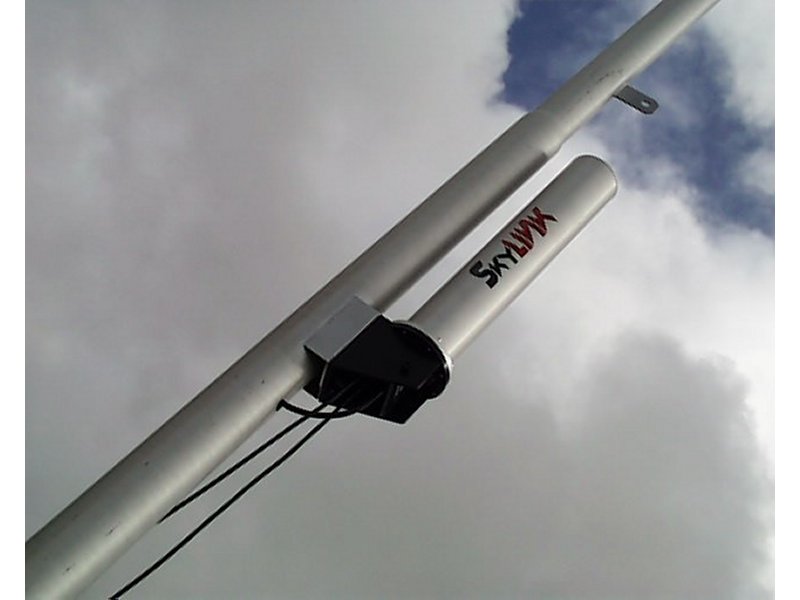
Ecotest RIK-09 Radiation Information Complex
Pros
- Giant, easy-to-read display
- Continuous gamma background monitoring
- Data transfer to a PC
- GPS time synchronization
- IP67-rated sensor for outdoor use
Cons
- Very large display board
- Requires stationary installation
- Not a gadget for home use
What is the RIK-09 and why would you need it?
The RIK-09 radiation information complex is a stationary system that measures the ambient dose equivalent rate of gamma radiation around the clock and shows the result on a large LED display board. These systems are installed where clear, continuous radiation readings are important: at industrial facilities, in controlled zones, at checkpoints and entrances, near critical infrastructure, and in places where environmental safety is a particular concern.
The official description and basic specifications are available in English on the manufacturer's page: ECOTEST — RIK-09.

What the system consists of
The RIK-09 has two key components:
- BDBG-09 gamma radiation detection unit: the system's “eyes.” It measures background gamma radiation and has RS-485 for data exchange, self-testing, and statistical error indication. The BDBG-09 has a stated IP67 rating.
- TIS-09 LED information display board: the system's “face.” Its large matrix and tall characters make readings visible from a distance.
Essentially, it's a sensor plus an outdoor display board, designed for integration into centralized monitoring: data can be transmitted continuously to a PC.
What the RIK-09 displays and how to read the numbers
The main number on the display is the gamma radiation ambient dose equivalent rate, usually in µSv/h. The higher the value, the higher the background radiation. For context, background levels in everyday settings are often fractions of a µSv/h, but the actual “normal background” depends on the region, altitude, geology, and other factors.
The system can also display the date and time (with GPS synchronization) and the ambient temperature.
TIS-09 display board: why it's so big and why that helps
The TIS-09 isn't a tiny screen on a wall; it's a full-size information panel nearly 2.5 m long. The maximum character height is 240 mm, and the matrix is 160×16 pixels. In practical terms, the readings are visible from a distance, without having to walk right up and squint.
The display glows yellow (591 nm), with stated viewing angles of 100° horizontally and 40° vertically. That matters when people view it from an angle, for example, from the road.
Connections, distances, and data transfer
The BDBG-09 and TIS-09 exchange data via RS-485. The display board and sensor can be up to 50 m apart, which is useful when the board needs to be visible to people while the sensor is placed where it can take a truly representative measurement.
The TIS-09 has an output for a personal computer, allowing you to collect and archive data and monitor several control points centrally when deploying a monitoring system.
Operating conditions: outdoors, dust, and moisture without the drama
The system is rated to operate at temperatures from -30 °C to +45 °C and relative humidity up to 100% (at +40 °C). The BDBG-09 sensor itself has a wider operating temperature range (up to +75 °C) and an IP67 rating, making it suitable for outdoor placement when installed correctly.
What to check before purchase and installation
- Sensor location: keep it away from metal structures, sources of interference, and “heat pockets.”
- Cable length and type: if you need around 50 m, it's best to plan for it from the start.
- PC connection: consider whether you only need the display board or also require an archive, graphs, or integration into a control system.
- Maintenance and verification: these are a normal part of the life cycle of such systems, not something to leave for later.
If you want a system you can put on a table to measure mushrooms, this isn't that kind of device. But if you need a stationary, easy-to-read radiation information point that can be integrated into a monitoring system, that's exactly what the RIK-09 is designed for.