Stationary radiation monitoring systems

Ecotest RIK-09 Radiation Information Complex
Price on request
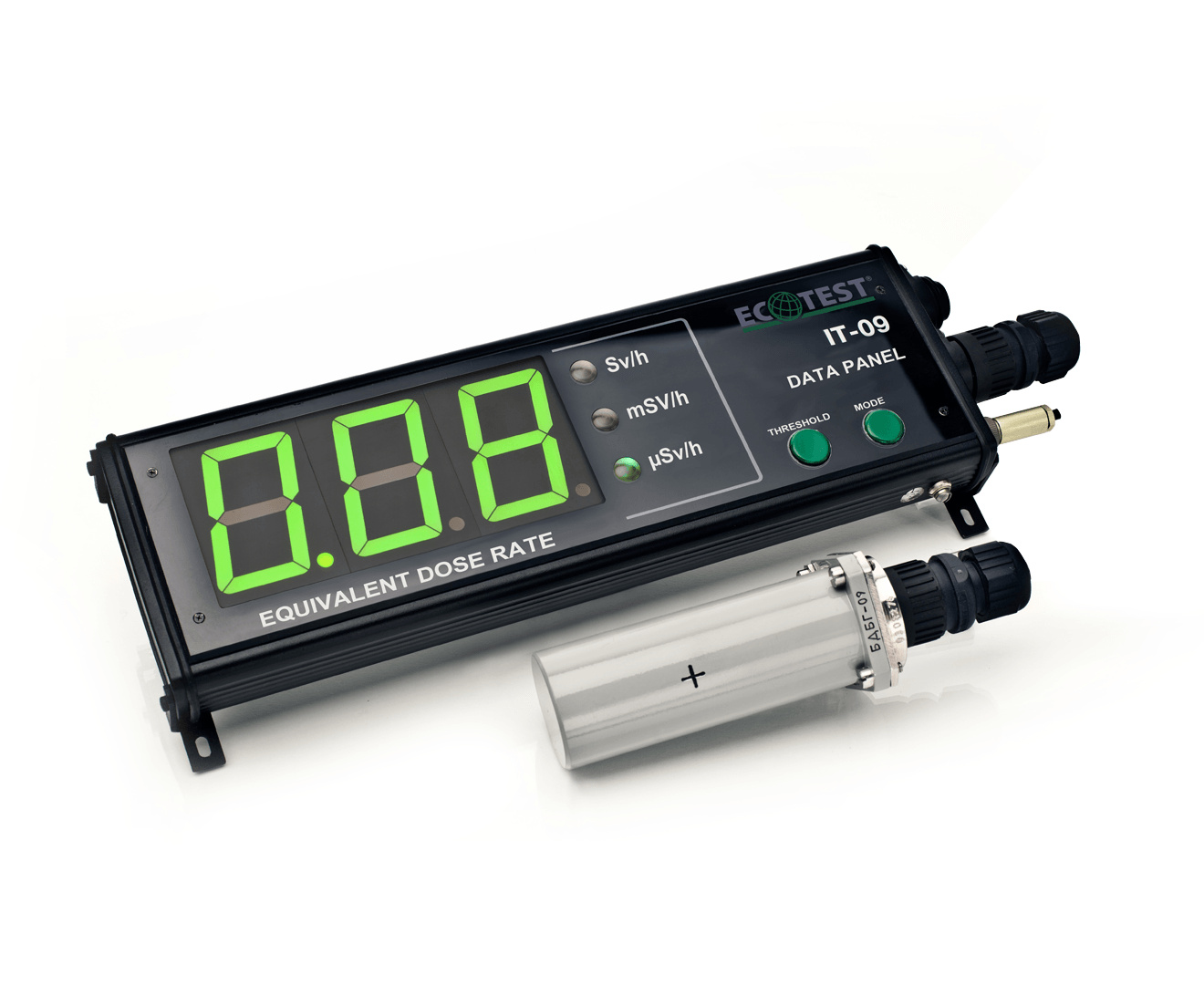
Ecotest IT-09 Stationary Radiation Monitoring System
Price on request
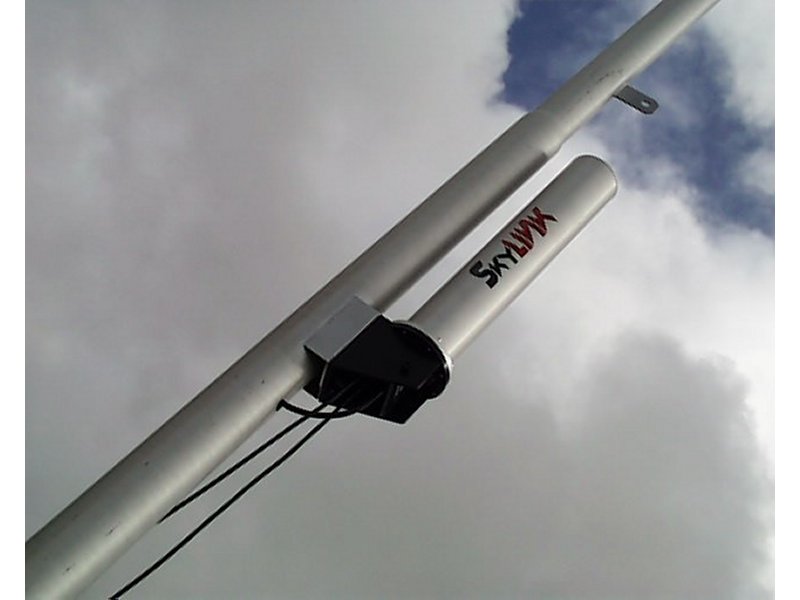
Saphymo AASKRO SkyLINK / ShortLINK Radiation Monitoring System
Price on request
How to choose
Stationary radiation monitoring systems are needed where it is important to continuously monitor radiation levels indoors, at a facility, or at remote stations. To choose the right system, first determine the operating format, which readings you need to see, and how the data should be transmitted onward.
System architecture and delivery format
First, determine which system format you need. The catalog includes a radiation information system with a local display and detector, as well as the autonomous AASKRO monitoring system in a telemetry network format. The first option is convenient when readings need to be available directly on site, while the second is suitable when remote data collection and operation across multiple monitoring points are important.
Also pay attention to whether the product is sold as a standalone device or as a set. This matters in terms of readiness for deployment: a set is usually easier to implement as a complete solution, while a standalone device is more often chosen to expand an existing system.
What the system measures
For stationary monitoring, it is important not simply to see that radiation is present, but to understand which measurement is needed for your work. In this category, systems are intended for gamma radiation and can work with quantities such as radiation dose rate and accumulated dose.
If you need prompt monitoring of the current situation, dose rate will usually be the key measurement. If it is important to track exposure over a period, accumulated dose will be useful. Also check exactly what the system displays and in which units, so the readings are convenient to interpret for your operating scenario.
Measurement ranges and accuracy
When choosing, compare not only whether the system can measure, but also the limits within which it operates. To do this, look at the dose rate measurement range (DER) and the accumulated dose measurement range (DE). The better these parameters match your conditions, the less likely the system will be either too coarse for everyday monitoring or insufficient for unusual situations.
The stated error is no less important. Dose rate accuracy and accumulated dose accuracy are especially critical where data is used for reporting, alarm thresholds, or comparison among several monitoring stations. If these parameters are listed on the product page, they should be among the first things you compare.
Communication, telemetry, and integration
If the system needs to transmit data to a computer, SCADA, or a central monitoring point, check the communication interfaces. The catalog includes RS-485 and USB via an adapter for this purpose, while telemetry solutions use a private radio telemetry network. This is important for compatibility with existing infrastructure and for implementation costs.
For projects with distributed stations, it is also useful to consider optional communication variants / backhaul options and compatibility with radiation probes or monitors. The available information mentions Wi-Fi, a GSM/GPRS cellular modem, and satellite communication, as well as compatibility with GammaTRACER, MiniTRACE, SpectroTRACER, and other low-power sensors. This helps assess how easily the system can be expanded or adapted to a specific facility.
Local indication and alarms
If quick visual monitoring is needed on site, pay attention to the display and alarm & indication modalities. The category includes an LED display, while the alarm channels listed include a visual LED signal and an audible signal. These notification methods are convenient where an operator needs to notice a change in radiation levels immediately without a separate computer.
Also check whether audible alerts are available and how communication between the detector and display module is organized. For local systems, RS-485 inter-module communication is important because it affects system layout and the connection of individual units to each other.
Reliability and installation conditions
For a stationary system, it is important to assess how well it suits the installation location and operating mode. The available products specify mains power, so such a solution is logical for permanently installed monitoring points where regular battery replacement is not planned.
From a practical standpoint, consider the IP rating, self-test / diagnostics mode, and time synchronization source. The catalog includes options with IP51 and IP67, continuous self-testing, and GPS time synchronization. This is especially important for outdoor locations, technical rooms, and facilities where uninterrupted operation and accurate time correlation of events are critical.
Tips
- For a single monitoring point, a system with a local display is more convenient; for several distributed stations, choose a telemetry network.
- Before purchasing, check whether the system measures the quantities you need for your work: dose rate, accumulated dose, or both.
- If connection to a PC, SCADA, or a remote center is planned, check right away that the required interface and communication option are available.
- For outdoor or demanding industrial environments, look for a higher IP rating and continuous self-testing.