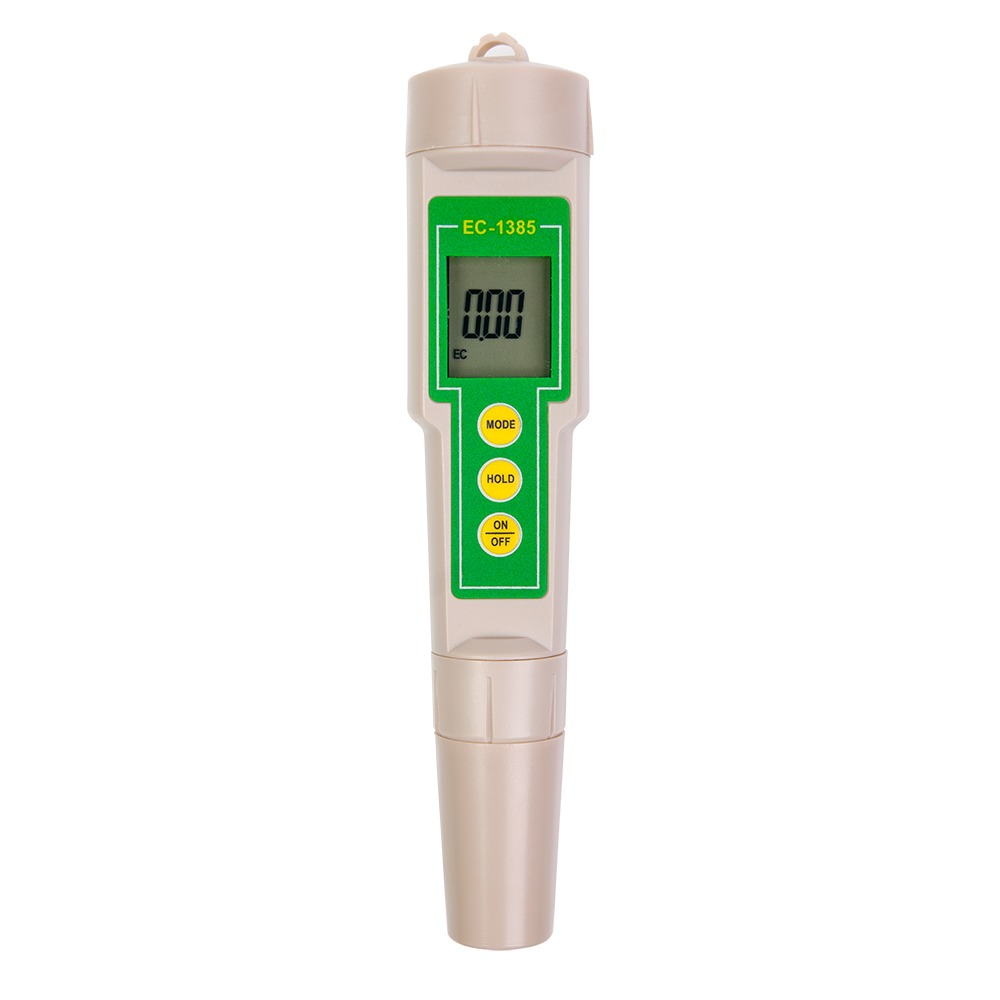
BROM TDS-3
Delivery and payment
Choose your city or town to see the price with delivery there and when you can get it.
Pickup points
- Branch
- Parcel locker
Pros
- Measurement range up to 9990 ppm
- Built-in thermometer and ATC
- HOLD button freezes the reading
- Case with clip included
- Auto power-off after ten minutes
Cons
- Does not identify specific contaminants
- Housing is not water-resistant
- Does not replace laboratory water testing
BROM TDS-3: a quick check of water mineral content
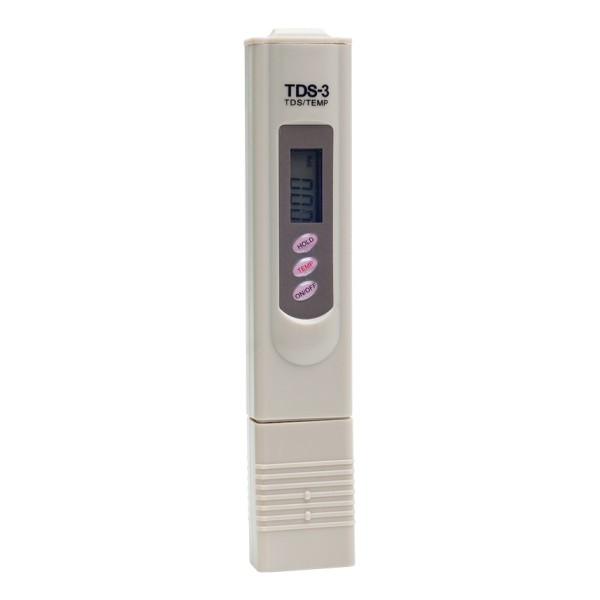
The BROM TDS-3 is a compact TDS meter, or salinity meter, for monitoring the total amount of substances dissolved in water. It displays readings in ppm, which for water are usually expressed as mg/L, and also measures water temperature. It is a practical tool for owners of reverse osmosis systems, aquariums, hydroponic setups, pools, wells, and boreholes.
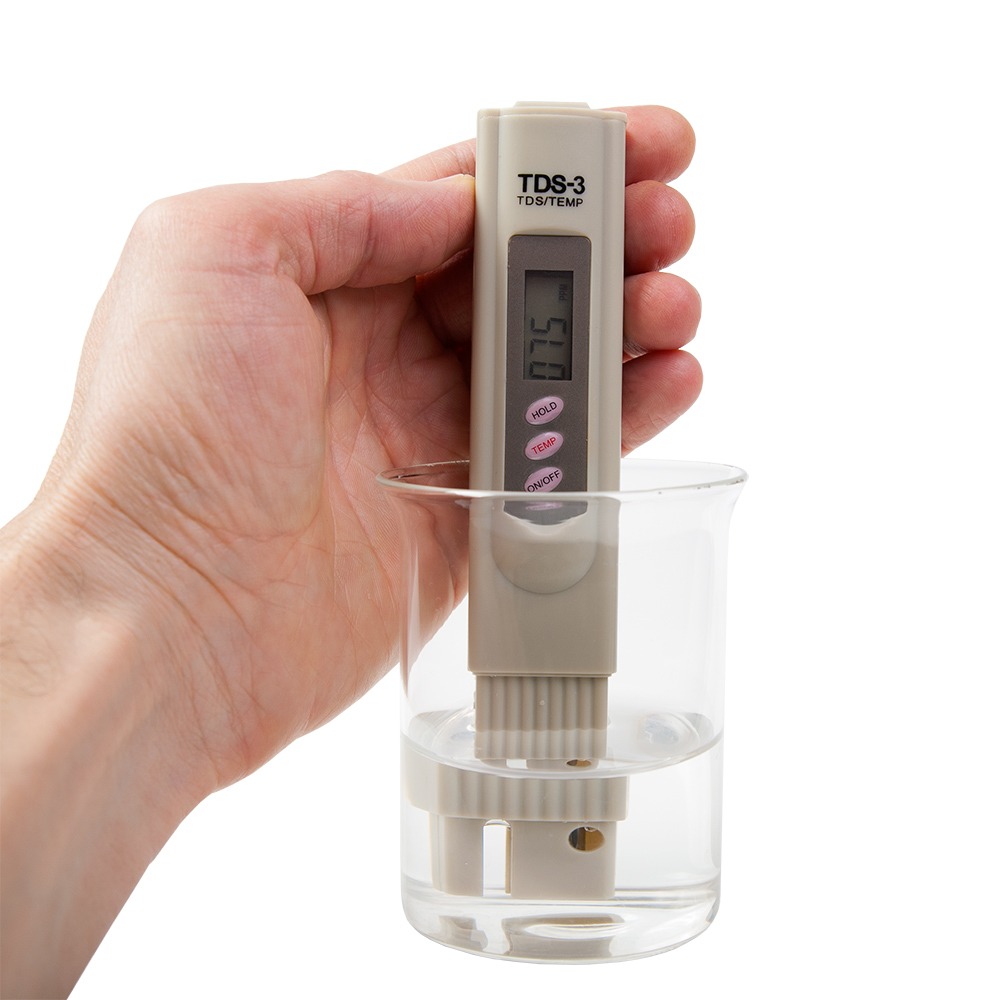
The process is simple: remove the cap, turn on the meter, immerse the sensor in a water sample, and wait for a stable reading on the LCD display. There are no test strips, reagents, or attempts to guess a color shade under the kitchen light.
What a TDS meter actually measures
TDS is a calculated measure of the total amount of dissolved salts and minerals. The BROM TDS-3 measures the electrical conductivity of water and converts it to ppm using an NaCl factor. This makes it well suited to comparing samples and monitoring changes, such as water before and after a filter or aquarium water on different days.
One important point: a low TDS reading does not certify that water is completely safe. The meter does not identify which substances are present in a sample or detect bacteria, viruses, pesticides, or individual heavy metals. It does not measure pH either. It is a tool for monitoring mineral content, not a pocket laboratory.
For filters, aquariums, and hydroponics
The most obvious use is checking the performance of a water purification system. Measure the TDS of the incoming water and the water after the filter: a large difference shows that the purification system is working. It is even more useful to record the results periodically. If the purified water reading rises noticeably while the incoming water remains unchanged, it is time to check the remaining life of the cartridges or membrane.
In an aquarium, the TDS-3 helps track mineral buildup between water changes. In hydroponics, it is useful for basic monitoring of nutrient solution concentration, although the TDS conversion factor should be kept in mind when adjusting nutrients more precisely.
Range, temperature, and convenient features
The meter measures TDS from 0 to 9990 ppm. Up to 999 ppm, readings are displayed in 1 ppm increments; at higher values, they are displayed in 10 ppm increments. This range is sufficient for both nearly demineralized water after reverse osmosis and much more mineralized solutions.
A separate TEMP button displays water temperature from 0 to 80 °C. Automatic temperature compensation accounts for sample temperature when calculating TDS, allowing for more accurate comparisons between cool borehole water and warm water from a container. The HOLD button freezes the reading on the screen, so you can remove the meter from the water and record the result at your leisure.
Compact and fuss-free
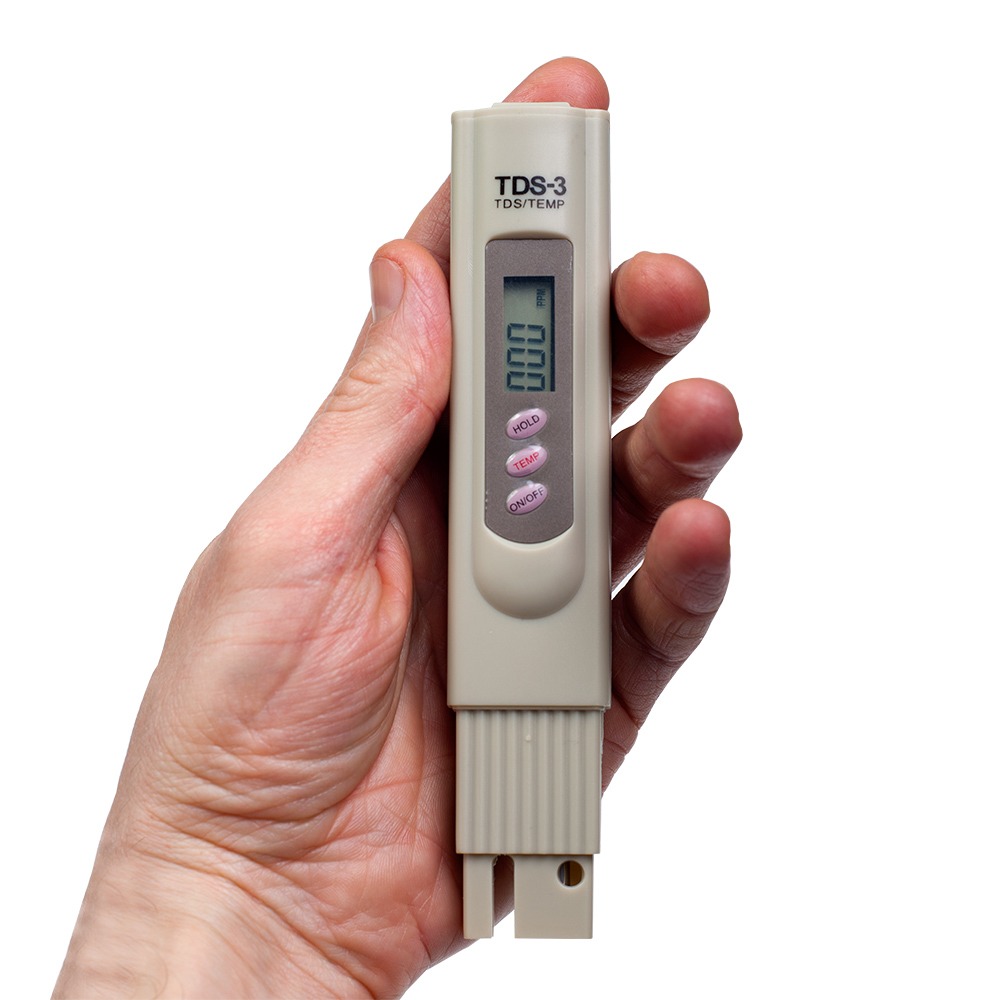
The BROM TDS-3 measures 15.5 × 3.1 × 2.3 cm and weighs just 56.7 g without the case. It runs on two 357A button-cell batteries, which are rated for up to 1000 hours of continuous operation. Auto power-off after 10 minutes of inactivity prevents the classic situation of leaving it on and draining the batteries.
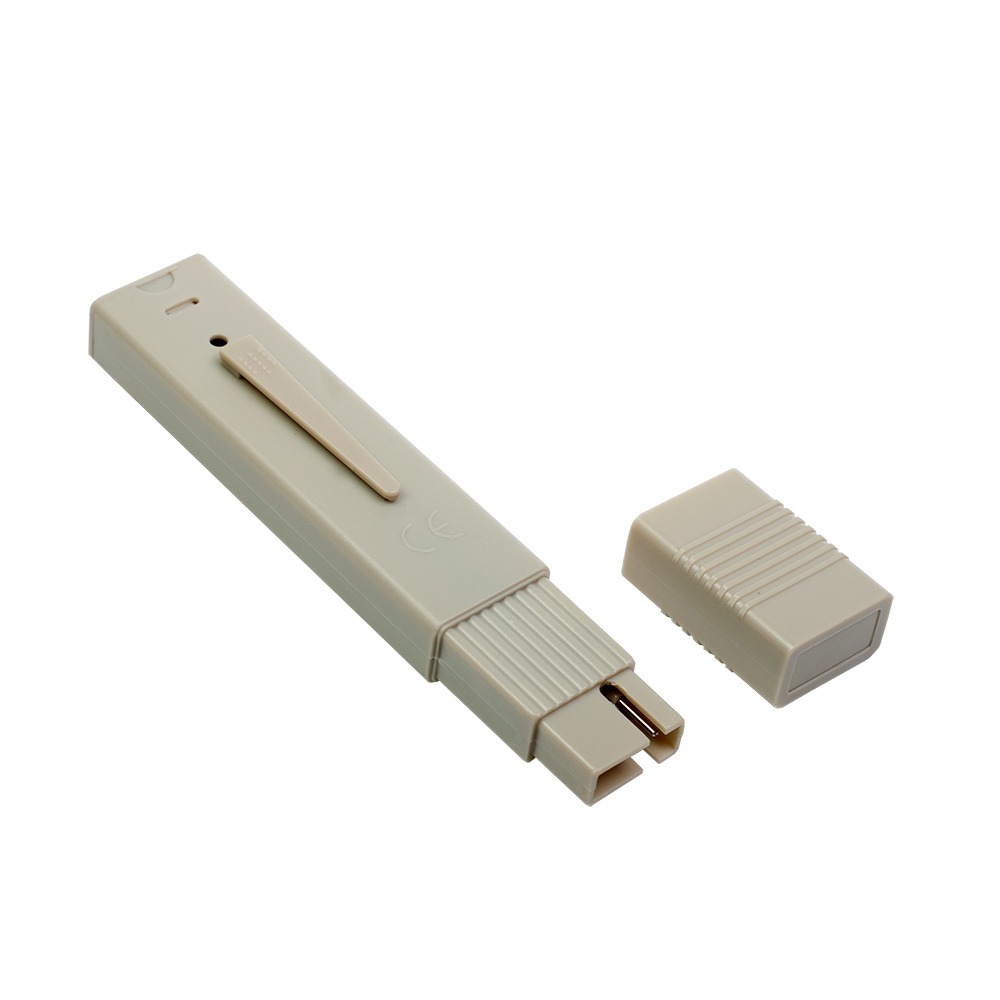
A protective cap and a case with a clip are included, making the tester easy to carry in a tool bag or keep near a filter. The housing is not water-resistant: immerse only the lower part with the sensor, without exceeding the maximum level mark.
Conclusion
The BROM TDS-3 is a simple, affordable meter for anyone who needs to regularly monitor water mineral content rather than perform complex chemical analysis. Its strengths include a wide range up to 9990 ppm, temperature measurement, automatic temperature compensation, HOLD, and readiness to use right out of the box.
It is a useful basic tool for checking a filter, reverse osmosis system, aquarium, hydroponic setup, or borehole water. The key is to interpret the result correctly: TDS shows the total level of dissolved substances, not a list of everything the water might contain.