Kelilong EC-1385 Conductivity Meter
Delivery and payment
Choose your city or town to see the price with delivery there and when you can get it.
Pickup points
- Branch
- Parcel locker
Pros
- Three measurements with one electrode
- Replaceable electrode
- Automatic temperature compensation
- Reading hold function
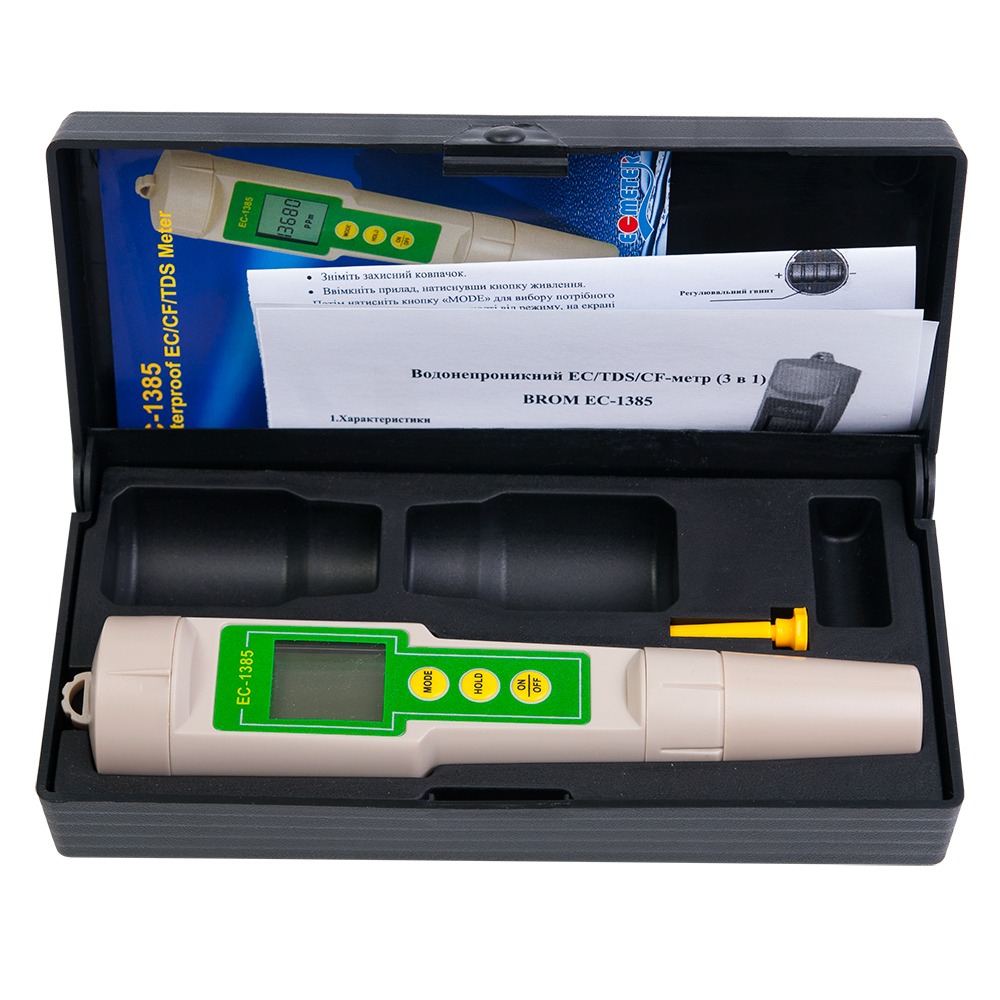
- Storage case included
Cons
- Does not measure pH or temperature
- Requires periodic calibration
- Does not identify the composition of impurities
EC-1385: quick checks of water and nutrient solutions
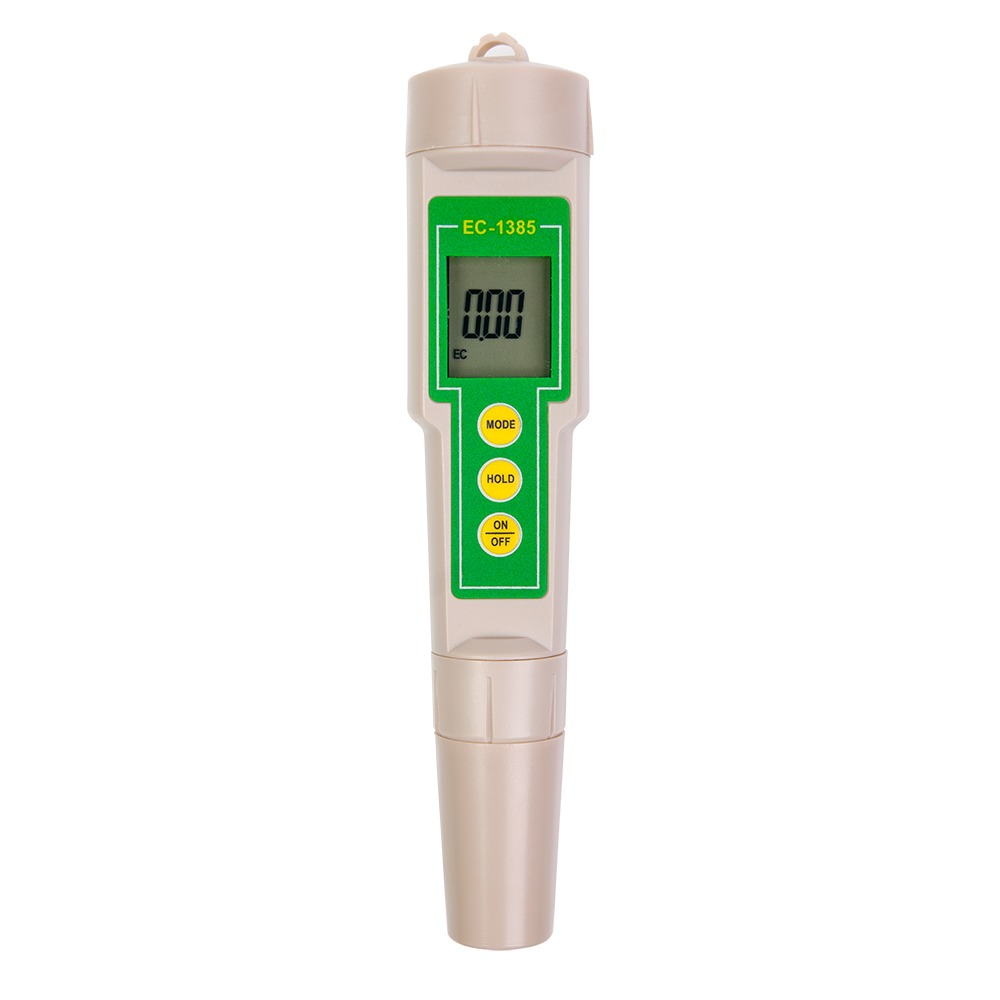
The EC-1385 is a portable, pen-style conductivity meter and salinometer designed to monitor the electrical conductivity of liquids. It measures three related values: EC, or electrical conductivity; TDS, or approximate total dissolved solids in ppm; and CF, or conductivity factor. Use the MODE button to switch between parameters, making this one device suitable for basic checks of water, fertilizers, and hydroponic solutions.
This model is a practical tool for aquarium enthusiasts, owners of reverse osmosis systems, pools, boreholes, and wells, as well as gardeners who prepare nutrient mixes. It won't turn a water sample into a lab report, but it quickly shows whether its mineral content has changed, which is often the first thing you need to know.

Three scales, one clear result
The main EC mode operates over a range of 0.00–19.99 mS/cm with a resolution of 0.01 mS/cm. This is useful for assessing nutrient solutions, filtered water, and other liquids with a noticeable salt content. TDS mode covers values from 10 to 19 990 ppm in increments of 10 ppm, while CF ranges from 0.0 to 199.0.
One important detail: devices like this calculate TDS from electrical conductivity. That means the EC-1385 is good at tracking the total amount of dissolved ions and changes between measurements, but it cannot tell you which specific salts or impurities are present in the water. Separate laboratory tests are needed to assess drinking water safety.
Automatic temperature compensation
A solution's electrical conductivity depends on its temperature: cold and warm water with the same amount of salts can give different readings. The EC-1385 has automatic temperature compensation from 0–50 °C, so there is no need to recalculate readings manually. This is especially useful when comparing measurements in a greenhouse or aquarium, or simply at different times of day.
The stated accuracy is ±2% of full scale. This is sufficient for household checks, plant care, and regular monitoring of purification systems, but the device should be calibrated with a reference solution before critical measurements.

A straightforward design
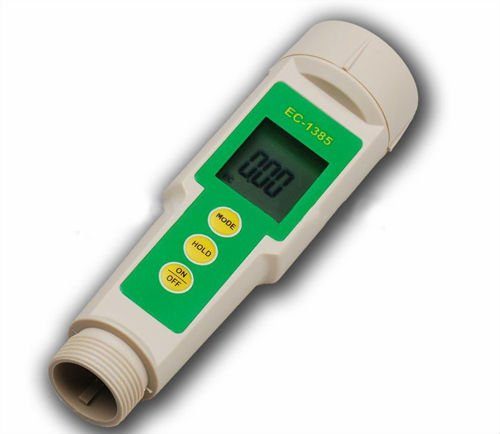
The 18.5 cm body weighs just 98 g, making the EC-1385 easy to carry in a tool bag or keep beside a tank. A large LCD display shows the active mode and reading, while three buttons control power, parameter switching, and HOLD.
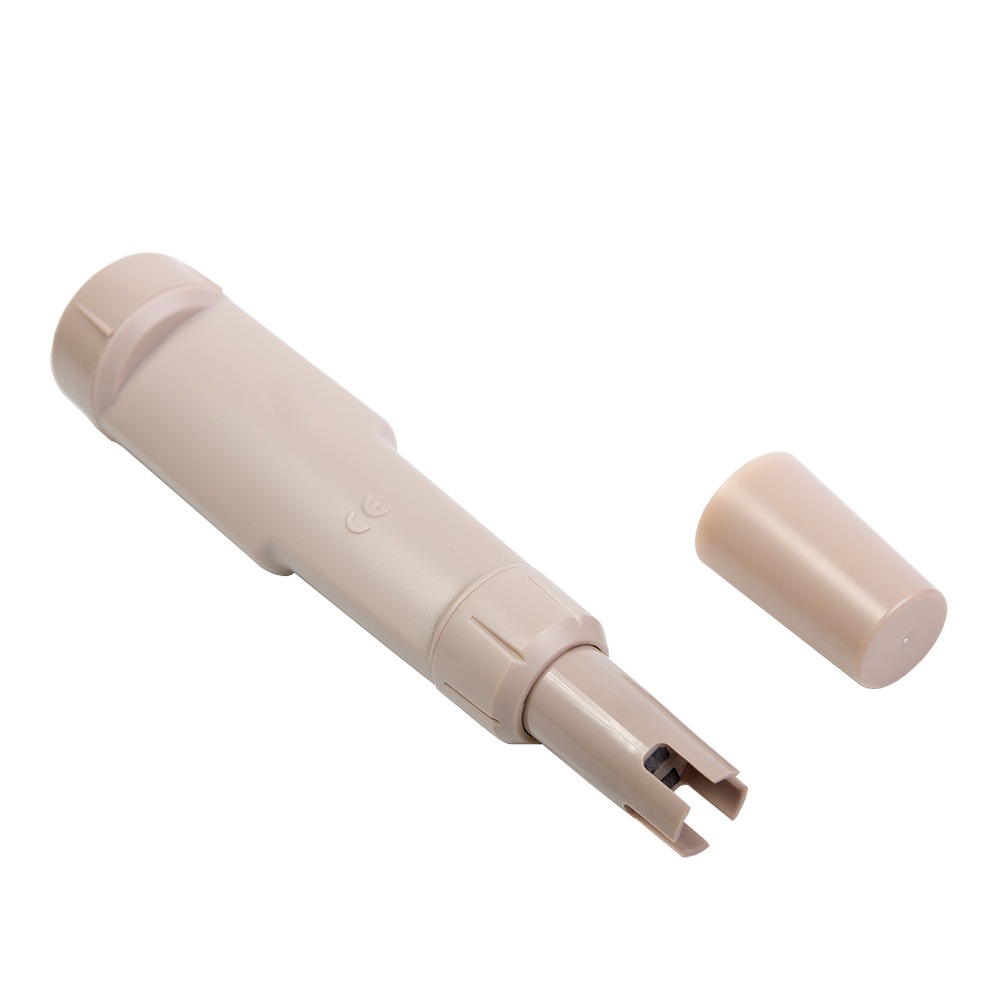
The HOLD function freezes the reading on the screen. It's a small feature that comes in handy when measuring water in an awkward spot, leaning over a tank, or simply trying not to remember a number on the go. The body is moisture-resistant, and a protective cap covers the electrode between measurements.
How to get accurate readings
Before measuring, rinse the electrode with clean water, immerse the sensor's working end in the liquid, gently stir the solution, and wait for the reading to stabilize. After use, rinse the electrode again and replace the cap. Don't measure dry substances or use the device as a stirring spoon—the electrode won't appreciate the joke.
The EC-1385 runs on four AG13 batteries. A calibration screwdriver, instructions, and a hard plastic case are included. It's a good choice for anyone who needs an affordable, compact, and easy-to-use device for regular EC/TDS/CF checks without complicated menus or unnecessary electronics.