DM-200W
Delivery and payment
Choose your city or town to see the price with delivery there and when you can get it.
Pickup points
- Branch
- Parcel locker
Pros
- Leaves no puncture marks in wood
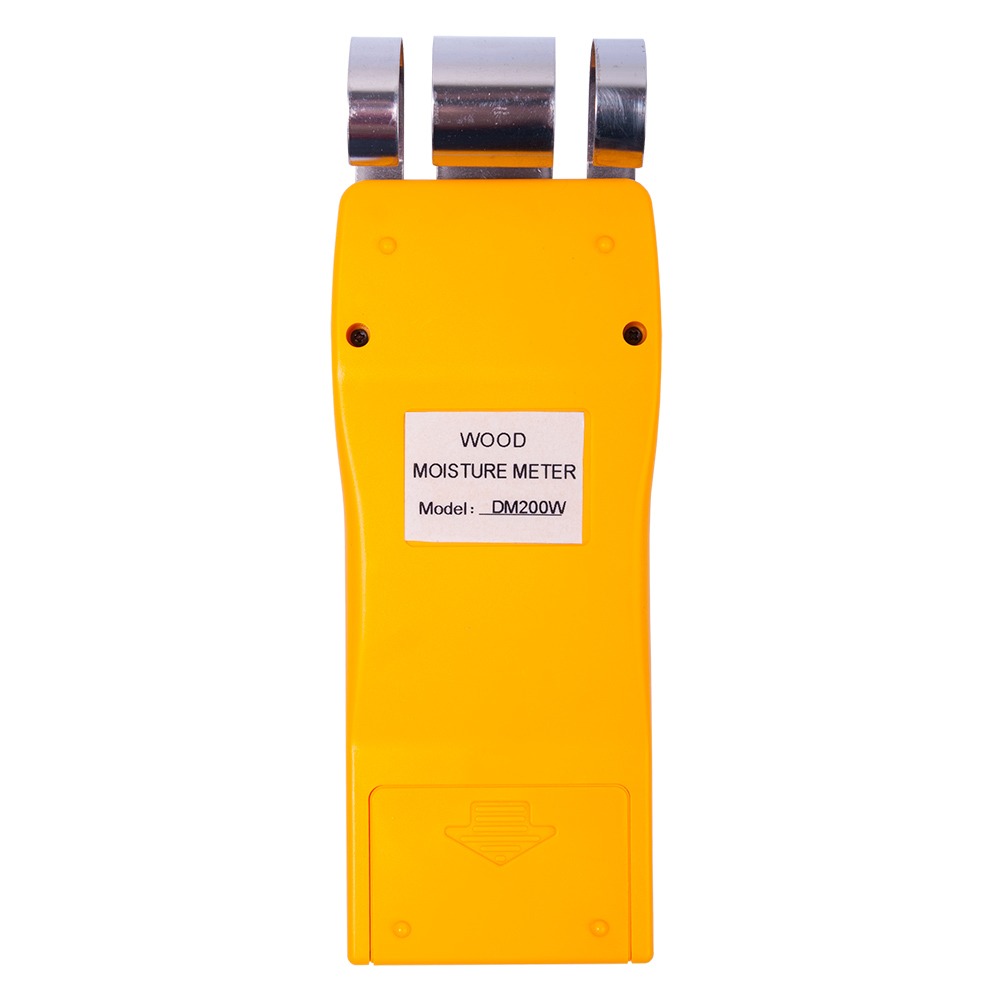
- Three spring contacts
- Quick readings in about a second
- Precision mode up to 2%
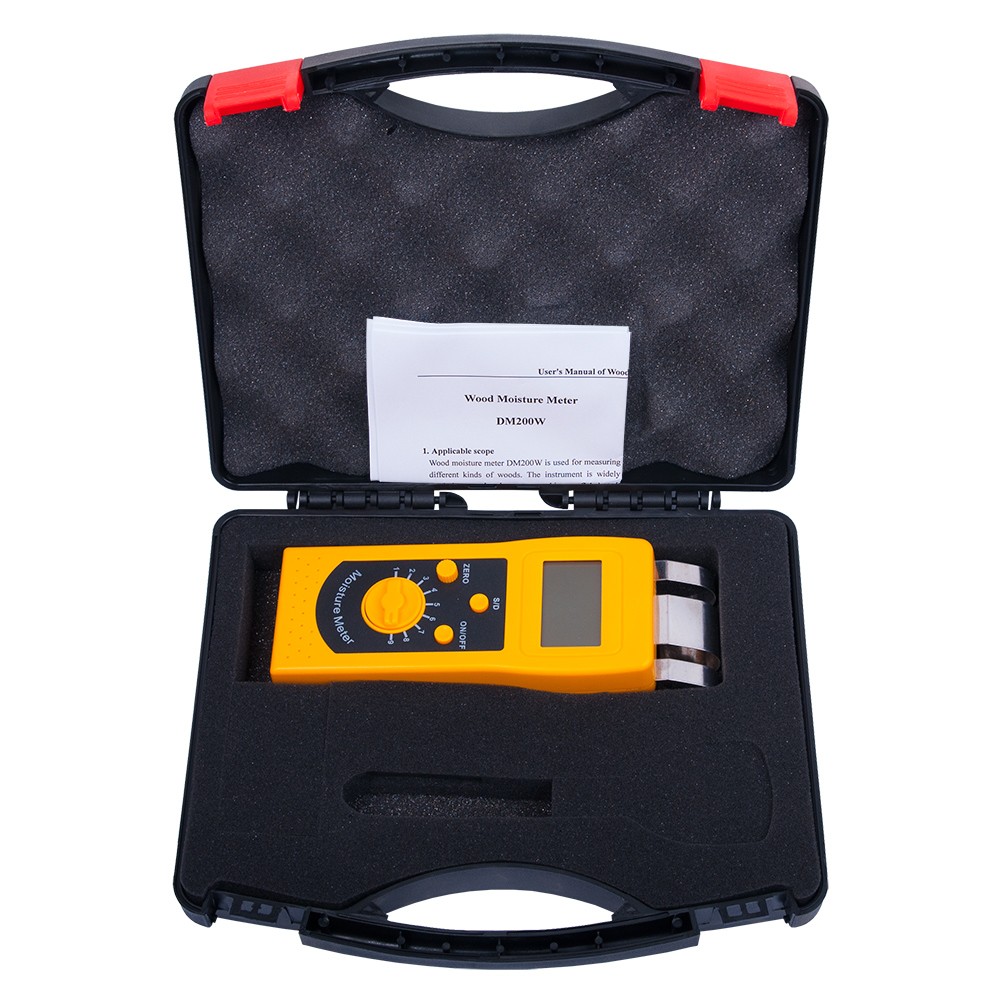
- Case for storage and transport
Cons
- Requires adjustment for the wood species
- Thin workpieces are harder to measure
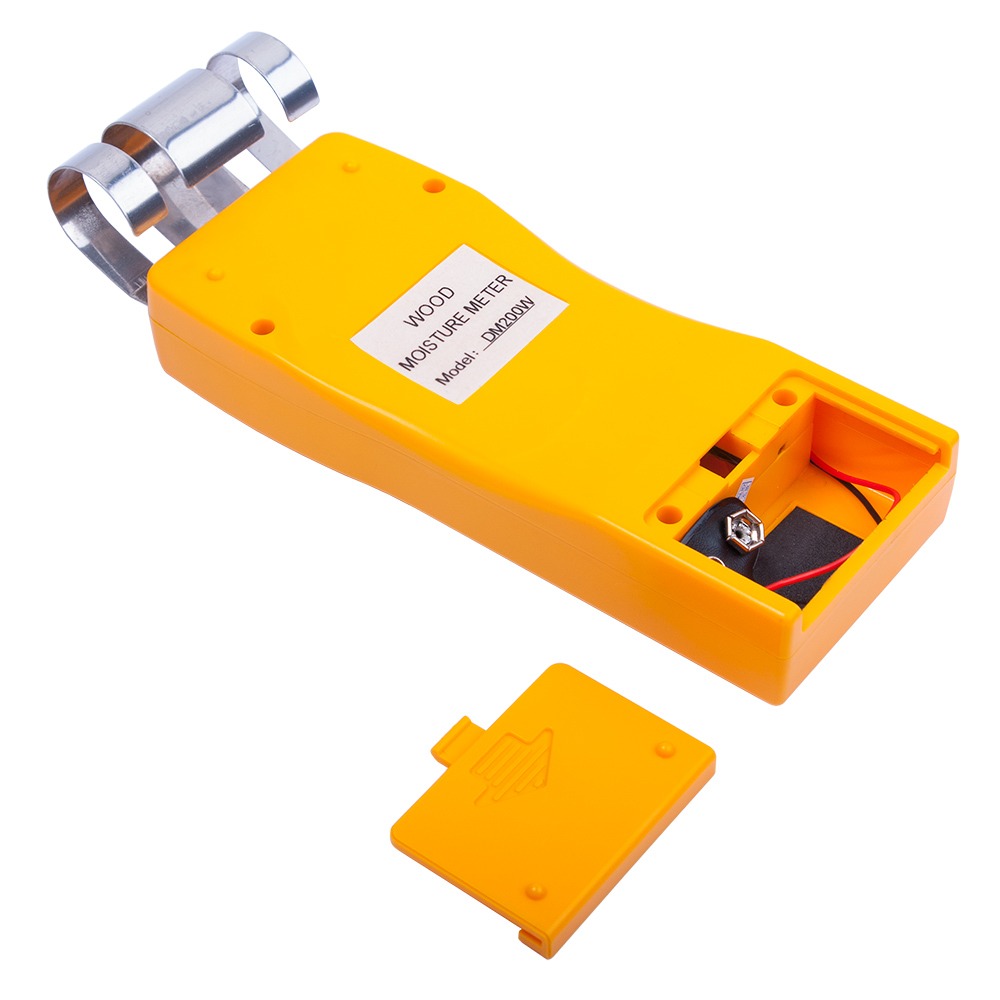
- 9V battery required separately
DM-200W Wood Moisture Meter: No Holes Required
The DM-200W is a portable high-frequency moisture meter for checking the moisture content of boards, timber, furniture blanks, flooring, plywood, and bamboo. Its main advantage over traditional pin-type models is simple: it does not puncture the material. That means you can check the moisture content of a finished part, cabinet front, or expensive board without leaving small but highly visible "traces of the experiment."
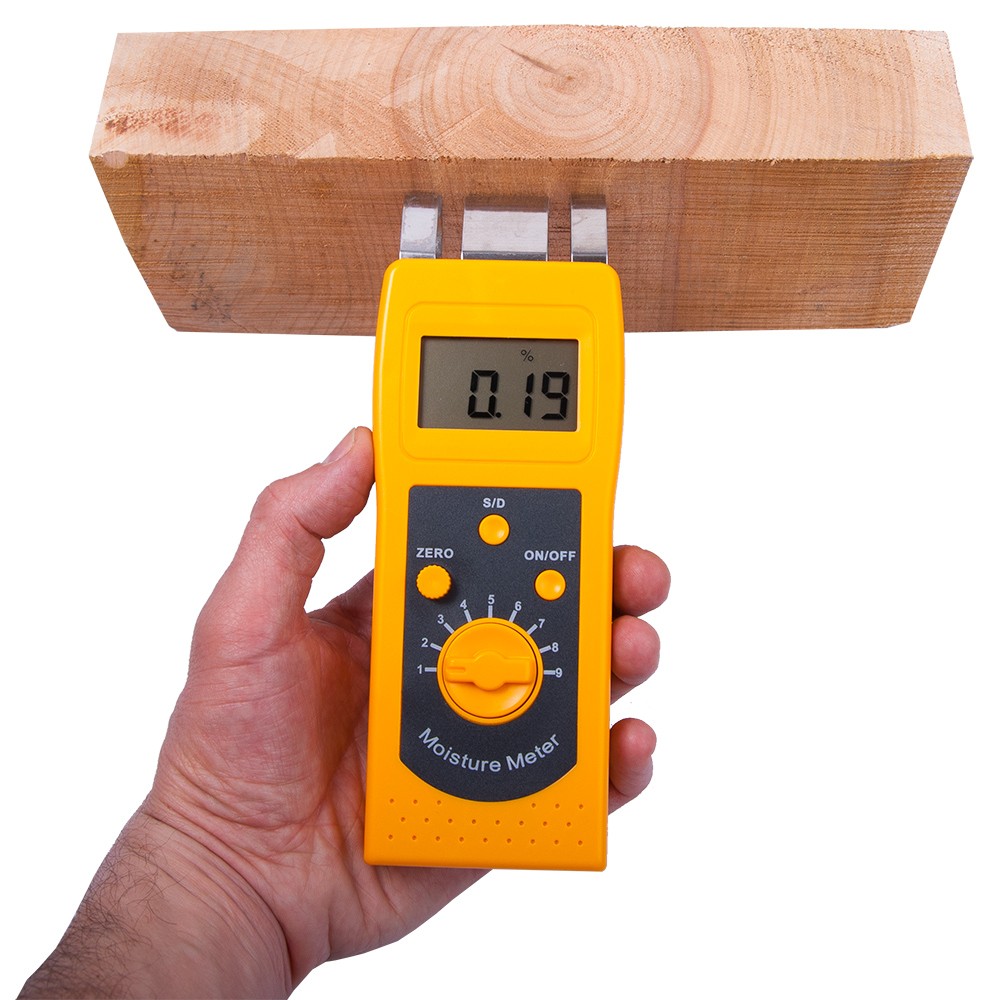
Instead of pins, it uses three spring-loaded metal plates. They touch the surface and adapt to minor irregularities, while a high-frequency electromagnetic sensor measures moisture inside the material. The result appears on the backlit LCD in about a second.
For woodworking, furniture making, and lumber inspection
The meter is useful for woodworkers, furniture makers, wood floor installers, door manufacturers, and anyone who buys lumber and wants to check it rather than rely on touch. It helps quickly compare the moisture content of several boards, find localized damp spots, or check that a workpiece has stabilized sufficiently before machining.
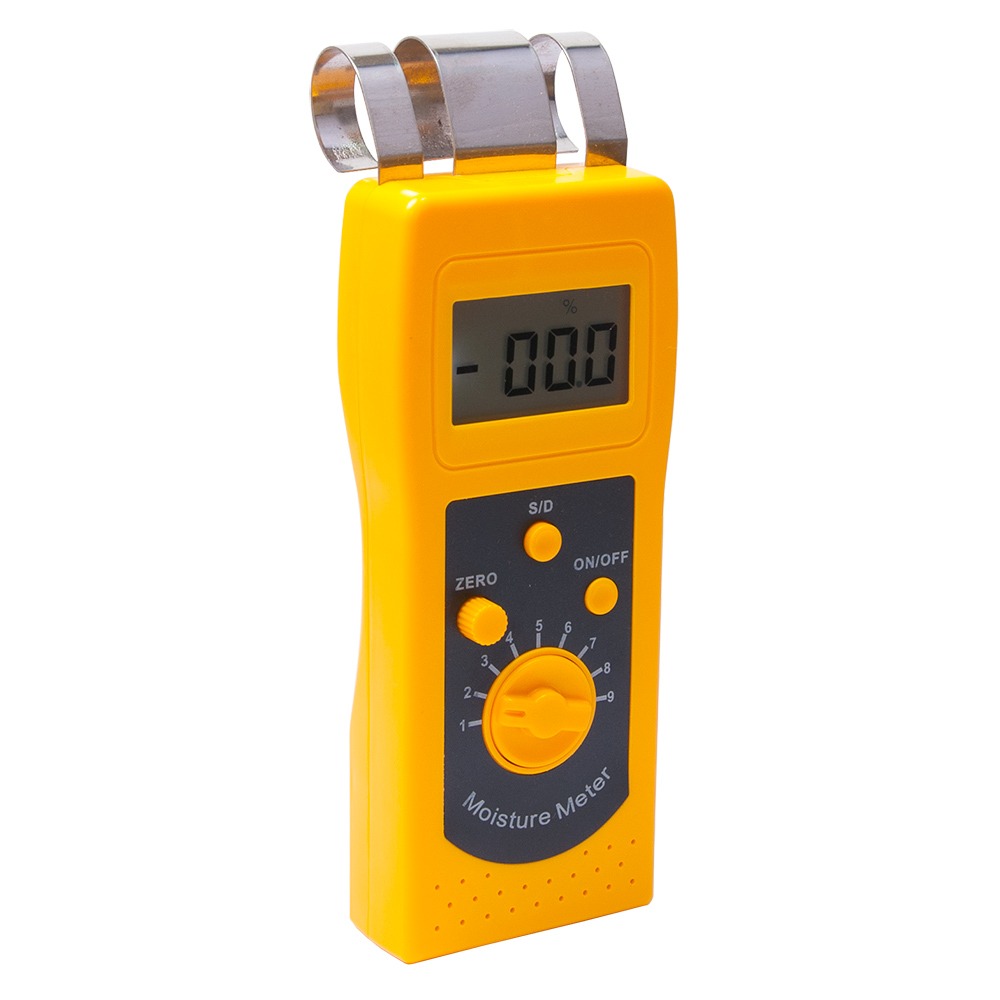
The DM-200W has a nine-position calibration switch. This matters because pine, birch, poplar, and dense exotic species respond differently to measurement. Choosing the right setting makes the readings more useful, rather than just attractive numbers on a screen.
Two precision modes
The main measurement range is 0–50% moisture with a resolution of 0.1%. For very dry wood, a double-precision mode covers 0.00–2.00% in increments of 0.01%. Switch modes with the S/D button, which is handy when you need to monitor material for precision woodworking rather than simply screen out obviously wet boards.
Before measuring, turn on the meter and check the zero reading. If the display does not show zero, adjust it with the ZERO control. This simple procedure helps compensate for temperature effects and produce more consistent results.
What to consider when using the meter
The high-frequency method reads beyond the surface, so thin boards, veneer, or plywood should not be placed flat on a table, backing, or other wood. Otherwise, the meter will also partly measure whatever lies underneath. Thin samples are best measured with an air gap beneath them.
For an objective picture, take several readings at different points on the workpiece: near the edges, in the middle, and on both sides. The DM-200W works best as a tool for quick checks and material comparisons. If you need a documented laboratory result, you will need reference samples, precise calibration, or the oven-dry weighing method.
A compact tool for the workshop and on-site use
The body is about 16 cm long and fits easily in your hand, the bright plastic is easy to spot among workshop machinery, and the display backlight comes in handy in dimly lit spaces. The moisture meter runs on a standard 9V battery, has a manual power-off, and automatically shuts off after about five minutes of inactivity.
A hard case is included to keep the meter, manual, and small items from sliding around in your toolbox. The DM-200W is a good choice for anyone who wants to quickly assess the condition of wood without turning every check into a procedure involving pins.