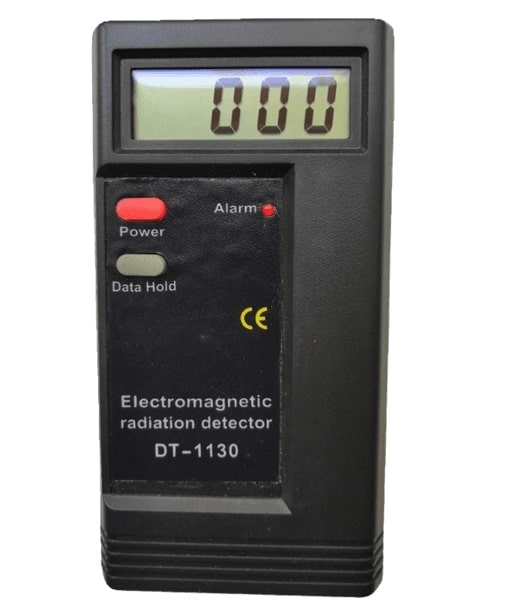
DT-1130
Delivery and payment
Choose your city or town to see the price with delivery there and when you can get it.
Pickup points
- Branch
- Parcel locker
Pros
- Wide stated frequency range
- Fast reading updates
- Data Hold function
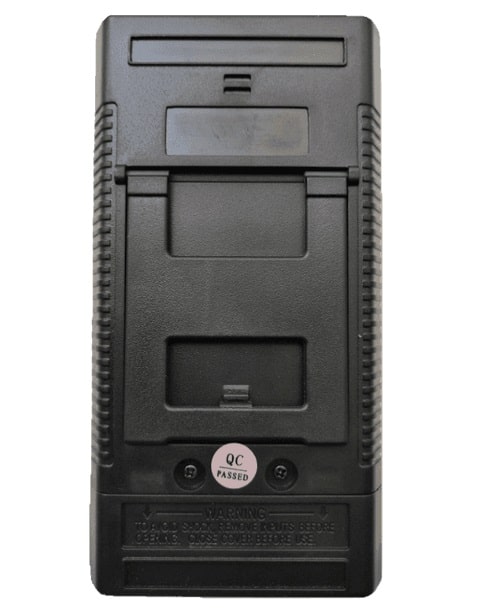
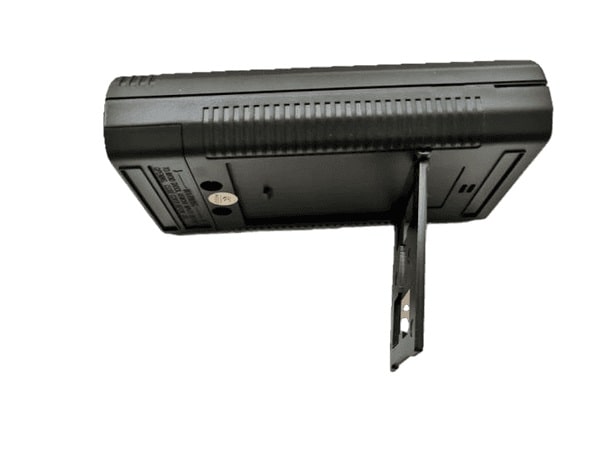
- Fold-out stand on the housing
- Runs on a readily available 9 V battery
Cons
- Does not measure magnetic fields in μT
- Does not cover 2.4 GHz Wi-Fi
- No signal frequency analysis
DT-1130: a simple electromagnetic field indicator
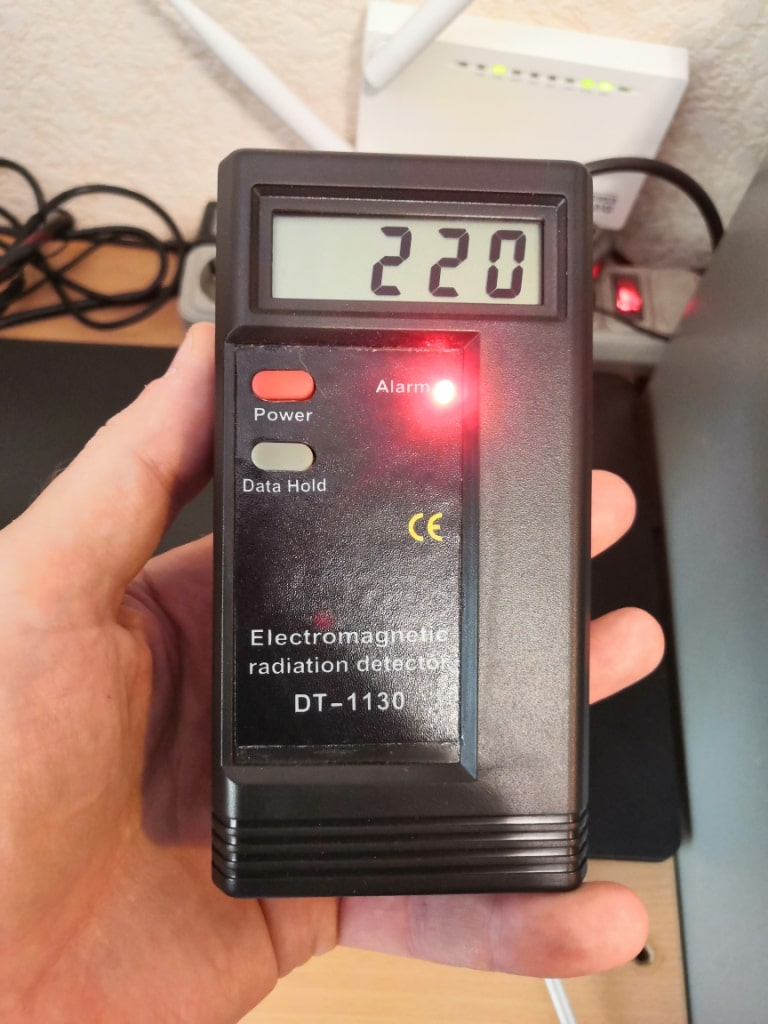
The DT-1130 is a compact detector for checking electromagnetic fields at home near appliances, wires, power supplies, monitors, electrical panels, and other potential sources of interference. Its main strength is not laboratory accuracy, but making comparisons easy: where readings are higher, how they change with distance, and whether a switched-off device has actually stopped producing a noticeable field.
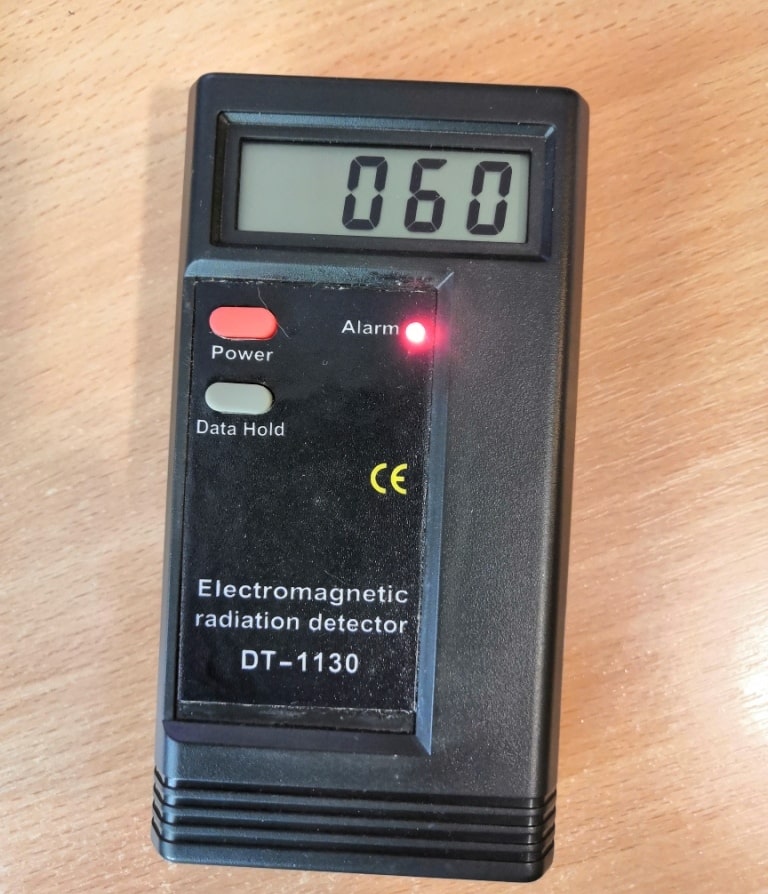
The device turns on with a single button and begins displaying readings on the large LCD screen almost immediately. A red Alarm indicator next to it signals when an internal threshold has been exceeded. It's a convenient way to perform quick checks at home without menus, apps, or the traditional ritual of reading a 48-page manual.
What it measures
The DT-1130 is rated for use with low- and high-frequency electromagnetic fields up to 2000 MHz. For low frequencies, it displays electric field strength in V/m; for high frequencies, it displays power flux density in μW/cm². The maximum reading on the 3.5-digit display is 1999.
One important detail: this is not a gaussmeter. If you need to measure the magnetic field of a transformer, motor, induction cooktop, or power cable specifically in μT, you need a dedicated magnetic flux density meter. The DT-1130 is more useful as an indicator of the electromagnetic environment and for comparative measurements.
How to get useful, rather than random, readings
Electromagnetic fields depend heavily on distance, the orientation of the device, and nearby sources. For a fair comparison, hold the DT-1130 in the same orientation, measure from the same distance, and repeat the check several times. Move the device slowly toward an outlet, cable, or power supply so you can more easily see where the reading starts to rise.
The Data Hold button freezes the reading on the screen, which is handy when you need to record a result or compare several points in a room. The update time is approximately 0.4 seconds, so it responds quickly enough to changes in distance for everyday use.
Limitations to know before buying
The stated upper frequency limit is 2000 MHz. This means the device is not intended for direct measurement of 2.4 GHz Wi-Fi and Bluetooth emissions, 5 GHz Wi-Fi, or many modern cellular signals. If these are the sources you want to investigate, choose an RF meter that supports at least 6–8 GHz instead.
You should not treat the red Alarm indicator as a medical diagnosis. The DT-1130 shows the presence and relative intensity of a field within its capabilities, but it does not replace certified equipment for health, workplace, or expert measurements. Its best use is to find a source, compare several locations, and check the effect of increasing distance, switching the source off, or shielding it.
Design and power
The plastic housing measures 13.2 × 6.9 × 2.9 cm and weighs approximately 190 g. The detector is easy to hold in one hand, and a fold-out stand on the back allows you to monitor readings from a fixed position. It runs on one 9 V 6F22 battery, a familiar type that is easy to replace without charging cables or searching for an outlet.
The DT-1130 is a good choice for anyone who needs an affordable, straightforward device to investigate equipment at home or in the office. It won't tell you which signal standard it has found, but it will quickly show where the electromagnetic field differs noticeably from the usual level.