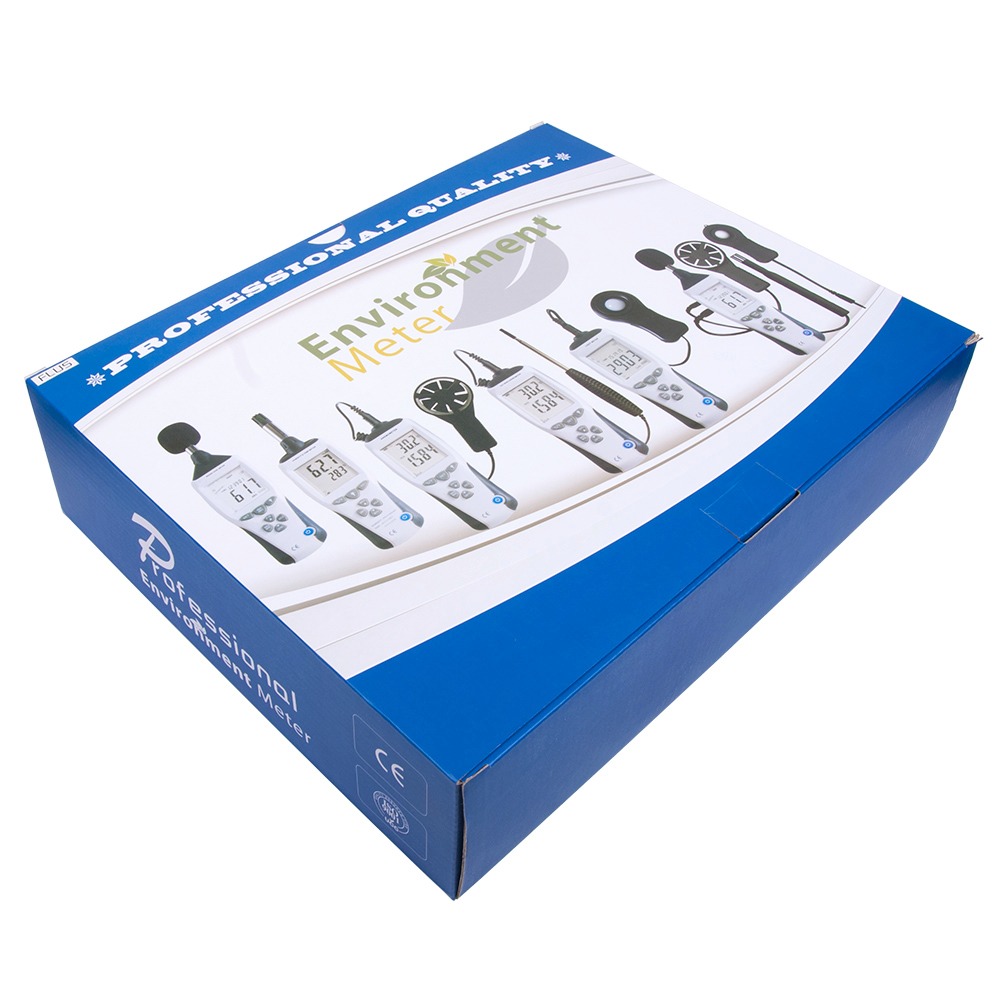
ET-953
Delivery and payment
Choose your city or town to see the price with delivery there and when you can get it.
Pickup points
- Branch
- Parcel locker
Pros
- 30–130 dB measurement range
- IEC 61672-1 Class 2 compliance
- A/C filters and Fast/Slow modes
- AC and DC analog outputs
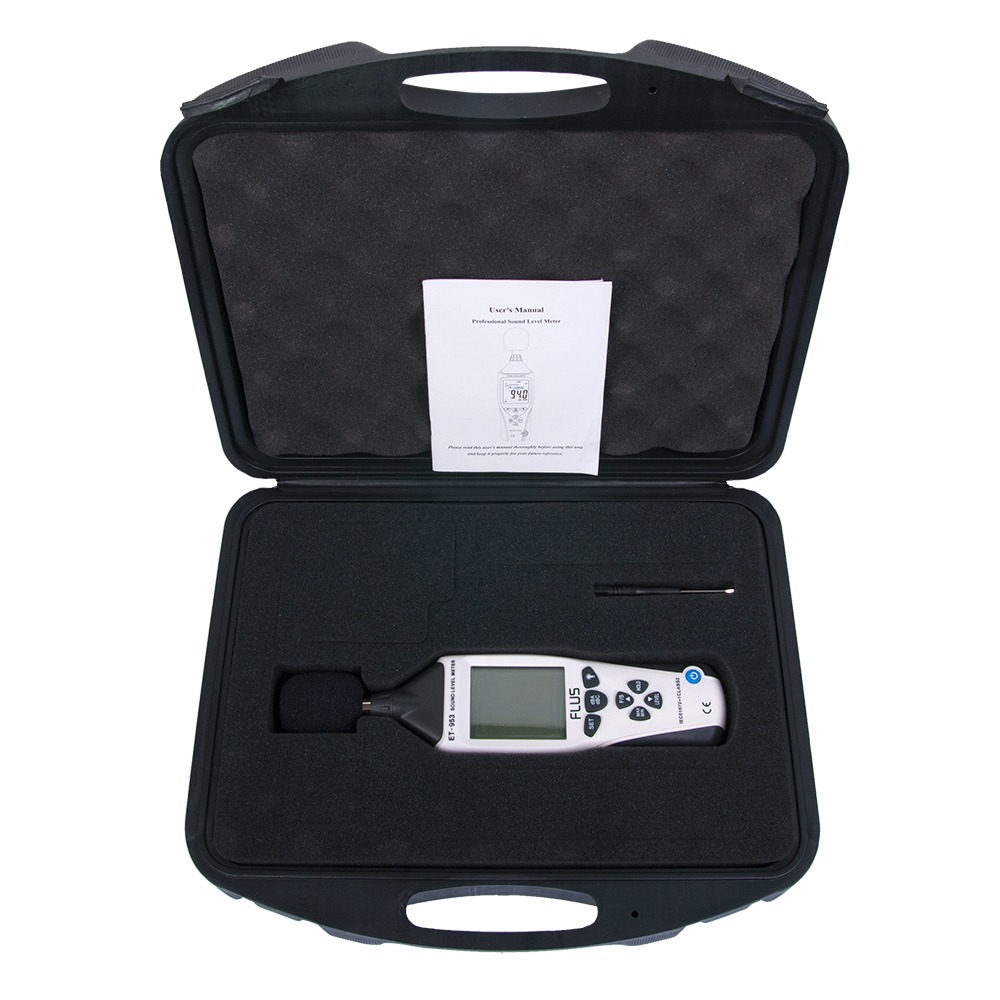
- Case and windscreen included
Cons
- No USB or measurement log
- Runs only on a 9V battery
- Accuracy is not suitable for laboratory analysis
FLUS ET-953: when “it’s loud over there” needs a number
The FLUS ET-953 is a portable sound level meter that measures sound from 30 to 130 dB. It is a tool for technicians, occupational safety engineers, production workers, construction site workers, school or office staff, or anyone who wants to find out just how loud a piece of equipment, a ventilation system, or a neighbor’s generator really is.
The meter meets Class 2 accuracy requirements under IEC 61672-1 and has a stated accuracy of ±1.4 dB. That makes the ET-953 a much more serious tool than a typical smartphone app, but it is no substitute for a professional Class 1 laboratory analyzer or official measurements for legal assessments.
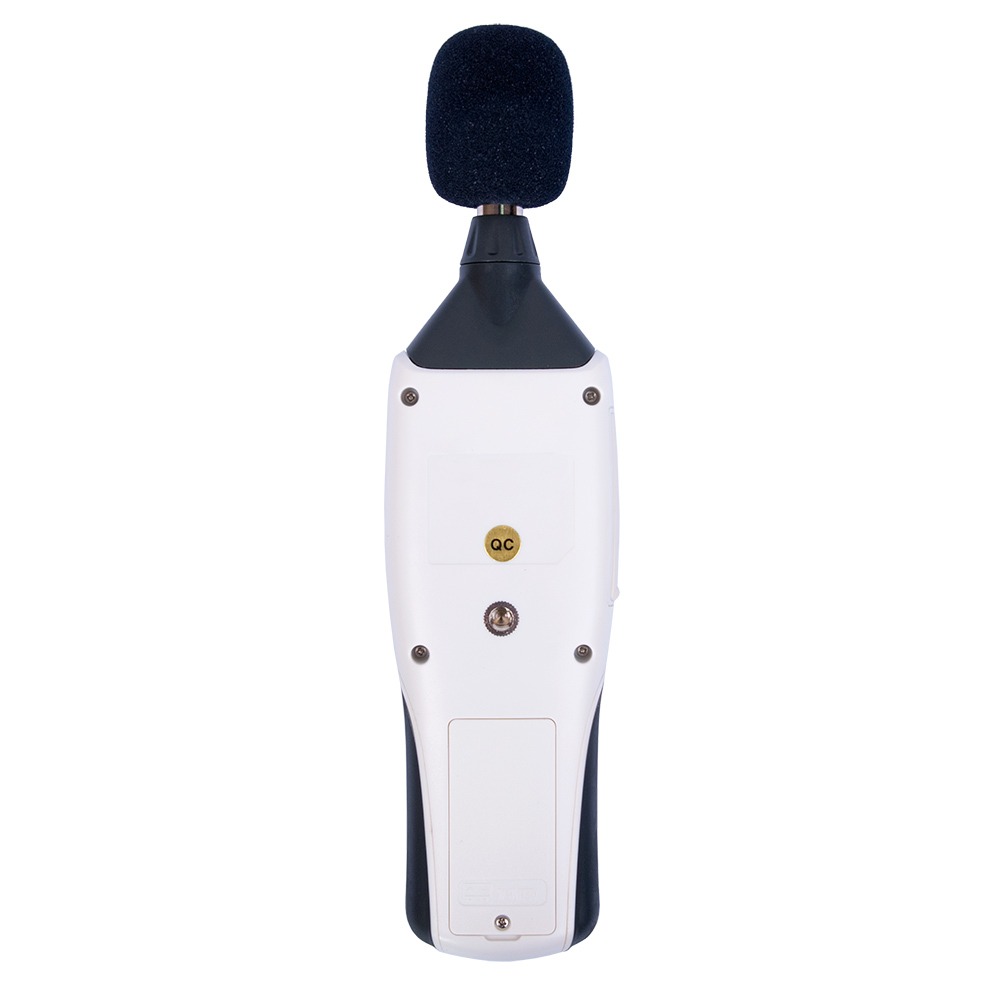
One meter for several measurement scenarios
The ET-953 offers four ranges: 30–80 dB, 50–100 dB, 80–130 dB, and an automatic 30–130 dB range. Automatic mode is convenient for quick checks, while manual range selection is useful when you need a more stable reading in a particular environment.
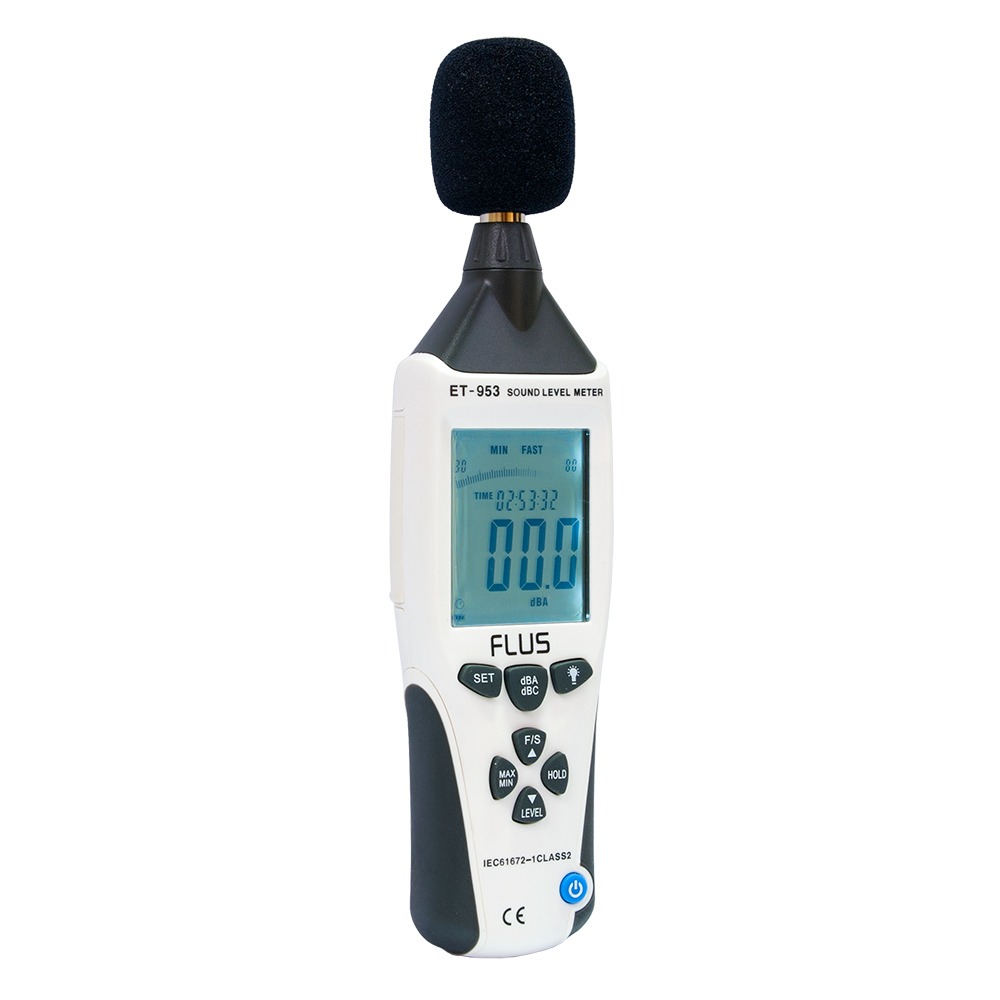
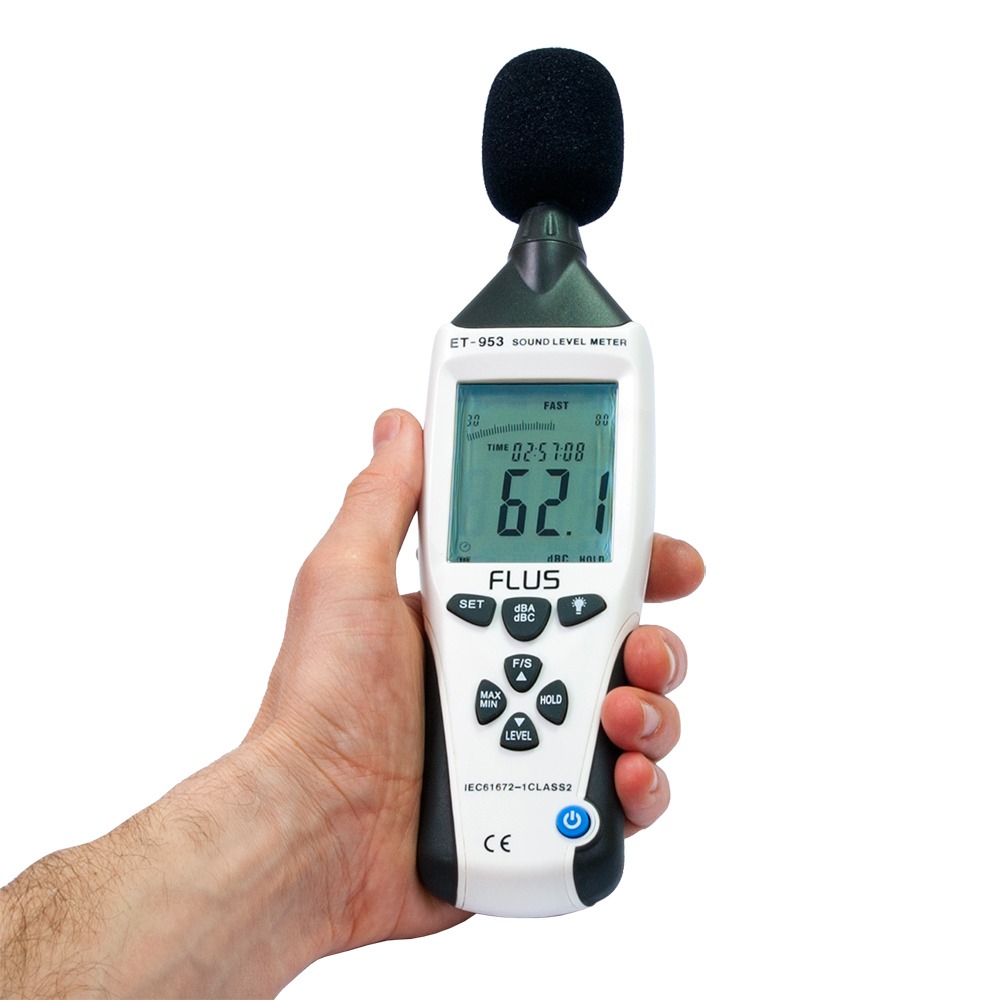
Measurements have a resolution of 0.1 dB, and readings update twice per second. The large LCD screen displays the current reading, selected mode, range scale, time, and date at the same time. It is also backlit, so the numbers remain visible in a utility room or basement where the lights were, as usual, “going to be fixed next week.”
A or C: more than two letters
The sound level meter supports A and C frequency weightings. The dBA mode approximates the way humans hear and is well suited to assessing noise at home, in the office, and in production environments. dBC attenuates low frequencies less, making it useful for loud equipment, engines, subwoofers, and other sources with a noticeable bass component.
Two time weightings are also available: Fast, with a 125 ms response for rapid sound fluctuations, and Slow, with a 1 s response for a smoother assessment of background noise. The MAX/MIN buttons retain the highest and lowest recorded values, while HOLD freezes the reading on screen, which is handy when you need to write down a result without juggling a notepad, meter, and stepladder at the same time.
Made for fieldwork, not the shelf
Inside is a 1/2-inch electret condenser microphone protected by a removable foam windscreen. It reduces the effect of airflow on readings when working outdoors or near ventilation. The housing weighs 262 g together with the device and has rubberized side panels for a more secure grip, plus a threaded mount for a tripod.
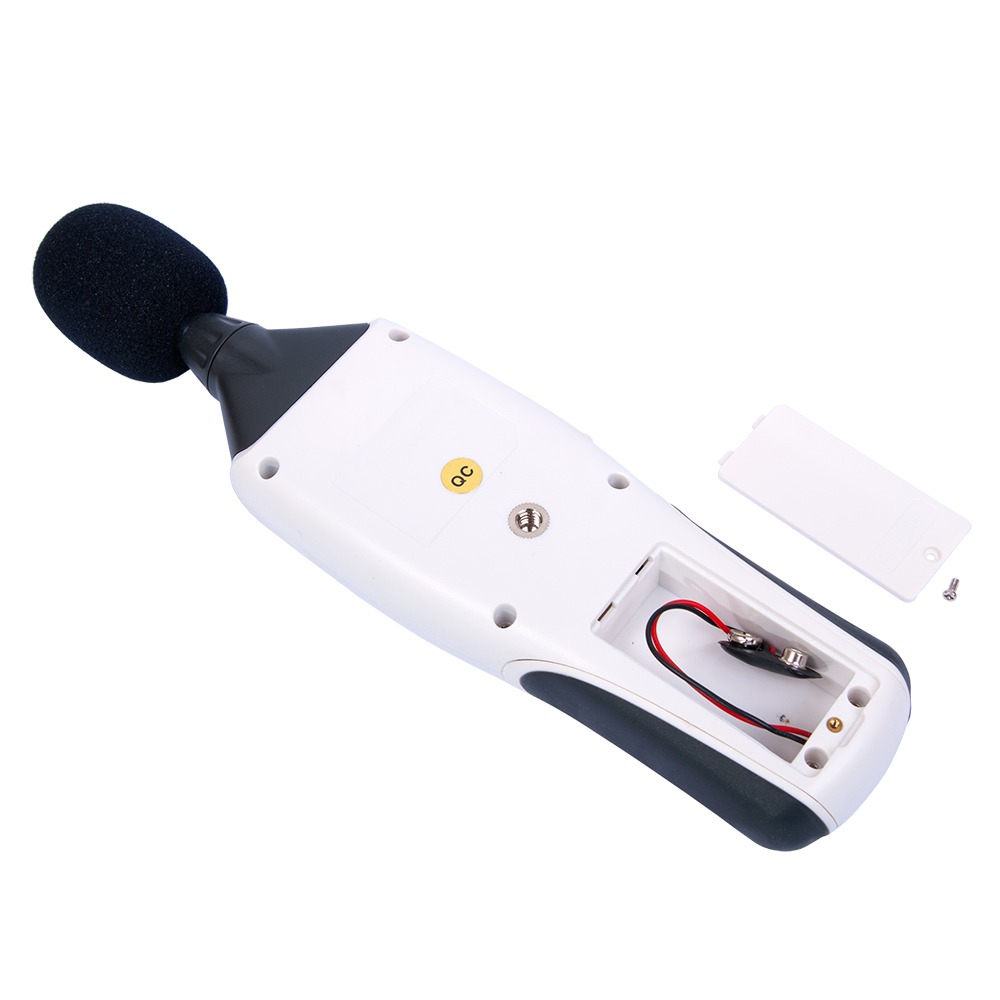
The ET-953 automatically warns you when the signal falls outside the selected manual range with OVER and UNDER indicators. After approximately 15 minutes of inactivity, the meter switches off to conserve the 9V battery. The stated operating life is at least 30 hours.
Analog output for more demanding tasks
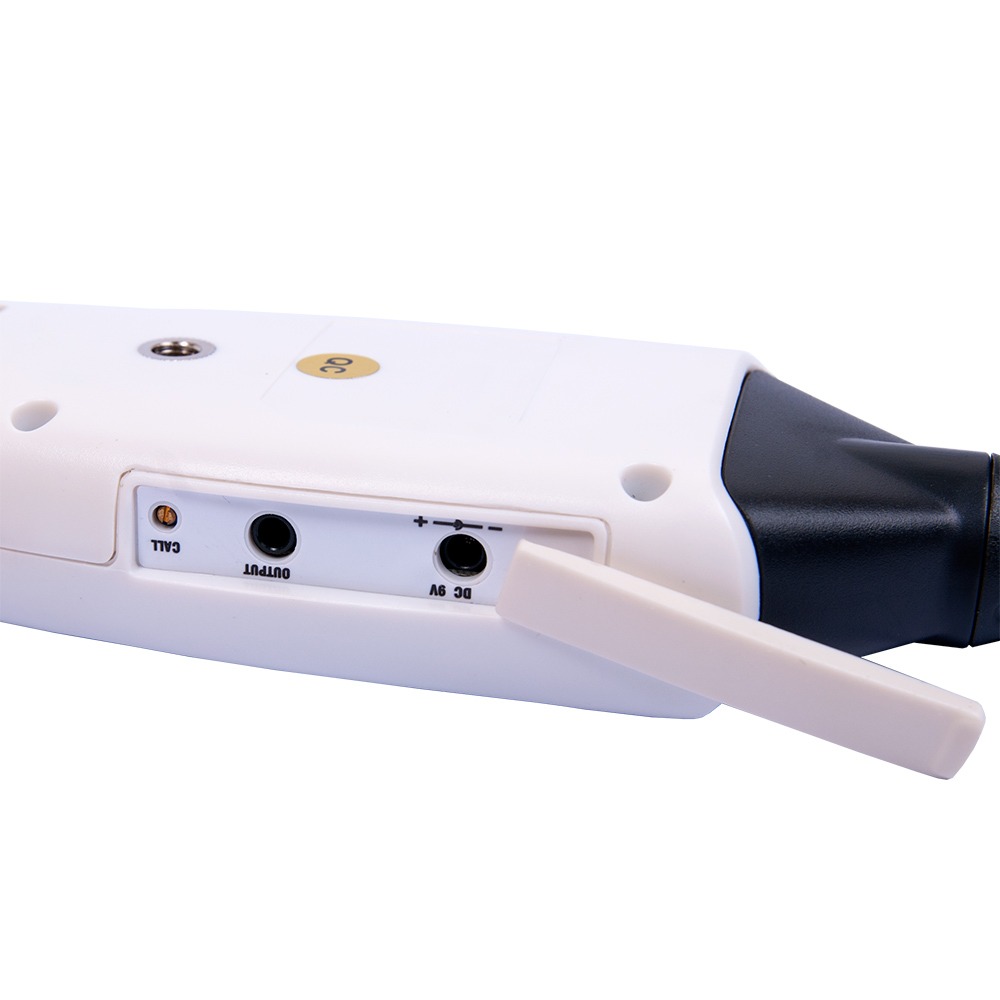
Through a 3.5 mm jack, the ET-953 provides AC and DC analog outputs: AC up to 1 Vrms and DC 10 mV/dB. This is useful for connecting a compatible frequency analyzer, data logger, or X-Y recorder when a reading on the screen is no longer enough.
The model does not have a USB connection, internal logger, or PC monitoring. For those tasks, consider the higher-end FLUS ET-956 or ET-958. The ET-953 does something different: it quickly and clearly shows the actual noise level right where you are, without unnecessary menus.
The bottom line
The FLUS ET-953 is a capable working sound level meter for regular background noise checks, equipment noise monitoring, workplace condition audits, and tracking down unwanted noise. Its strengths include a wide automatic range, straightforward controls, dBA/dBC and Fast/Slow modes, maximum and minimum capture, and the ability to send an analog signal to external equipment. The included case means you can confidently take the tool to a job site rather than treat it like fine china.