Flus ET-933
Delivery and payment
Choose your city or town to see the price with delivery there and when you can get it.
Pickup points
- Branch
- Parcel locker
Pros
- 30–130 dB measurement range
- dBA and dBC filters
- Automatic and manual range selection
- MAX, MIN, HOLD and backlight
- Lightweight body with carrying case
Cons
- No measurement log
- Powered by a 9V battery
- Accuracy of ±1.4 dB
FLUS ET-933: when “very loud” needs a number
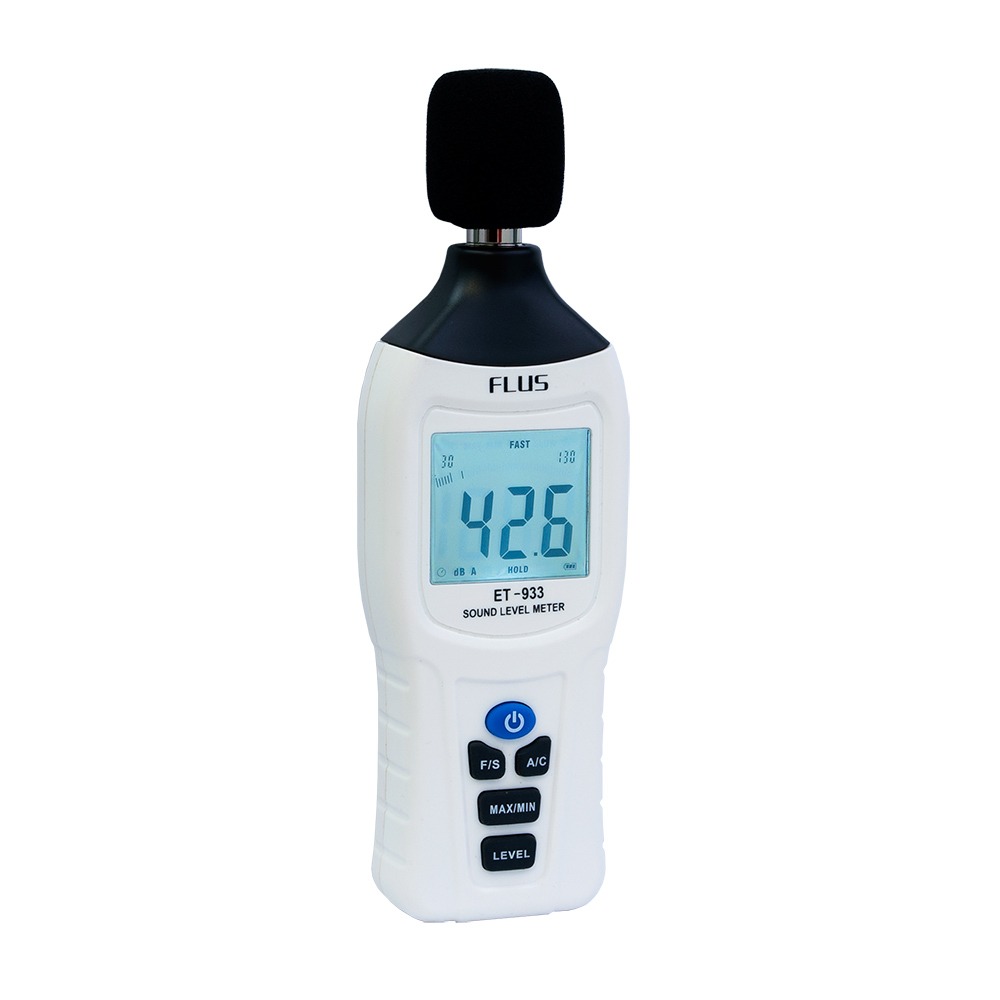
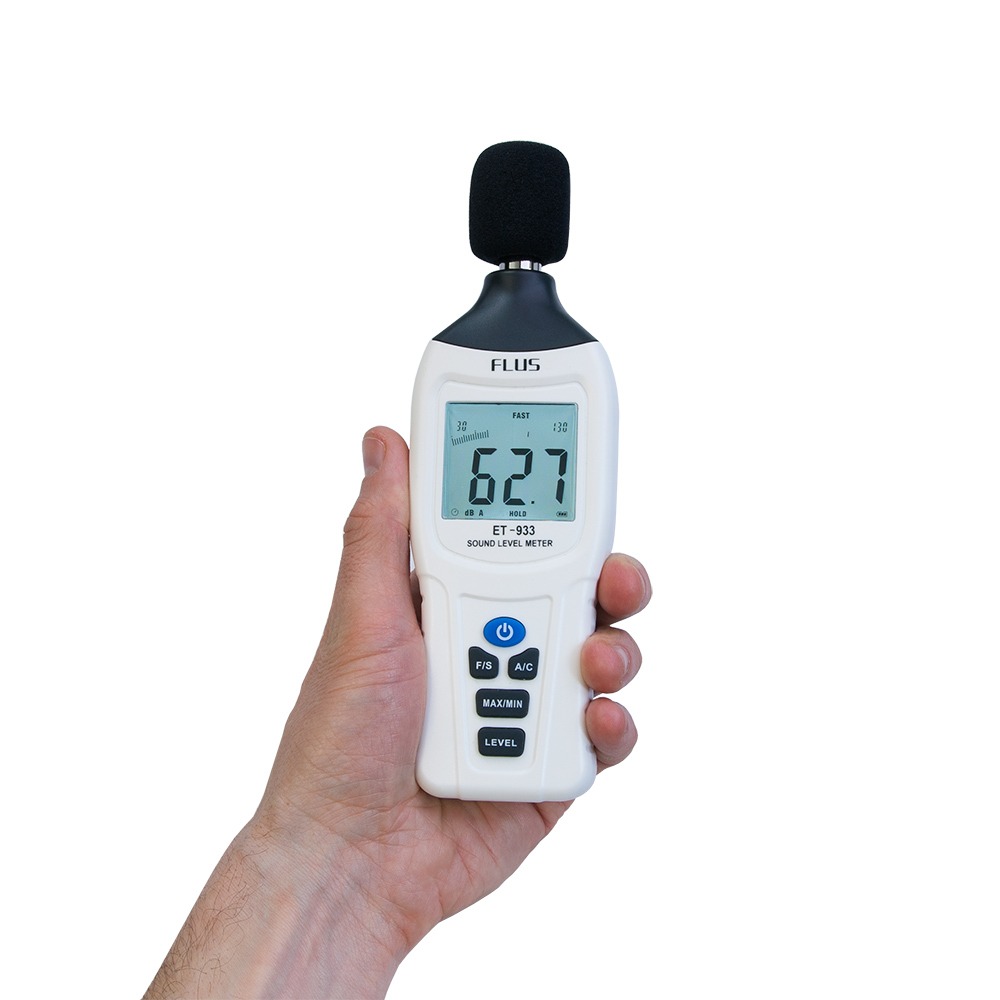
The FLUS ET-933 is a portable class 2 sound level meter for checking sound levels in an office, apartment, school, workshop, industrial facility or construction site. It measures sound pressure from 30–130 dB, displays results in 0.1 dB increments and doesn't require navigating a menu that takes up half the screen: all the main modes have dedicated buttons.
It's a practical tool for an occupational safety specialist, ventilation installer, aspiring sound engineer or anyone who wants to find out just how loudly an extractor fan, air conditioner or neighbor's rotary hammer symphony is making itself heard. For official measurements with legal significance, check the requirements for instrument verification and calibration separately.
Four ranges without the extra math
The ET-933 has three manual ranges: 30–80 dB, 50–100 dB and 80–130 dB. They let you select a mode for the expected volume and avoid losing a reading when it goes beyond the scale. For a quick check, there's an automatic range of 30–130 dB, convenient when you don't know in advance whether you're facing a quiet office, a noisy workshop or a music venue.
If the signal is too weak or too loud for the selected manual mode, the meter displays an UNDER or OVER warning. The screen simultaneously shows a large digital reading, the selected range, operating mode, battery charge and an analog scale for quickly seeing changes.
dBA or dBC: two ways to look at the same noise
The sound level meter supports A and C frequency weighting. The dBA mode is suitable for general noise assessment because it approximates the sensitivity of human hearing. It's a sensible choice for offices, classrooms, living spaces, ventilation or household appliances.
dBC attenuates low frequencies less, making it useful for assessing loud bass or industrial noise. The FLUS ET-933 is not, however, a spectrum analyzer or a noise dosimeter: it shows the overall level but won't break sound down by frequency or keep a measurement history.
FAST, SLOW and capturing important moments
Two time weighting modes are available for fluctuating noise. FAST updates measurements at 125 ms intervals and better shows rapid fluctuations. SLOW works at 1 s intervals, smoothing the readings and making it convenient for more stable background noise.
The MAX and MIN functions retain the highest and lowest values during the current session, while HOLD freezes the number on the display. This is useful when you need to record a result in a report, photograph the screen or simply avoid trying to follow constantly changing numbers.
A compact work tool
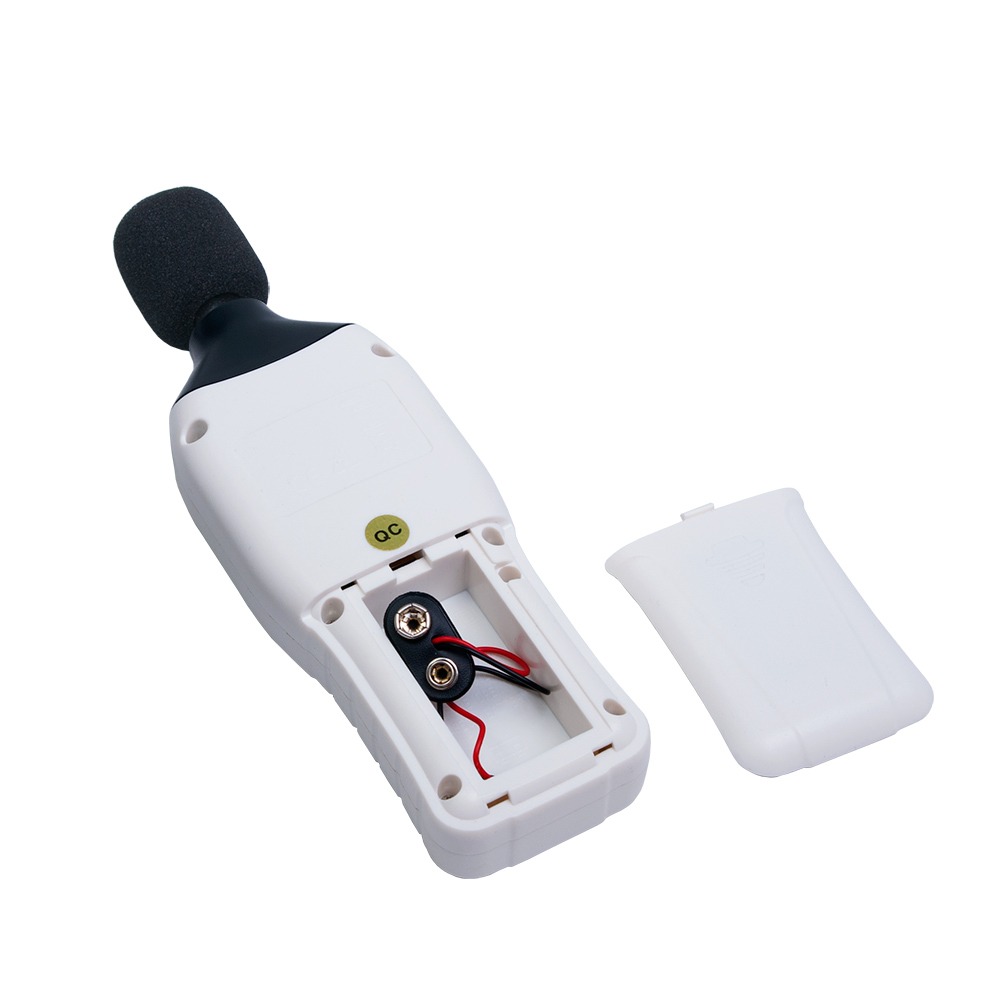
The meter weighs 178 g and measures 15.8 × 6.2 × 3.2 cm, so it won't weigh down your tool bag. It's powered by one 9V battery, rated for at least 30 hours of operation. Auto power-off after approximately 15 minutes of inactivity conserves battery life, while the display backlight helps you read data in dark utility rooms.
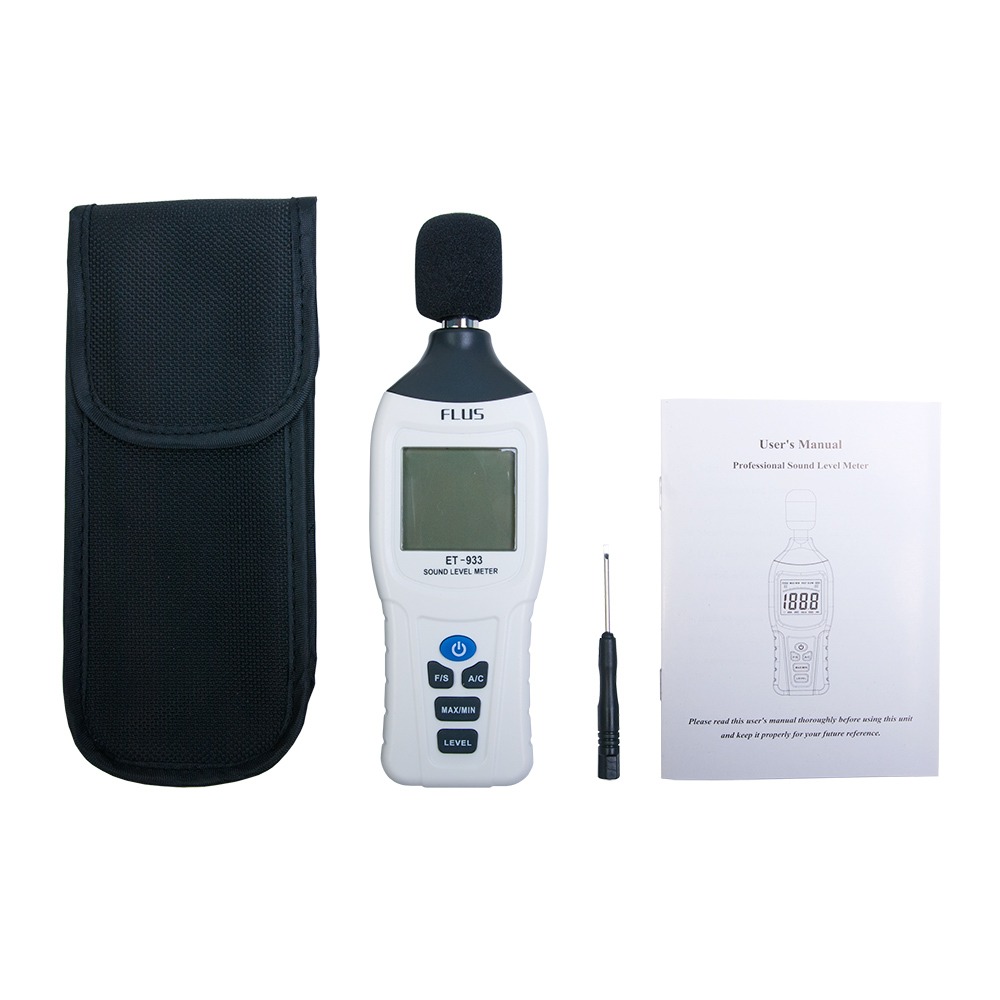
The 1/2-inch electret condenser microphone is covered by a foam windscreen. It's especially useful outdoors or near ventilation airflow: it won't make the wind quieter, but it can reduce its effect on the reading. A soft case is included for transport and storage.

Who it's for
The FLUS ET-933 is a good choice if you need an easy-to-use, battery-powered sound level meter for occasional or regular checks. It's accurate enough for technical monitoring, has the modes needed for different scenarios and isn't overloaded with secondary features. If you need graphs, data recording to a memory card, transfer to a smartphone or detailed spectral analysis, look at substantially more complex and expensive models.