Flus ET-958
Delivery and payment
Choose your city or town to see the price with delivery there and when you can get it.
Pickup points
- Branch
- Parcel locker
Pros
- Data logger for 262 100 measurements
- USB and real-time monitoring
- dBA and dBC for different tasks
- Automatic and manual ranges
- AC/DC analog outputs
Cons
- Class 2 accuracy, not class 1
- Runs on a 9 V battery
- Tripod sold separately
Noise isn't just something you hear; you can document it
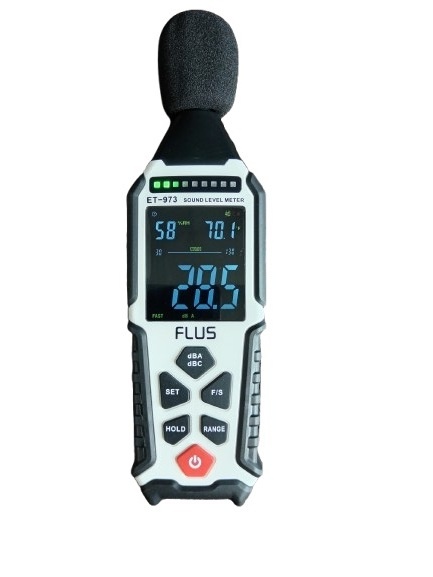
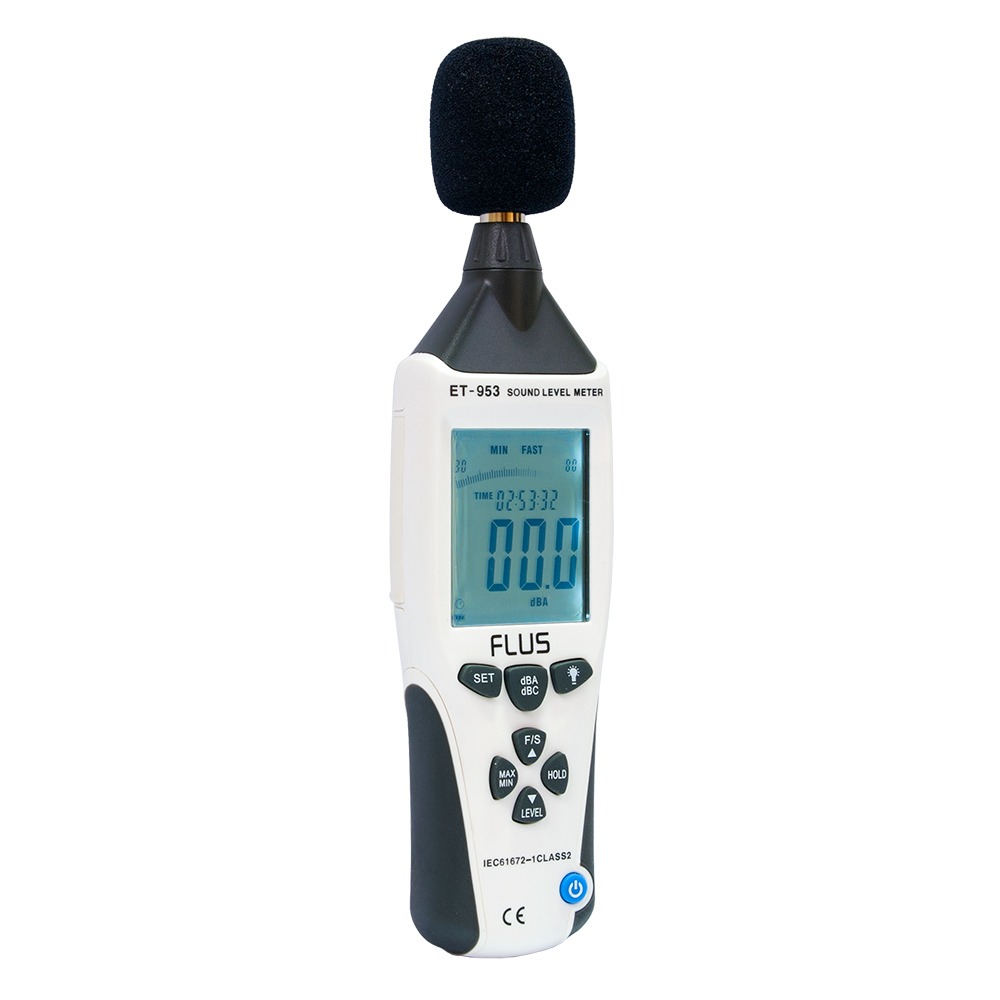
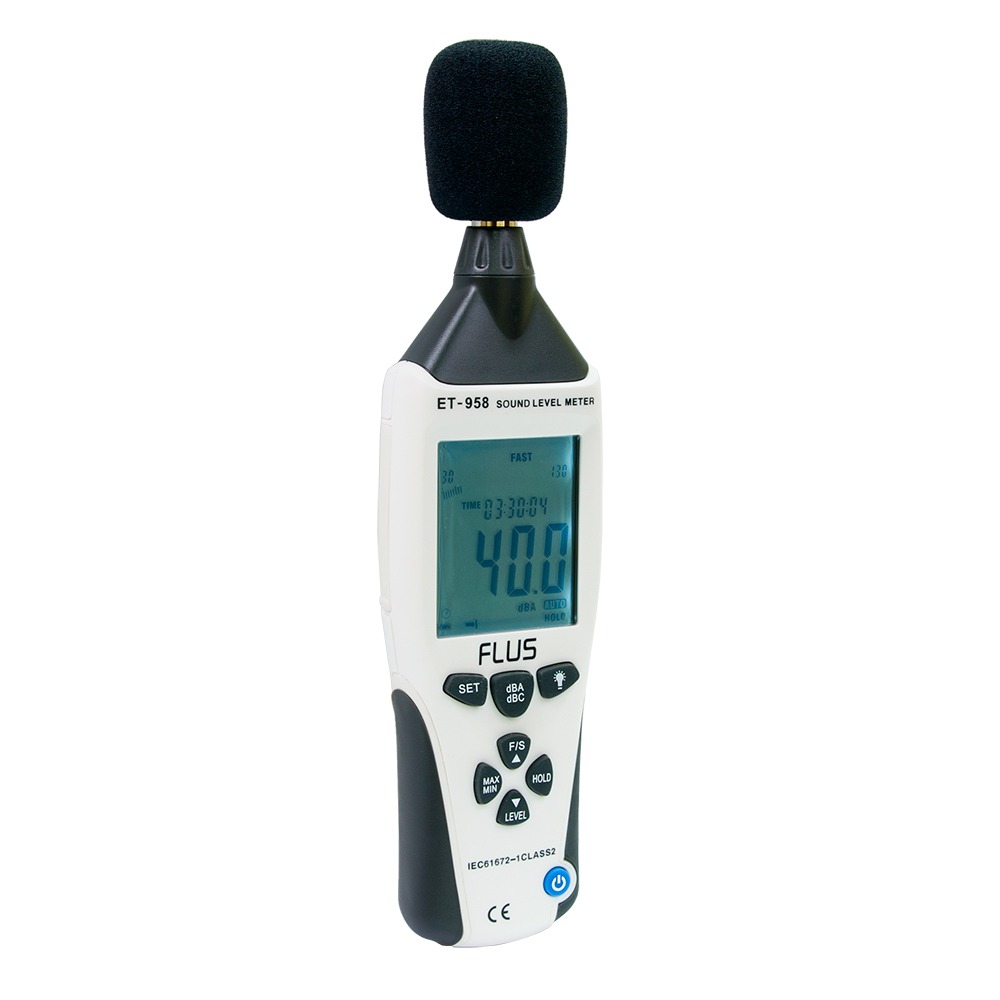
Flus ET-958 is a professional sound level meter with a data logging function for situations where a single reading on the display isn't enough. The device measures sound levels from 30 to 130 dB, stores the results in internal memory, and transfers them to a computer via USB. It's a practical tool for checking noise in a workshop, office, classroom, factory, construction site, or near ventilation equipment or a busy road.
The model is stated to comply with the IEC 61672-1 class 2 standard. This means the ET-958 is suitable for technical checks and comparative measurements, but for official assessments, certification, or measurements required by regulations, it's worth checking the accuracy class and calibration certificate requirements in advance.
From a quiet room to a noisy workshop
The ET-958 has three manual ranges: 30–80 dB, 50–100 dB, and 80–130 dB, plus an automatic 30–130 dB mode. Switching ranges helps you get accurate readings for the conditions, while automatic mode lets you skip that step during a quick check. Resolution is 0.1 dB, and the stated accuracy is ±1.4 dB at 94 dB and 1 kHz.
The device operates over a frequency range of 31.5 Hz – 8 kHz and uses a 1/2-inch electret condenser microphone. The large LCD displays the current value, level scale, active mode, date and time, and indicators for an over-range or under-range signal.
dBA or dBC: more than just two letters
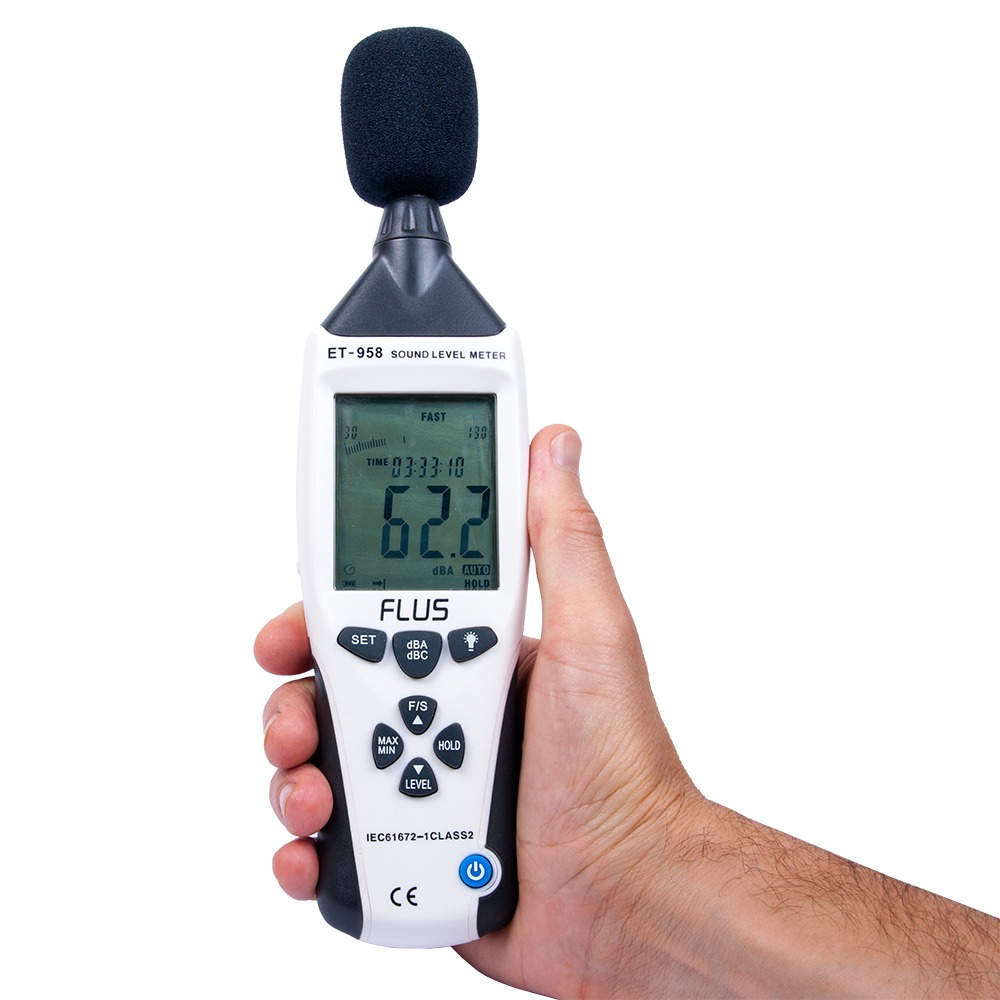
dBA frequency weighting approximates how the human ear perceives noise, making it the primary mode for assessing noise at home, in an office, or in an industrial setting. dBC attenuates low frequencies less and is useful when you need to account for the hum of motors, ventilation systems, subwoofers, or other equipment with prominent bass.
FAST time weighting with a 125 ms response and SLOW time weighting with a 1-second average are also available. FAST is better for showing brief, sharp changes in noise, while SLOW provides steadier readings that make it easier to assess relatively stable background noise. The MAX, MIN, and HOLD functions let you quickly find peak and minimum values or freeze a reading on the screen.
Data logger: evidence instead of memories
What sets the ET-958 apart from a basic sound level meter is its memory for 262 100 measurements. The recording interval can be set from 1 second to 10 hours, allowing you to track noise over a work shift, a day, or several days. Auto power-off is disabled during recording, so the device won't interrupt a series of measurements in an overzealous effort to save battery power.
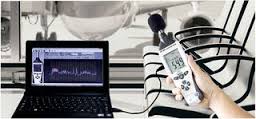
The sound level meter connects to a PC via USB to transfer the log and monitor readings in real time. The software lets you view data as a list or graph, save results, and set upper and lower thresholds. This is especially useful when you need to do more than say “it's loud here” and show exactly when and how loud it was.

Connections, power, and tripod mounting
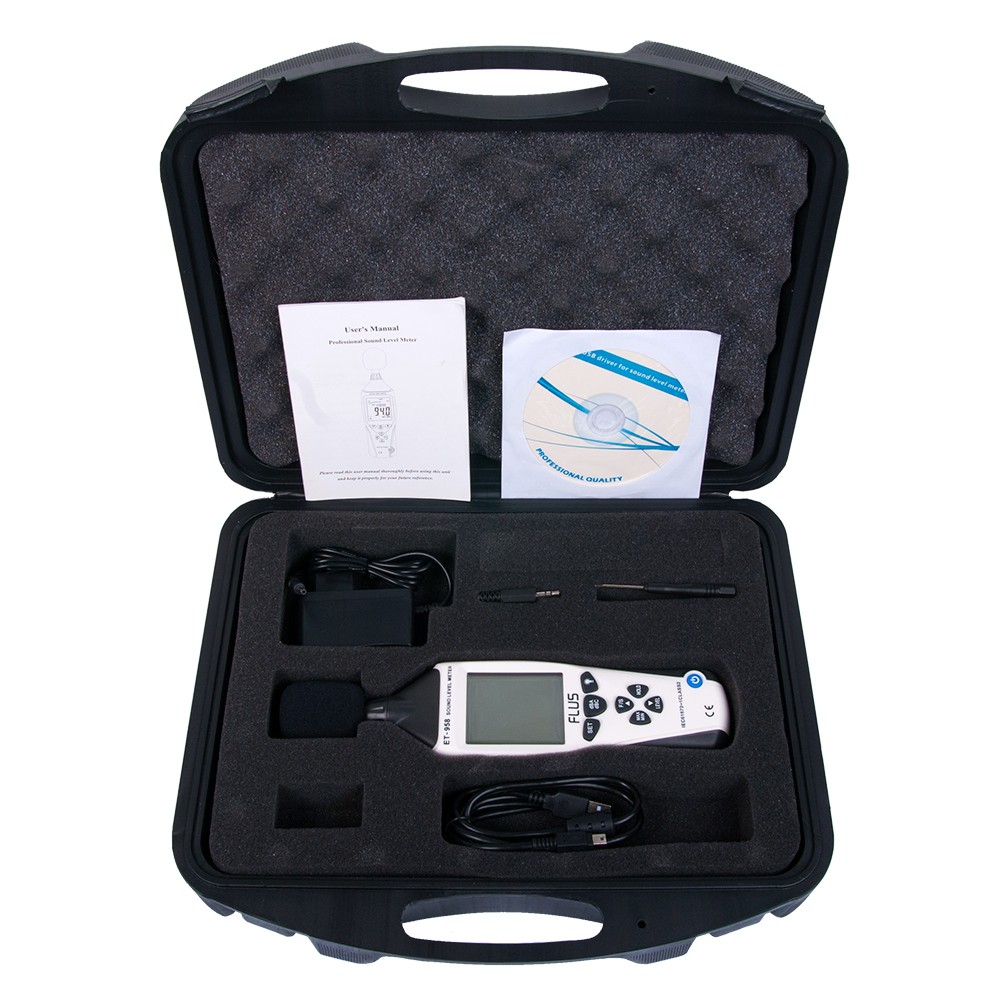
For extended measurements, the Flus ET-958 can be powered by an external 9 V adapter. The device runs for at least 30 hours on one 9 V battery. There is also an analog output via a 3.5 mm connector: AC 1 Vrms or DC 10 mV/dB. This is useful for connecting a compatible frequency analyzer, recorder, or other measurement system.
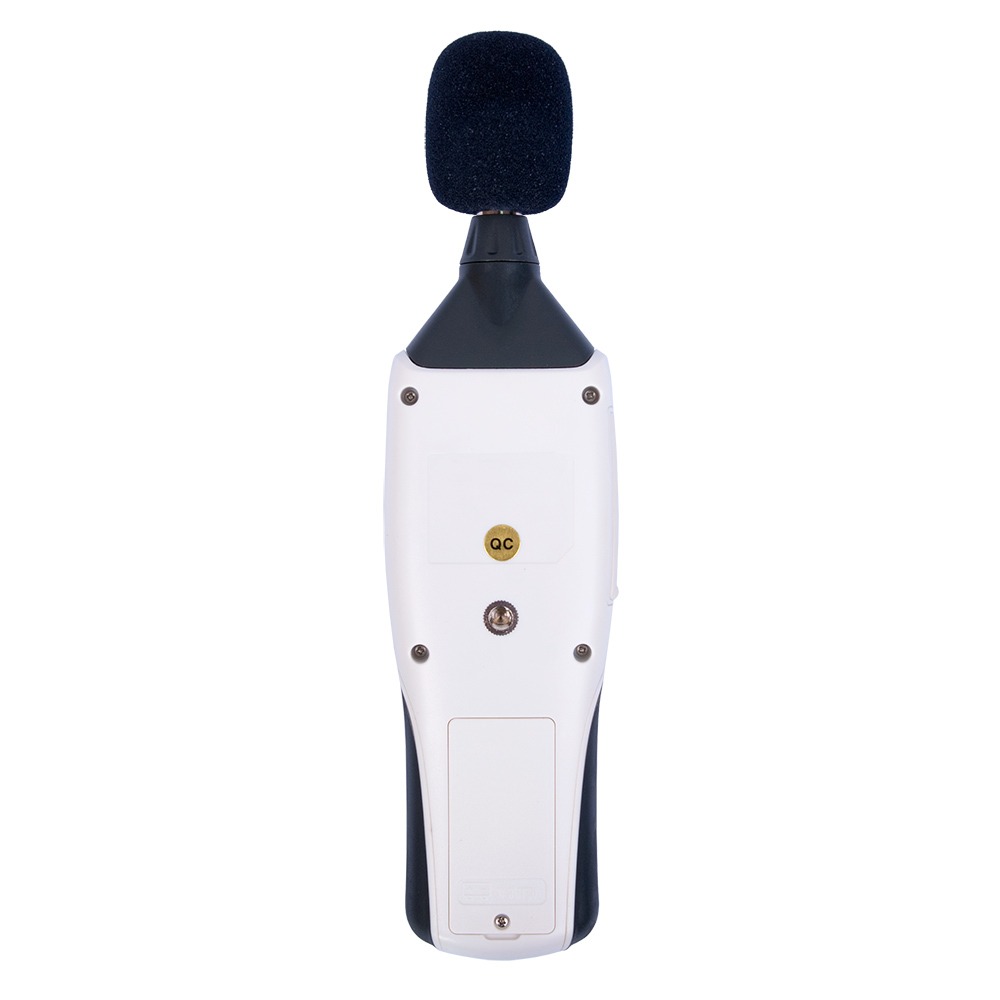
A tripod thread is provided on the back. This is important for repeatable measurements: the microphone can be fixed in one position without adding noise from hand movements to the results. The included windscreen isn't just decorative either; airflow can noticeably inflate readings, especially outdoors or near ventilation.
Conclusion
Flus ET-958 is a good choice for anyone who needs more than a portable decibel indicator and wants a complete noise measurement log that can be transferred to a PC. It combines a wide 30–130 dB range, dBA/dBC, FAST/SLOW modes, memory for over 262 thousand records, USB, and analog outputs. For everyday technical checks, finding noise sources, and long-term monitoring, it's a much more useful tool than a basic “decibel meter for a quick glance.”