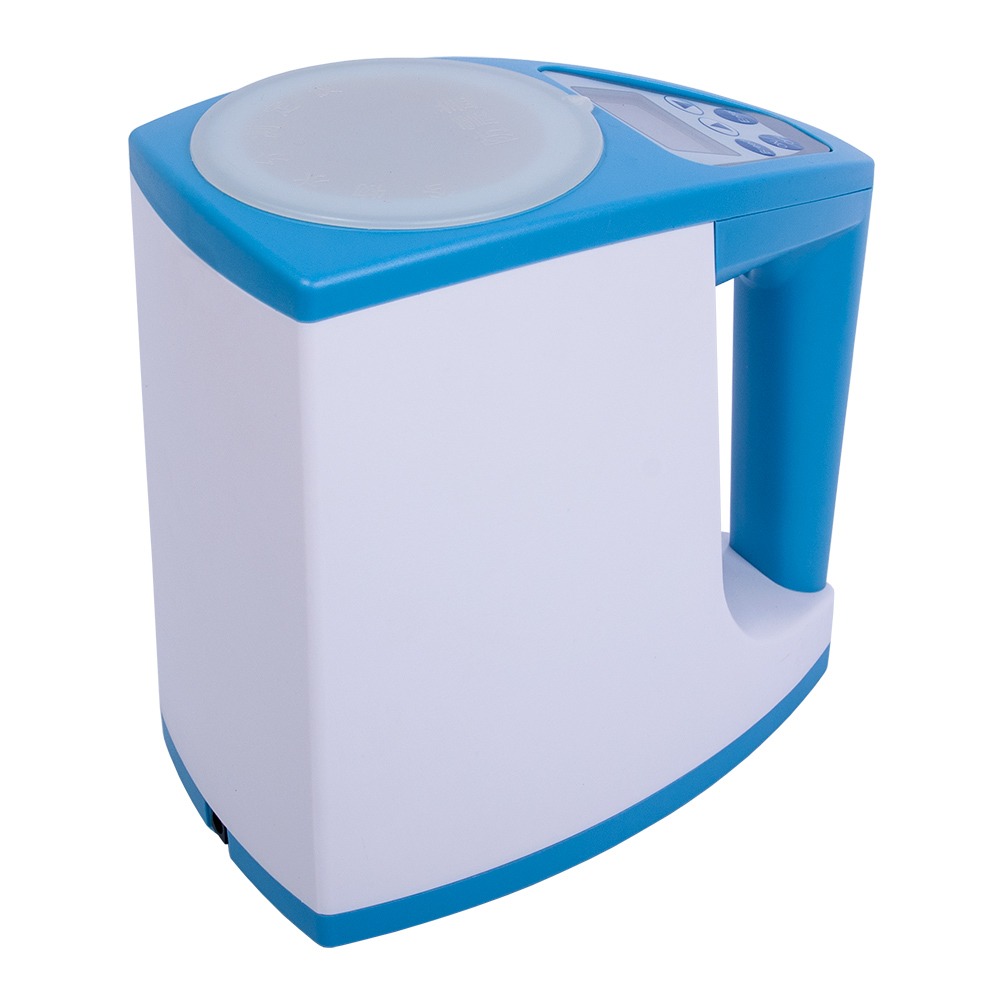
LDS-1G
Delivery and payment
Choose your city or town to see the price with delivery there and when you can get it.
Pickup points
- Branch
- Parcel locker
Pros
- Measurement in approximately 10 seconds
- Automatic temperature compensation
- Displays moisture, temperature, and mass
- Runs on batteries or an adapter
- Convenient carrying case
Cons
- Requires selection of a crop program
- Does not replace laboratory verification
- Less convenient for measuring large seeds
LDS-1G: quick grain checks without a laboratory
The LDS-1G is a portable cup-type moisture meter for grain, seeds, legumes, oilseeds, and compound feeds. It is a practical tool for the field, warehouse, dryer, grain elevator, or small farm, where it is important to quickly determine whether grain is ready for storage, needs further drying, or risks losing mass from overdrying.
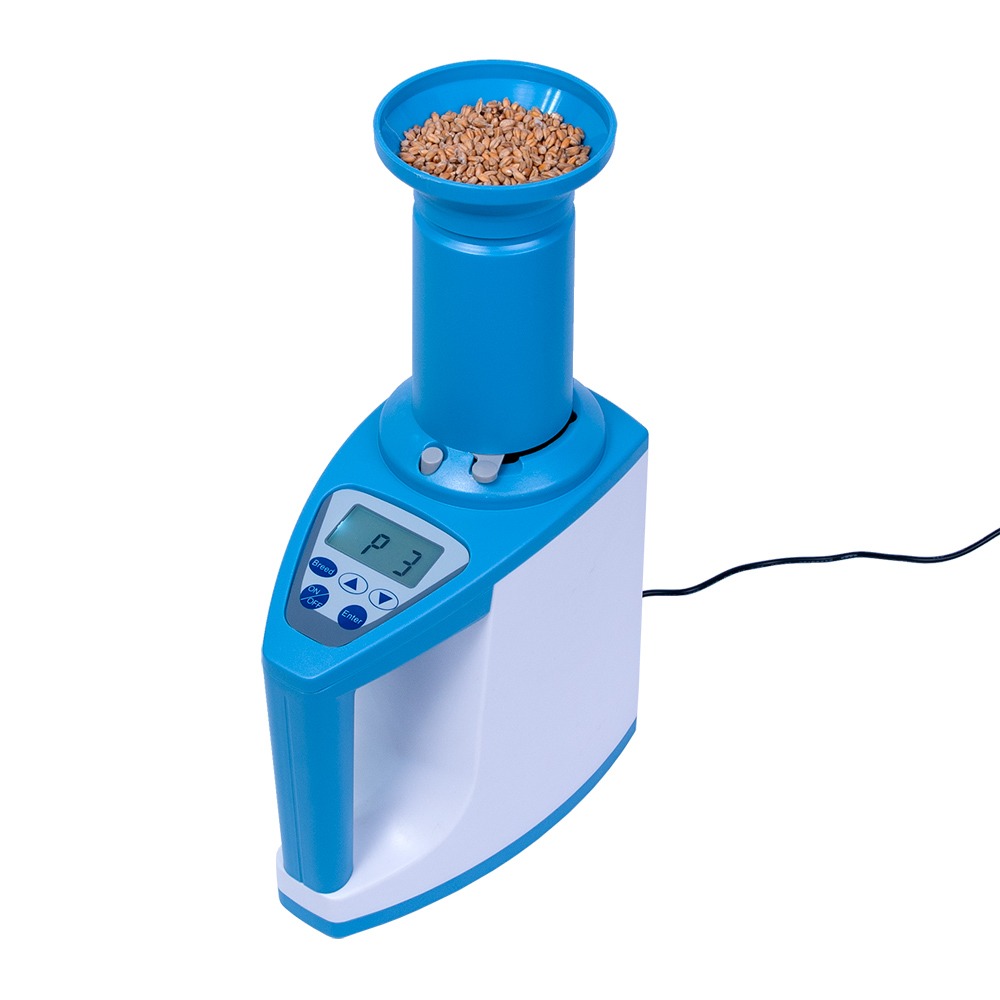
The device does not require the sample to be ground. Simply select the crop code, install the measuring chamber, pour the material into the funnel, and start the measurement. The result appears on the LCD screen in less than 10 seconds, with no complicated tables or endless calculations in a notebook.
What the device measures
The LDS-1G primarily measures moisture content by mass in the 3–35% range. The moisture meter also displays sample temperature, sample mass, and calculated average moisture content. Another useful feature is the grain bulk density display, which helps you quickly assess the sample's test weight without a separate scale and measuring container.
Preset programs are available for different materials, including wheat, corn, barley, rice, soybeans, rapeseed, sorghum, sunflower seeds, peanuts, coffee and cocoa beans, vegetable seeds, oilseed meals, and pelleted feeds. That is why it is important to select the correct code before measuring: unfortunately, agronomy has yet to come up with a universal number for every crop.
Design: handle, cup, and easy-to-use buttons
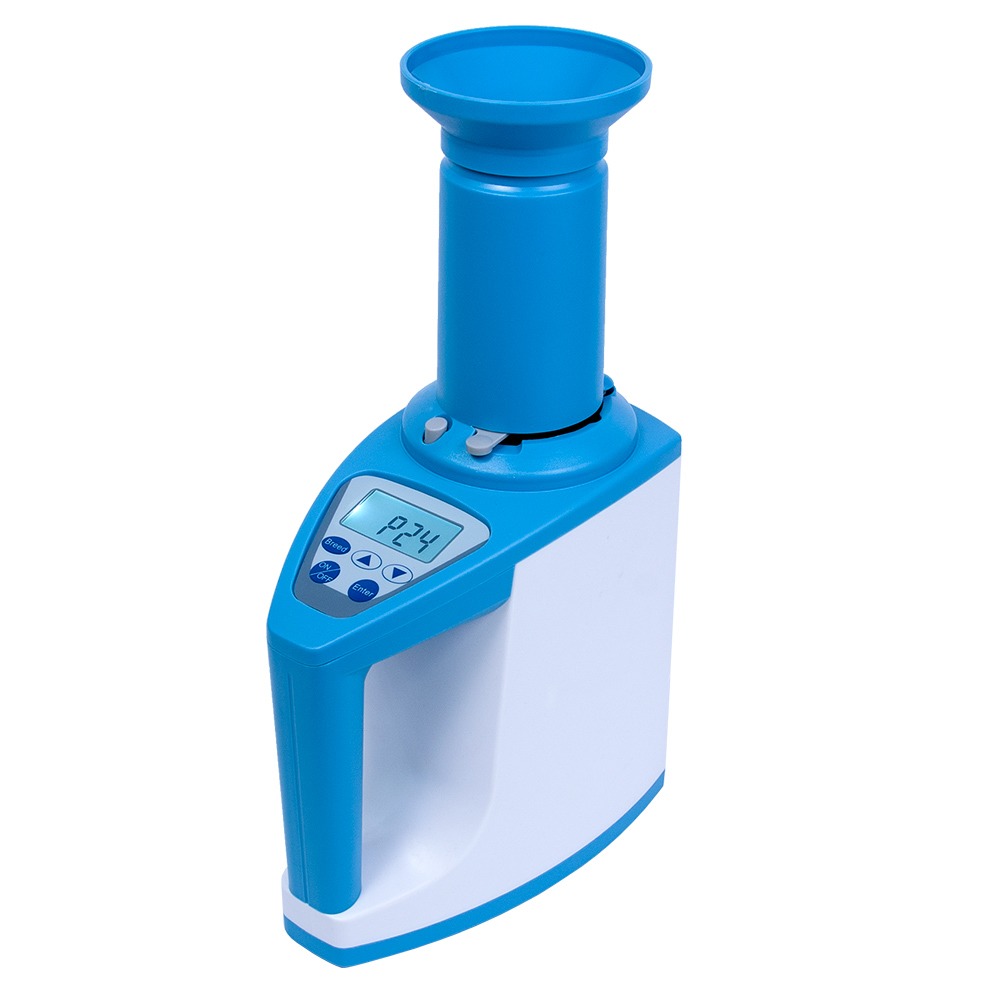
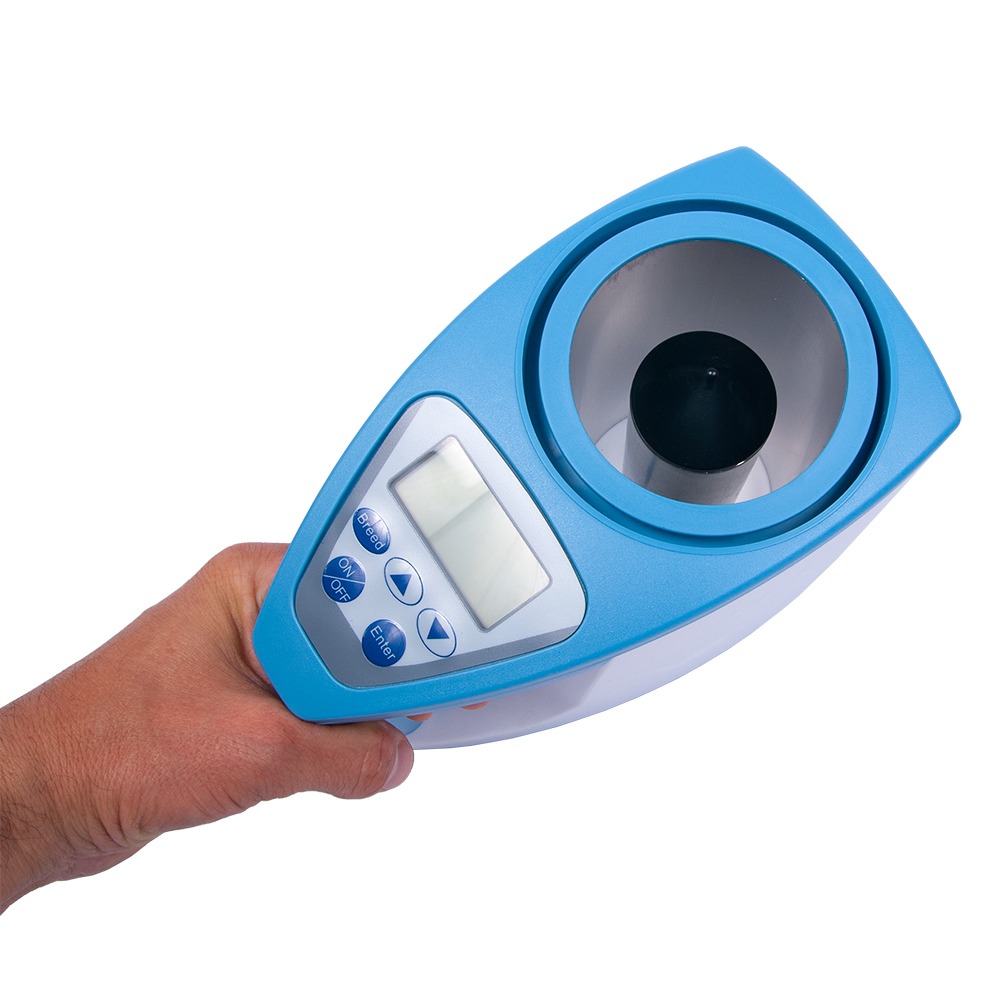
The LDS-1G has a compact portable body with a large handle. The display, controls, and socket for the measuring cup are located on top. The screen is backlit, so readings are easy to see in a storeroom, vehicle, or under a canopy without having to catch a ray of sunlight at just the right angle.
The removable cylindrical chamber with a funnel produces a standard sample volume. This is important not only for measuring moisture but also for accurately calculating mass and bulk density. After use, the chamber is easy to empty and clean with a brush.
Accuracy also depends on the sample
The stated error for the LDS-1G is up to ±0.5% in the main moisture range, and repeatability is up to 0.2%. A built-in sensor automatically accounts for sample temperature, since cold grain from the field and warm grain from the dryer behave differently during measurement.
For consistent results, use a clean, uniform, representative sample free of stones, metal contaminants, and large clumps. If the reading has a critical impact on the purchase price, acceptance of a batch, or dryer settings, take measurements at several points and check the device against a reference method.
Power and battery operation
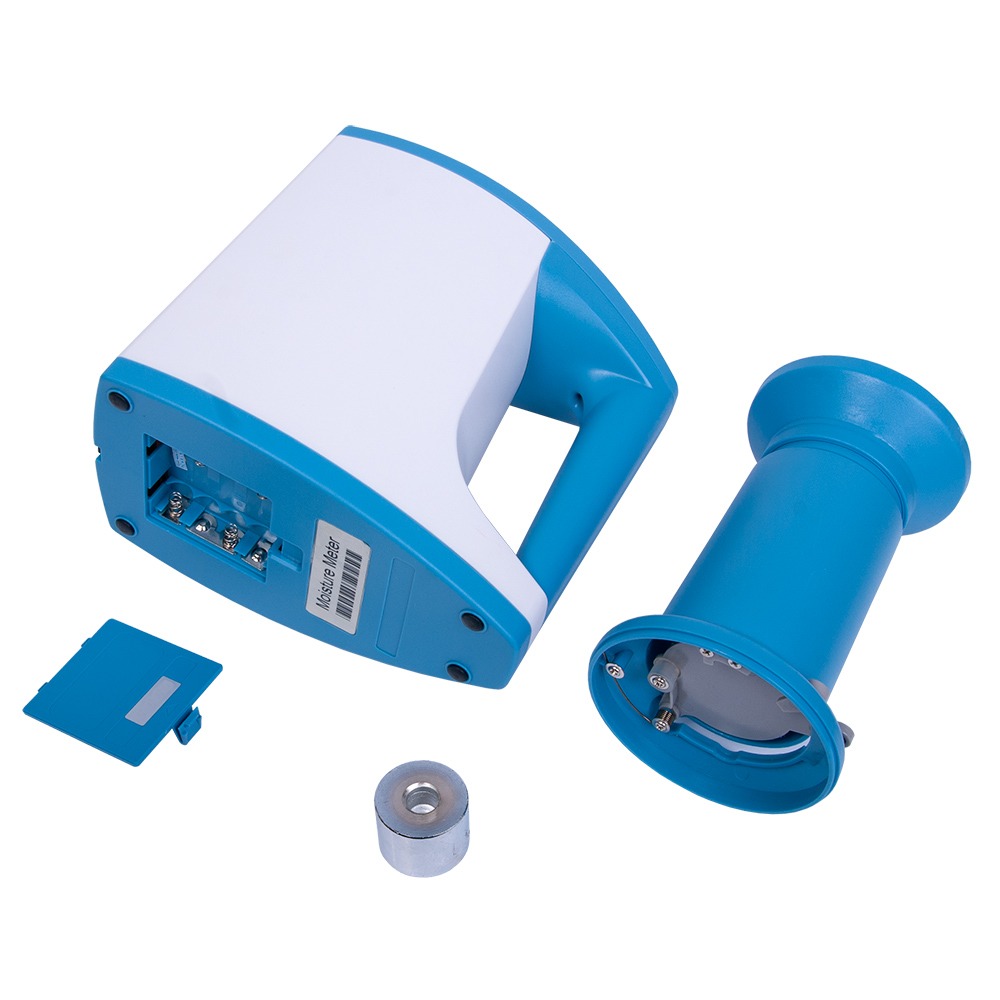
The moisture meter runs on four AA batteries and can also be powered by an external 9 V adapter when needed. Automatic power-off after approximately three minutes of inactivity conserves battery life, a small detail that is especially appreciated at the end of a long day in the field.
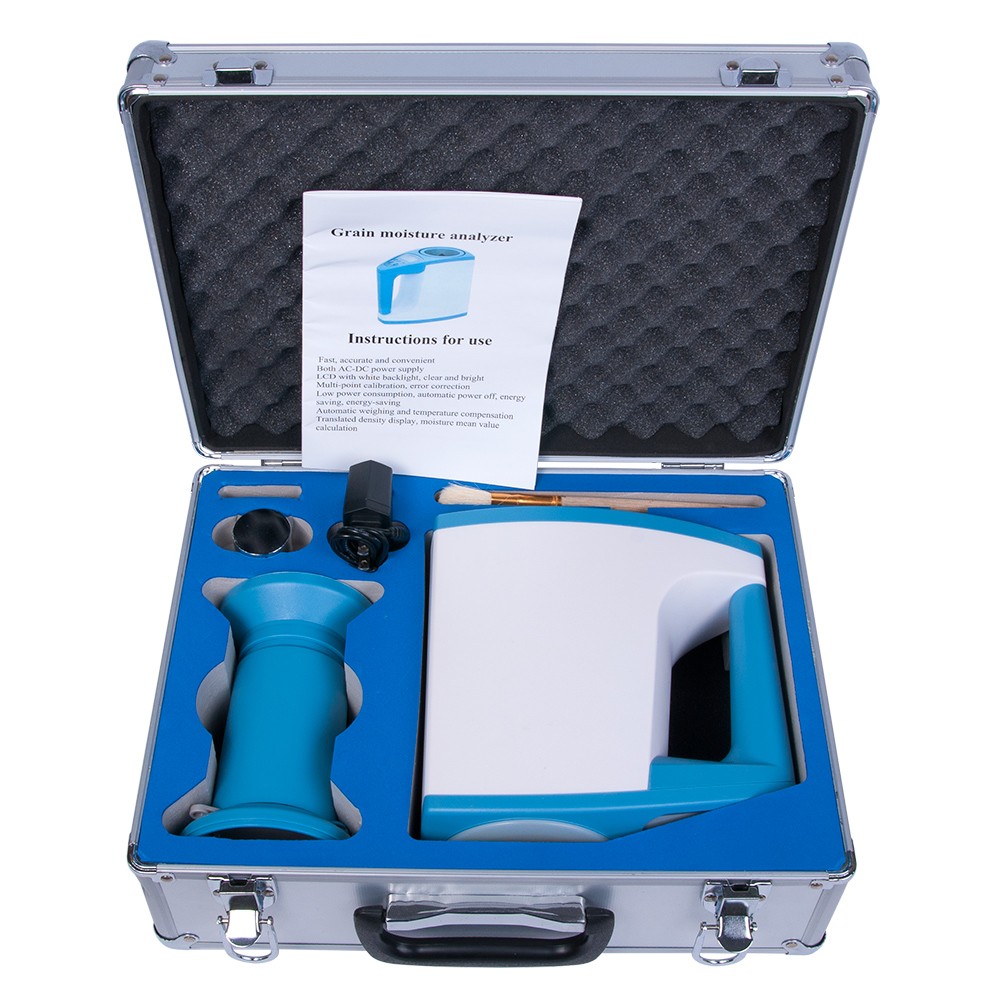
The device comes with a protective aluminum case. It has space for the moisture meter, measuring cup, calibration weight, brush, and adapter. The kit is convenient to keep in a vehicle or carry between the warehouse, dryer, and field.
Who is the LDS-1G for?
The LDS-1G is a good choice for farmers, agronomists, grain buyers, warehouse workers, or dryer owners who need to check grain quality quickly on site. It is especially useful for regular checks before, during, and after drying, as well as before putting the harvest into storage.
It is not a stationary laboratory analyzer or a magic “perfect harvest” button. But it quickly provides the key answer, how much moisture the sample contains right now, and helps you make decisions when waiting for a laboratory would be too late.