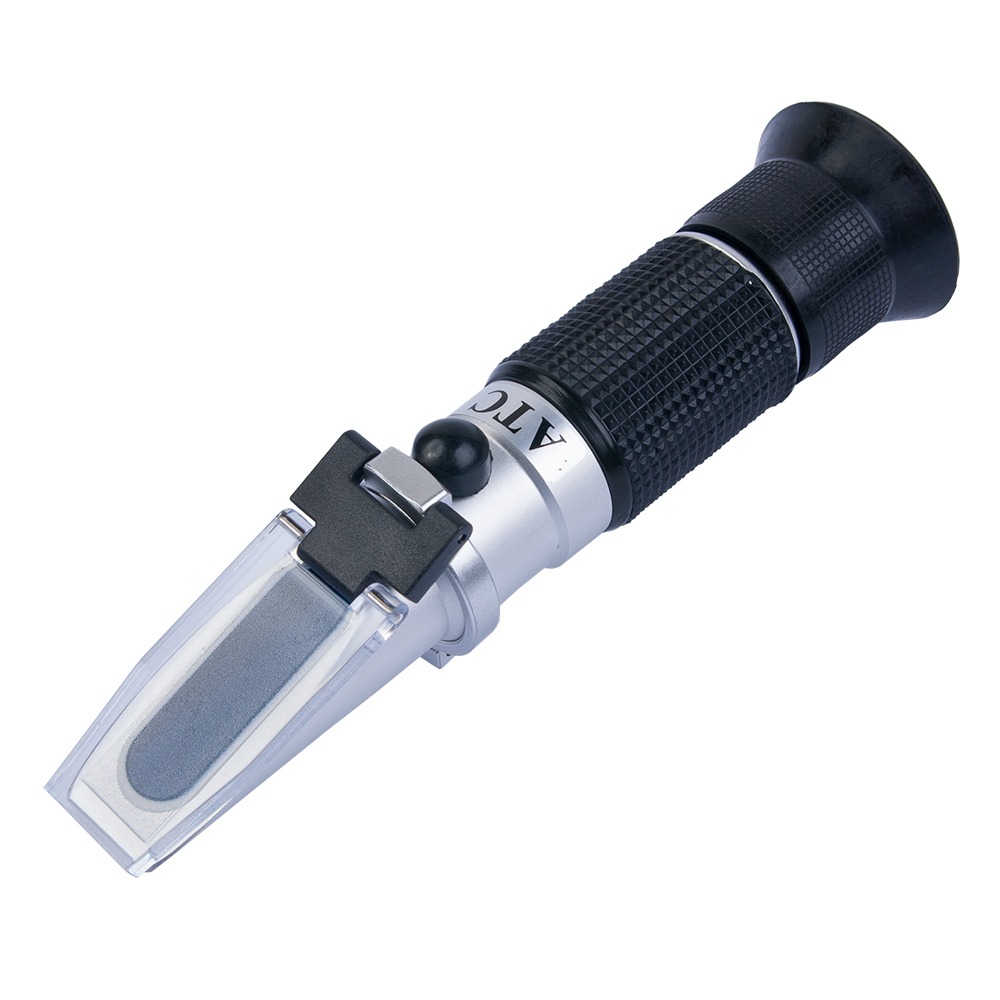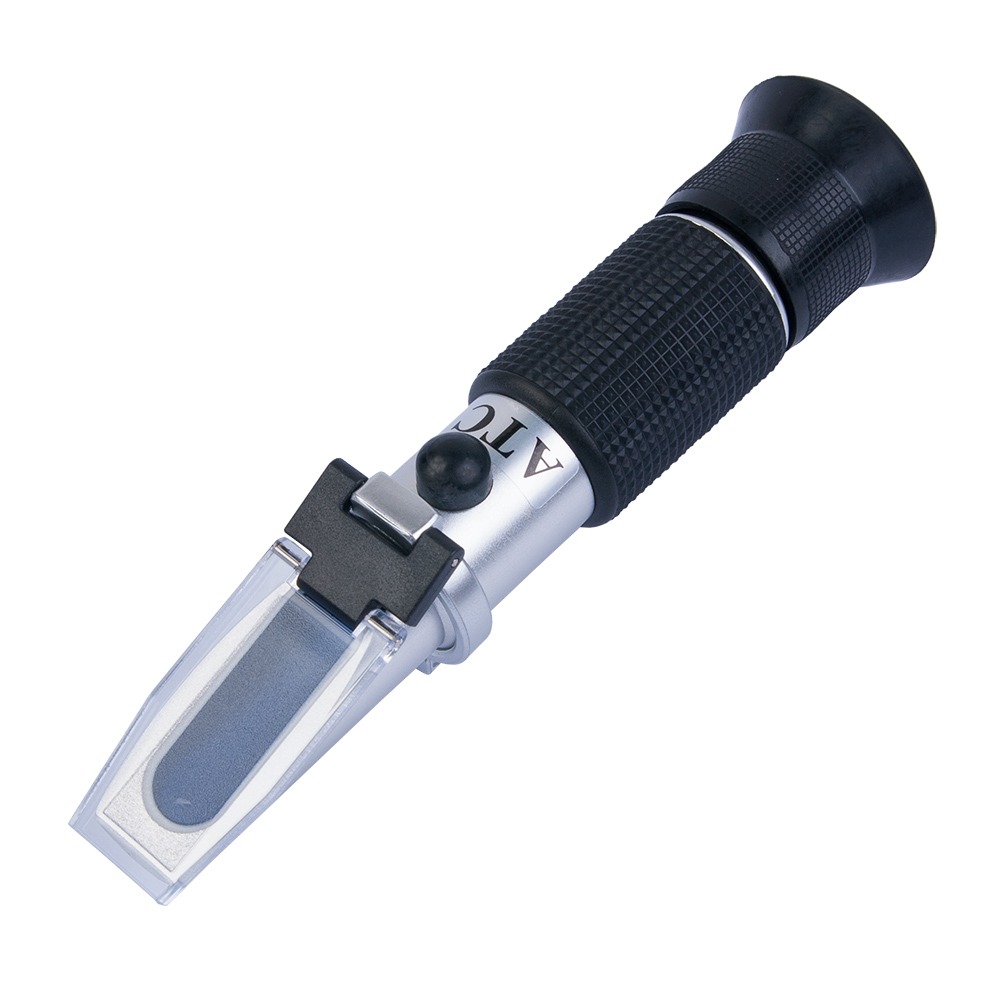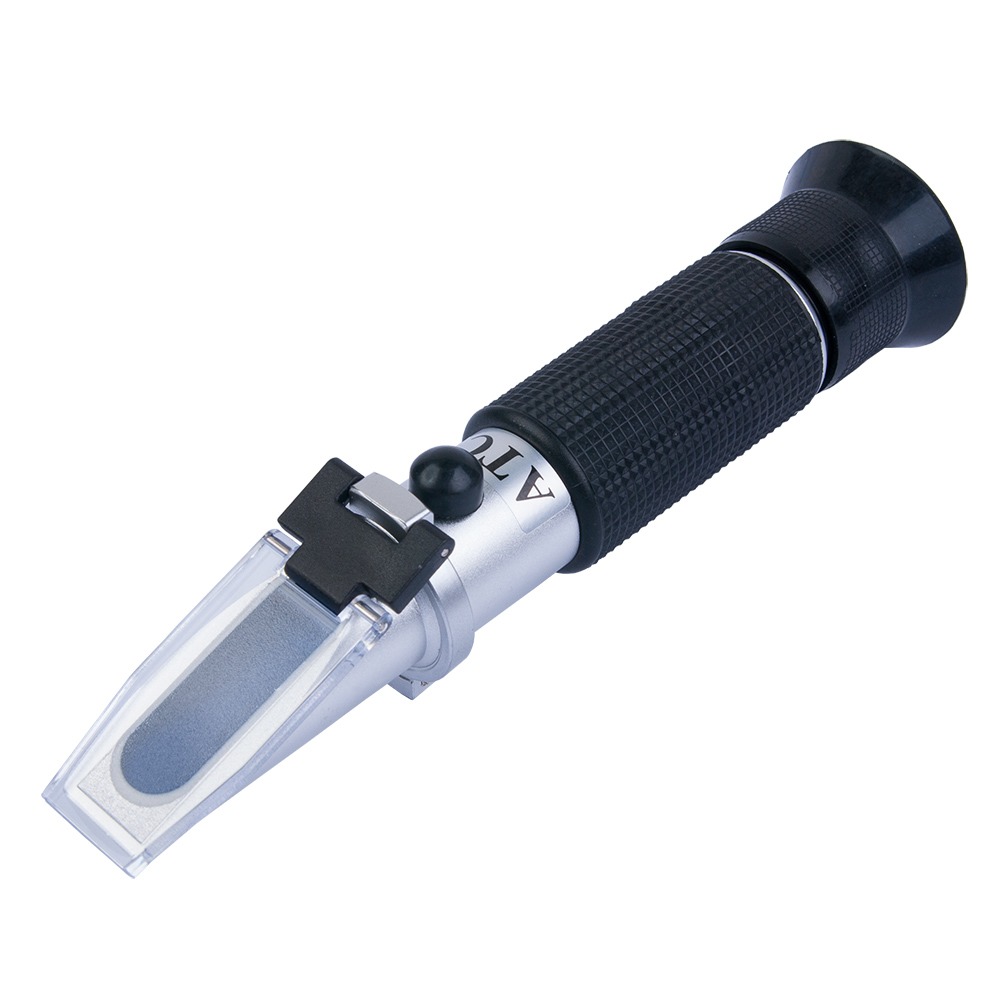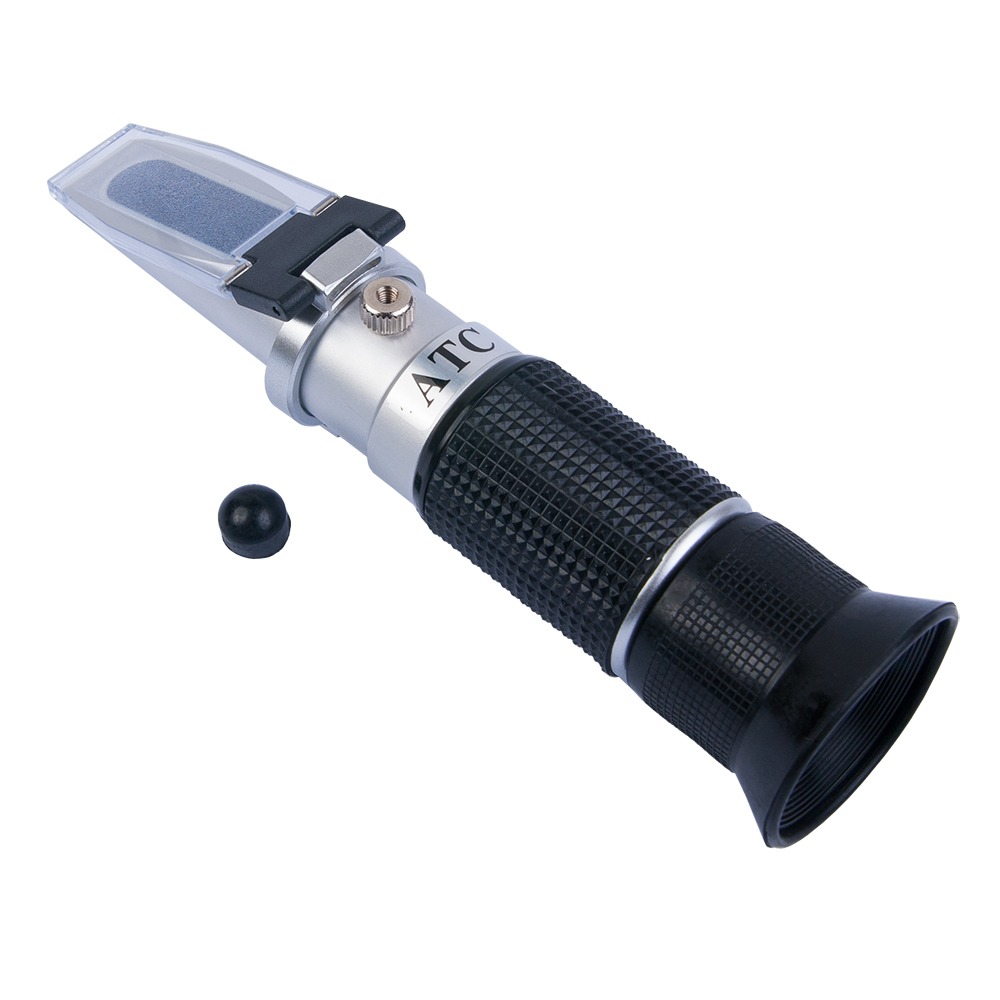

Walcom HT ATC Brix Refractometer 58–90% Brix
Delivery and payment
Choose your city or town to see the price with delivery there and when you can get it.
Pickup points
- Branch
- Parcel locker
Pros
- Works without batteries
- ATC reduces temperature-related error
- Only 1–3 drops needed per measurement
- Quick scale reading
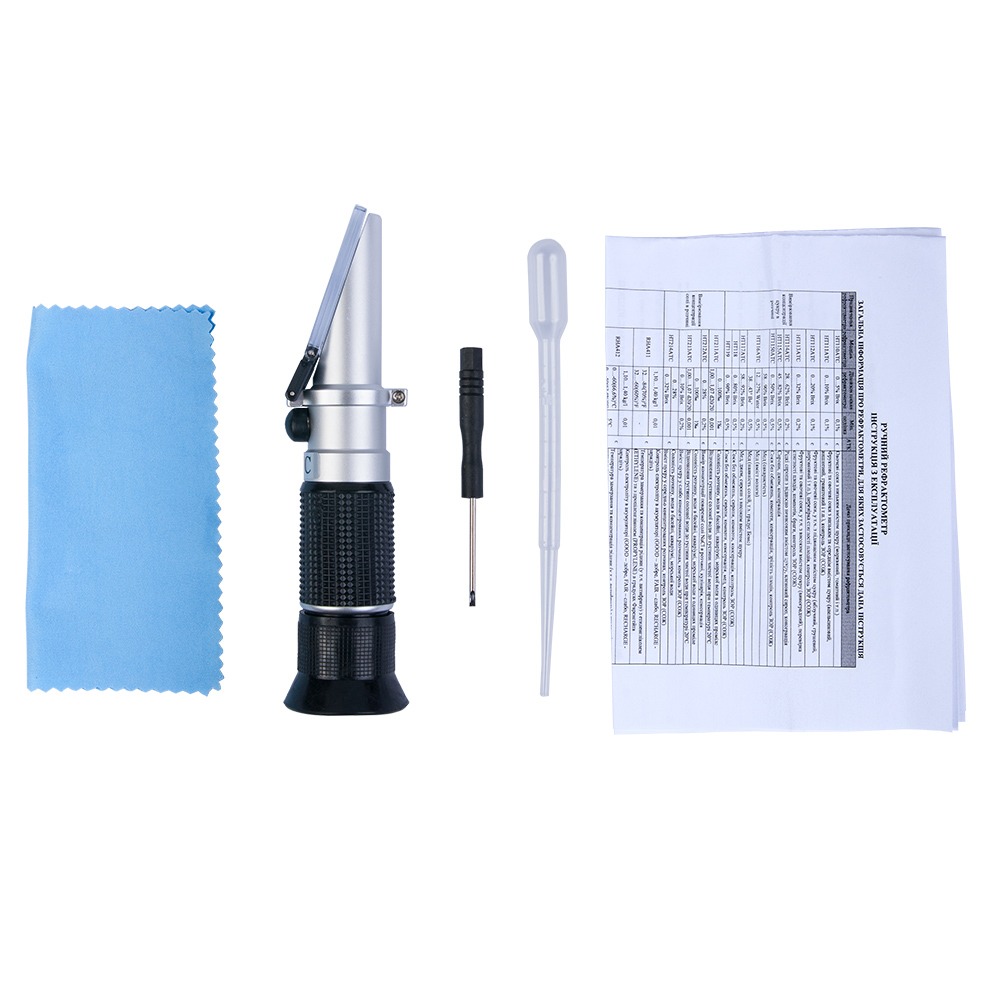
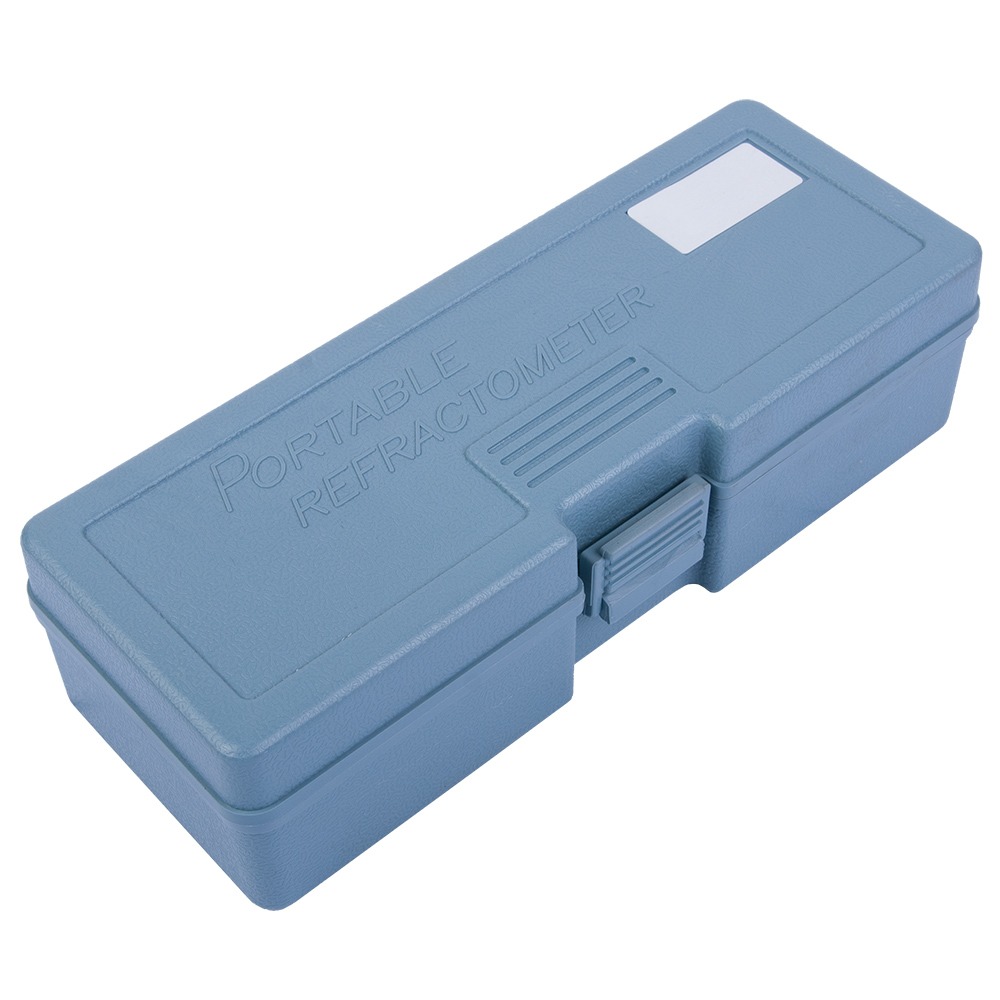
- Case and accessories included
Cons
- Requires an external light source
- Prism is susceptible to scratches
- Range must be chosen carefully
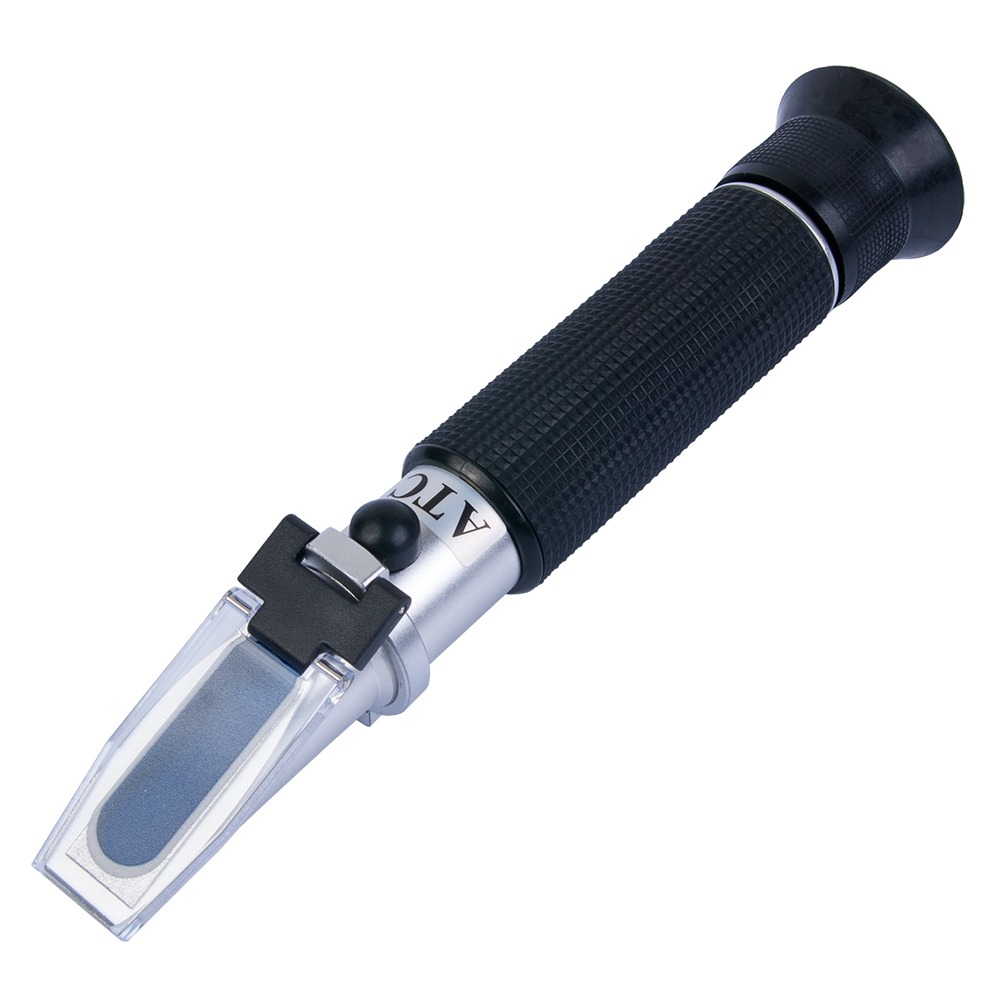
HT ATC (Brix): a “pocket laboratory” for sugar content
The HT ATC (Brix) series consists of handheld optical refractometers that measure the concentration of dissolved substances in a liquid on the %Brix scale. In short, place a sample on the prism, close the cover plate, look through the eyepiece, and read the value at the boundary between the blue and white fields.
ATC (Automatic Temperature Compensation) isn't just for show: the instrument automatically compensates for the effect of temperature within its working range (typically 10–30 °C). The scale often shows 20 °C, the reference temperature to which readings are adjusted.
What is Brix and why is it a “sugar equivalent”?
%Brix is the mass fraction of sucrose in an aqueous solution at 20 °C. In other words, 20% Brix means that 100 g of solution contains 20 g of sucrose and 80 g of water. In real-world samples (juices, must, syrups, honey), sucrose is not the only component, so a refractometer reading represents “sugar content/dissolved solids expressed as Brix.” This is more than enough for monitoring process consistency (ripening, reduction, batch consistency).
How to use it: become a process expert in 30 seconds
The process is simple:
- Wipe the prism and cover plate with a cloth so they are clean and dry.
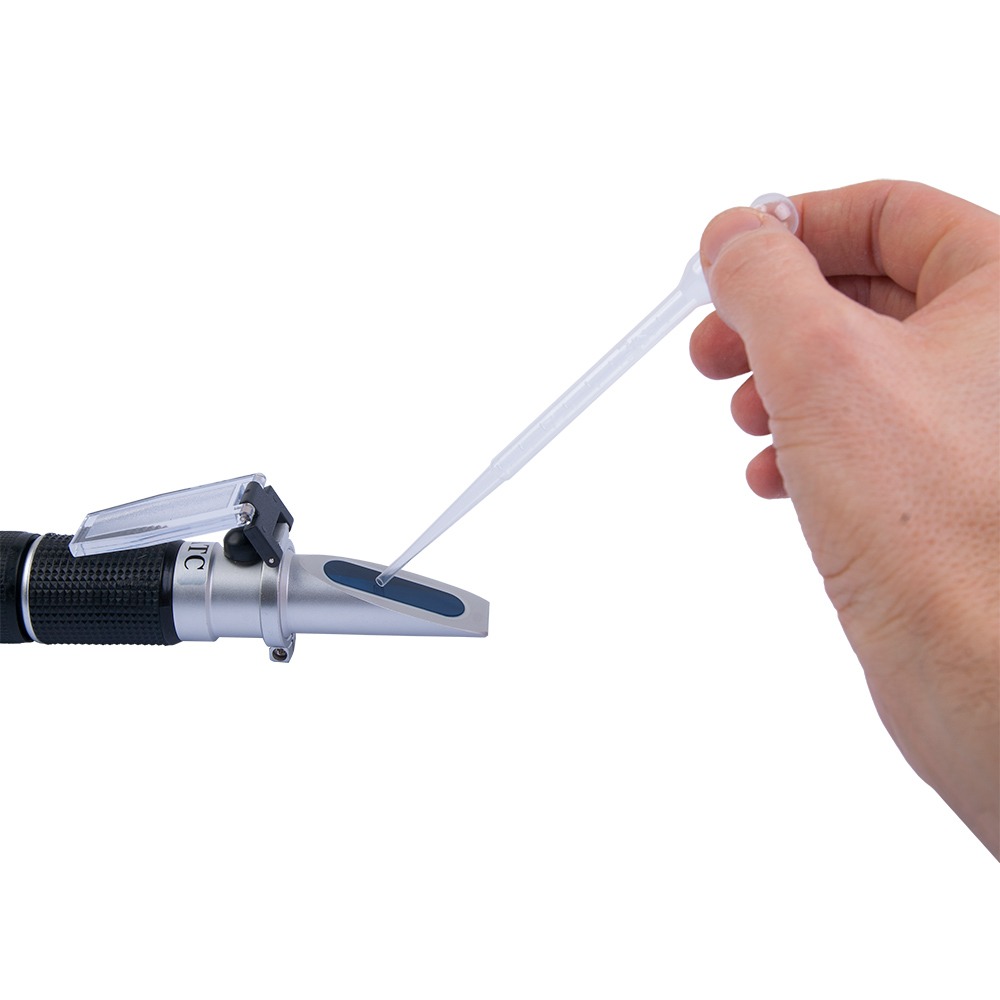
- Apply 1–3 drops of the sample to the prism.
- Close the cover plate so the liquid spreads into a thin layer without bubbles.
- Point the instrument toward a light source (window/lamp) and look through the eyepiece.
- If the scale looks blurry, adjust the focus using the eyepiece.
- Read the value at the boundary between the blue and white areas.
- Immediately after measuring, rinse or wipe off the remaining sample (especially syrups and honey).
Choosing the right range: the key to accuracy
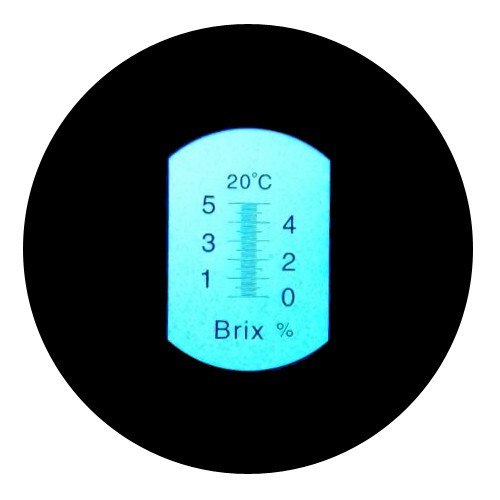
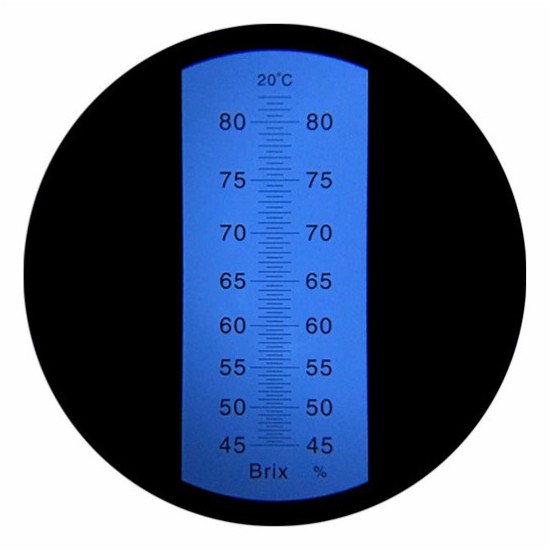
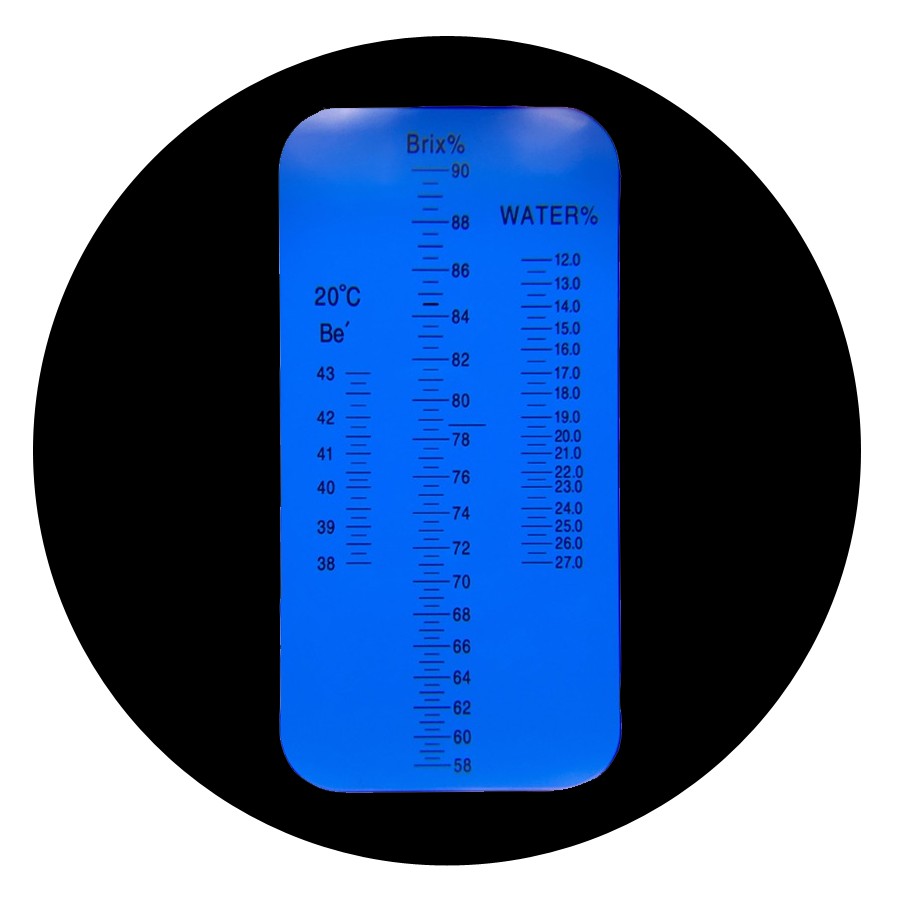
With refractometers, the narrower the range, the easier it is to detect small changes (a finer scale step and usually better accuracy). So the question isn't “which one is cheaper?” but “which one suits my samples?”
- HT110ATC (0–5 %Brix) is a precise solution for very low concentrations (vegetable juices such as tomato or carrot juice, and dilute solutions). Scale step 0.1; accuracy ±0.1.
- HT112ATC (0–20 %Brix) is a versatile option for measurable juices, compotes, and purées. Scale step 0.1; accuracy ±0.1.
- HT113ATC (0–32 %Brix) is even more versatile: sweet juices, winemaking before fermentation, must/mash at the start, and process solutions. Scale step 0.2; accuracy ±0.2.
- HT1150ATC (0–50 %Brix) is for when 32% is no longer enough: rich juices/syrups and some winemaking and food production applications. Scale step 0.5; accuracy ±0.5.
- HT114ATC (28–62 %Brix) covers concentrates and medium- to high-density syrups (such as maple syrup). Scale step 0.2; accuracy ±0.2.
- HT115ATC (45–82 %Brix) is for highly concentrated syrups, jams, and reduction. Scale step 0.5; accuracy ±0.5.
- HT116ATC (58–90 %Brix) is designed for honey: in addition to Brix, it usually has moisture (%WATER) and Baumé (Be’) scales. Scale step 0.5; accuracy ±0.5.
- HT117ATC (58–92 %Brix) offers a high Brix range with a finer scale step for monitoring very sweet syrups/honey without additional scales. Scale step 0.2; accuracy ±0.2.
Calibration: when water is enough and when it isn't
For ranges starting at 0% Brix, calibration is usually performed with distilled water (set the reading to “0” using the calibration screw). But for high-range models (where zero is outside the scale, such as 45–82 or 58–90/92), it makes more sense to use reference liquids/calibration oils or solutions of the appropriate concentration. Otherwise, there is simply no “0” point to set.
A practical tip: ATC helps, but it doesn't replace common sense. Give the instrument and sample several dozen seconds to reach a similar temperature, don't measure boiling liquids, and don't leave sticky syrup on the prism. It won't thank you for it.
Who will benefit most
- Home and small-scale juice/syrup/jam producers can get quick readings without a “laboratory in the kitchen.”
- Beekeepers can check honey quality, especially with the HT116ATC and its moisture scale.
- Winemakers/brewers can assess sugar content at the start (after active fermentation, readings must be recalculated because of the effect of alcohol).
- Process specialists seeking consistency between batches can use the readings to compare with previous batches and keep recipes consistent.