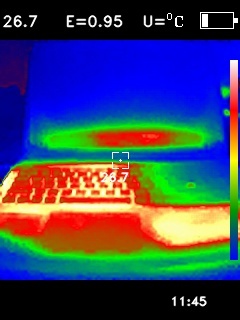
Xintest HT-100
Pros
- Wide 50° × 50° field of view
- Compact body weighing 235 g
- Measurement range up to 550 °C
- Image storage and USB-C
- Adjustable emissivity
Cons
- Native resolution of only 96 × 96
- No Ukrainian menu language
- Does not record video
Xintest HT-100: a thermal imager for finding problems, not hunting ghosts
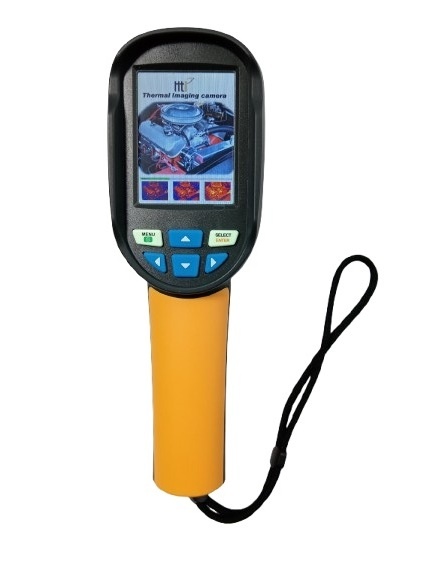
The Xintest HT-100 is a compact handheld thermal imager for the home, workshop, and basic electrical diagnostics. It shows the distribution of surface temperatures in real time: thermal bridges around windows, underheated areas of underfloor heating, and overheating terminals, radiators, outlets, bearings, or pipes. It is designed for quickly finding anomalies when taking spot measurements with a pyrometer would be slow, tedious, and not particularly effective.
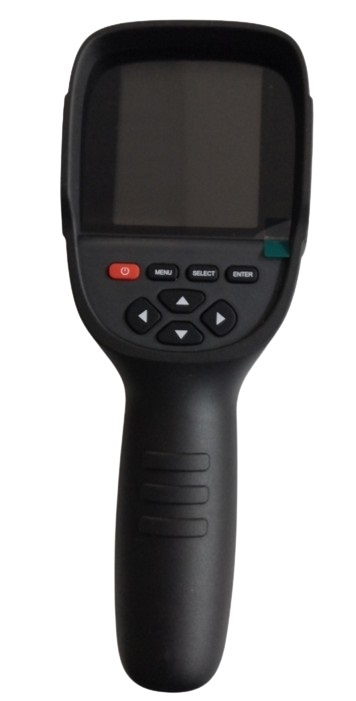
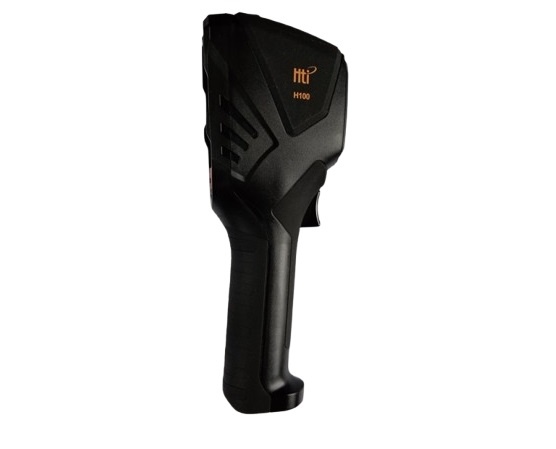
The model measures temperatures from −20 to +550 °C, has a wide 50° × 50° field of view, and weighs about 235 g. This makes the HT-100 comfortable to hold in one hand and use in tight spaces when inspecting window reveals, electrical panels, heating systems, or ventilation.
What you can see on the screen
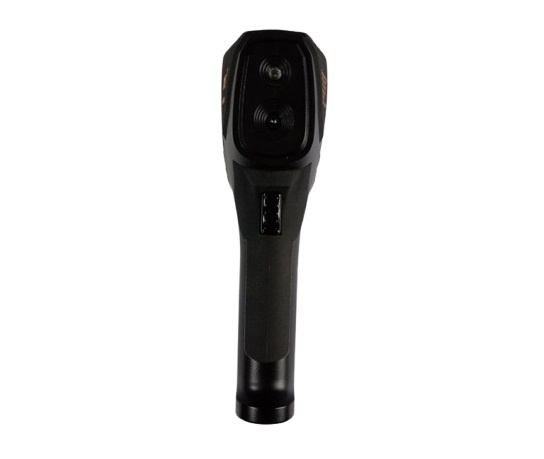
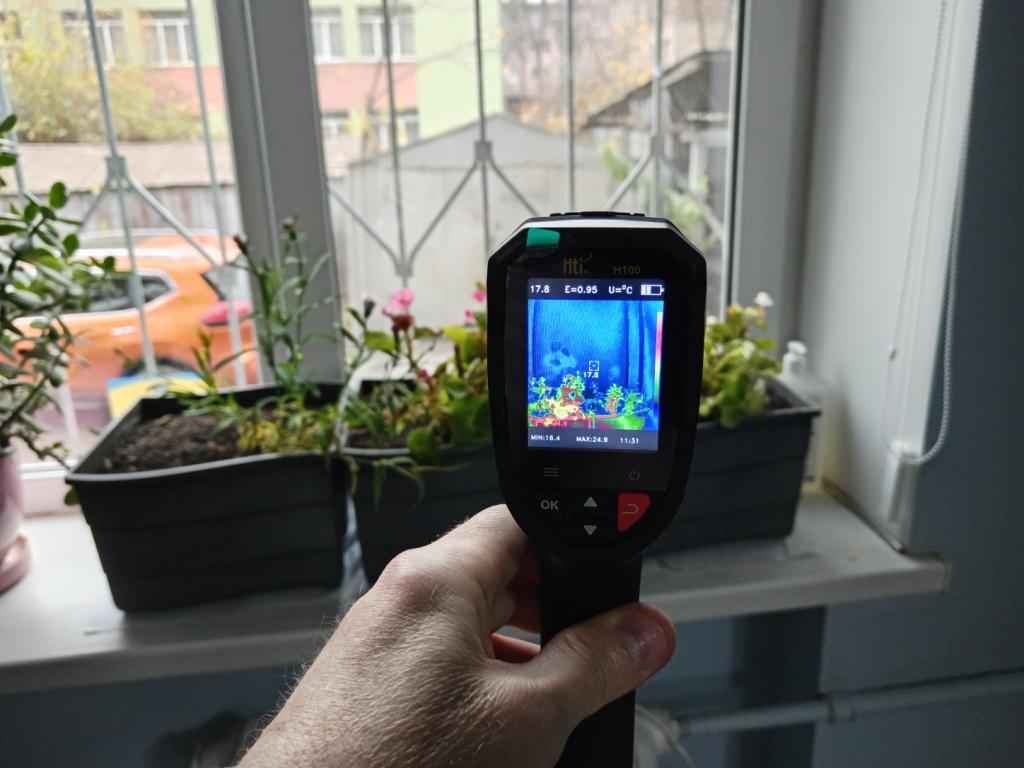
At the heart of the device is an infrared sensor with a native resolution of 96 × 96 pixels. That is enough to see the outline of a cold area on a wall, an overheated contact, or uneven heating in equipment. Software processing enlarges the image to 240 × 240 pixels, but it is important to understand that this makes the image larger without adding fine detail.
The wide field of view is especially useful in rooms and around equipment where you cannot step far back. At a distance of 1 m, the thermal imager covers approximately 93 × 93 cm of surface, with each pixel corresponding to roughly 9.7 mm. That is not enough to inspect a building facade from across the street or find a tiny defect on a circuit board, but it is quite practical for home energy audits and service work.
Temperature measurement: the numbers have context
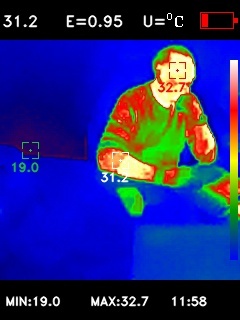
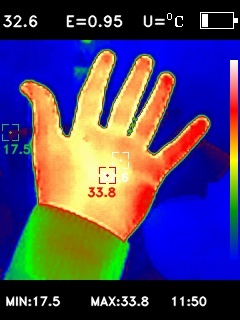
The HT-100 measures temperature in 0.1 °C increments and displays readings for the center point and the hottest and coldest areas in the frame. Accuracy is ±2 °C or ±2%, whichever is greater. The device has two operating subranges: −20 to +150 °C and +100 to +550 °C.
For more accurate results, emissivity can be adjusted manually from 0.01 to 1.00. This is a genuinely useful feature: a matte painted wall, wood, plastic, and black rubber emit infrared radiation differently than shiny metal. Shiny metal readily reflects heat from surrounding objects, so a bright patch of color on the screen does not always mean a component is actually overheating.
For the home, heating, and electrical work
In a home, the thermal imager can help reveal cold seams, underheated parts of a radiator, heat leaks around doors, insulation problems, hidden hot-water pipes, or areas of underfloor heating. For electrical work, it is useful for an initial search for terminals, circuit breakers, and connections that are heating up more than nearby components.
However, the Xintest HT-100 cannot see through walls, furniture, or device housings, and it does not detect moisture directly. It captures the temperature pattern of a surface. A cold spot may indicate a thermal bridge or moisture, but a final diagnosis should be confirmed with further inspection.
Controls, memory, and battery life
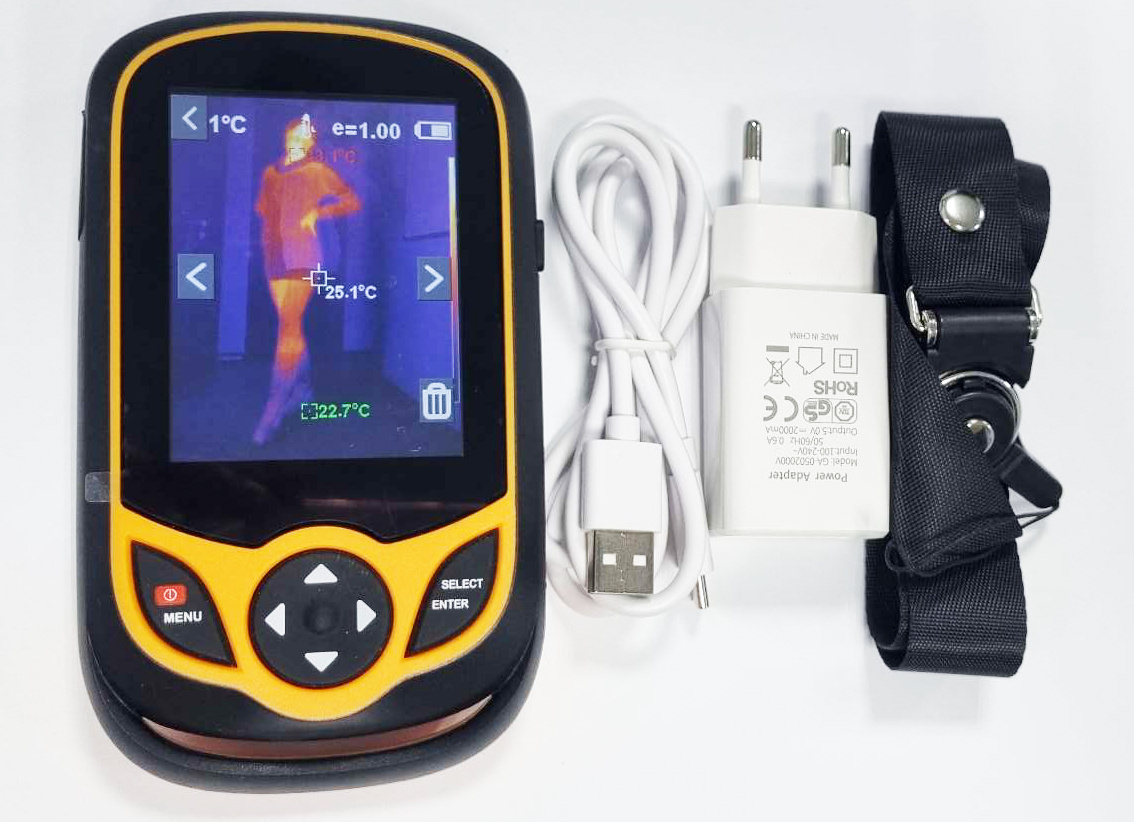
The thermal imager has a 2.4-inch color display with a resolution of 240 × 320 pixels. There are five palettes: rainbow, iron oxide, red hot, white hot, and black hot. The first is well suited to a general search for temperature differences, while the monochrome modes sometimes show the boundaries of temperature zones more clearly without a carnival of colors.
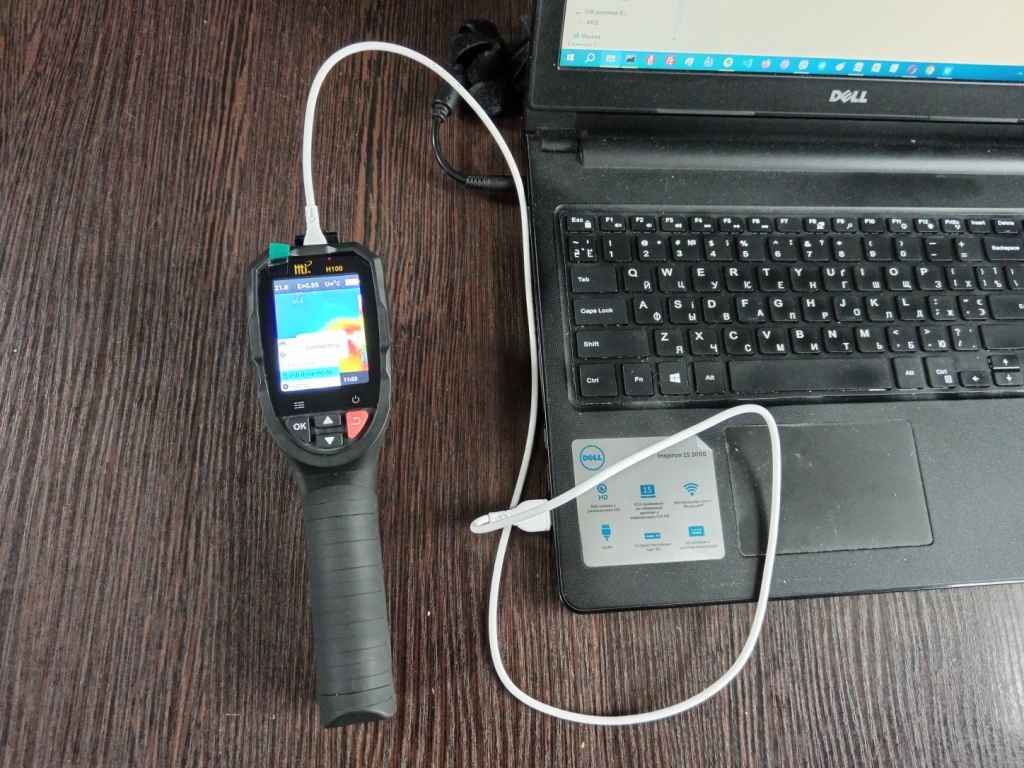
Images are saved in JPG format to the built-in memory, and transferring them to a computer simply requires connecting the device via USB-C. The built-in 1000 mAh rechargeable battery provides up to 3 hours of operation. Auto power-off activates after 5 or 20 minutes of inactivity and can be disabled if needed.
Who is the Xintest HT-100 for?
This is a solid entry-level thermal imager for a homeowner, technician, heating system installer, or electrician who needs to quickly locate a problem. It will not replace a professional camera with a higher native resolution for detailed technical inspections, but it does its main job well: showing exactly where to take a closer look.
If you need a lightweight, self-contained device to check heat loss, batteries, pipes, radiators, and electrical connections without relying on a smartphone, the Xintest HT-100 is a practical and straightforward choice.