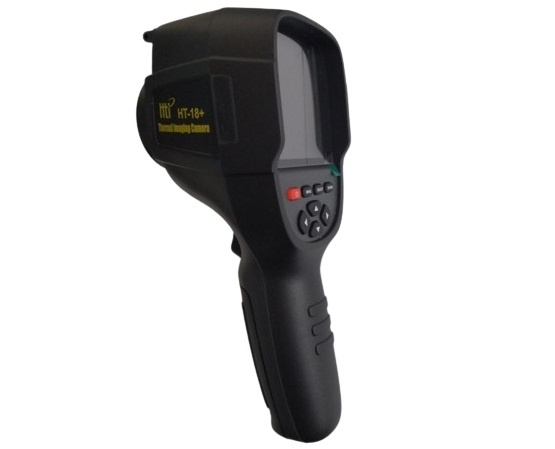

Xintest HT-18+
Pros
- 256 × 192 thermal resolution
- Wide 56° × 42° field of view
- Thermal and visible image blending
- Photo and video recording and PC analysis
- Removable 2200 mAh battery
Cons
- Only 2–3 hours of battery life
- No manual focus
- Outdated Micro-USB port
A thermal imager for finding problems, not just colorful patches
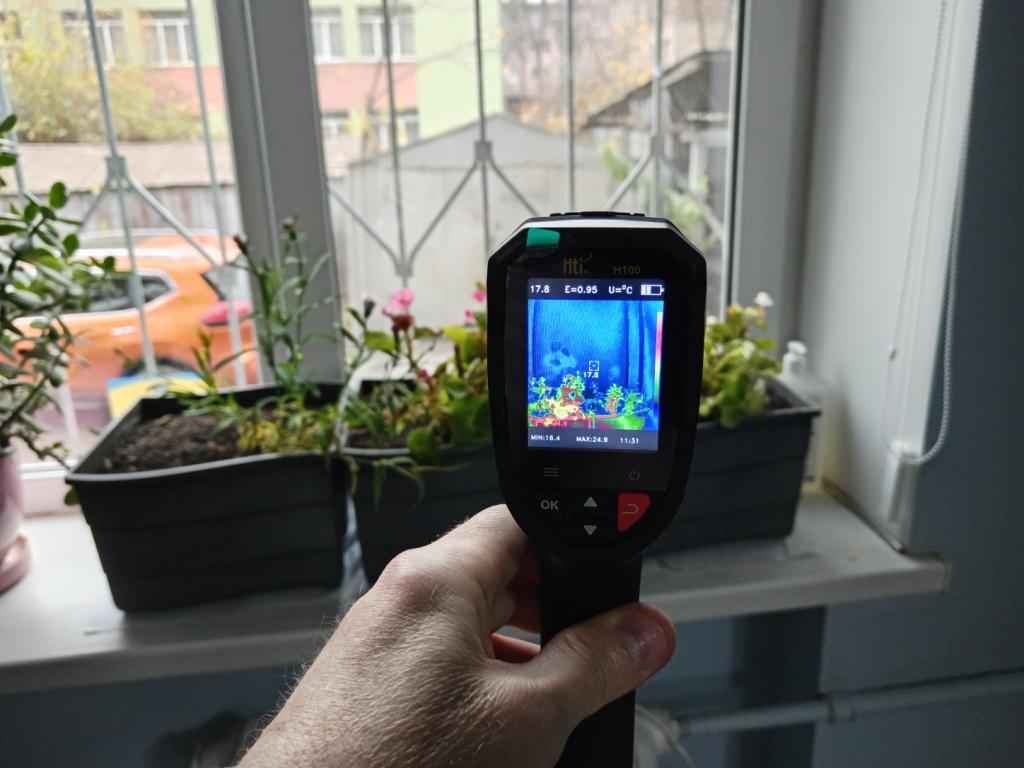
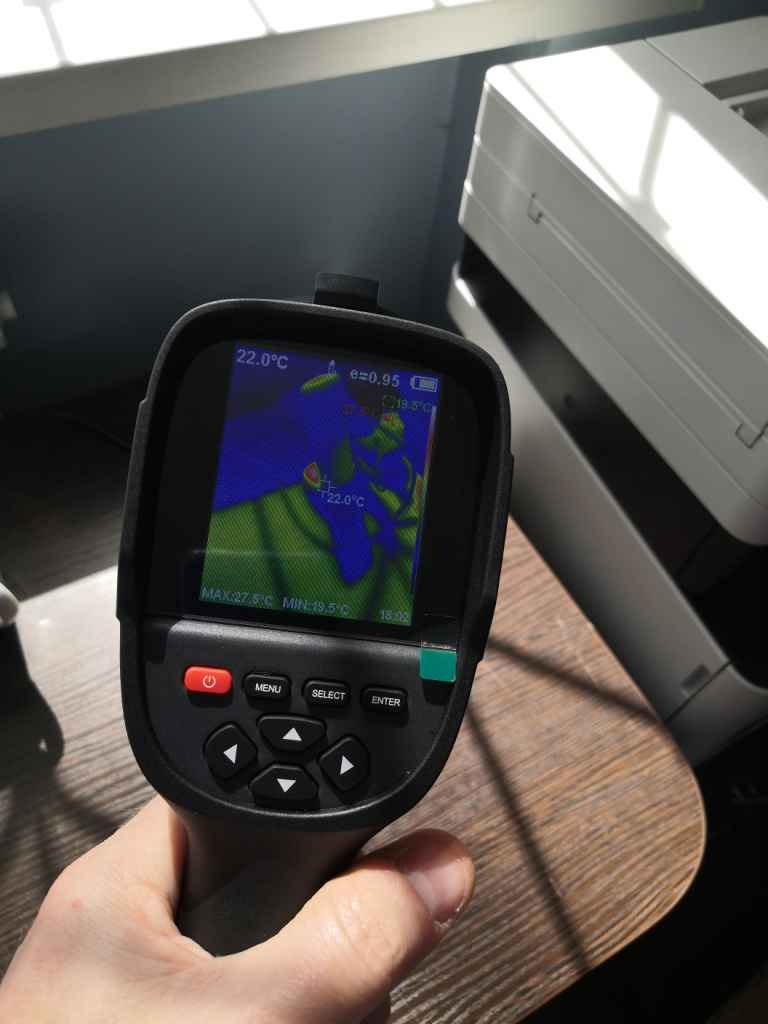
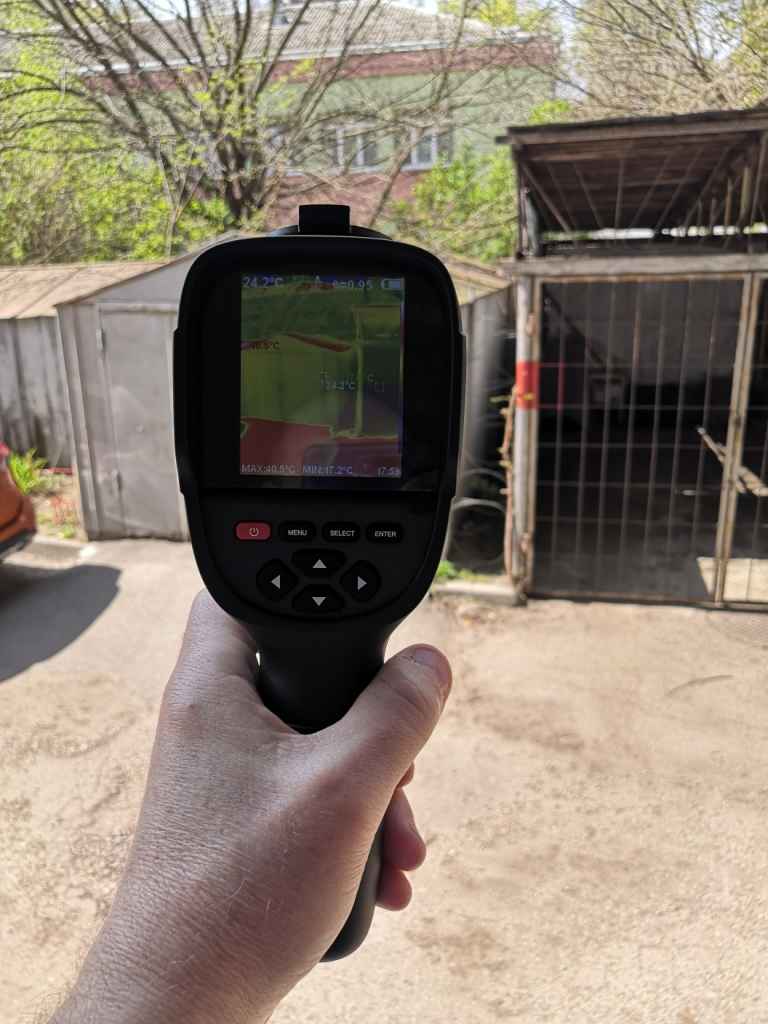
The Xintest HT-18+ is a handheld thermal imager for situations where the naked eye can no longer tell you what's going on. It helps you spot an overheated circuit breaker in a panel, a poor connection, a thermal bridge, heat loss through a window, a concealed heating pipe, or an area with suspicious moisture. The device produces a real-time thermogram, measures temperature, and shows the center of the frame along with the hottest and coldest spots.
The model's main advantage over basic “thermal thermometers” is its 256 × 192-pixel sensor. That's 49 152 measurement points in a single frame: enough not only to spot an anomaly, but also to see exactly where it occurs.
A wide field of view for rooms and equipment
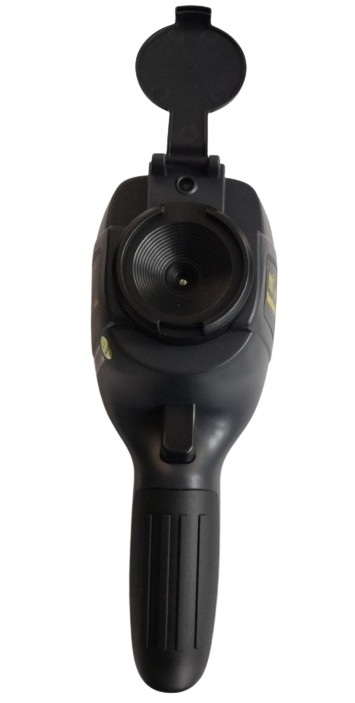
The lens has a 56° × 42° field of view, making it well suited to inspecting rooms, facades, electrical panels, pipelines, radiators, HVAC equipment, and automotive components. A large section of wall or an entire group of circuit breakers fits easily in the frame, so you won't have to back up to the other end of the hallway to see the problem.
Thermal sensitivity of up to 50 mK lets you spot small temperature differences. This is especially useful for finding uneven insulation, weak heating in a heated floor, or a connection that's already warmer than its neighbors but hasn't yet caused a serious failure.
A thermal image with real-world reference points
The HT-18+ also has a visible-light camera with a resolution of 640 × 480 pixels. You can view a thermal image on its own, a standard image, or a blend of the two. The last option is especially practical: outlines of wires, pipes, terminals, or windows are overlaid on the thermal image, making it much easier to find the exact hot connection.
Five palettes are available for different tasks: Rainbow, Iron Red, Cold, White Hot, and Black Hot. Rainbow quickly draws attention to contrasts, while monochrome modes often show small temperature differences more clearly without a riot of color.
Temperatures from −20 to +550 °C
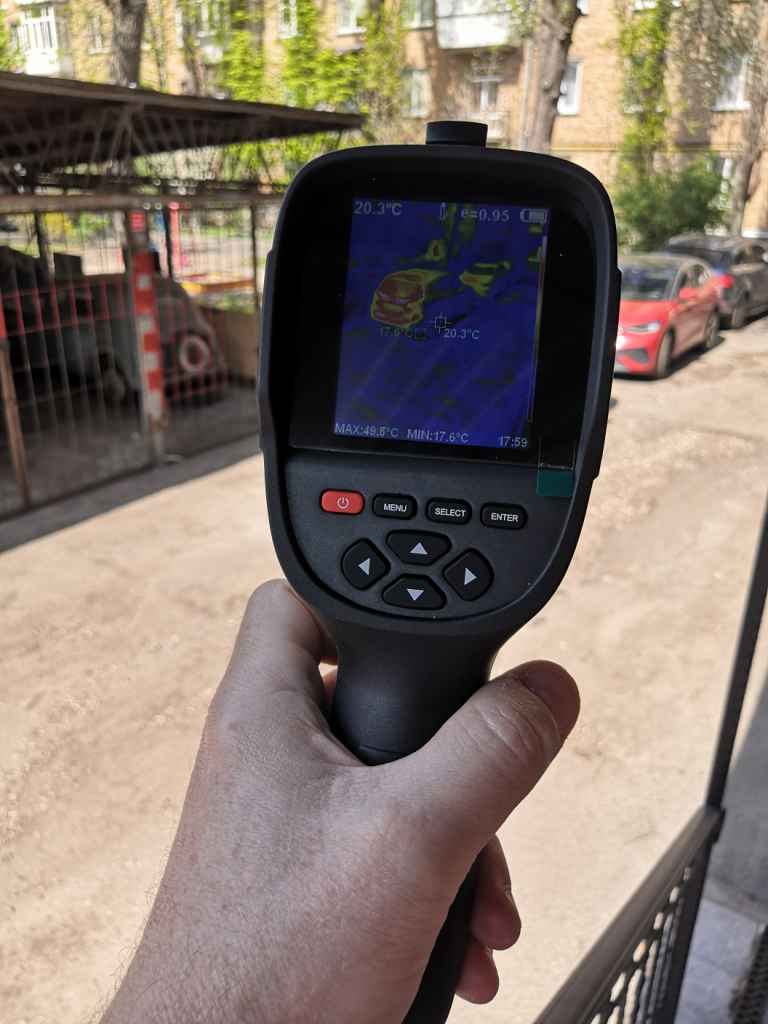
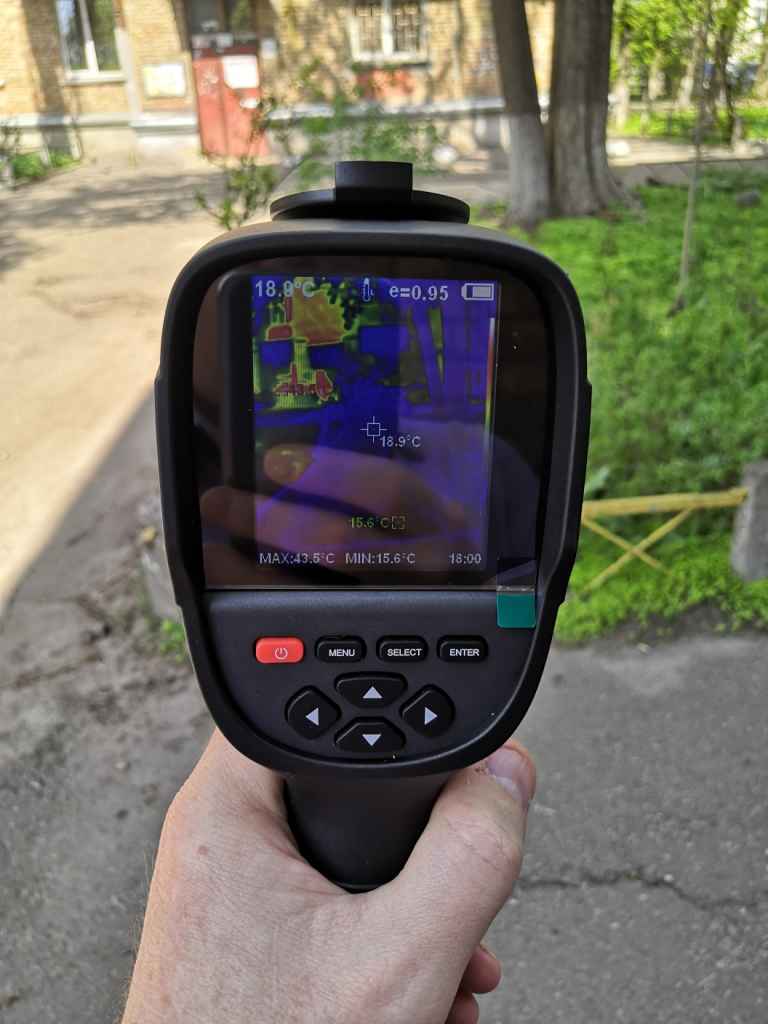
The device measures temperatures from −20 to +550 °C in 0.1 °C increments. For temperatures from −15 to +550 °C, the stated accuracy is ±2 °C or ±2%, whichever is greater. From −20 to −15 °C, the error increases to ±4 °C.
Emissivity can be adjusted from 0.01 to 1.00. This isn't just a secondary setting for the curious: the correct emissivity value is critical to accurate measurement. A matte painted surface usually gives a good reading, while shiny metal readily reflects heat from surrounding objects and can give a convincingly false reading.
It's also worth remembering a basic rule of thermal imaging: the HT-18+ cannot see through solid walls. It shows the temperature pattern on the surface. However, a pipe, damp area, or insulation defect often changes the wall's temperature enough for its outline to become visible without taking anything apart.
Photos, video, and computer analysis
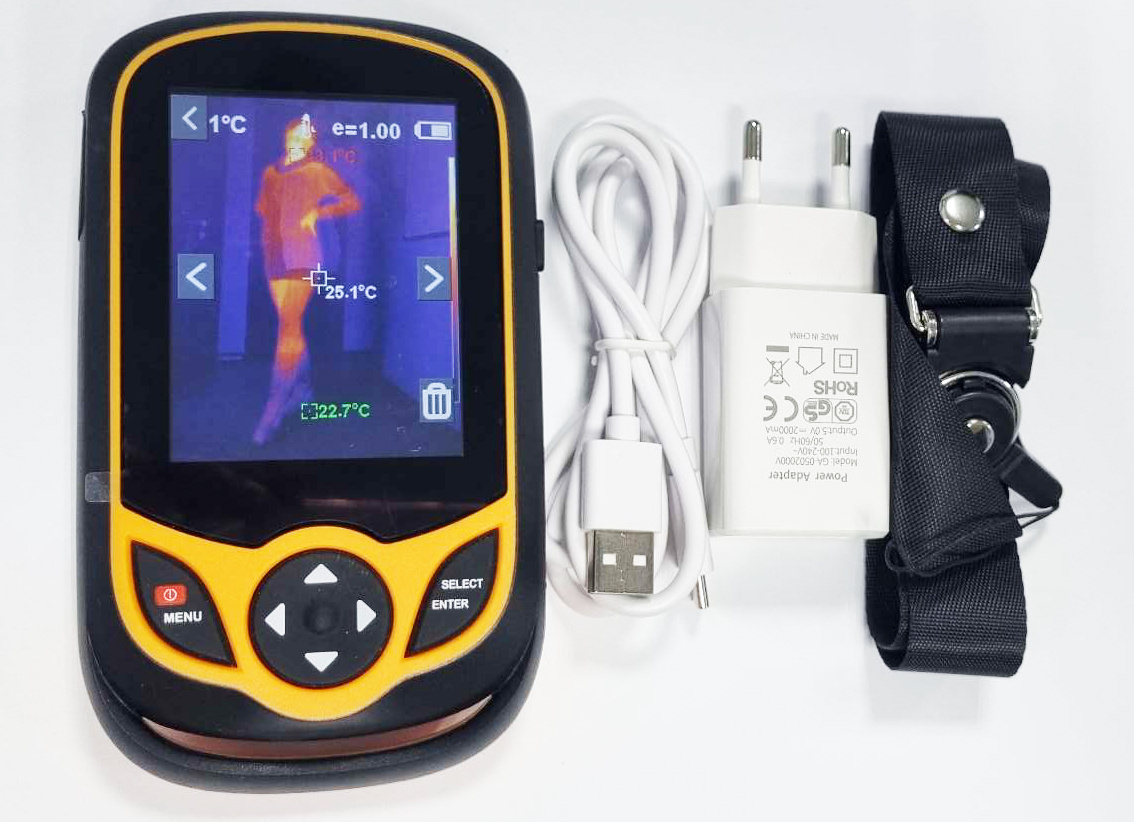
The device has 4 GB of eMMC storage, with approximately 3 GB available to the user. The thermal imager saves photos in JPG format and video in MP4. Data is transferred to a computer via Micro-USB, where it can be viewed and analyzed using PC software.
This makes the HT-18+ useful for more than a one-time home inspection. A technician can document the condition of an electrical panel before and after repairs, while an energy auditor can save thermograms of problem areas for a report or later comparison.
Practical ergonomics
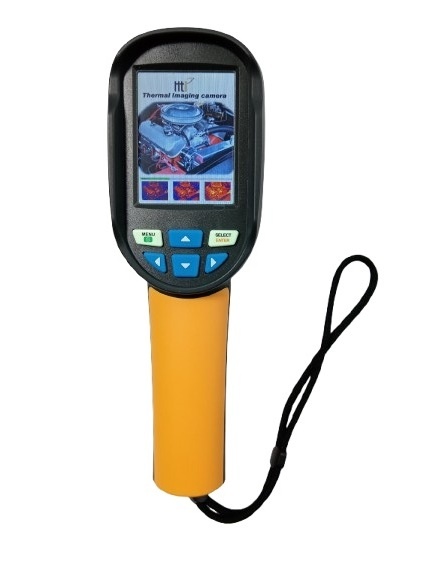
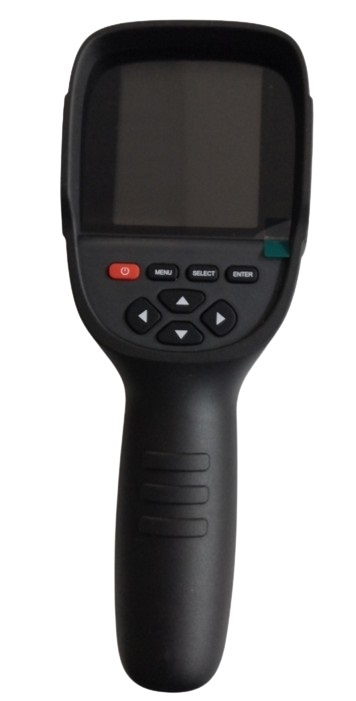
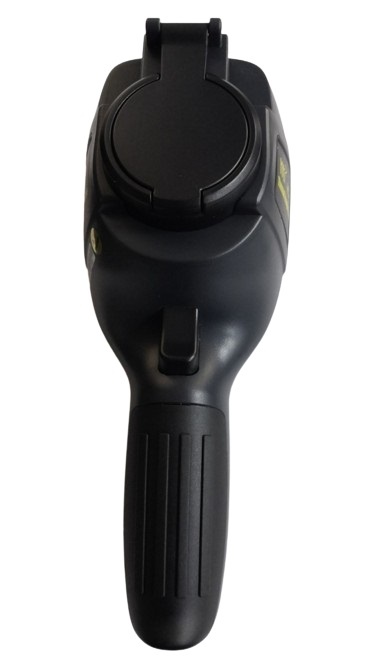
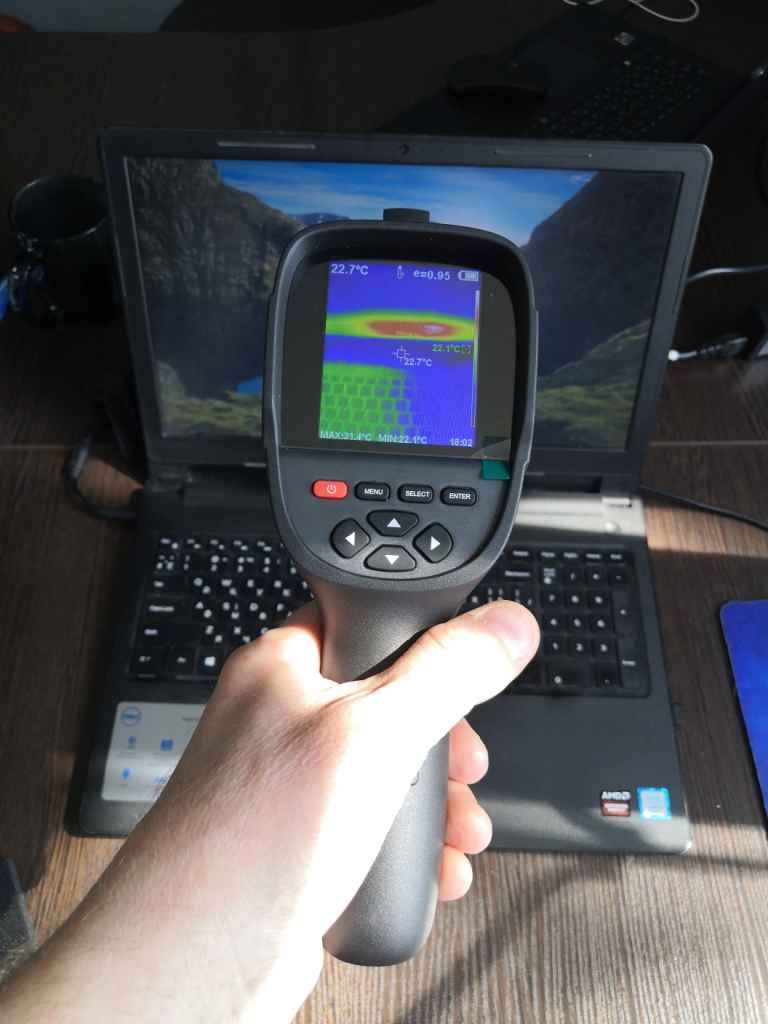
The 389 g body has a pistol-grip shape, and the 3.2-inch color display with a resolution of 240 × 320 pixels is complemented by large physical buttons. It's not the most compact tool in the bag, but it's comfortable to sweep along walls, panels, and equipment while keeping the screen in view.
The removable 2200 mAh lithium battery provides approximately 2–3 hours of operation. That's enough for a short inspection, but for a full workday it makes sense to have a spare battery or access to charging. Auto power-off can be set to 5 or 20 minutes, or turned off entirely.
Who is the Xintest HT-18+ for?
It's a good choice for electricians, HVAC technicians, service engineers, insulation specialists, and homeowners who want to find thermal anomalies without guesswork. Its 256 × 192 resolution, wide field of view, two-camera image blending, and data recording make the HT-18+ a full-fledged working tool.
That said, it's no substitute for safety procedures or professional diagnostics. A thermal imager is excellent at finding suspicious areas, but the cause of overheating, a leak, or poor insulation needs to be confirmed through further inspection. That's how a colorful image on the screen becomes a useful solution, rather than just a reason to photograph a warm kettle.