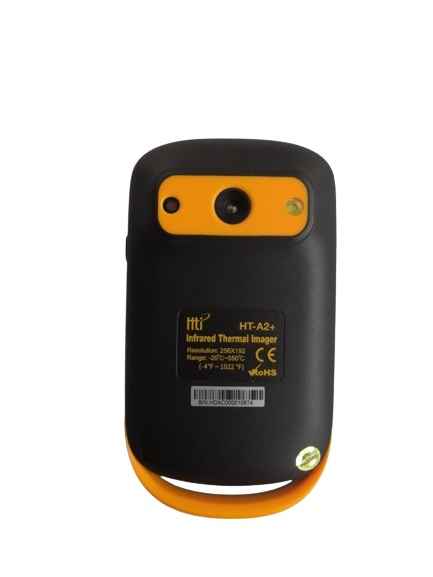
Xintest HT-A2+
Delivery and payment
Choose your city or town to see the price with delivery there and when you can get it.
Pickup points
- Branch
- Parcel locker
Pros
- 256 × 192 thermal sensor
- Wide 56° field of view
- Photos, video, Wi-Fi, and 16 GB
- Touchscreen and physical buttons
- IP54 protection and a work-ready housing
Cons
- Fixed focus with no macro mode
- No Ukrainian menu language
- Glossy surfaces require emissivity adjustment
Heat you can finally see
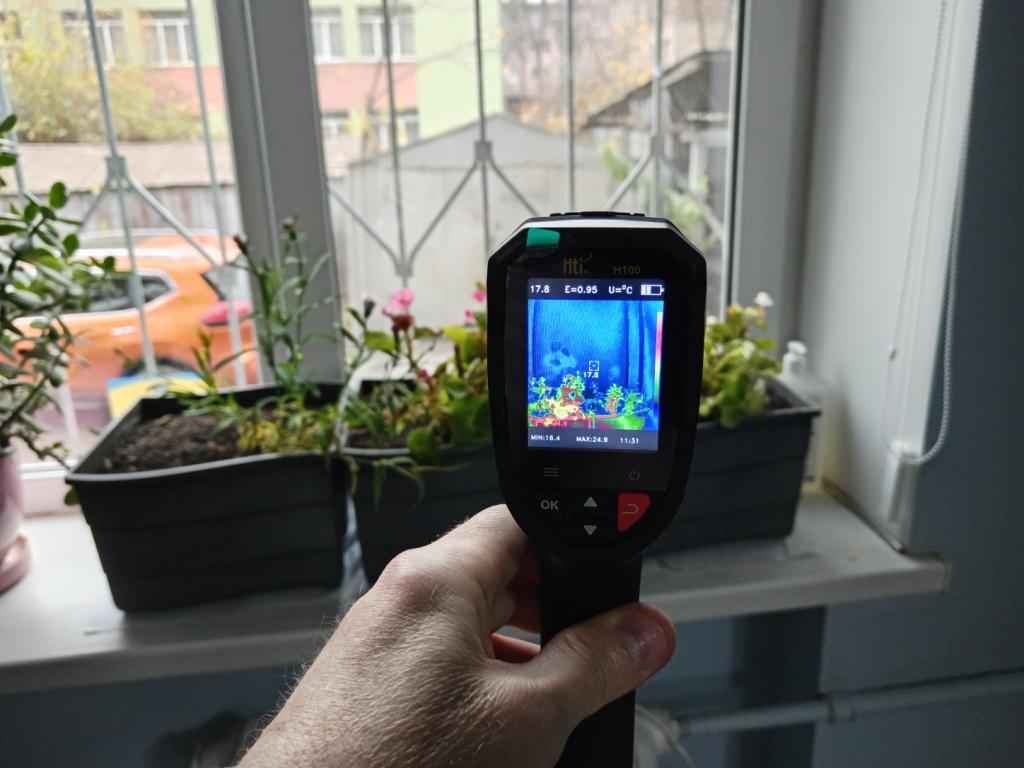
The Xintest HT-A2+ is a handheld thermal imager for those times when you're tired of searching for a problem by guesswork. It helps you quickly spot an overheating circuit breaker in a panel, a thermal bridge in a wall, heat loss around a window, a warm pipe behind a finish, or a suspiciously hot bearing. It's not a camera that can see through walls, but it is a practical tool that shows the temperature patterns on surfaces.
The model's main strength is its infrared sensor with a resolution of 256 × 192 pixels. For a compact device, that provides enough detail to not only spot a hot area but also see exactly where it begins. A refresh rate of up to 25 Hz keeps the image smooth as you move the camera along pipes, radiators, electrical panels, or an engine compartment.
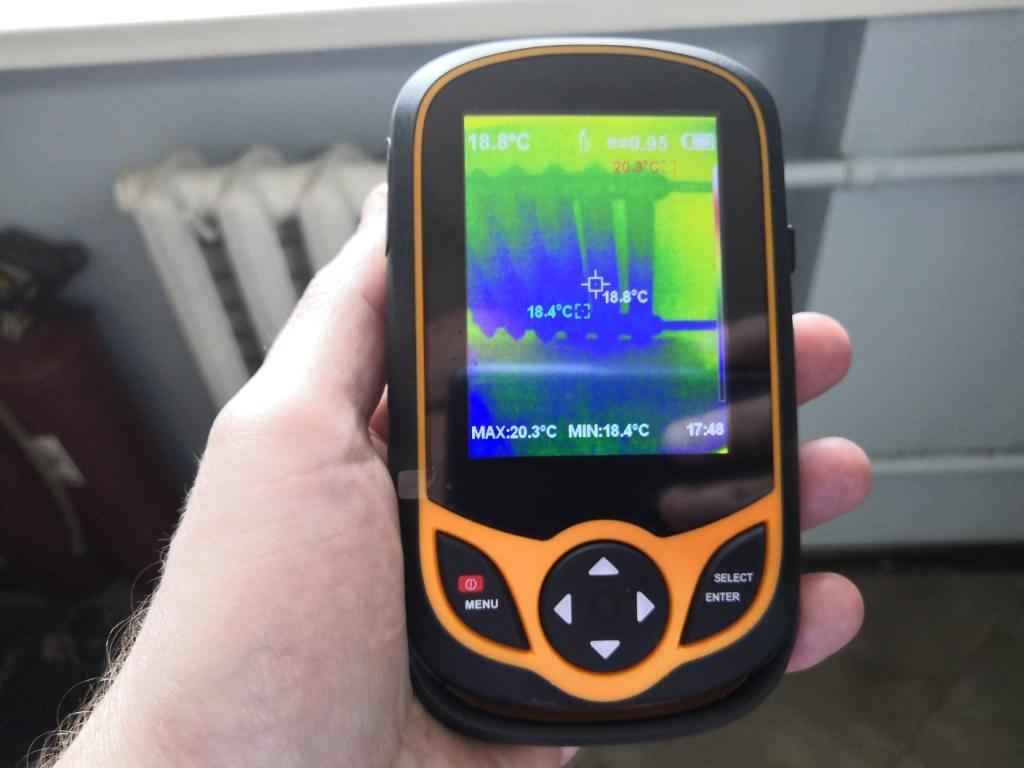
A wide view of your home, car, and electrical systems
The lens has a 56° × 42° field of view, making it well suited to inspecting large areas from close range, such as facades, heated floors, ceilings, electrical panels, or an engine. The minimum focus distance is 0.15 m, so you can get fairly close to a part. At the same time, fixed focus and a spatial resolution of 3.75 mrad mean this is not a laboratory instrument for inspecting tiny components at a distance.
The camera measures temperatures from –20 to +550 °C, split into two operating modes: a low-temperature range from –20 to +120 °C and a high-temperature range from +120 to +550 °C. The screen can show the temperature at the center of the frame alongside automatic markers for the hottest and coldest points. This is especially useful when first troubleshooting a problem: the camera highlights the area worth a closer look.
More than colorful thermal images
The HT-A2+ has a 0.3-megapixel visible-light camera. It isn't intended for artistic photography, but for overlaying a standard image on the thermal image. You can choose between infrared-only, visible-light, and blended modes. This makes it easier to distinguish one cable from another, identify which valve is heating up, or find a defect on a complex surface.
Five palettes—rainbow, iron, cold, white hot, and black hot—let you choose the contrast that suits the task. Color modes are useful for quickly finding temperature differences, while monochrome modes often show subtle heat transitions more clearly.

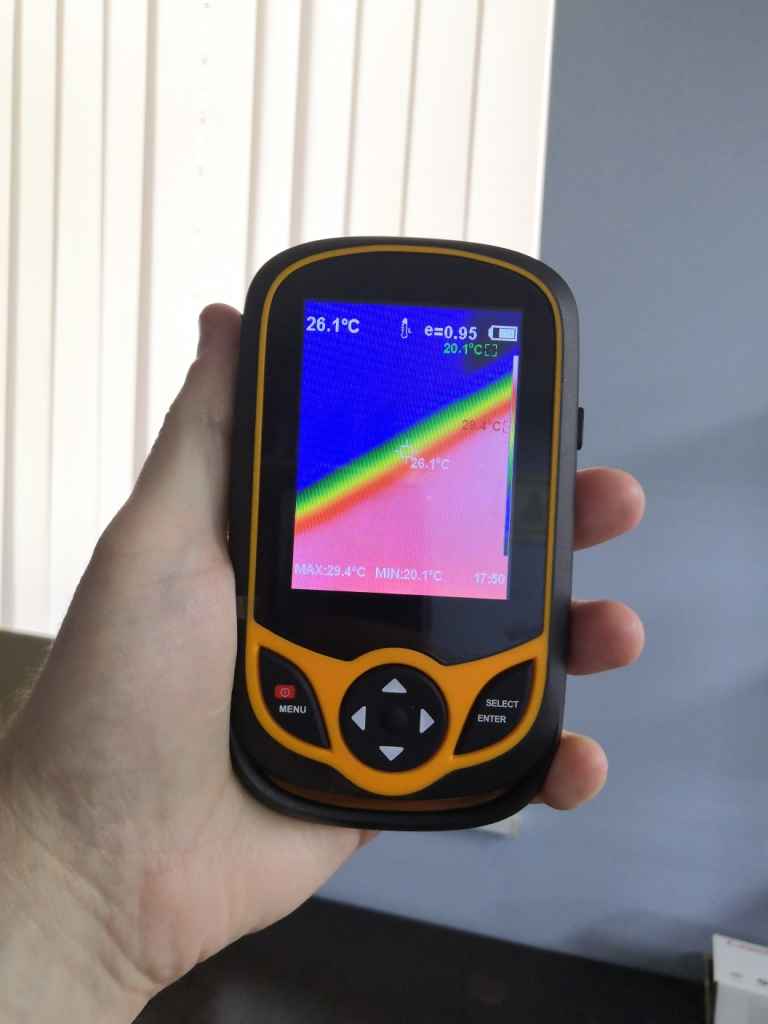
Easy-to-use controls
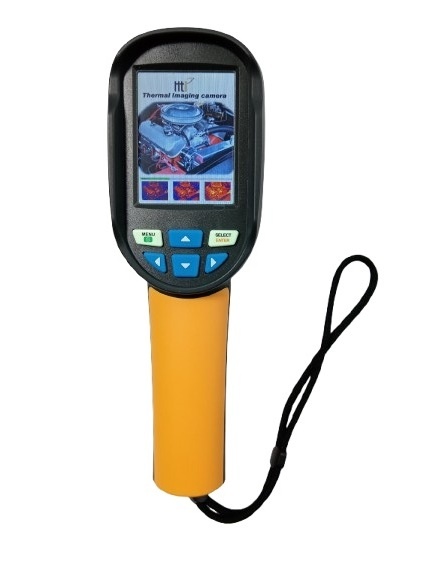
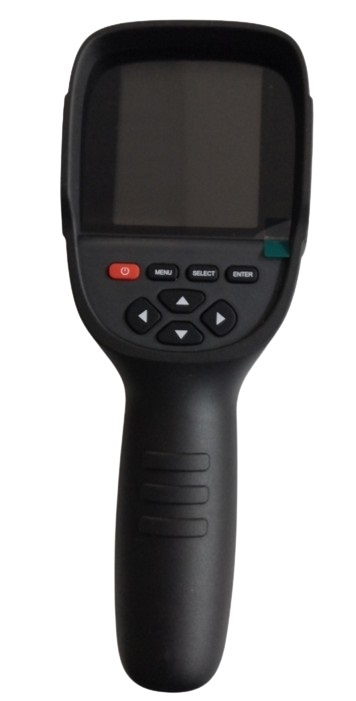
A 3.2-inch color touchscreen sits on the front, but you don't have to rely on it alone: there are seven physical buttons below the display. You can use them to turn on the device, open and navigate the menu, confirm a selection, take a photo, or start a video. Having both control options is useful in the workshop, in freezing weather, or when your hands aren't particularly clean after inspecting a car.
The menu lets you adjust brightness, auto power-off after 5 or 20 minutes, the date and time, clock format, units of measurement, and the display of cold and hot zone markers. The menu is available in Chinese, English, German, and Italian.
Measurements: accuracy starts with emissivity
The camera lets you manually set emissivity from 0.01 to 1.00. For wood, concrete, paint, fabric, and most matte surfaces, the standard value of 0.95 works well. Shiny metals, chrome parts, and polished pipes, however, can reflect heat from surrounding objects and produce attractive but misleading readings. For a more accurate result, select the correct emissivity or measure a matte area of the surface.
The stated accuracy from –15 to +300 °C is ±2 °C or ±2%, and from +300 to +500 °C it is ±4%. The HT-A2+ is therefore excellent for diagnostics and comparing areas, but it does not replace a contact reference instrument where tenths of a degree are critical.
Saving results and working with a PC
The device has 16 GB of built-in memory, with approximately 13.9 GB available to the user. It saves images in JPG and video in MP4, and you can transfer them to a computer via Type-C. The device's memory also contains software for analyzing thermal images, allowing you to view frame data, change the palette, and place measurement points, lines, or selected areas.
Wi-Fi operates as a local hotspot created by the thermal imager itself. Once connected to the device's network, you can open its web interface in a browser to view images or change settings without a cable. This is useful for showing results to a customer or viewing the screen from a little farther away.
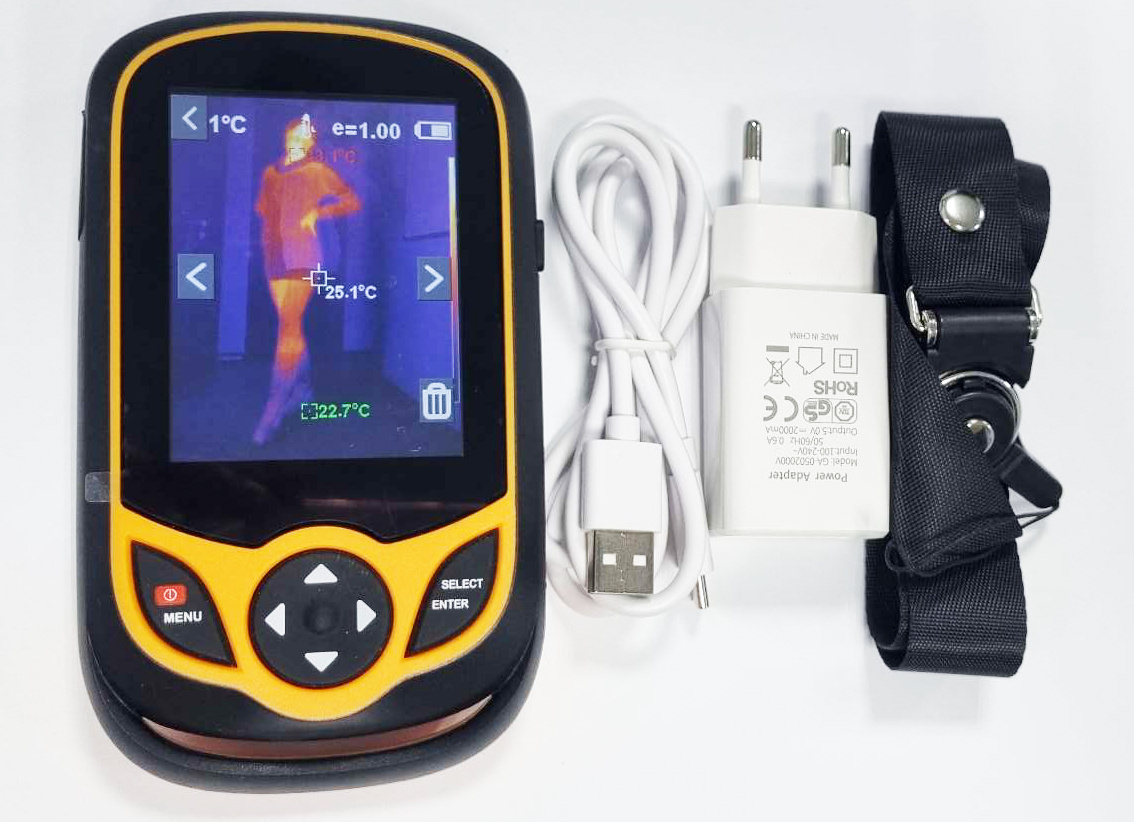
A compact tool for the job
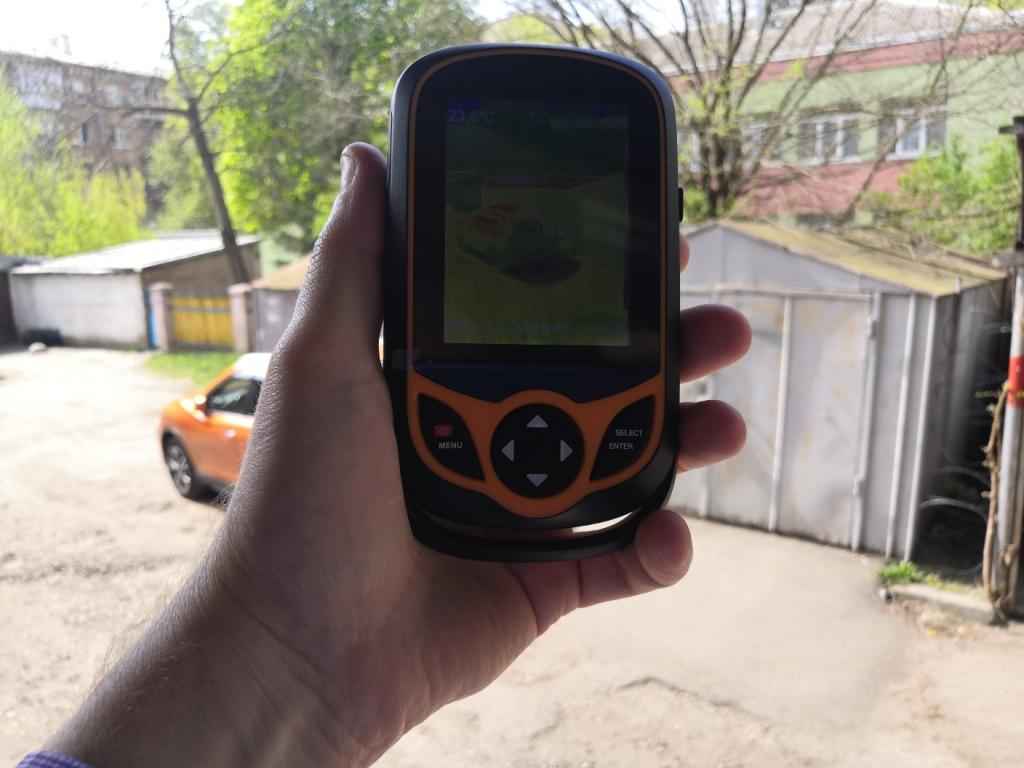
The housing measures approximately 14.25 × 8.1 × 2.83 cm and fits easily in a jacket pocket or tool bag. IP54 protection means resistance to dust and splashes, while the stated ability to withstand a drop from up to 2 m provides added peace of mind on the job. The built-in 3000 mAh rechargeable battery charges via Type-C from a 5 V / 2 A power source.
The Xintest HT-A2+ is a good choice for electricians, equipment repair technicians, motorists, insulation professionals, and curious homeowners. It's a functional thermal imager that doesn't depend on a smartphone: turn it on, point it, spot an anomaly, and save the result. That's how a tool should work when a problem is hidden from sight but not from temperature detection.