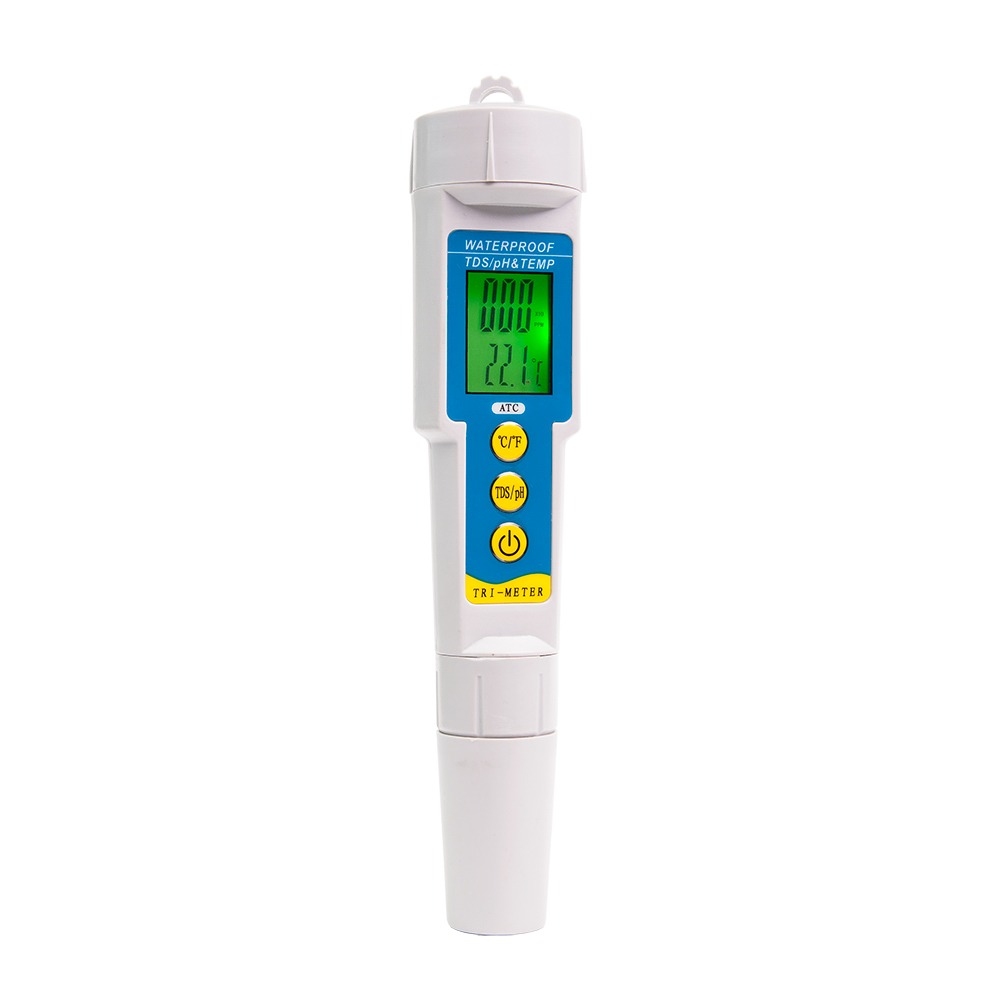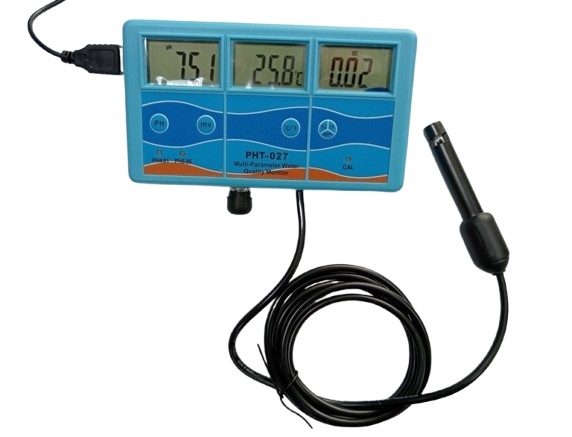
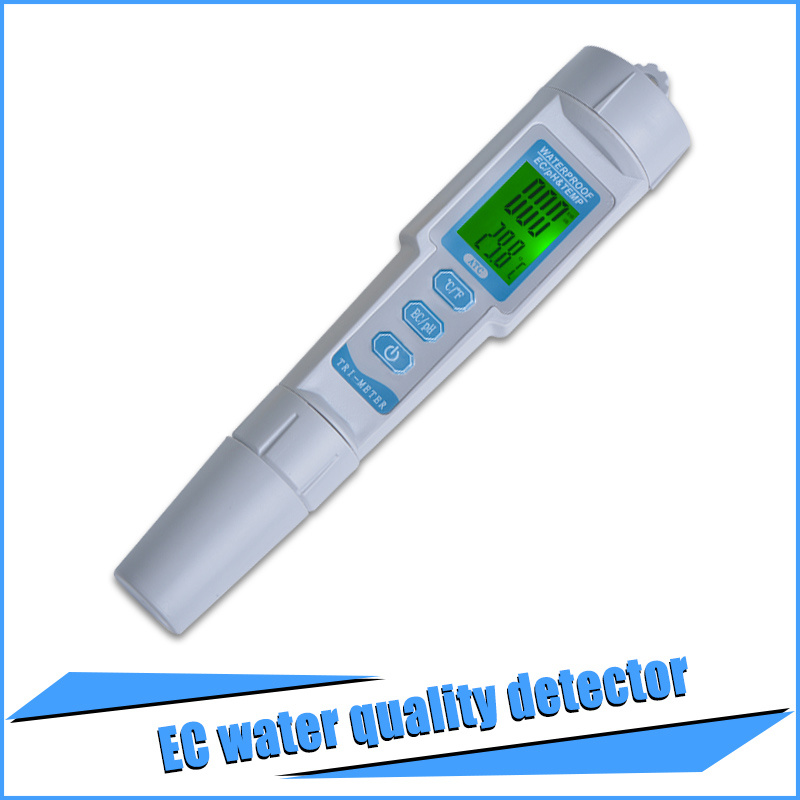
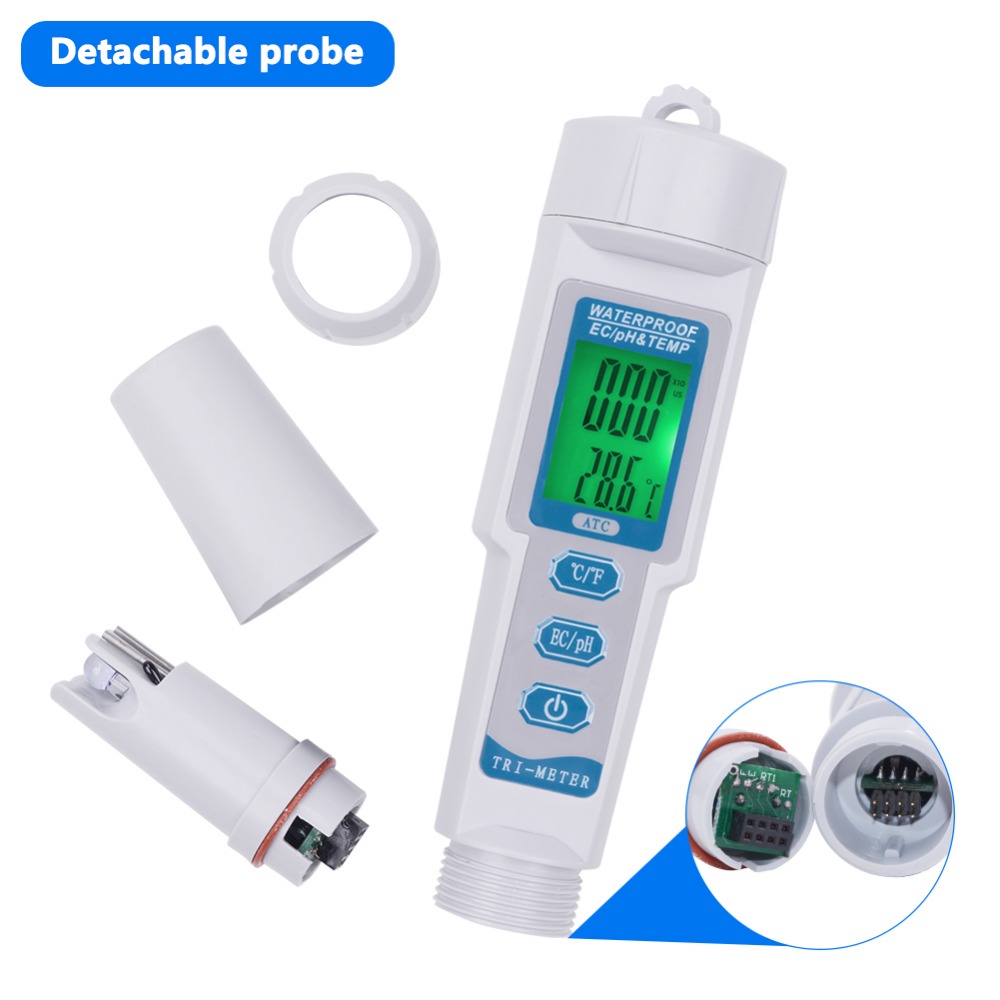
pH/EC-983 Water Quality Analyzer
Delivery and payment
Choose your city or town to see the price with delivery there and when you can get it.
Pickup points
- Branch
- Parcel locker
Pros
- 3-in-1: pH, EC, temperature
- Large backlit screen
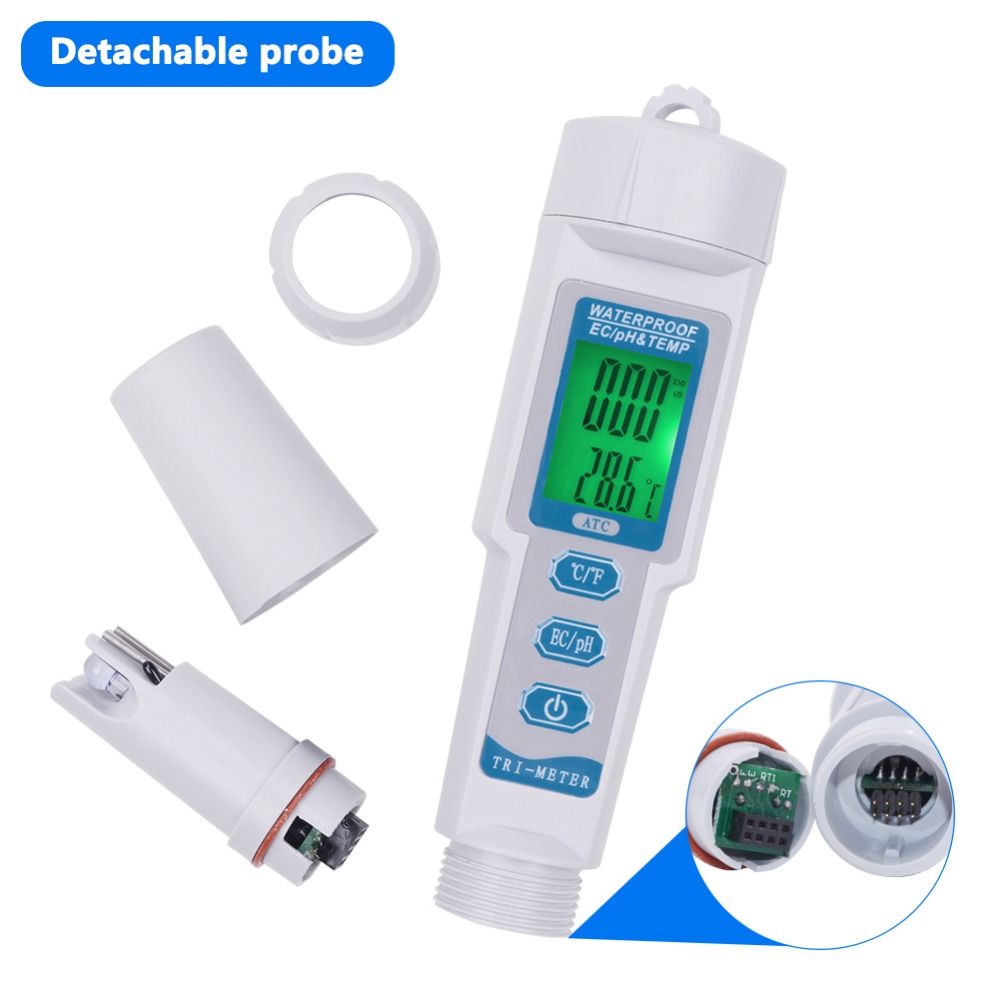
- Replaceable electrode (probe)
- ATC: temperature compensation
- Simple three-button operation
Cons
- pH accuracy of only ±0.1
- Calibration with a screwdriver
- EC without TDS/ppm out of the box
What is the pH/EC-983 and what is it for?
The pH/EC-983 is a pocket-sized 3-in-1 water analyzer that measures pH (acidity/alkalinity), EC (electrical conductivity, an indication of mineral content/salt concentration), and temperature. It is most often used for hydroponics, seedlings and fertilizers, aquariums, pools/spas, and monitoring water from reverse osmosis systems or wells, as well as any situation where judging by eye is no longer enough.
One important point: this model is often sold under different names (sometimes as PH-983), but the device is essentially the same: a compact combination tester with switchable modes.
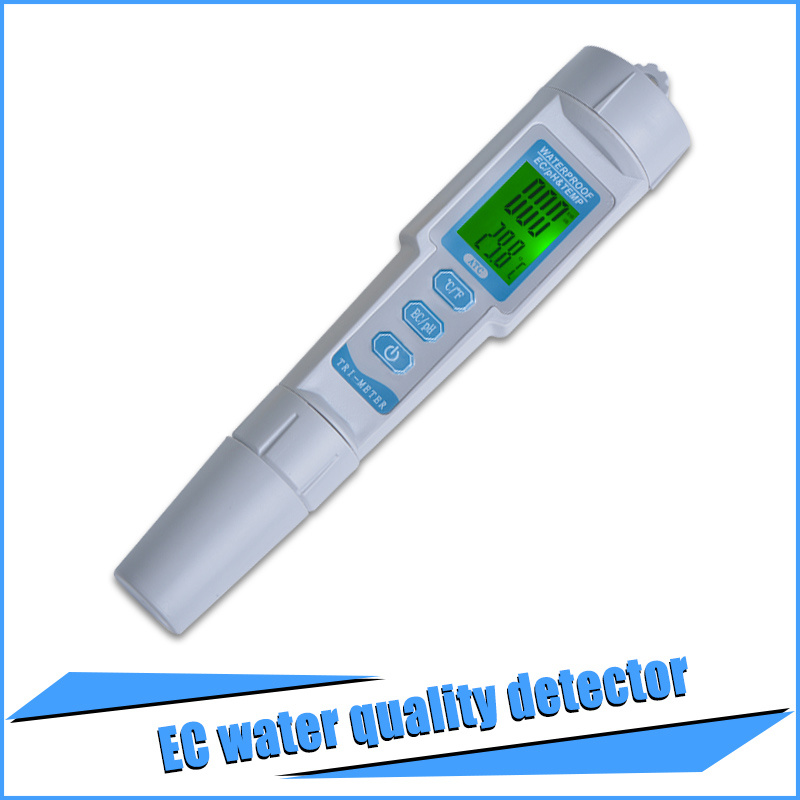
What the screen shows and how
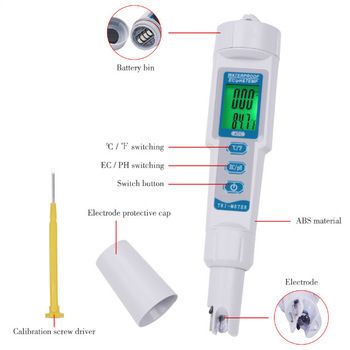
The display shows temperature and one of the main parameters, pH or EC, at the same time. A button switches between them. The backlight is a small feature, but it comes in handy in a greenhouse, under grow lights, or in a basement where a tank is kept.
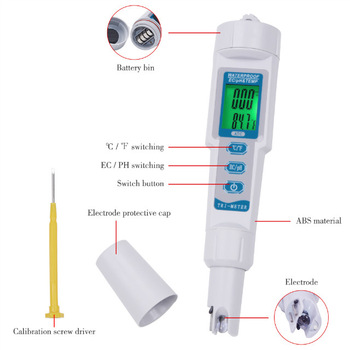
The buttons are usually as follows:
- EC/pH switches between conductivity and acidity measurements
- °C/°F switches temperature units
- Power turns the device on and off
Ranges, resolution, and accuracy without the marketing gloss
The pH/EC-983 has practical ranges for everyday testing of water and nutrient solutions:
- pH: 0.00–14.00 (0.01 resolution; stated accuracy ±0.1 pH)
- EC: 0–19990 µS/cm (10 µS/cm resolution; stated accuracy ±2% F.S.)
- Temperature: −50…70 °C (0.1 °C resolution; stated accuracy ±1 °C)
This is usually enough for hydroponics and fertilizers, but if you need pH accuracy to the hundredth in practice, for example for demanding crops or laboratory work, ±0.1 pH may not be sufficient. That doesn't rule it out; it just means this is a field/home instrument, not a laboratory reference.
ATC: what it does and why it matters
The tester is rated for automatic temperature compensation (ATC) over an operating range of approximately 0–50 °C. This is especially useful for EC, because conductivity depends heavily on temperature: without compensation, the same water will give different readings at different temperatures.
Calibration: simple, but solutions are needed
The pH/EC-983 is calibrated the old-fashioned way, by adjustment (a mini screwdriver is usually included). It is not as elegant as automatic calibration at the push of a button, but it works and requires no apps.
A practical approach is:
- For pH: a pH 6.86 buffer is most commonly used (the powder is often included).
- For EC: a standard solution is usually required (a common option is 1413 µS/cm), and it often has to be purchased separately.
A tip from experience: if the device starts giving wildly inconsistent readings, in 80% of cases it either needs calibration or has a dirty or dried-out electrode.
Electrode care: 3 rules that extend the life of the device
The electrode is a consumable, but a few basic steps can keep it from failing within a week:
- After measuring, rinse the sensor with clean water (preferably salt-free).
- Do not leave fertilizer or salt deposits on the tip, as they make readings less stable.
- Store the device with its cap on and do not let the electrode dry out completely.
How to interpret EC in everyday use (and what to do if you need ppm)
EC shows how conductive a solution is, indicating how many ions (salts/fertilizers) it contains. The device measures in µS/cm.
If you are used to TDS/ppm, you will need to use a table or converter, or know the conversion factor, which varies between systems. The pH/EC-983 gives you EC as measured, without marketing-driven ppm figures.
Power and everyday convenience
The device runs on 4 LR44 (AG13) batteries (6 V in total). They are a common, easy-to-find type, but batteries are usually not included in the box, so check before buying.
Who should consider it
- You want one compact device instead of three separate ones.
- You need to monitor solutions for hydroponics/fertilizers or aquarium water.
- You are comfortable with practical rather than laboratory-level accuracy.
If pH accuracy to the hundredth in real-world conditions and quick digital calibration without a screwdriver are essential, it makes sense to look at more expensive models. But as a workhorse for regular pH/EC/temperature checks, the pH/EC-983 looks like a sensible compromise.