Kelilong PHT027 Water Quality Monitor
Delivery and payment
Choose your city or town to see the price with delivery there and when you can get it.
Pickup points
- Branch
- Parcel locker
Pros
- 3 screens show everything at a glance
- pH, ORP, EC/CF, TDS, temperature
- External electrodes are easy to position remotely
- Automatic temperature compensation (ATC)
- BNC connectors for probe replacement
Cons
- Electrodes need maintenance
- Not a “set it and forget it” device
- IP55 is not suitable for immersion
What is the PHT027 and why would you need it?
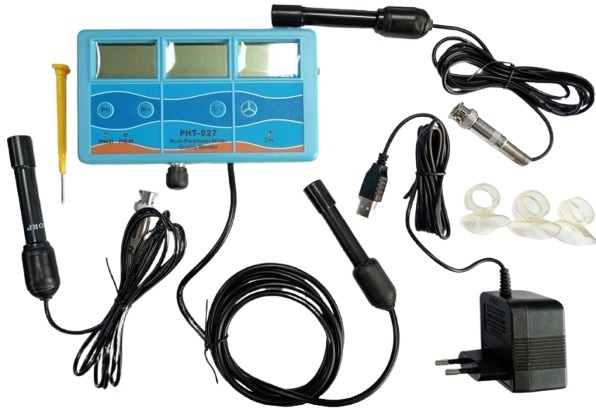
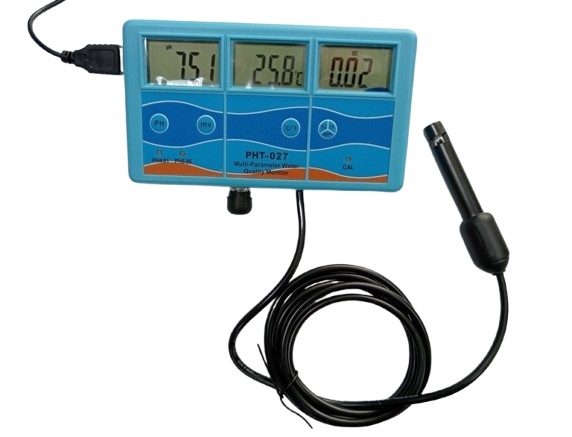
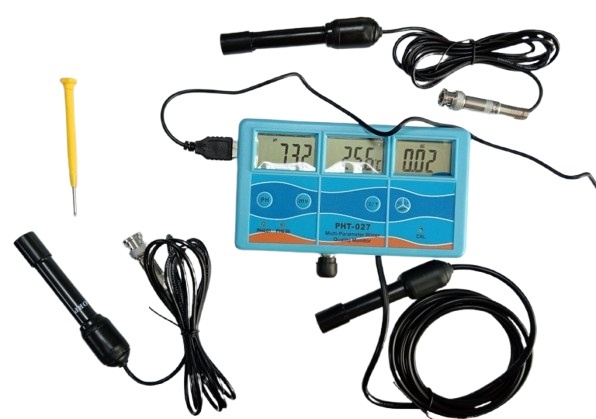
PHT027 (PHT-027) is a wall-mounted/stationary water quality monitor with three large LCD screens that show key solution parameters in real time: pH, ORP (redox potential, mV), electrical conductivity (EC), CF, TDS (ppm) and temperature. Think of it as a dashboard for your water: one glance tells you whether everything is within range.
Parameters: making sense of the readings
The PHT027 keeps things simple: three screens display different measurements at the same time (depending on the mode and connected electrodes). That's handy when you need to see the whole picture right now, rather than switching between three different instruments.
- pH measures acidity/alkalinity (in an aquarium, pool, hydroponic system or process water).
- ORP (mV) measures oxidation-reduction potential (useful for disinfection, oxidizers and monitoring water “freshness”/oxidation).
- EC / CF measures electrical conductivity (and therefore how salty or concentrated the solution is).
- TDS (ppm) estimates total dissolved solids in ppm (essentially derived from EC and useful for everyday applications).
- Temperature is useful not just for reference but also for ATC (automatic compensation), so pH/EC readings remain meaningful as the temperature changes.
Electrodes: the biggest strength (and responsibility)
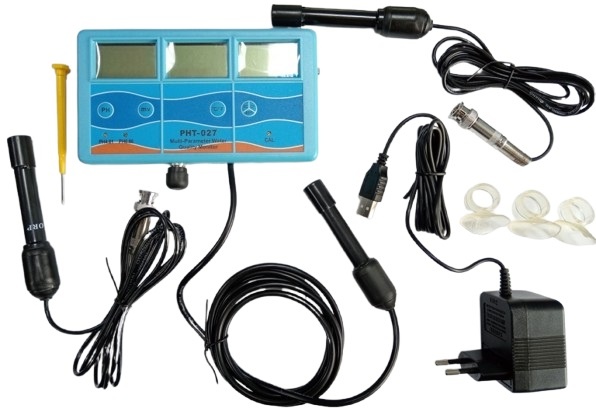
The package usually includes three remote electrodes: pH, ORP and EC/TDS. In most configurations, the pH and ORP electrodes connect via BNC (a plus: you can replace a probe without buying a new monitor). The pH probe is glass (E-201 type) with gel KCl electrolyte, the ORP probe uses a platinum electrode, and the EC/TDS probe also uses a platinum-coated electrode.
Important: pH/ORP electrodes aren't sensors that last forever. They age, get dirty, shouldn't be allowed to dry out, and need periodic cleaning and proper storage. Treat them like a teaspoon and your readings will be about as accurate.
Calibration: when “showing something” ≠ “showing the truth”
The PHT027 is designed to be calibrated as part of normal use. Many packages include pH 4.003 calibration solution and pH 6.864 (pH 7.00 buffer is also often used, depending on the method and available solutions). EC/TDS calibration typically uses standard conductivity/TDS solutions (which may not be included).
Practical tip: if repeatable readings matter to you (for an aquarium with sensitive species, hydroponics or a production process), budget not just for the instrument but also for buffers and electrode storage/cleaning solutions, and make a habit of calibrating on a schedule.
Installation and daily use
The monitor can be placed or hung conveniently near the monitoring point (an aquarium sump, fertilizer tank or water treatment line). The package often includes suction cups to secure the probes neatly in the container, as well as a power adapter (DC 6 V). Some versions have a built-in rechargeable battery (which keeps the monitor running after power is disconnected); some configurations have an alternative power supply, so check your specific package.
For stable readings: give the electrodes 2–10 minutes to stabilize after immersion (especially ORP), keep the sensors out of the “bubble storm” from an aerator, and don't press them against the sides or bottom.
Who is the PHT027 best for?
- Hydroponics: monitor pH and EC/CF/TDS without constantly juggling handheld testers.
- Aquariums (especially planted tanks/marine systems): continuous monitoring of pH and temperature, plus ORP as an additional indicator.
- Water treatment / RO: monitor TDS to know when it's time to service the filters.
- Small-scale production processes: when simple online monitoring is needed without expensive industrial controllers.
Conclusion
The PHT027 is a good choice if you want to see key water parameters at the same time and are prepared to treat the electrodes as measuring instruments, not as “sticks that should work forever.” It won't improve the water on its own, but it will quickly show you exactly when you've made it worse, and honestly, that's already half the battle.