BROM pH/TDS-986 Water Quality Analyzer
Delivery and payment
Choose your city or town to see the price with delivery there and when you can get it.
Pickup points
- Branch
- Parcel locker
Pros
- Three measurements in one device
- Combined replaceable electrode
- IP57-rated housing
- Large backlit display
- Automatic temperature compensation
Cons
- Requires regular manual calibration
- TDS does not identify specific contaminants
- Does not replace laboratory water testing
BROM pH/TDS-986: a pocket laboratory for water
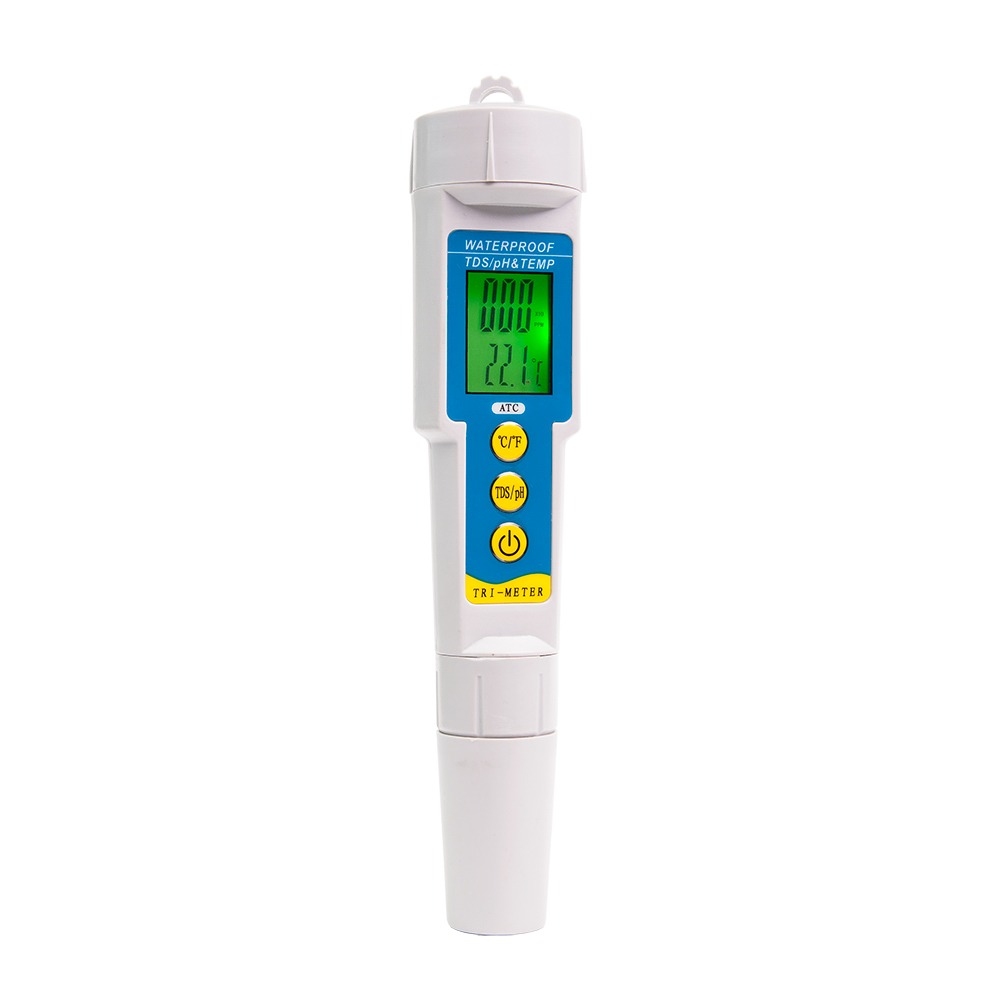
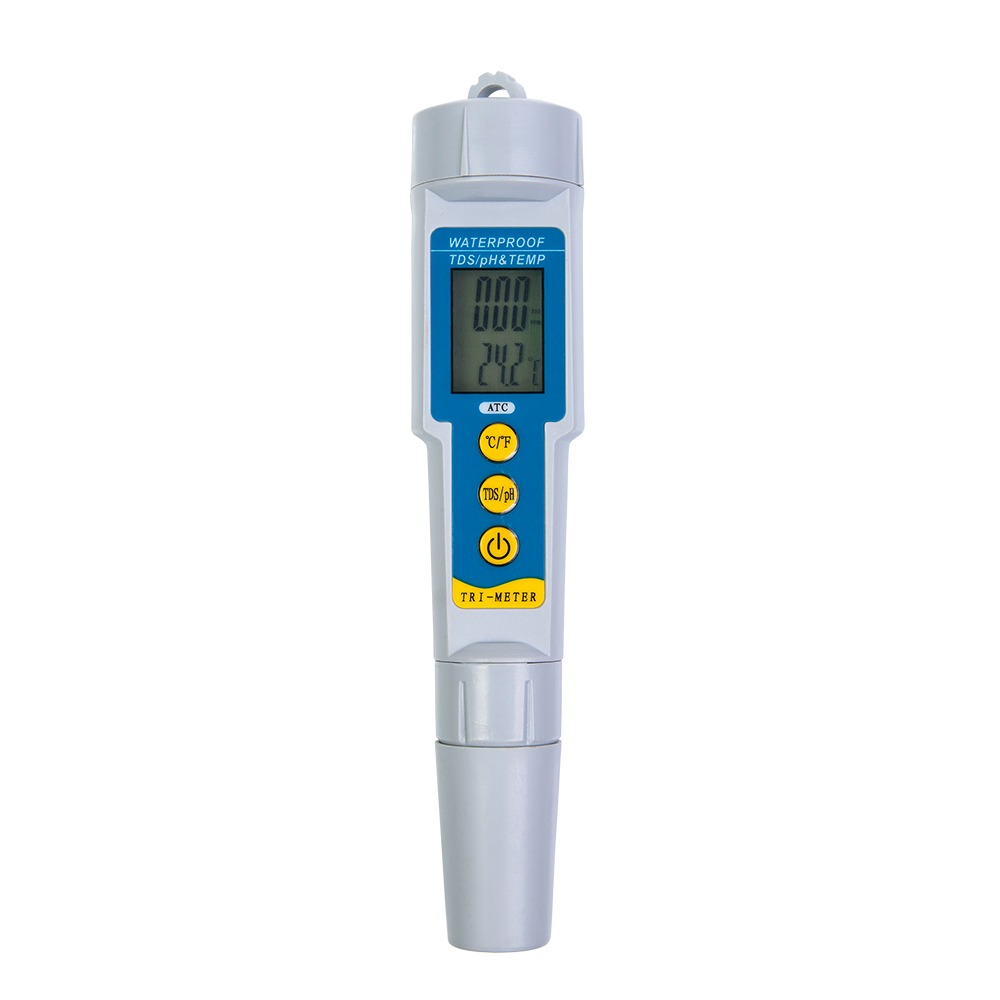
The BROM pH/TDS-986 is a portable three-in-one meter that combines a pH meter, TDS meter, and thermometer. It quickly shows the acidity or alkalinity of a solution, its approximate dissolved solids content, and its temperature. The device is useful for testing drinking and process water, as well as for aquariums, pools, hydroponics, reverse osmosis systems, irrigation, and basic industrial tasks.
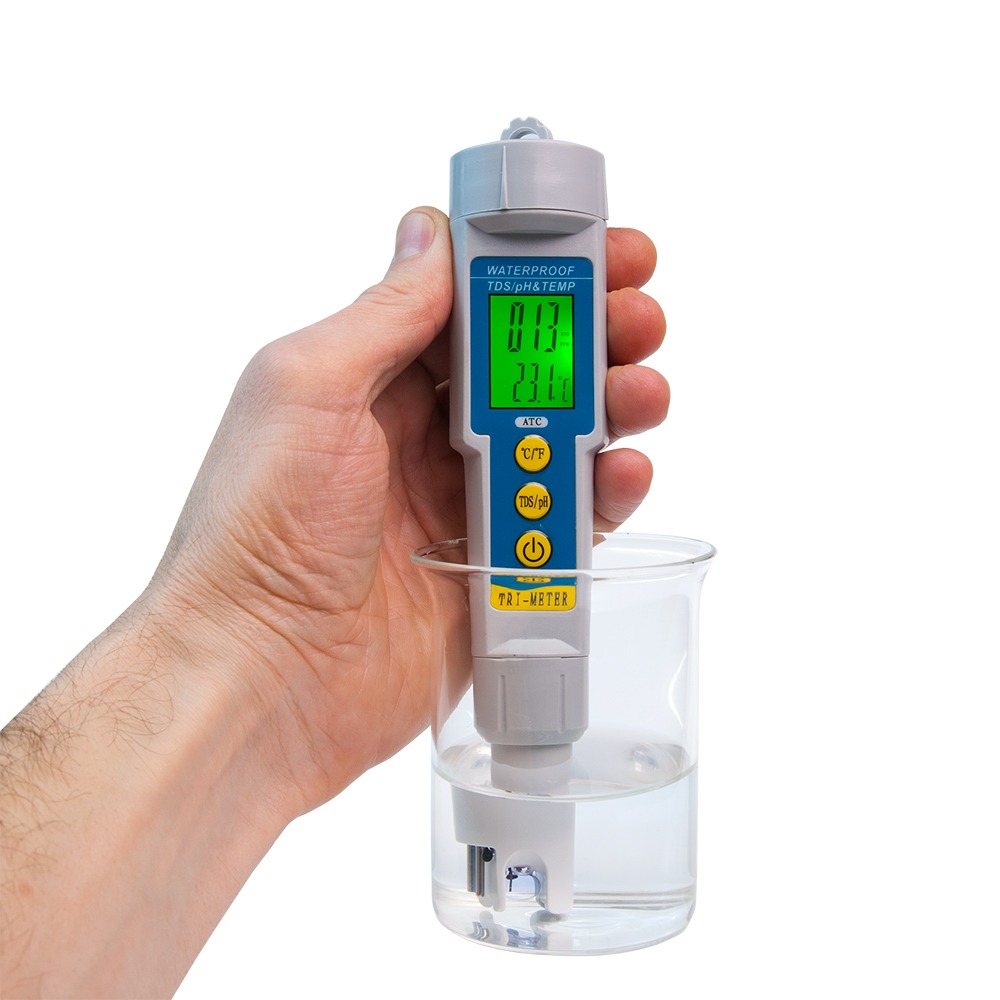
The model's main advantage is its combined pH + TDS electrode. There's no need to switch probes, unscrew half the housing, or worry about the contacts each time: a button switches between modes. Temperature appears on the bottom line of the screen, while the main display shows pH or TDS.
What the device measures
In pH mode, the BROM pH/TDS-986 measures from 0.00 to 14.00 pH with a resolution of 0.01 pH. This helps monitor the acidity of water for aquarium inhabitants, nutrient solutions, pools, or irrigation. For accurate results, the pH electrode should be calibrated periodically with buffer solutions, especially after prolonged storage or intensive use.
TDS mode measures total dissolved solids over a range of 0–19 990 ppm in 10 ppm increments. In simple terms, it indicates overall mineralization: salts, minerals, and other dissolved particles. But TDS cannot identify a specific substance: the same ppm reading does not mean the water is equally safe. A separate laboratory analysis is needed to detect bacteria, heavy metals, nitrates, or other specific contaminants.
Temperature and automatic compensation
The built-in thermometer measures temperatures from −50 to +70 °C, and a button lets you choose between degrees Celsius and Fahrenheit. In practice, this is convenient: you won't need a separate thermometer for an aquarium, tank, or hydroponic solution.
The device has automatic temperature compensation over a range of 0–50 °C. This matters because temperature affects electrochemical measurements: the tester takes it into account when measuring pH and TDS, making readings more stable than those from the cheapest models without ATC.
Housing, display, and electrode
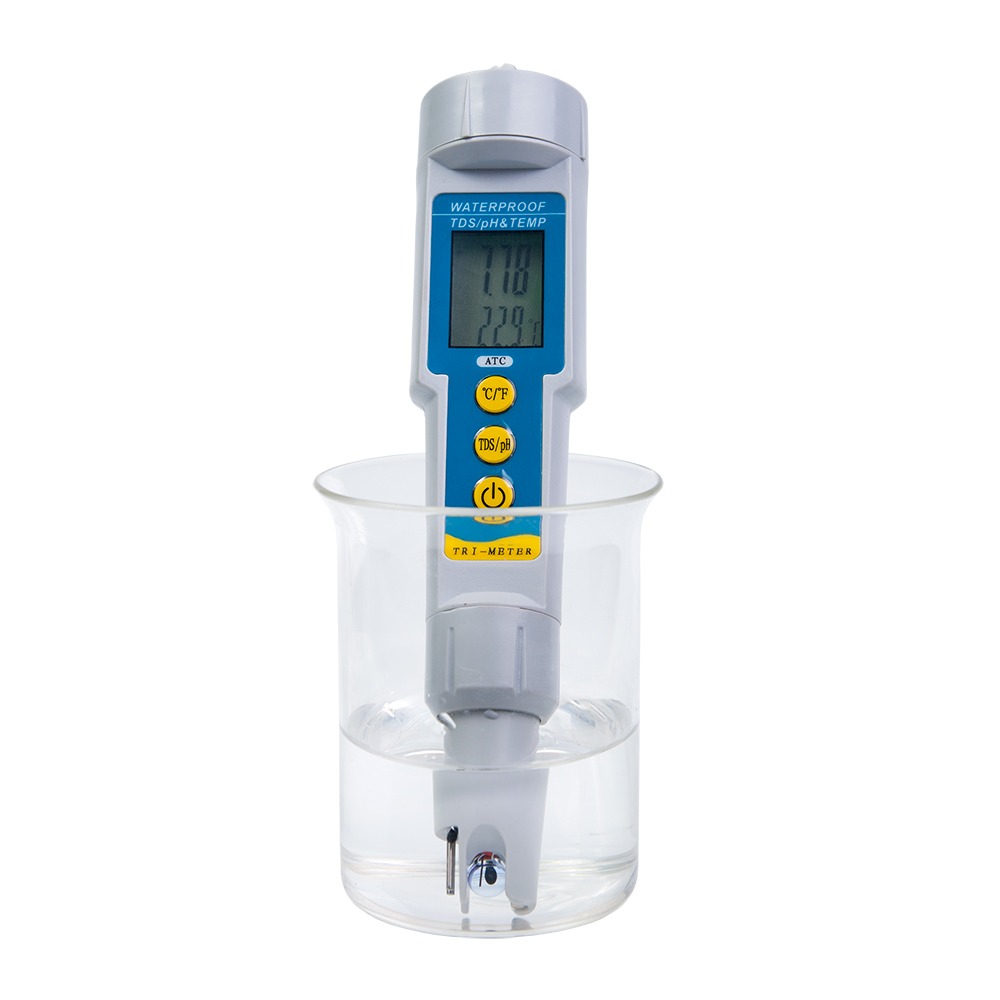
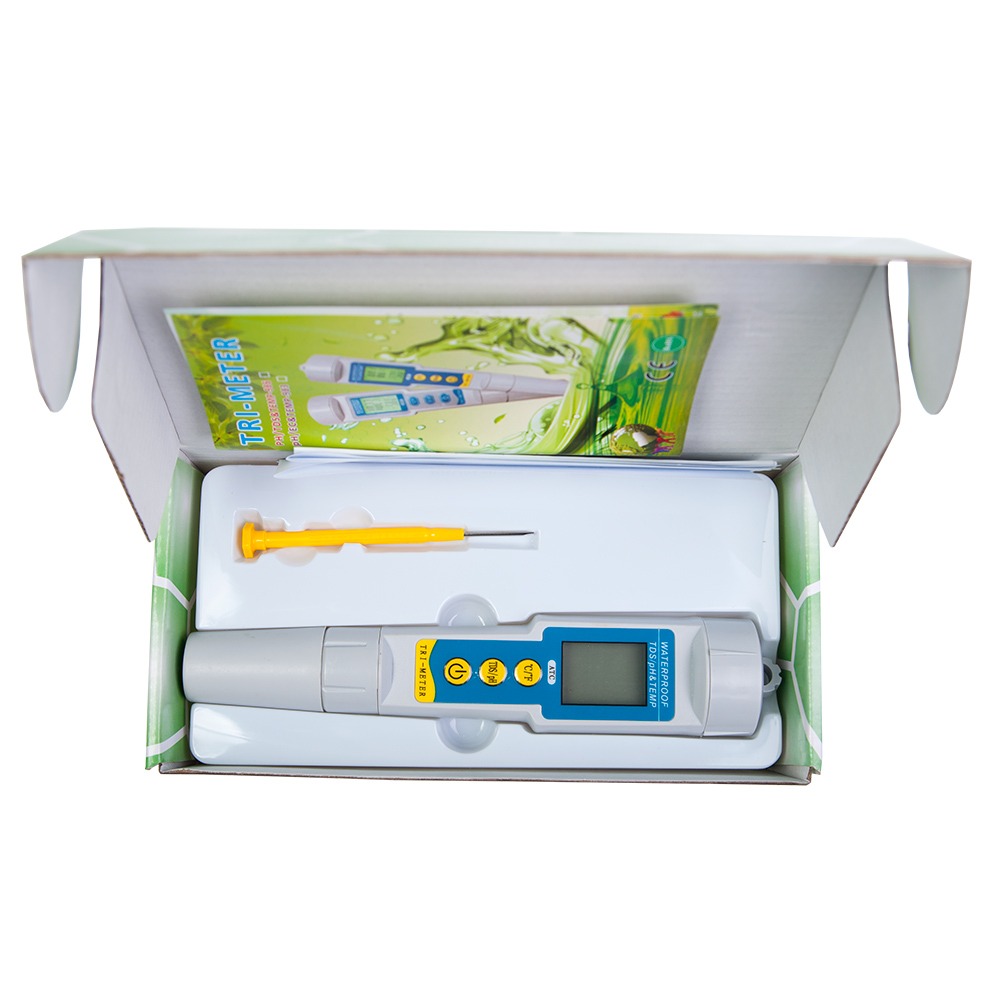
The tester weighs about 76 g, measures 18.8 cm long, and fits easily in a drawer, tool bag, or aquarium care kit. The large LCD screen is backlit, so the numbers are easy to read in a storage room, by the pool, or outdoors.
The housing has an IP57 protection rating: it is protected against dust and brief immersion in water. Even so, that's no reason to leave the device floating in a tank or rinse it under a strong stream of water. After measuring, it's best to rinse the electrode with clean water, gently shake off the droplets, and cover it with the protective cap.
The electrode is replaceable, so you don't have to discard the entire device when the sensing element wears out through normal use. This is more practical than one-piece budget testers, although it's worth checking the availability of a compatible electrode before buying.

How to use it without unnecessary fuss
Remove the cap, turn on the tester, select pH or TDS, and immerse the electrode in the liquid sample. Do not press the sensitive part of the probe against the bottom or sides of the container. Gently stir the water, wait until the numbers stop changing noticeably, and record the reading. Then rinse the electrode with clean water.
Calibration with buffer solutions is essential for pH measurements. The product listing specifies manual two-point pH calibration, as well as manual TDS calibration. It's not a complicated procedure, but it makes the difference between a useful measurement and a very convincing yet random number on the screen.
Who is the BROM pH/TDS-986 for?
This is a good choice for anyone who needs to quickly and regularly monitor basic parameters of water-based solutions rather than conduct certified laboratory tests. It is especially useful for aquarium keepers, water purification system owners, hydroponics enthusiasts, gardeners, and pool users.
The model is not intended for gasoline, organic solvents, or other incompatible liquids. It's also worth noting a discrepancy in the stated specifications: the manufacturer's description lists pH accuracy as ±0.02, while the specifications table lists ±0.1 pH. The BROM pH/TDS-986 should therefore be regarded as an accurate monitoring tool for household and professional use, but not as a replacement for a fully verified laboratory instrument.