
Flus ET-932
Delivery and payment
Choose your city or town to see the price with delivery there and when you can get it.
Pickup points
- Branch
- Parcel locker
Pros
- Range up to 400 000 lx
- Remote sensor on a cable
- Automatic and manual range selection
- MAX/MIN, HOLD and Peak Hold
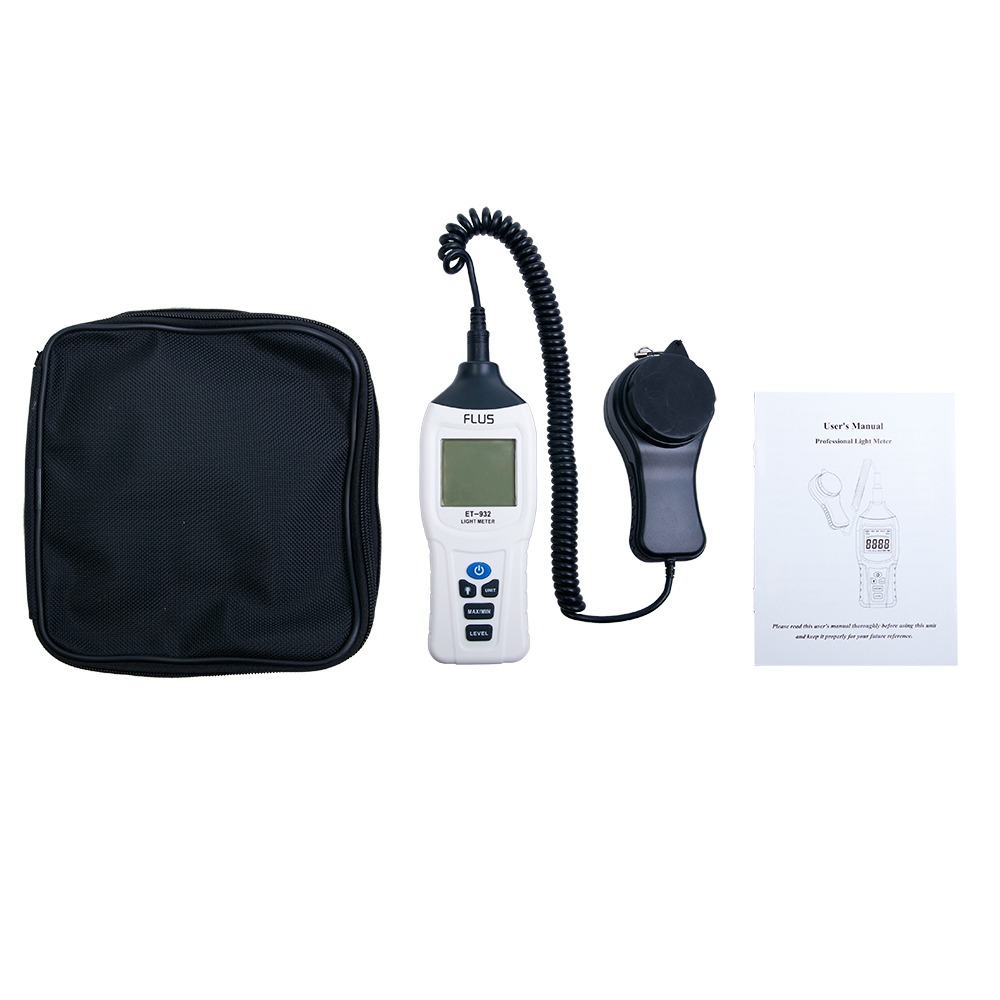
- Carrying case included
Cons
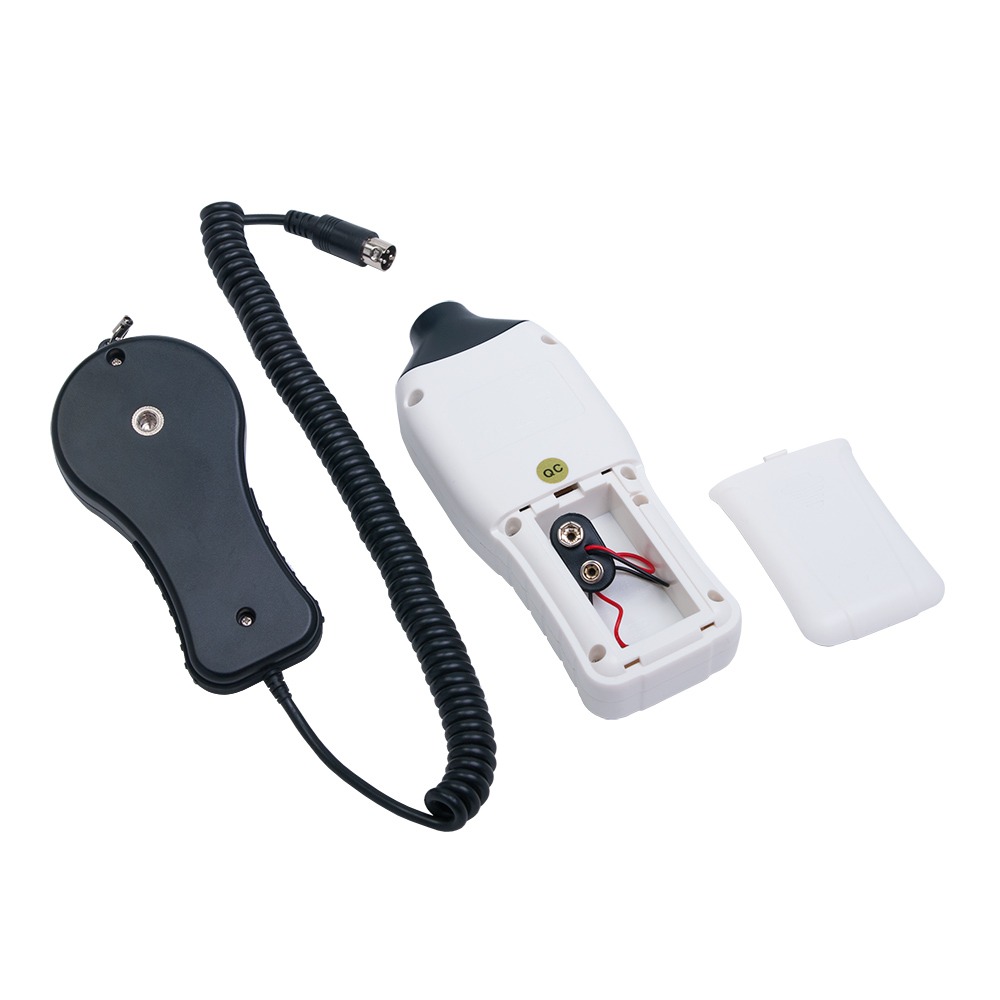
- Runs on a 9V battery
- Does not measure PPFD for plants
- No measurement log or USB
FLUS ET-932: when light needs to be measured, not guessed
The FLUS ET-932 is a portable light meter for checking illuminance indoors and outdoors. It measures the illuminance of a surface in lux, whether it is a desk, a warehouse shelf, a classroom, a production area, a photo area or a technician's workstation. The device covers a wide range from 0 to 400 000 lx, making it equally suitable for a dim hallway or checking bright daylight.
This is a practical tool without unnecessary digital fuss: turn it on, place the sensor at the desired point and wait for a stable reading on the screen. You then have a number you can work with. The ET-932 is useful for occupational safety professionals, electricians, lighting technicians, photographers, agricultural workers, office administrators and anyone who needs more than a guess that a space seems bright enough.
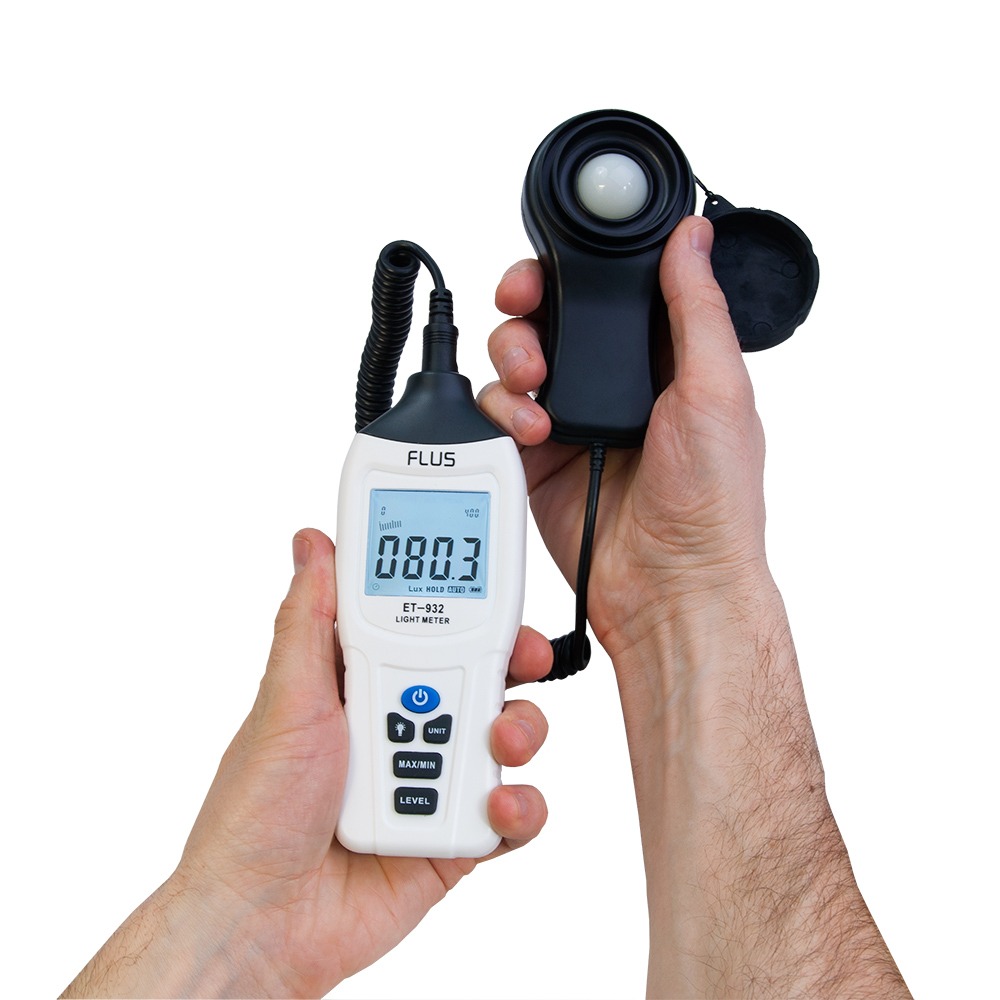
A remote sensor designed for real-world measurements
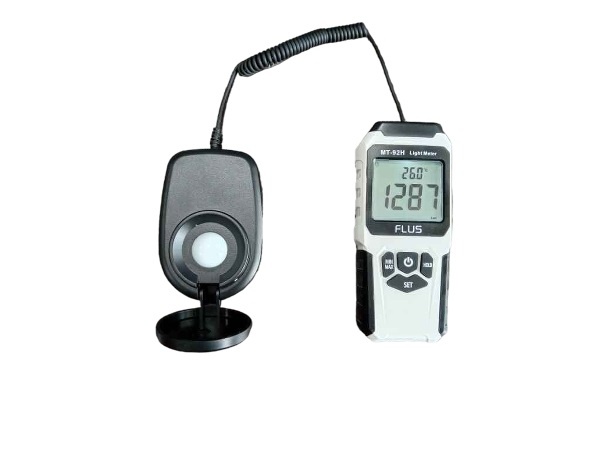
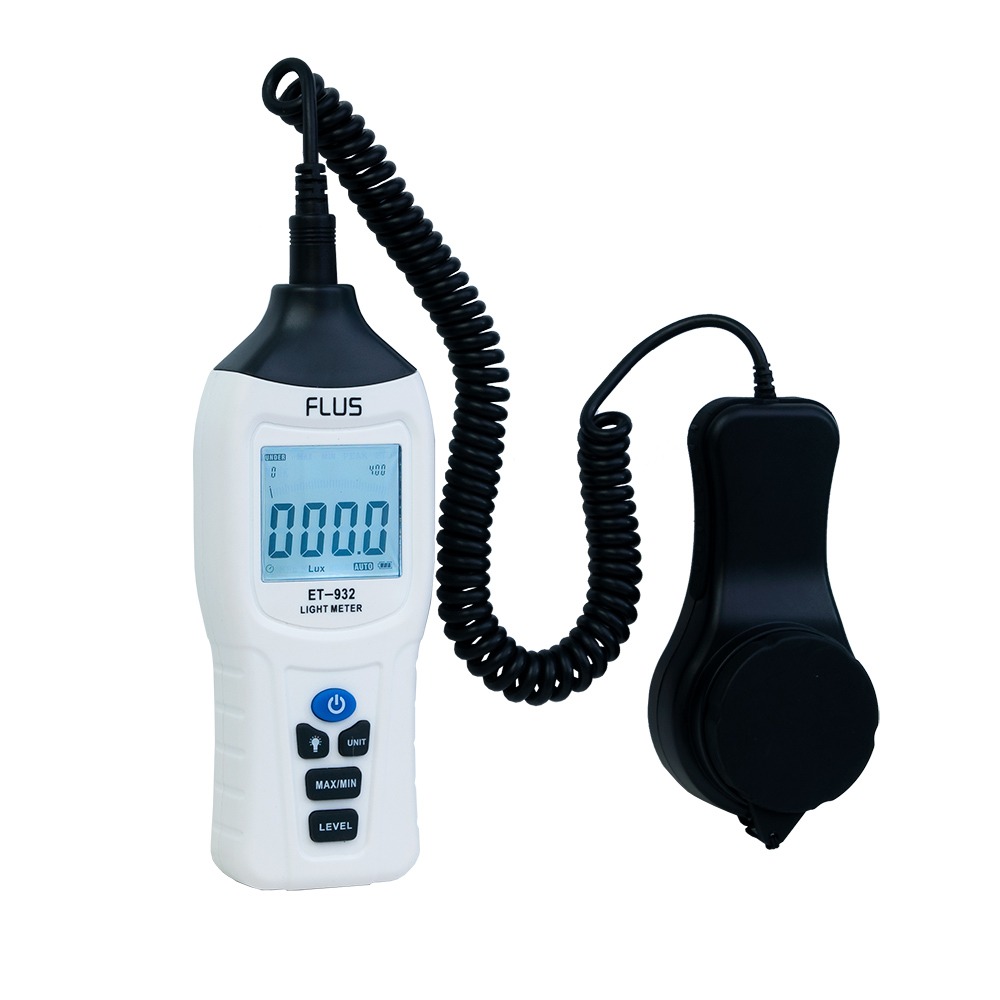
The main advantage of the FLUS ET-932 is its separate light sensor on a coiled cable approximately 2.5 m long. It lets you keep the main unit and display in view while placing the sensor exactly where illuminance needs to be checked: on a desk, in the center of a shelving unit, under a light fixture or at working height.
This arrangement is more convenient than light meters with a sensor built into the housing. Your hands and the meter are less likely to block the light, and you do not have to reach toward the ceiling or look at the display against a bright light source. A protective cover shields the light-sensitive element during transport, and a tripod thread lets you secure the sensor for repeatable measurements.
From a desk lamp to a sunny day
The light meter has four ranges: up to 400 lx, 4 klx, 40 klx and 400 klx. For everyday use, automatic mode lets the ET-932 select the appropriate range on its own. Manual mode is useful when you need to measure on a specific scale and avoid range switching as the light changes.
Resolution is 0.1 lx up to 1 000 lx and 1 lx at higher illuminance levels. The display updates twice per second, and the response time is approximately 0.5 s: readings respond quickly enough to changes in light without making the screen distracting to watch.
The silicon photodiode with a spectral filter has a CIE photopic response, matching the sensitivity of the human eye. Measurements can be taken in lux or foot-candles, although lux is the logical choice for most tasks in Ukraine.
Display and functions: only what really helps
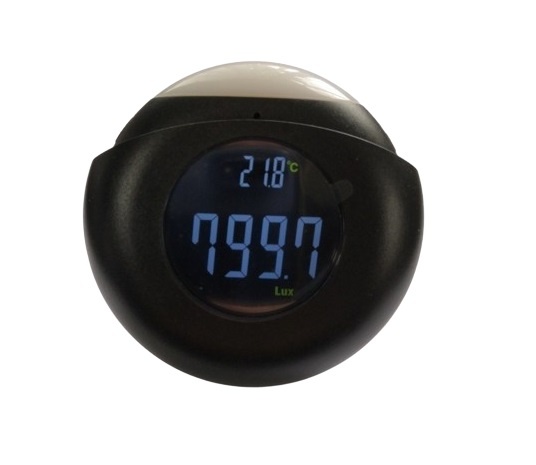
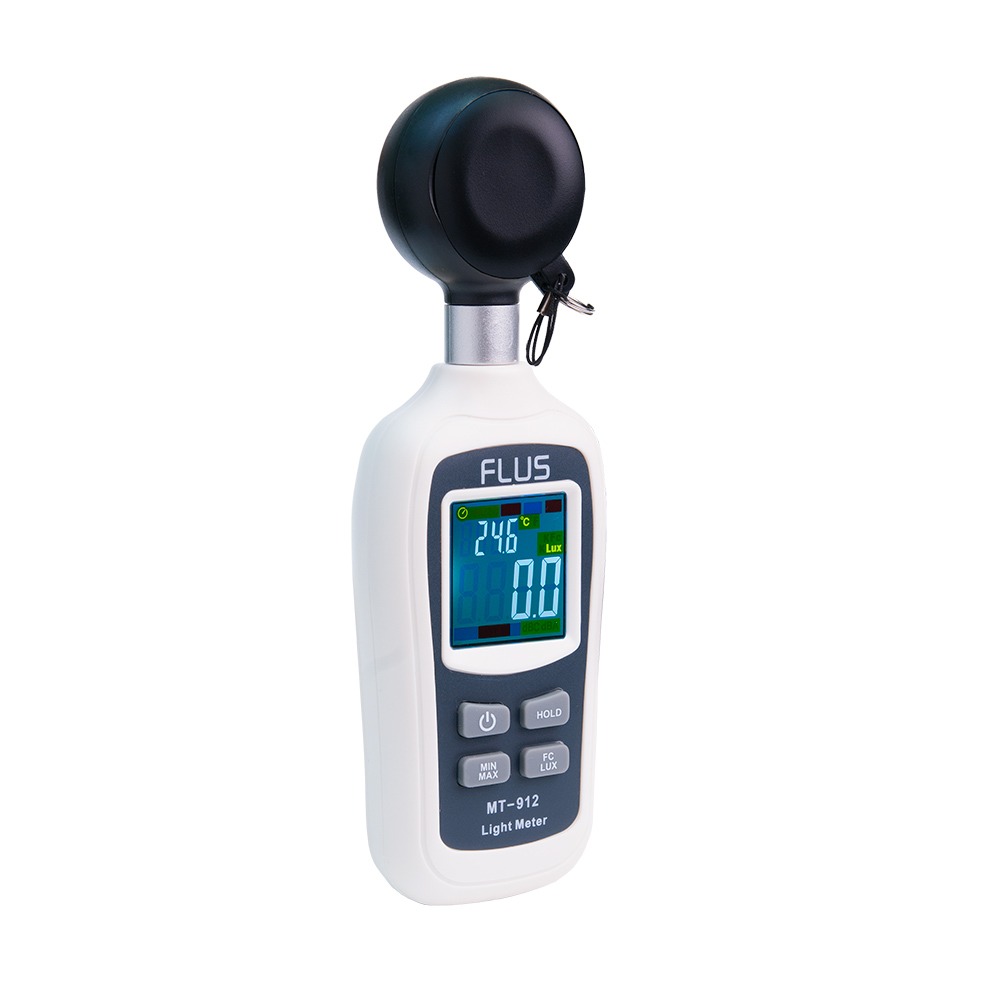
The large 4-digit LCD shows current illuminance, the selected unit, the range mode and status indicators. The backlight is useful in dark rooms, while a bar graph helps you quickly assess changes in light levels without staring at the numbers.
The HOLD button freezes the current reading on the screen, which is convenient when the sensor is in a hard-to-reach place. The MAX/MIN functions retain the highest and lowest readings during a session, while Peak Hold helps capture brief spikes in illuminance. The device also warns you when the battery is low or the selected range is exceeded.
How to get an accurate reading
To take a measurement, remove the cover from the light sensor and place it on the surface where illuminance is being checked. When checking light on a desk, place or secure the sensor at desk height; when checking a shelf, place it directly on the shelf. Try not to shade the sensor with your hands, body or the meter housing, and allow a few seconds for the reading to stabilize.
The FLUS ET-932 measures illuminance as perceived by the human eye. This is exactly what is needed to check lighting in work areas. However, precise plant cultivation requires a separate quantum sensor to measure photosynthetic photon flux density (PPFD): lux cannot replace micromoles.
Battery life and practicality
The device runs on one 9-volt PP3 battery and is designed for approximately 30 hours of operation. Auto power-off after 15 minutes of inactivity conserves battery power, and the function can be disabled when needed for extended monitoring.
At 15.8 × 6.2 × 3.2 cm and 258 g, the ET-932 takes up little room in a technician's bag. Its operating temperature range of -20 to +60 °C allows it to be used not only in an office, but also on a construction site, in a warehouse or outdoors.
Conclusion
The FLUS ET-932 is a straightforward, functional light meter for regular illuminance checks. Its strengths include a wide range, a remote sensor, quick readings, automatic range selection and useful reading-hold functions. It is a good choice when you need a battery-powered measuring tool for practical work rather than a complex system that sends data to an app.