MT-912 FLUS
Delivery and payment
Choose your city or town to see the price with delivery there and when you can get it.
Pickup points
- Branch
- Parcel locker
Pros
- Range up to 200 000 lx
- Measures illuminance and temperature
- Backlit color display
- Automatic range selection
- Lightweight and fits in a pocket
Cons
- Does not measure PPFD for plants
- No measurement log
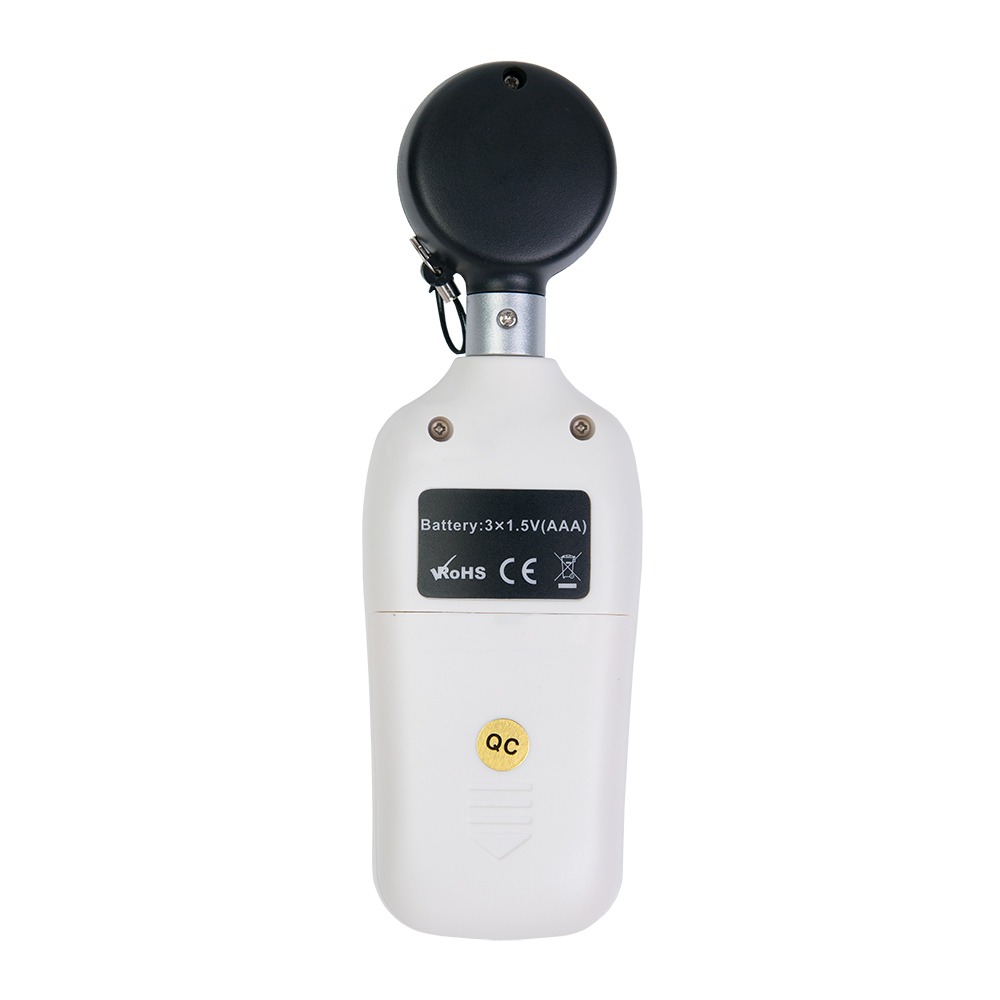
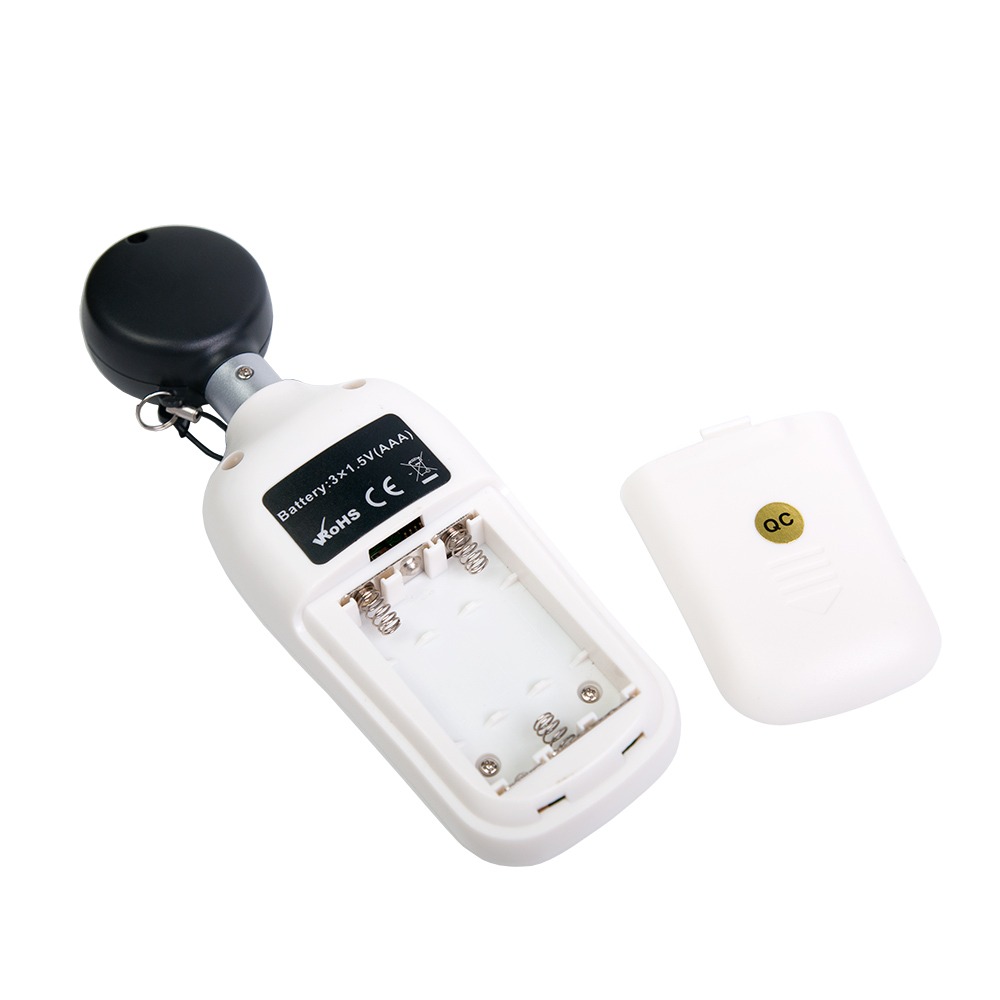
- Runs on three AAA batteries
FLUS MT-912: light in numbers, not just “bright enough”
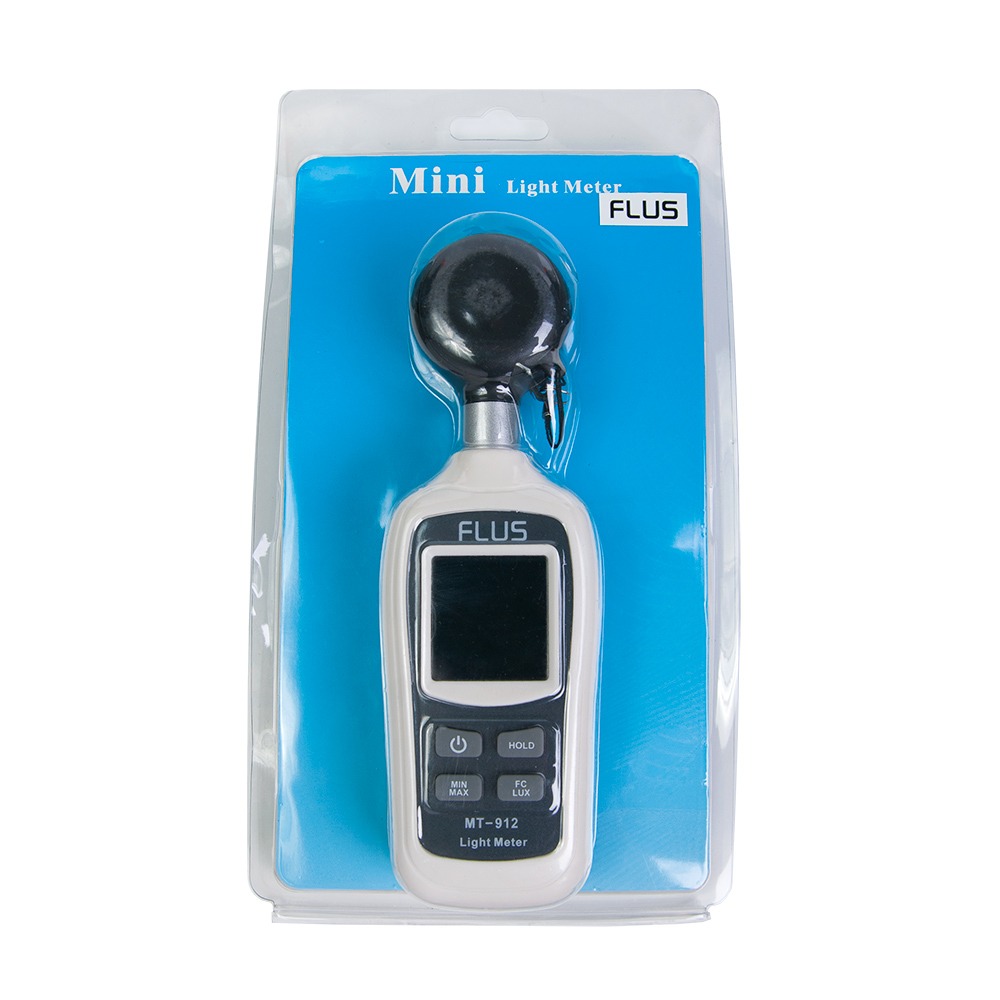
The FLUS MT-912 is a compact digital light meter for measuring illuminance from 0 to 200 000 lx. It is useful for checking lighting in a workspace, classroom, workshop, warehouse, studio, display window, or home greenhouse. The device displays illuminance and ambient temperature at the same time, so there is no need to carry a separate thermometer.
This is not a laboratory station with a menu taking up half the screen, but a straightforward pocket tool: open the sensor's protective cover, turn it on, place the sensor at the measurement point, and get a reading in moments. Automatic range selection eliminates manual switching between ranges, while updates twice per second let you quickly assess changes in lighting.
What it measures
The MT-912 primarily measures illuminance in lux. You can switch to foot-candles if needed, but lux is more convenient for most household, office, and technical tasks. A silicon photodiode with a spectral filter follows the sensitivity curve of the human eye, so the device is intended specifically for assessing visible light.
Maximum error is ±3% of the reading plus 8 counts up to 10 000 lx, and ±4% of the reading plus 10 counts at higher levels. This accuracy is sufficient for checking indoor lighting, choosing a place to work, comparing lamps, or setting up lighting scenes. For official measurements that require documentation, the device should be calibrated periodically.
Easy to use even in hard-to-reach spots
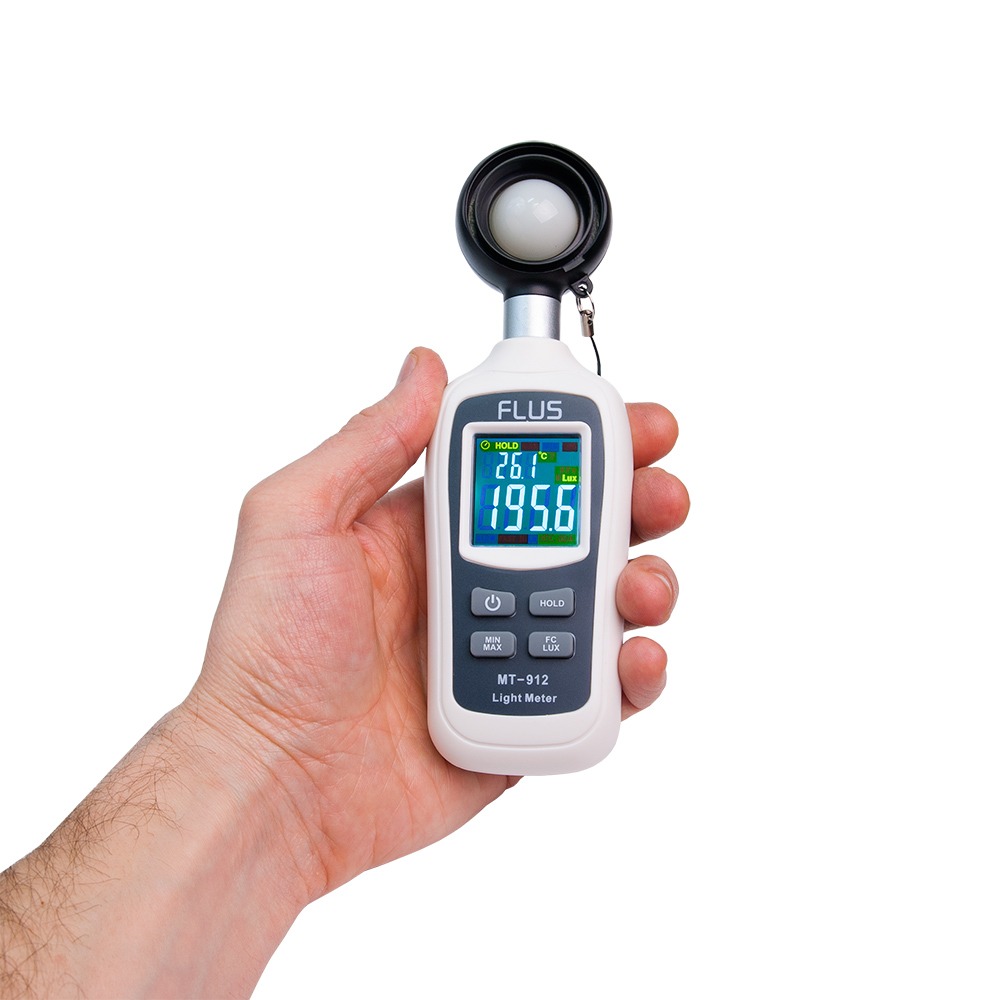
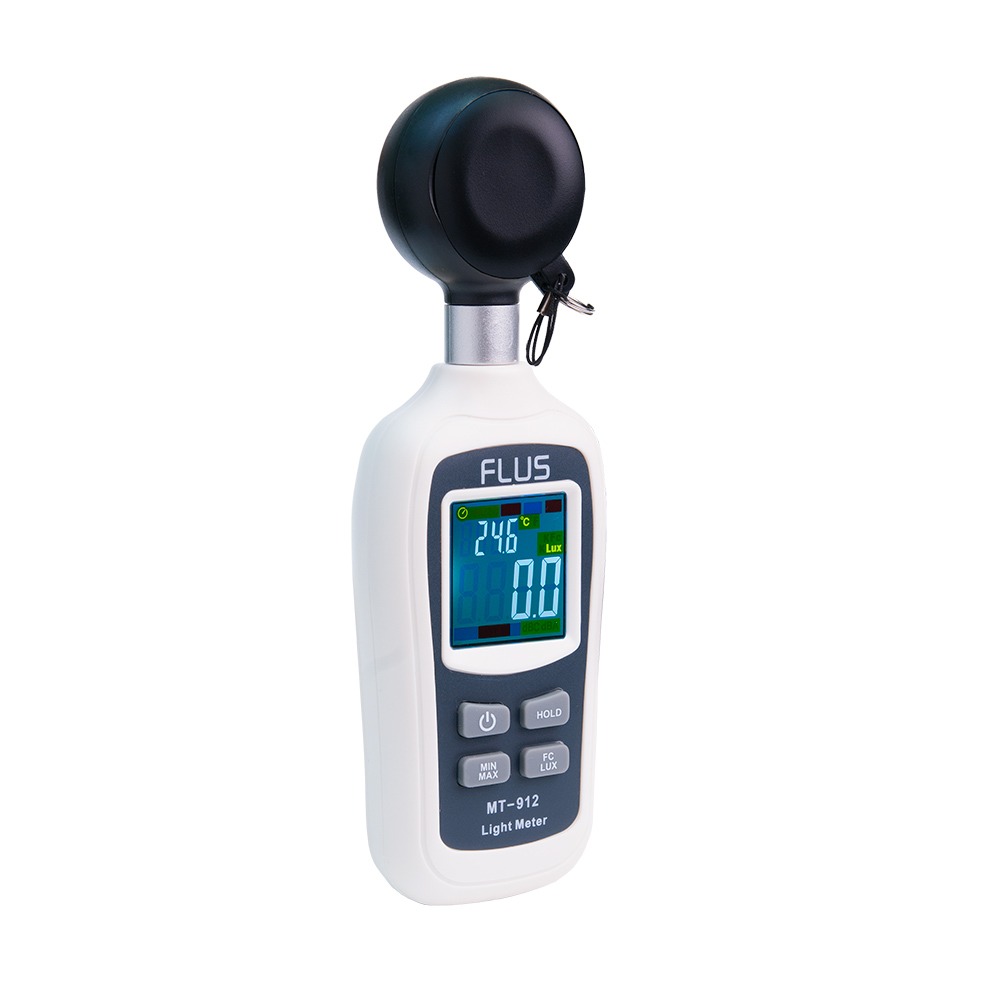
The large sensor is located at the top of the housing and covered by a round protective cap. There is no need to search your pockets for it: the cap is attached by a cord. This simple detail helps protect the sensor from dust and scratches and keeps the cap from mysteriously disappearing after the first trip to a job site.
The backlit 4-digit color LCD is easy to read in dark rooms and displays illuminance and temperature at the same time. The screen also shows active modes, units of measurement, and a low battery warning.
HOLD, MIN, and MAX: useful buttons without the fuss
The HOLD button freezes the current reading on the screen. This is especially useful when the sensor is in an awkward spot, such as above a desk, inside a cabinet, or near a light fixture, and you need to record the result after retrieving the device.
MIN/MAX mode lets you view the lowest and highest values recorded during the current session. This makes it easy to check how unevenly a work area is lit or how light changes throughout the day. Auto power-off after 15 minutes of inactivity can be disabled, which is useful for longer monitoring sessions.
Temperature is a welcome extra check
The MT-912 measures temperature from −20 to +70 °C with a resolution of 0.1 °C. Switching between °C and °F may be useful for those working with English-language documentation; everyone else can use the familiar Celsius scale.
It is worth understanding what this function is for: it measures the air temperature near the device. It is not a contact thermometer for surfaces or a replacement for a professional microclimate logger. Still, it is perfectly suited to quickly checking conditions in a room, greenhouse, or utility space.
Who the FLUS MT-912 is for
This light meter is a good choice for anyone who needs to check illuminance regularly without complicated setup: electricians, occupational safety specialists, photographers, decorators, office workers, teachers, and workshop and greenhouse owners. It is also useful at home when you want to find out whether a “bright” lamp actually lights up the room rather than just dazzling you.
For plant care, the MT-912 can provide a reference for visible light levels, but it does not replace a quantum PAR meter: lux does not indicate PPFD or describe light for plants as accurately as specialized measurements. Otherwise, it is a solid basic device: lightweight, fast, self-contained, and unlikely to turn a simple measurement into a quest.