Flus MT-92H
Pros
- Remote sensor on a spring cable
- Range up to 200 000 lx
- Air temperature measurement
- HOLD, MIN and MAX functions
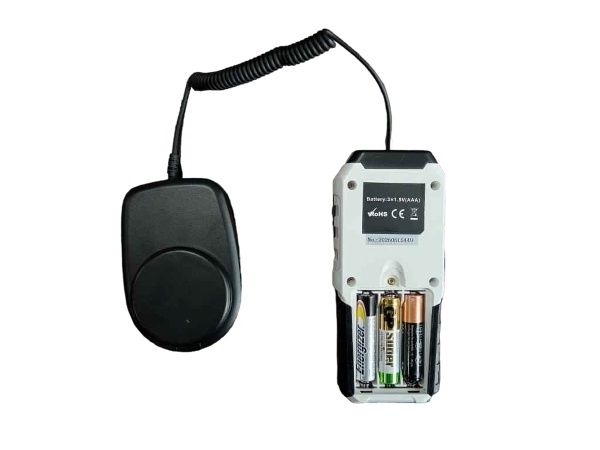
- Compact housing and AAA battery power
Cons
- Does not log measurements
- No data export to a PC
- Does not replace a PPFD meter for plants
When eyeballing it is no longer enough
The FLUS MT-92H is a compact light meter for measuring illuminance indoors, at workplaces, in warehouses, production facilities, educational institutions, photo studios or at home. It measures how much light actually reaches a surface, not how many watts are printed on the lamp box. Its measurement limit of 200 000 lx lets you work with office or room lighting as well as bright floodlights and direct daylight.
The device measures illuminance in lux and foot-candles, automatically selects the appropriate range and updates readings twice per second. It is a straightforward tool: turn it on, remove the sensor cover, place the sensor where you need it and get a reading without guessing.
Remote sensor: less acrobatics near the ceiling
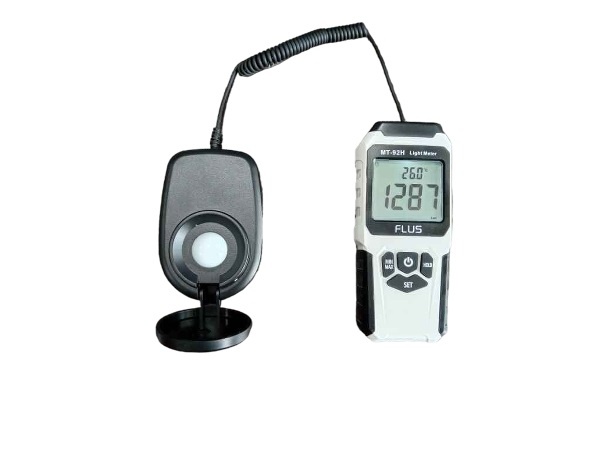
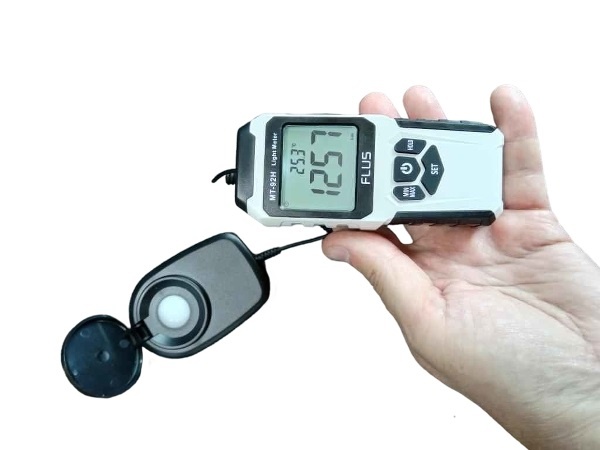
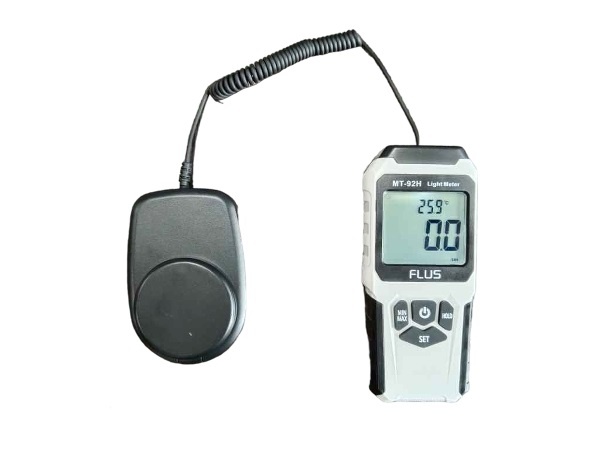
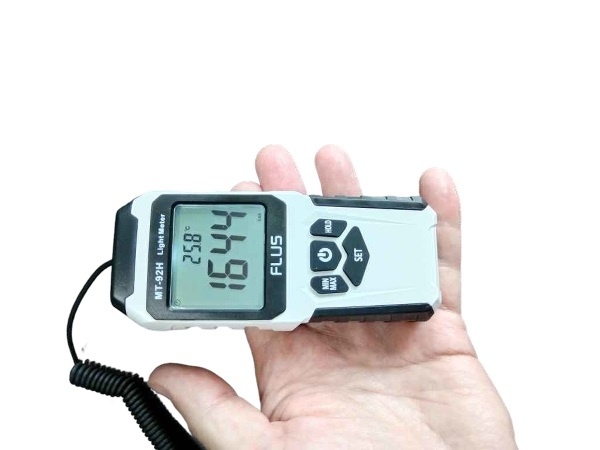
The main advantage of the MT-92H is its separate light sensor on a flexible coiled cable. You can hold the meter in front of you and read the result while the sensor rests on a table or shelf, faces a work surface or is held up to a light fixture.
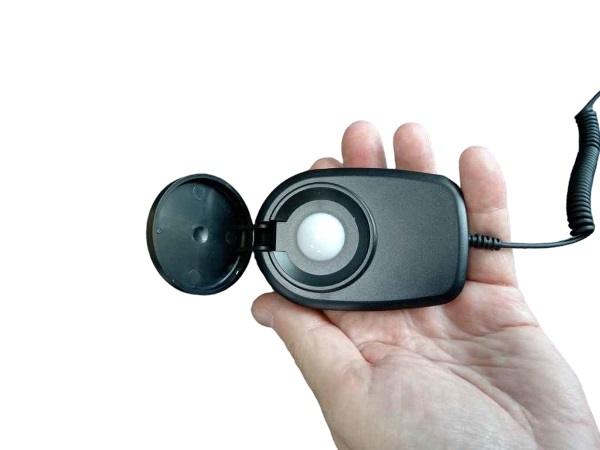
This design is more convenient than models with a sensor built into the housing: there is no need to twist your arm and the display to position the device correctly. The sensor has a protective cover that should be put on after use and, of course, removed before measuring. Otherwise, a zero on the screen will not indicate a fault, but a very honest measurement of the cover.
How to measure correctly
Lux measures the illuminance of a surface. Place or position the sensor in the same plane as the object being measured: on a table, work surface, floor, shelf or plant leaf. When measuring light on a desk, the sensor should rest on the desk rather than point directly at the lamp.
With readings updated every 0.5 s, it is easy to find the darkest area of a room, check lighting uniformity or see how brightness changes after moving a fixture. Automatic range selection eliminates the need to cycle through modes manually.
Display, temperature and useful modes
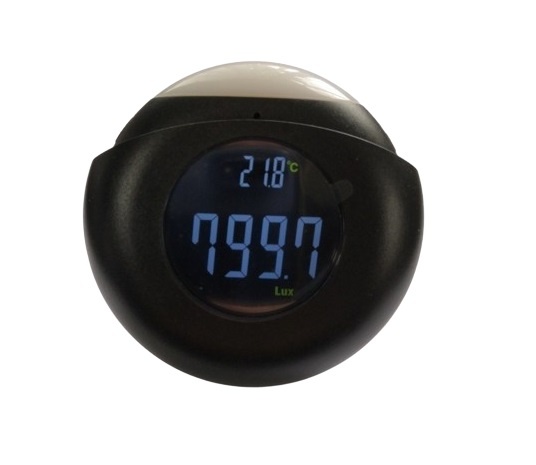
The illuminance reading takes up most of the large LCD display, with the temperature shown at the top. The MT-92H operates from -10 to +60 °C, so it can also help you check conditions in a work area, warehouse or greenhouse.
The HOLD button freezes the current reading on the screen, which is useful when the sensor is positioned high up or in a narrow recess. MIN/MAX modes retain the minimum and maximum values during measurement, making it easy to check changes in illuminance throughout the day or test a light fixture. An indicator alerts you when a reading is out of range, and the automatic power-off after 15 minutes of inactivity can be disabled for longer measurements.
Accuracy without inflated promises
For illuminance up to 10 000 lx, the stated accuracy is ±3% of the reading plus 8 least significant digits; above 10 000 lx, it is ±4% plus 10 least significant digits. Resolution changes with the range, from 0.1 lx in low light to 0.1 klx in bright light.
This is a good choice for monitoring lighting, comparing different lamps, checking work areas and adjusting light fixtures. However, a light meter is not a quantum PAR/PPFD meter: accurately measuring the photosynthetic photon flux useful to plants requires a specialized instrument, especially under colored LED grow lights. The MT-92H is nevertheless practical for tracking changes in illuminance and comparing conditions under the same light source.
A compact tool for regular checks
The meter measures 125 × 56 × 30 mm, so it fits easily in a tool bag or drawer. It runs on three AAA batteries, with a stated battery life of up to 60 hours. It is not a device for complex analysis with charts and data transfer to a computer, but it quickly provides what matters most: a clear illuminance reading at the desired point.
The FLUS MT-92H is worth considering for electricians, occupational safety specialists, lighting technicians, office, warehouse and greenhouse owners, and anyone who wants to check light with a measurement rather than rely on a lamp seller's persuasiveness.