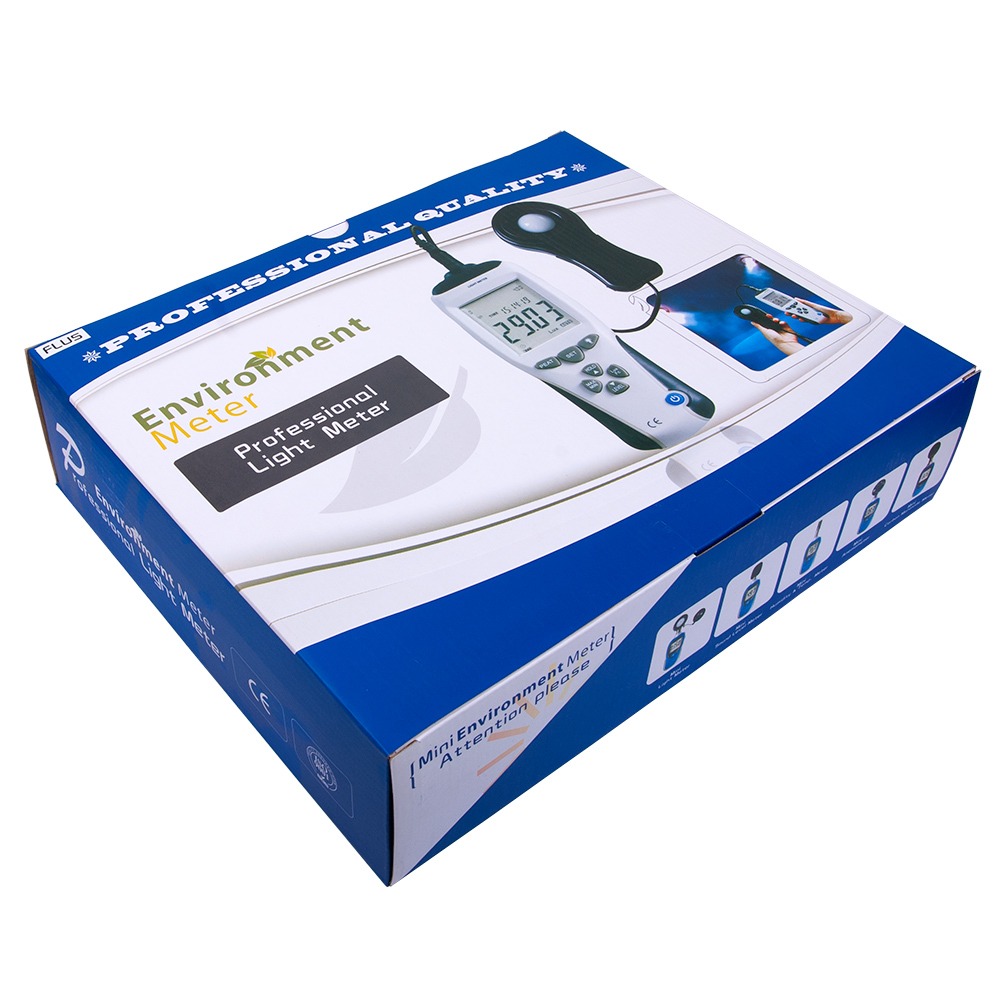
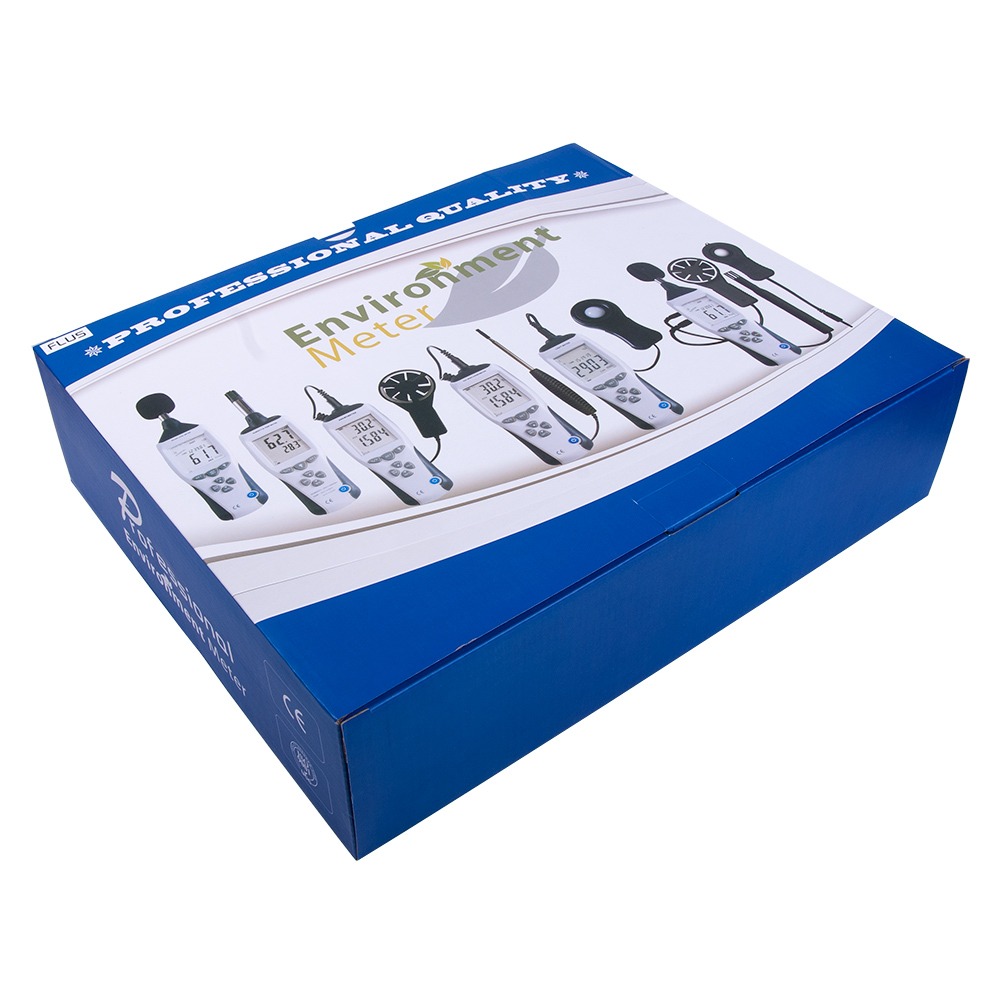
Flus ET-952
Pros
- Range up to 400 000 lx
- Remote sensor on a cable
- Backlight and bar graph
- PEAK, MAX/MIN and HOLD
- Auto power-off, battery indicator
Cons
- Does not measure spectrum or PPFD
- No USB or memory
- FC is not an option everyone needs
FLUS ET-952 is a “real” light meter, not a “phone app”
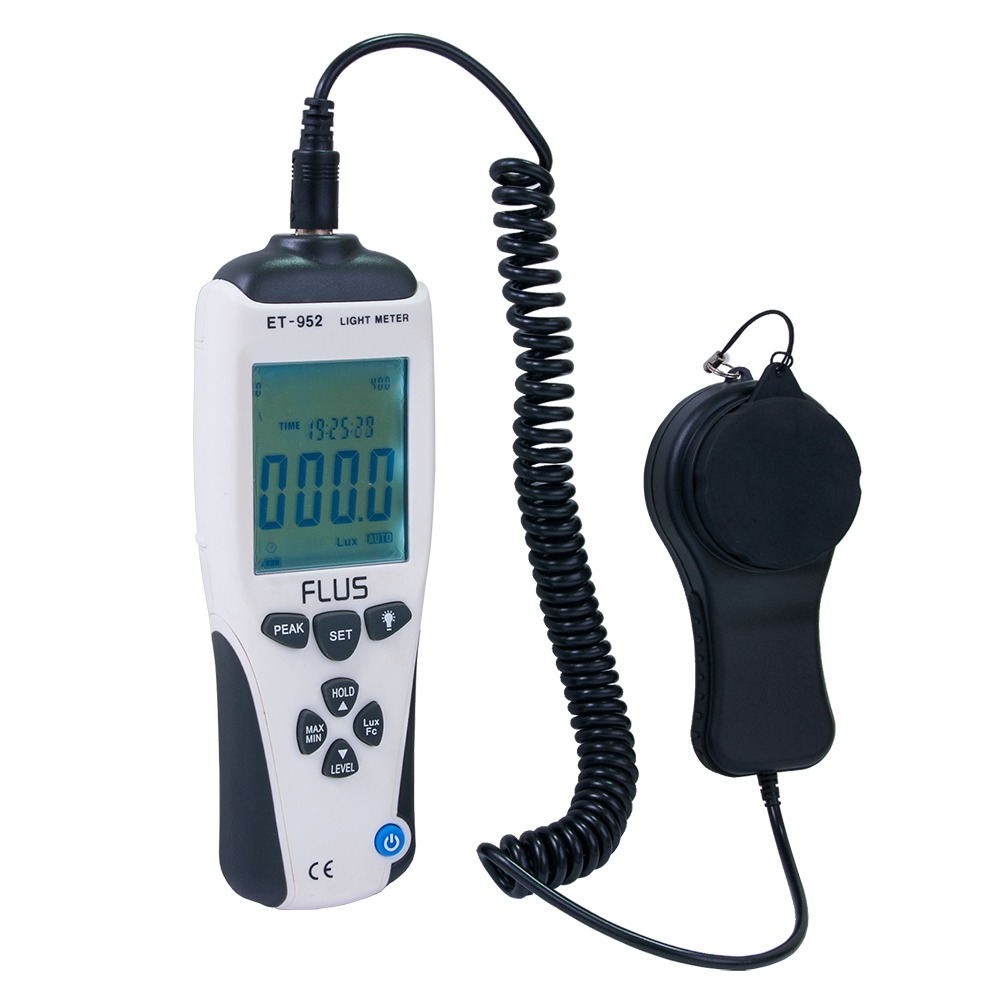
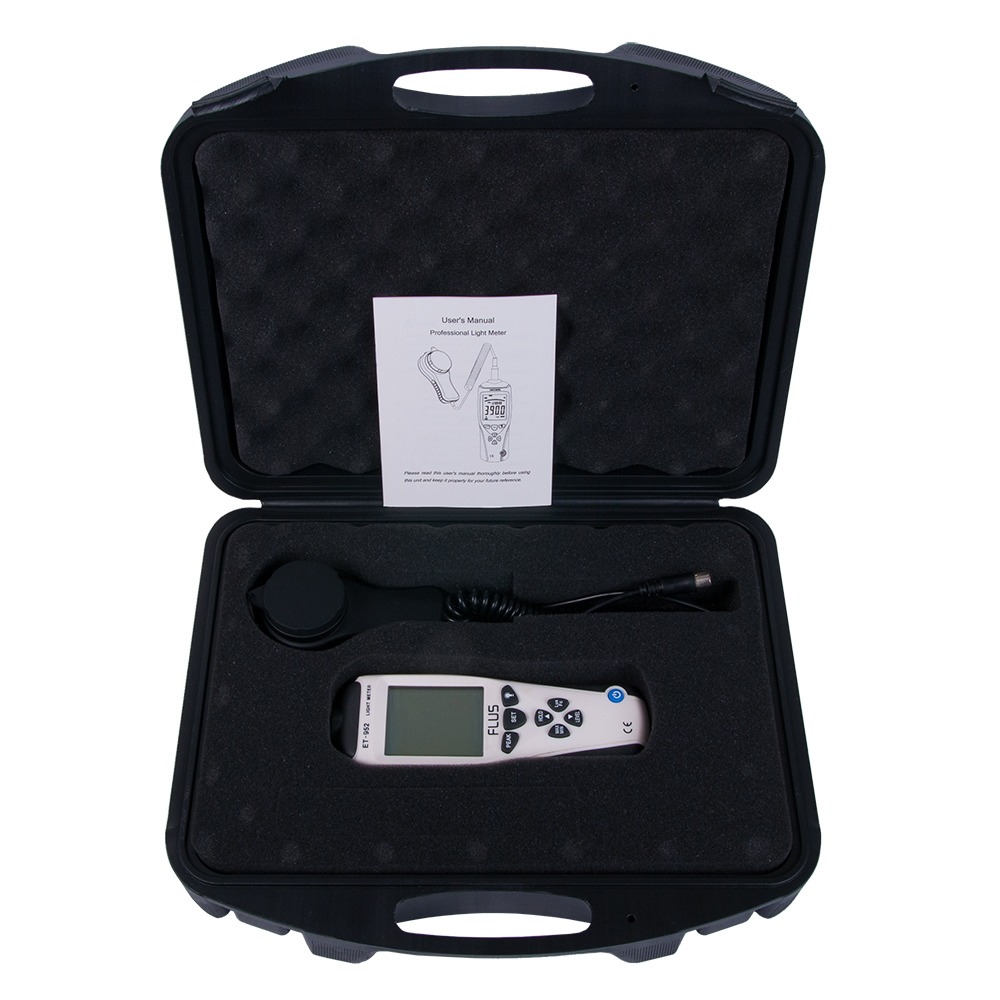
FLUS ET-952 is a portable digital light meter with a remote photosensor that measures illuminance in lux (lx) and, when needed, foot-candles (fc). It is just what you need when you want to put a number on the light: at a workstation, in a classroom, workshop, warehouse or photo studio, or when choosing or adjusting indoor lighting.

Range up to 400 000 lx: enough for a room or “sun in your eyes”
ET-952 measures from 0 to 400 000 lx (and up to 40 000 fc). For perspective, a typical room often measures tens or hundreds of lux, an office usually aims for several hundred, and a bright day outdoors can easily exceed tens of thousands of lux. That upper limit gives you more than enough “professional” headroom.
The device has 4 measurement ranges (with automatic and manual range selection), and readings update approximately 2 times per second. This is handy when adjusting lights and you want to see the response “almost in real time.”
Remote sensor on a long cable: the main practical advantage
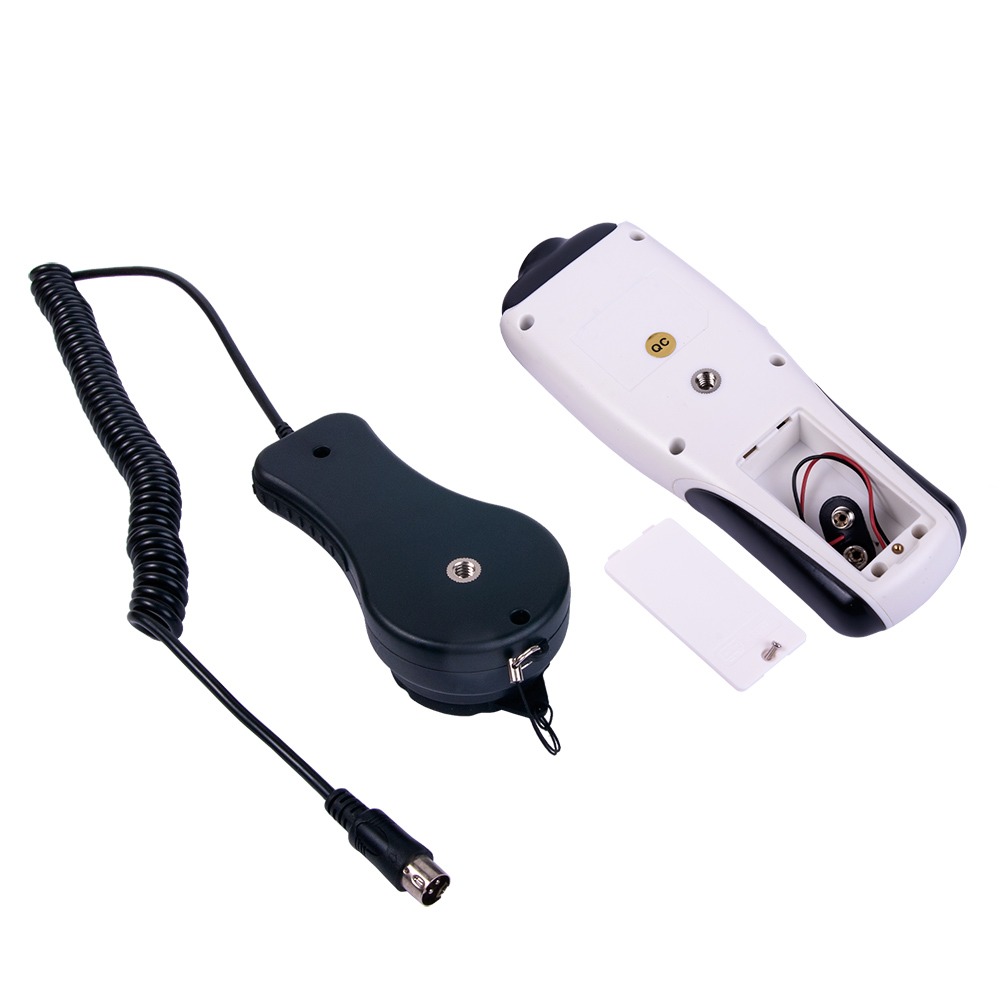
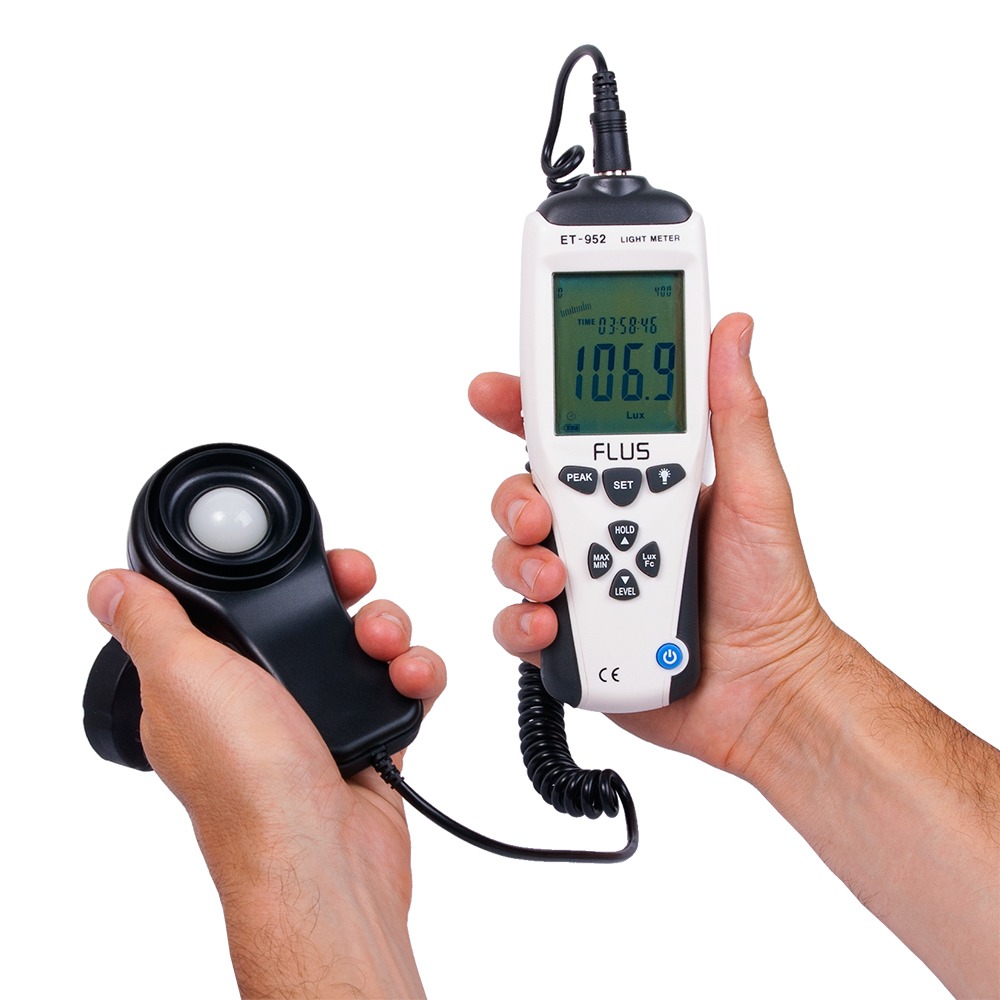
Unlike light meters with a sensor “in the housing,” FLUS ET-952 has a remote photodetector on a cable (approximately 2.5 m). This makes things much easier:
Place the sensor where illuminance matters (on a desk, floor or work surface, or near a display case),
and hold the meter so you can comfortably read the display without shading the sensor.
You can also mount the sensor on a tripod (optional), which is useful for a series of measurements or when you need to “take a reading and step away so you don't affect the result.”
Buttons without the fuss: HOLD, MAX/MIN, PEAK, backlight
ET-952 offers functions you'll actually use, not just features added “to check a box”:
HOLD freezes the reading on the screen (handy when measuring in a hard-to-reach place).
MAX/MIN records the maximum and minimum over the observation period (so you can quickly find the darkest and brightest spots).
PEAK captures the peak value (useful for brief changes in illuminance).
Backlight means you won't have to illuminate the screen with a flashlight… and then accidentally measure the flashlight with the light meter (a classic).
There is also a 40-segment bar graph that helps you see the trend at a glance (rising or falling) without squinting at the numbers.
Accuracy and measurement “honesty”: what CIE photopic means
The photodetector is a silicon photodiode with a spectral filter, and its spectral response is designed to match CIE photopic (the sensitivity curve of the human eye). This is the right approach for assessing “how people perceive light” (workplaces, homes, classrooms and so on).
Stated accuracy: ±3% of reading (up to 10 000 lx) and ±4% of reading (above 10 000 lx), with additional tolerances for the least significant digits. This is more than adequate for practical tasks such as checking lighting uniformity, choosing lamps and comparing “before and after.”
How to measure without getting “nice-looking but random” numbers
A few simple rules can improve measurement quality more than any “professional magic”:
1) Keep the sensor in the same plane as the object (usually horizontal on the work surface).
2) Don't shade the sensor with your body or the meter; that's exactly why the sensor is remote.
3) Take several readings at different points and check MIN/MAX; illuminance uniformity matters too.
4) If you're measuring “purple” spectrum LEDs for plants, remember that lux measures light “for the eye,” not “for photosynthesis.” PPFD requires different instruments. But a light meter is still useful for relative comparisons (adjusting, evening out or repeating a setup).
Housing, power and auto power-off
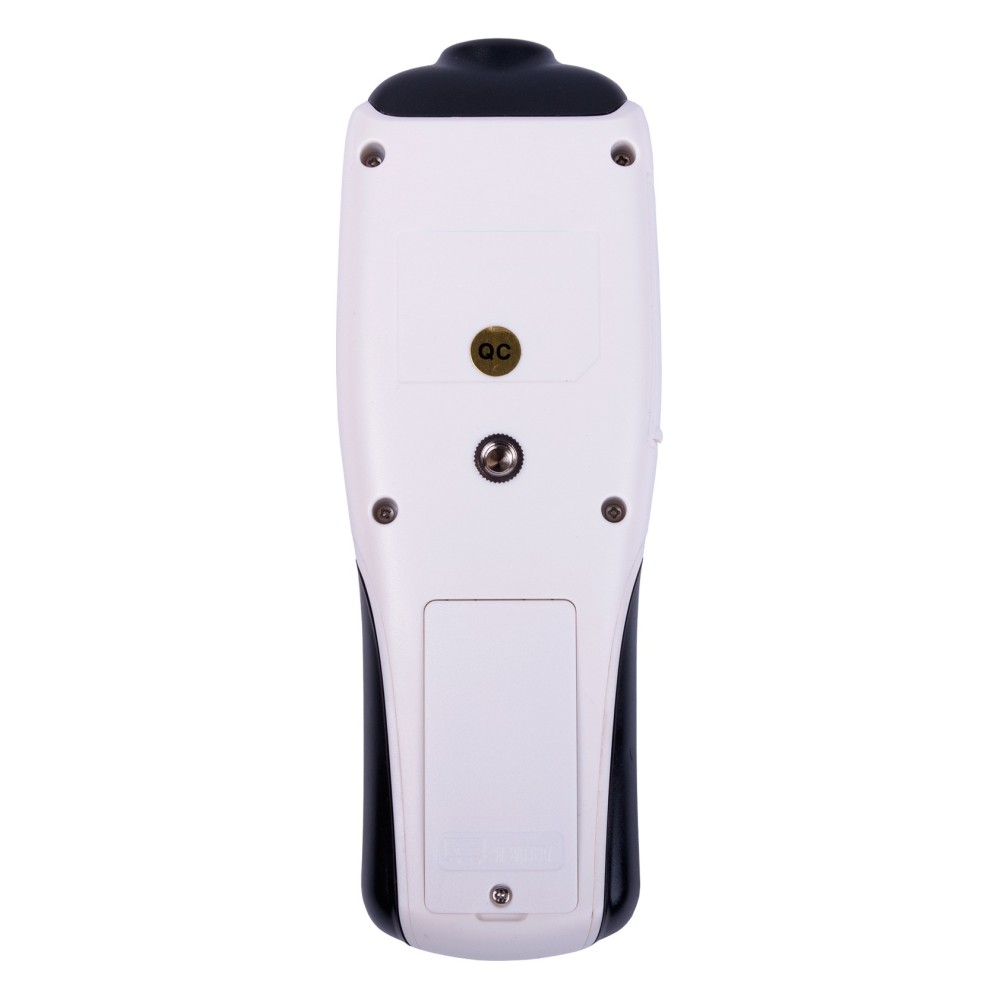
The device runs on a 9V battery (type 006P / IEC 6F22 / NEDA1604), has a low battery indicator and automatically turns off after approximately 15 minutes of inactivity. Operating conditions are up to 90% relative humidity without condensation, with an operating temperature from -20 to +60 °C.


Who should buy the ET-952 and who shouldn't
Buy it if you need to check illuminance in lux: for lighting audits, workplace safety, installing or adjusting lights, monitoring work-area illuminance, photo or video work (for illuminance), or comparing lamps and lighting setups.
Look elsewhere if you need a meter specifically for plant PPFD/μmol measurements or want to analyze spectrum, CRI or flicker. Those are different categories of meters, usually more expensive and complex.