

BSI GCDX-OS Over-Square Gamma Spectrometer
Delivery and payment
Choose your city or town to see the price with delivery there and when you can get it.
Pickup points
- Branch
- Parcel locker
Pros
- Detects photons from 3 keV
- High peak resolution
- Effective for compact samples
- Low intrinsic instrumental background
- Flexible cooling system configuration
Cons
- Requires specialized cooling
- Analyzer and software are selected separately
- Designed for a trained operator
More than a detector: the foundation of a precise γ spectrometer
GCDX-OS Over-Square is a series of coaxial high-purity germanium (HPGe) detectors for high-precision analysis of γ and low-energy X-ray radiation. This professional laboratory equipment is designed for situations where detecting radiation is not enough: the spectrum must be resolved into distinct energy peaks, radionuclides identified, and their activity accurately assessed.
The series is used in nuclear power, radiation safety, environmental monitoring, industry, and research. This instrument makes no pretense of being a consumer dosimeter, and rightly so.
What Over-Square means
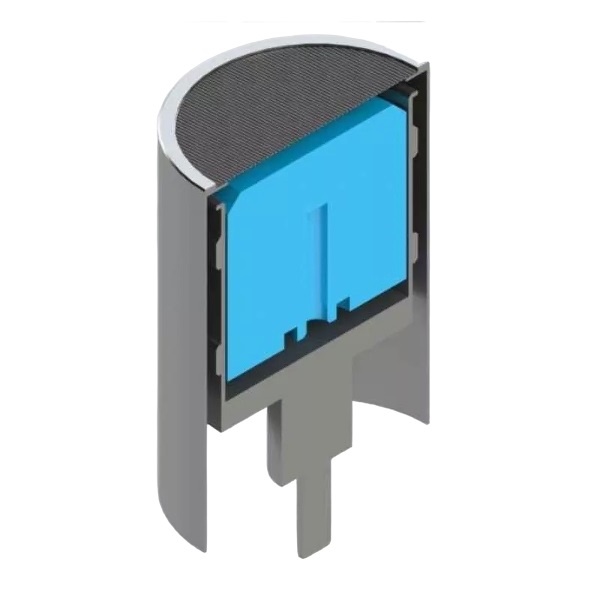
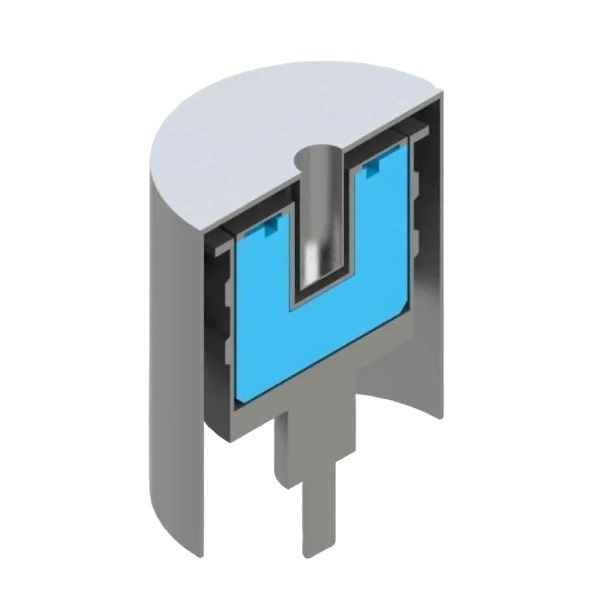
The GCDX-OS crystal has an optimized Over-Square geometry: its diameter is greater than its height. At a comparable volume, this approach provides a large active front surface area, making the detector especially effective with compact samples placed close to the end cap, such as vials, Petri dishes, small containers, and other samples in laboratory geometries.
Compared with conventional coaxial GCDX detectors, this helps increase detection efficiency in the range of approximately 1.5–2 MeV. At the same time, the series retains a GCDX strength: sensitivity to low-energy photons.
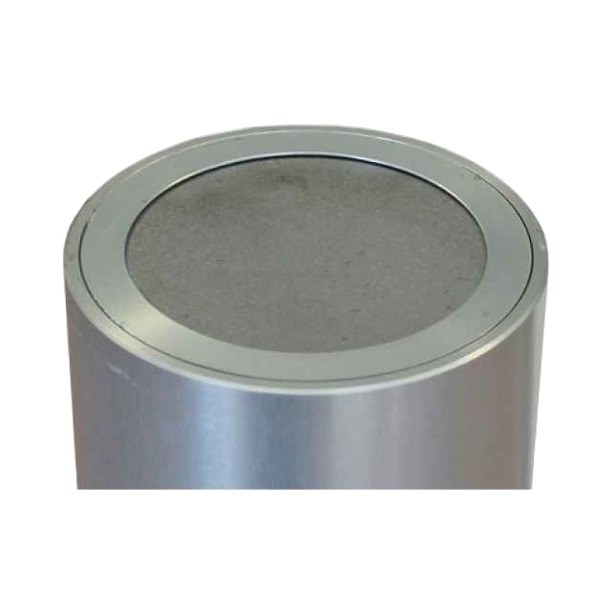

Range from 3 keV: important for low-energy lines
The series has an energy range from 3 keV to 10 MeV. The lower limit depends on the selected entrance window material, but the thin-contact design itself is intended to prevent low-energy photons from being lost before they reach the crystal.
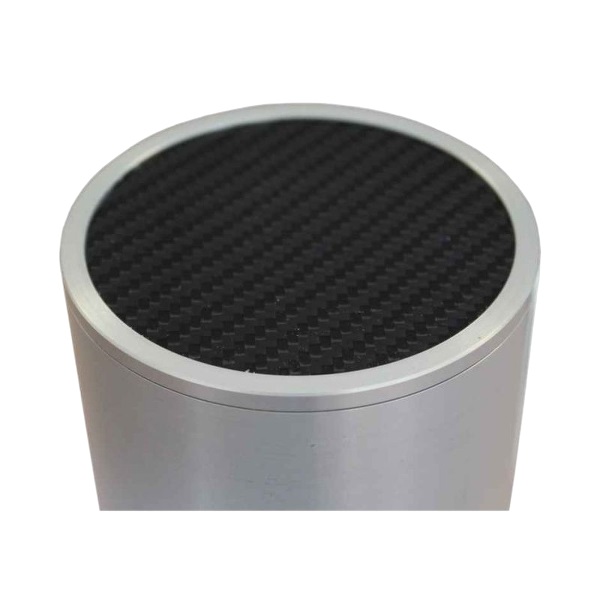
Beryllium or carbon fiber entrance windows are used for this purpose. This design is especially valuable when analyzing radionuclides with lines in the low-energy part of the spectrum, where a conventional, thicker entrance layer can act as an unwanted filter.
Resolution: when neighboring peaks remain distinct
Standard GCDX-OS models provide a specified energy resolution of 350–500 eV at 5.9 keV, 650–750 eV at 122 keV, and 1.75–2.00 keV at 1.33 MeV. The exact value depends on the crystal model, but the entire series features highly symmetric peaks and low instrumental background.
The practical benefit is straightforward: instead of a mountain range of suspiciously similar hills, the spectrum displays well-separated lines suitable for qualitative and quantitative interpretation.
Configured for the task
The series includes standard models with relative efficiency of 6–60%, a sensitive area of 1590–6500 mm², and crystal thickness of 15–30 mm. In other words, a GCDX-OS should not be chosen on the assumption that bigger is better: the optimal model depends on the energies to be measured, sample geometry, expected activity, and spectrum acquisition time requirements.
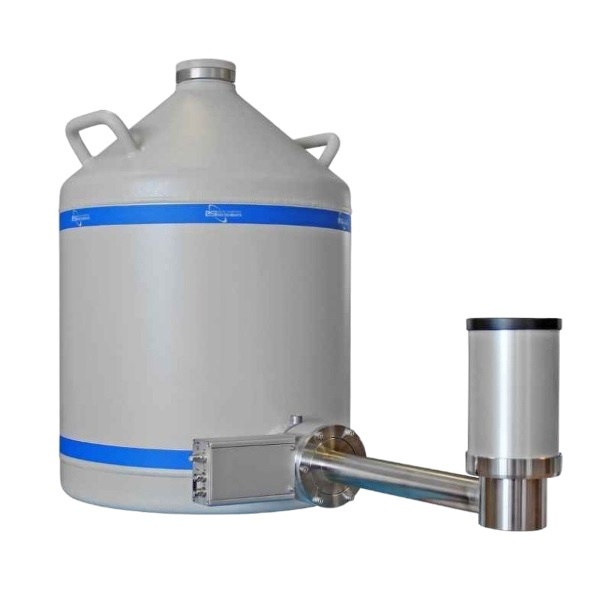
The detector can be fitted with an integrated or remote preamplifier. The package includes a coaxial HPGe detector, an SHP preamplifier with a cooled input stage, a cryostat, a cooling system, and cables. Depending on the project, various cryostat designs and Monolith or Nicole cooling systems or liquid nitrogen solutions are available.
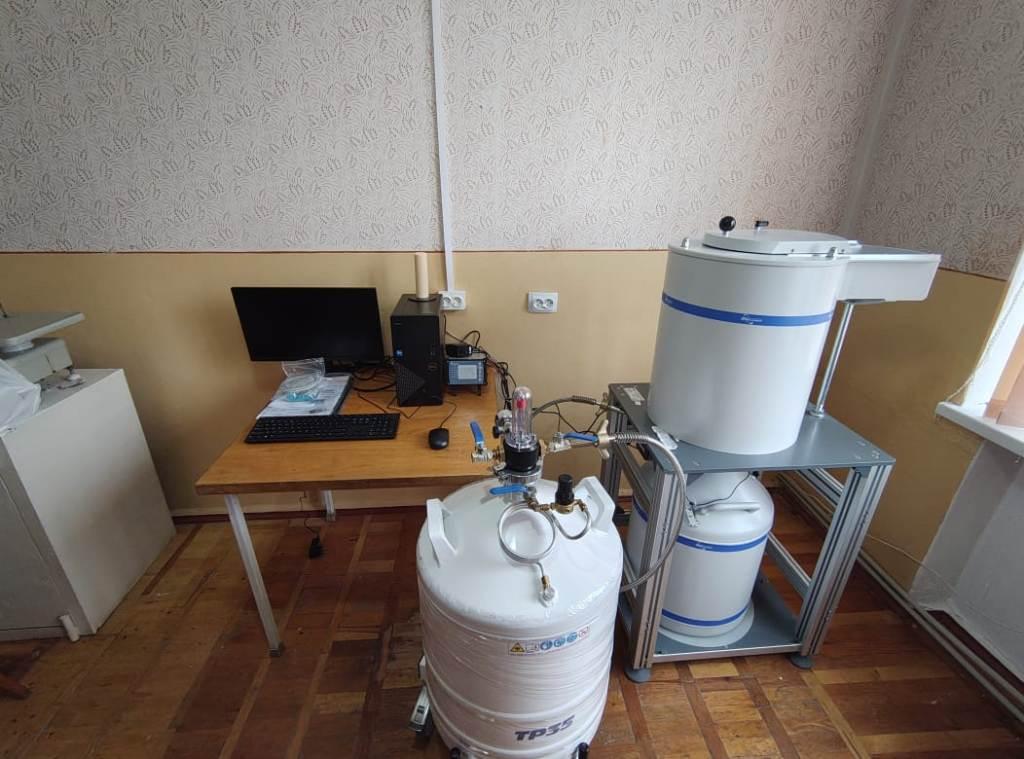
What a complete spectrometry system requires
The detector is a key component, but it is not the only part of the setup. Spectrum acquisition and processing require a multichannel analyzer and specialized software, while low-background measurements also require suitable lead shielding. For GCDX-OS, digital and analog-to-digital analyzers are available, along with GammaPRO for spectral analysis and MCC-MT for modeling and efficiency calculations for objects with complex geometries.
In short, GCDX-OS Over-Square is a strong choice for a laboratory that needs an HPGe detector with strong low-energy performance, high resolution, and increased efficiency for compact samples. It is not a one-size-fits-all “box with a button,” but a highly precise instrument that can be configured for a specific measurement method.