GWDX
Delivery and payment
Choose your city or town to see the price with delivery there and when you can get it.
Pickup points
- Branch
- Parcel locker
Pros
- Exceptional resolution at 122 keV
- Near 4π measurement geometry
- High efficiency for small samples
- Thin dead layer
- Low intrinsic background
Cons
- Requires liquid nitrogen
- Designed for professional laboratories
- Specifications vary by model
GWDX for a closer look at small samples
GWDX is a series of well-type HPGe detectors from Baltic Scientific Instruments for high-precision gamma spectrometric analysis. Rather than an all-purpose counter, it is a specialized instrument for situations where the sample is small, activity is low, and closely spaced energy peaks need to be reliably separated rather than merely suspected.
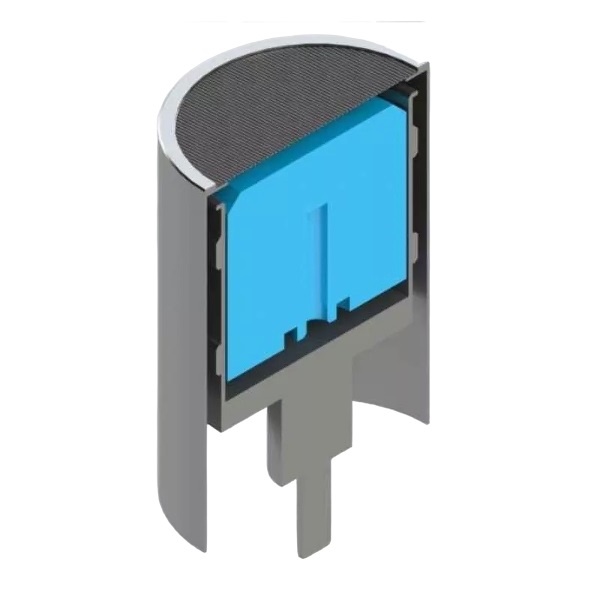
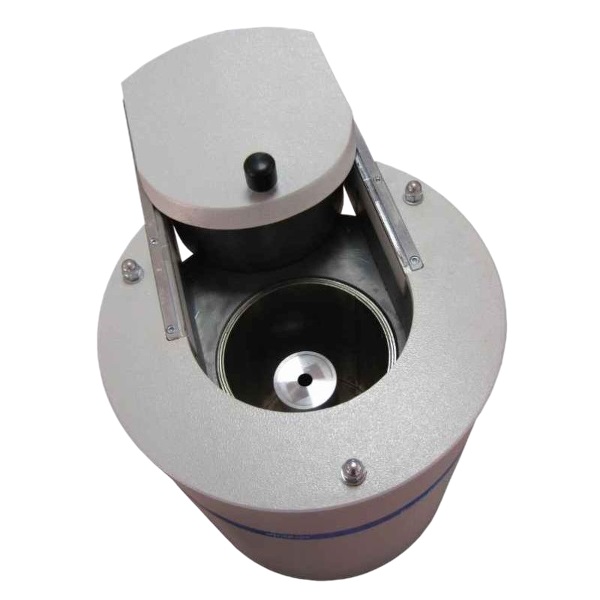
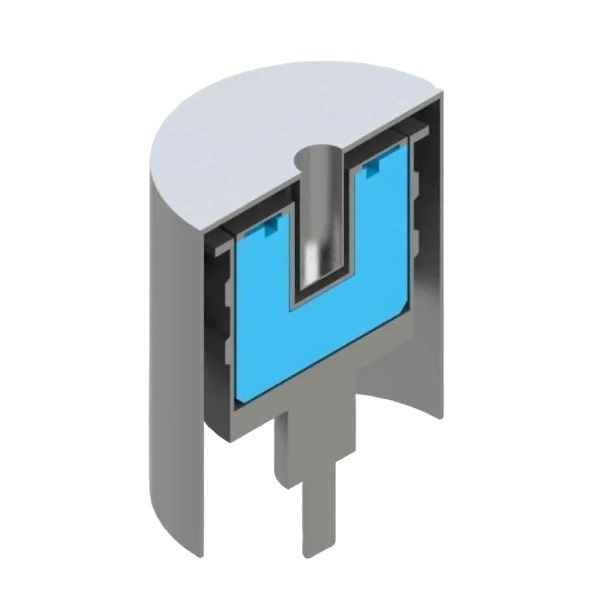
The principle behind the well-type design is simple and highly effective: the sample is placed inside an opening in the crystal. The detector surrounds it on nearly all sides, providing a measurement geometry close to 4π. As a result, GWDX is particularly effective at collecting gamma radiation from small samples such as filters, prepared specimens, control samples, and materials for radioecological or process analysis.
Why choose GWDX over a conventional coaxial HPGe detector?
The defining feature of the series is a very thin dead layer inside the well. This allows more efficient detection of low-energy gamma radiation and operation across a range from 20 keV to 10 MeV. Compared with conventional coaxial HPGe detectors, the well geometry is especially advantageous when the radiation source is compact enough to be placed directly inside the measurement chamber.
The specified resolution for the series is 0.75–0.85 keV at 122 keV and 2.0–2.4 keV at 1332 keV, depending on the model. In practice, this means sharper peaks in the spectrum, less confusion between closely spaced gamma lines, and more reliable identification of radionuclides.
Options for different samples
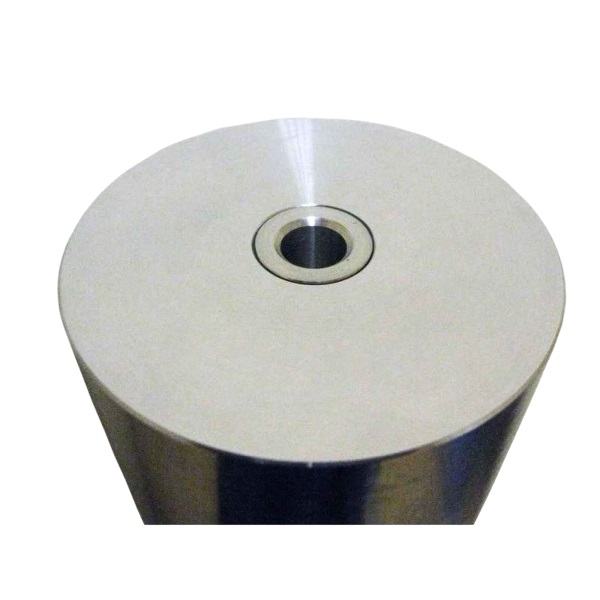
The GWDX range includes models with a well diameter of 10 or 16 mm and a nominal volume of 90 to 360 cm³. Rather than assuming bigger is better, choose a model based on sample dimensions, required efficiency, and energy resolution requirements. If the sample does not fit inside the well or sits in an unfavorable position, the detector's advantage can quickly become a very expensive inconvenience.
The aluminum well is suitable for measuring small containers and samples, while different cryostat designs allow the system to be adapted to a specific laboratory setup. Versions with an integrated or remote preamplifier are also available.
Cooling: precision relies on liquid nitrogen
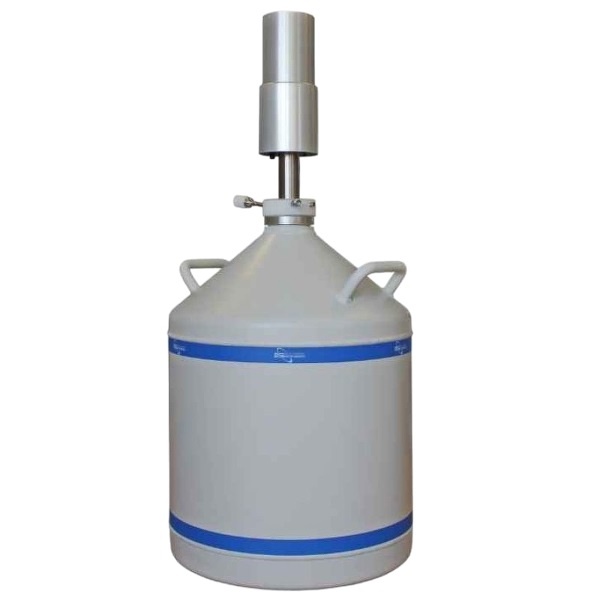
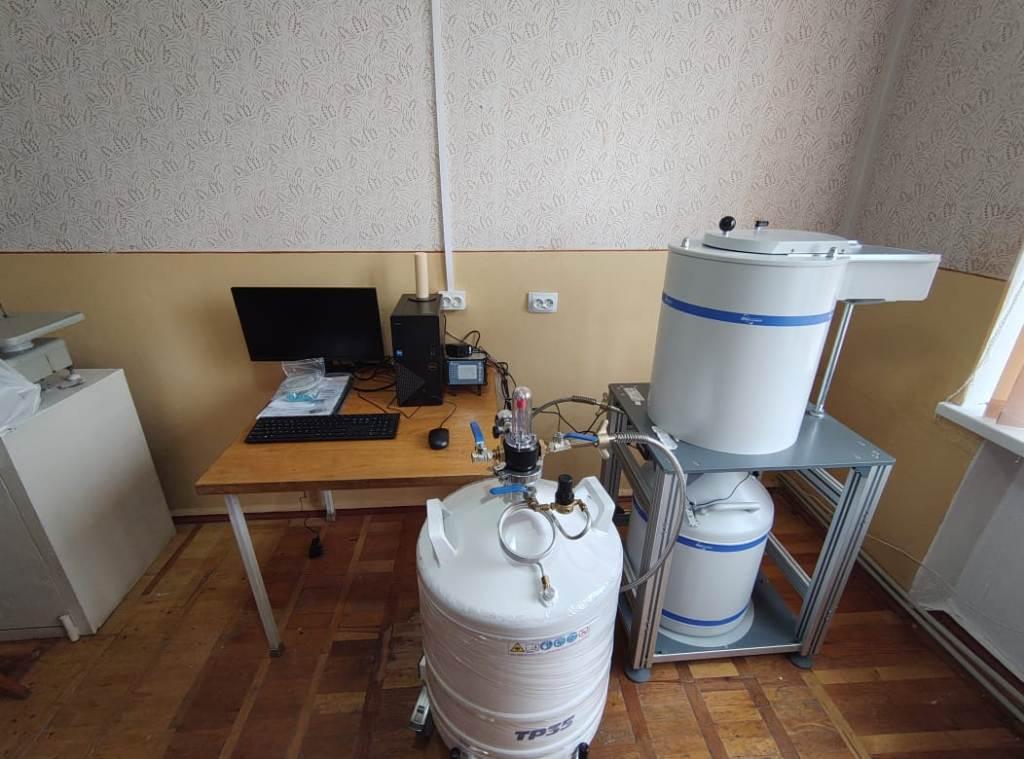
The HPGe crystal operates only at cryogenic temperatures, so GWDX uses a Dewar vessel filled with liquid nitrogen. This is a classic and highly effective approach to precision gamma spectrometry, but it requires discipline: monitoring the nitrogen level, refilling on time, and following safety procedures for handling cryogenic liquids.
A preamplifier with a cooled input stage helps maintain low noise levels. The system includes high count-rate indication and high-voltage power supply protection if the detector is insufficiently cooled. These are important details: an HPGe system does not take kindly to overheating or to the idea of taking one more measurement and topping up the nitrogen later.
Where GWDX is most useful
The series is designed for nuclear power, radioecological monitoring, industrial laboratories, scientific research, and nuclear medicine. It is suitable wherever high-quality analysis of small samples is needed, from monitoring radioactive contamination to identifying the nuclide composition of process materials.
The standard system includes the HPGe detector, cryostat, Dewar vessel, preamplifier, spectrometry device, and GammaPRO software. If needed, the system can be supplemented with a multichannel analyzer, lead shielding to reduce background, a liquid nitrogen storage and filling system, a nitrogen level sensor, or the extended MCC-MT software.
Conclusion
GWDX is a professional well-type HPGe detector for laboratories that need more than simply detecting gamma radiation: they need to measure its spectrum accurately. Near 4π geometry, a thin dead layer, and exceptional resolution make the series a strong choice for work with compact samples. In return, it requires a properly selected model, cryogenic infrastructure, and an operator who understands the cost of missing a single nitrogen refill.