BSI GCDX Series Gamma Spectrometer
Delivery and payment
Choose your city or town to see the price with delivery there and when you can get it.
Pickup points
- Branch
- Parcel locker
Pros
- Detection of low-energy γ photons
- High HPGe resolution
- Low intrinsic background
- Flexible cryostat and entrance window options
- High-voltage protection during warm-up
Cons
- Requires working with liquid nitrogen
- Requires specialized spectrometry equipment
- Configuration must be agreed in advance
GCDX: when an ordinary gamma detector isn't enough
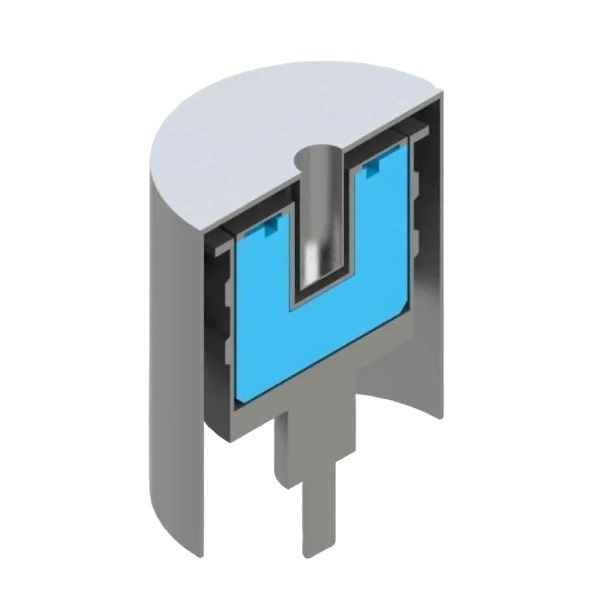
The Baltic Scientific Instruments GCDX series consists of coaxial semiconductor γ-radiation detectors based on p-type high-purity germanium (HPGe). They are designed for applications where it is important not only to detect radiation, but also to resolve spectral peaks, correctly identify radionuclides, and work with energies beyond the reach of conventional coaxial HPGe solutions.
The letter X in the name is there for a reason: GCDX detectors have an extended low-energy range. In the appropriate configuration, the detector can register γ photons from 3 keV to 10 MeV. This makes the series suitable for environmental radiation monitoring, nuclear power, industrial measurements, scientific research, medicine, and analytical laboratories.
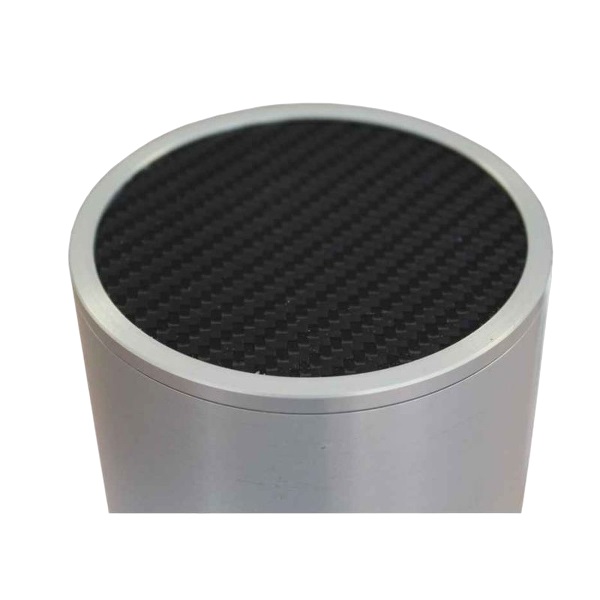
A thin window for important spectral details
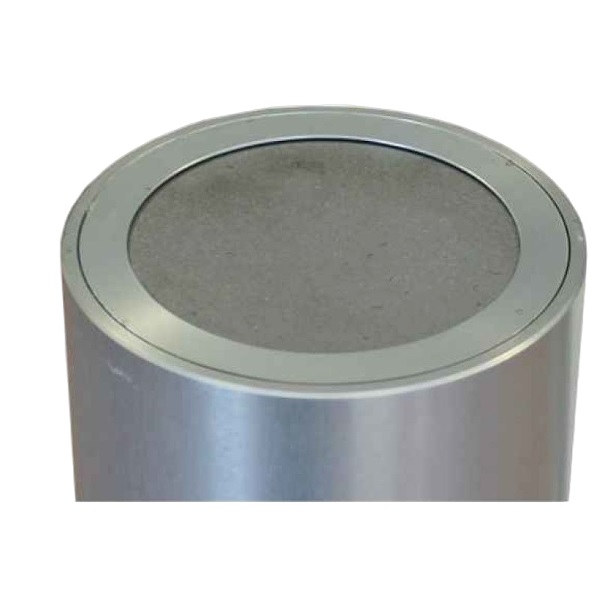
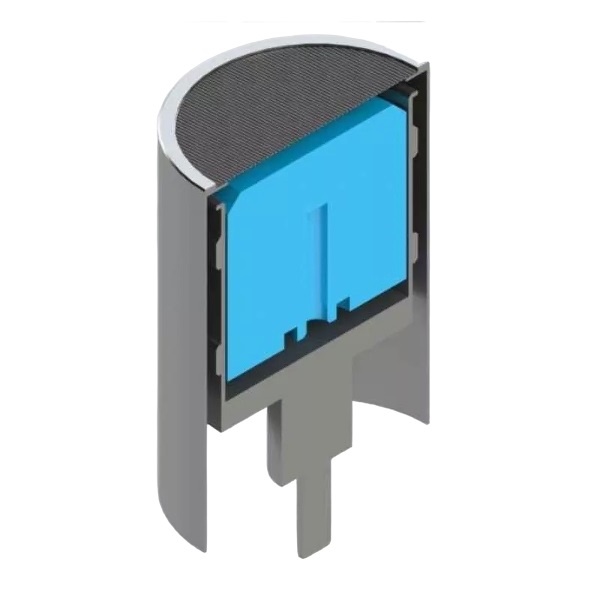
The main strength of the GCDX is its thin front crystal contact and a special entrance window integrated into the end of the detector. Depending on the application, versions are available with an aluminum, beryllium, or carbon window. Beryllium and carbon fiber options are particularly effective at allowing low-energy photons to reach the germanium crystal.
The practical benefit is straightforward: more useful information is retained in the low-energy part of the spectrum, where thicker structural components could attenuate it. The specific window configuration should be selected for the measurement geometry, energy range, and nature of the samples; there is no universally “best” option.
Coaxial HPGe: precision that requires cooling
The series uses a coaxial high-purity germanium crystal. This technology is valued for high energy resolution, good spectral peak symmetry, and low instrumental background. That's why HPGe systems remain a reference instrument where a scintillation detector is not enough.
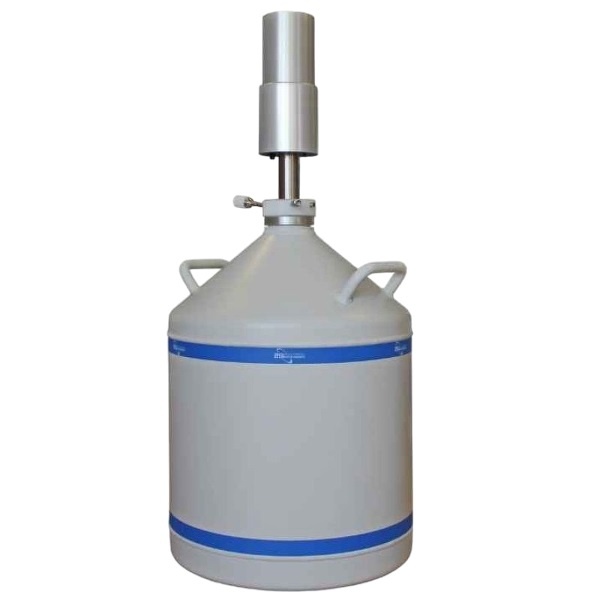
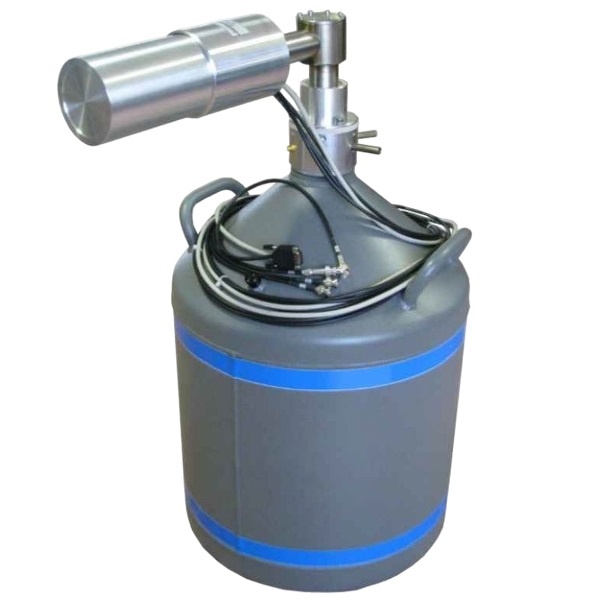
The germanium crystal operates at cryogenic temperatures, so the GCDX comes with a Dewar vessel for liquid nitrogen cooling. This is not a device you can simply switch on and forget: it requires regular nitrogen refills, trained personnel, and adherence to safety procedures. In return, users get a class of measurement where small peaks don't disappear into a statistical haze.
A cryostat for your measurement setup
The GCDX is not limited to one form factor. The series offers different cryostat designs, including vertical and horizontal detector orientations, as well as options with an integrated or remote preamplifier. This allows the system to be adapted to a protective lead shield, laboratory test bench, automated waste monitor, or mobile measurement system.
One important detail: the detector itself is only the sensing part of the spectrometry chain. For full operation, it requires a multichannel analyzer, a high-voltage power supply, and software for spectrum acquisition and analysis, as well as shielding, collimators, and nitrogen level monitoring equipment when needed. The complete configuration should be specified when ordering.

Detector protection is more than an optional extra
The series provides high-voltage power supply protection if the detector warms up, as well as high count-rate indication. These are important features for everyday laboratory work: they help prevent undesirable operating conditions for the expensive germanium crystal and provide timely warning when the radiation flux is too intense for normal measurement.
Models are available with different relative efficiencies, from 10% to 100% and above. Higher efficiency means a greater probability of detecting γ photons, but it also affects dimensions, cost, shielding requirements, and the choice of measurement geometry.
Who the GCDX series is for
GCDX is a professional choice for laboratories and industrial operations that need precise gamma spectrometry measurements with sensitivity to low energies. The series is particularly useful for monitoring radionuclides in environmental samples, industrial products, medical or research samples, and in nuclear safety applications.
Before buying, it's worth determining five things: the required energy range, relative efficiency, entrance window material, cryostat orientation, and the components of the rest of the spectrometry system. A properly configured GCDX is more than a detector; it is the foundation of a measurement system you can trust with a complex spectrum.