HT-1805
Pros
- Simultaneous monitoring of four key readings
- Visual, audible and vibration alerts
- Adjustable upper and lower thresholds
- STEL, TWA, peak values and O₂ minimum
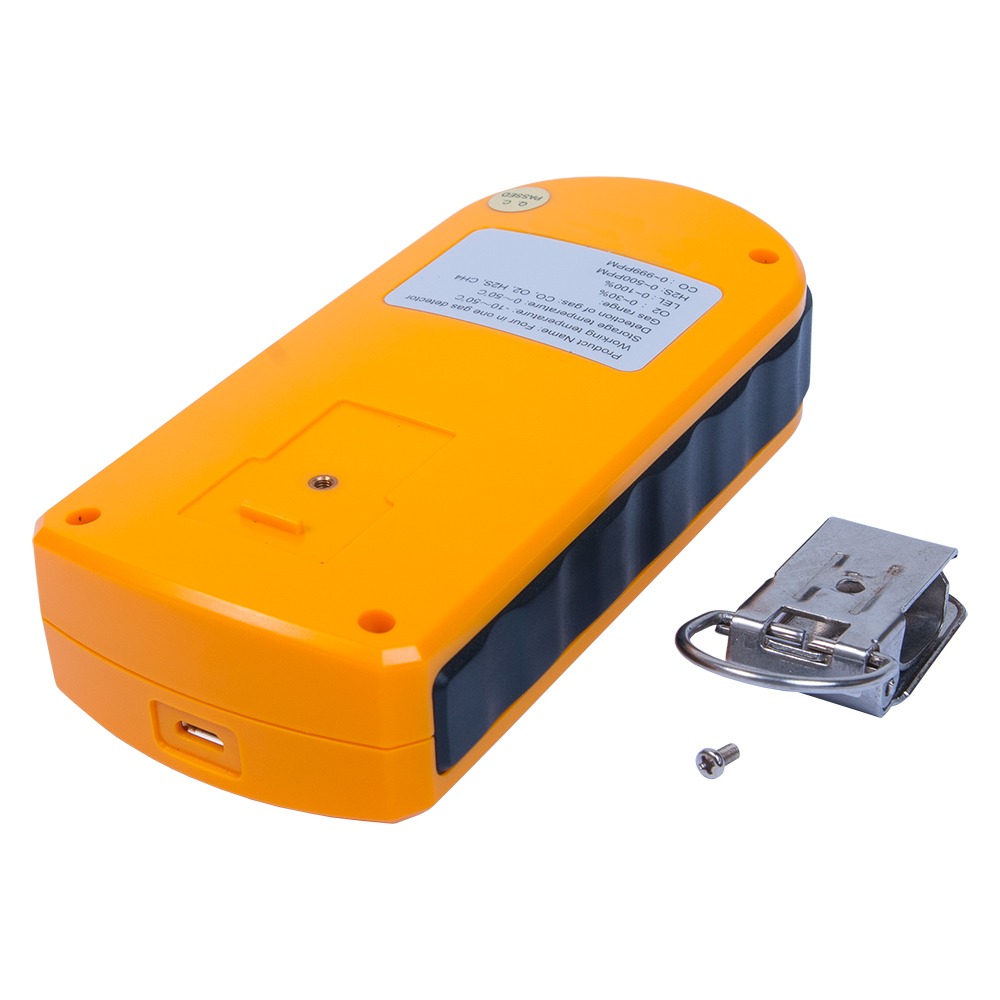
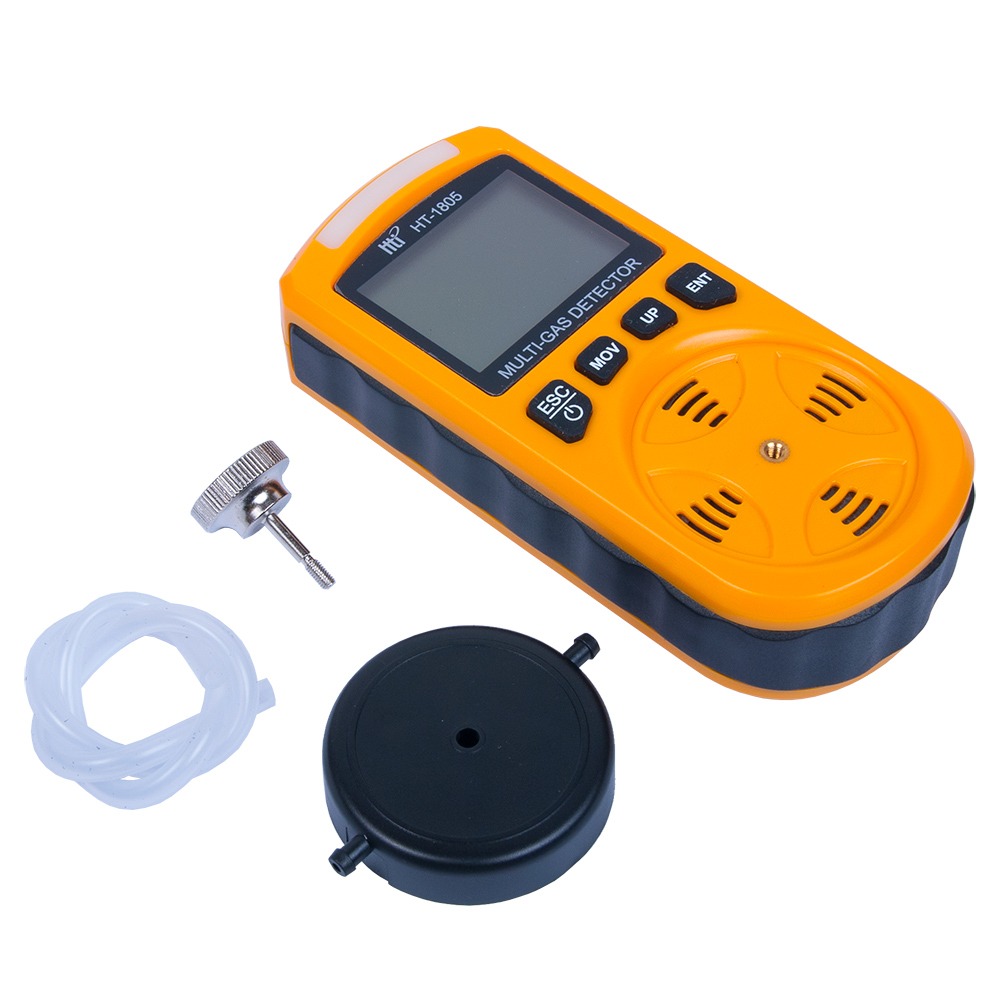
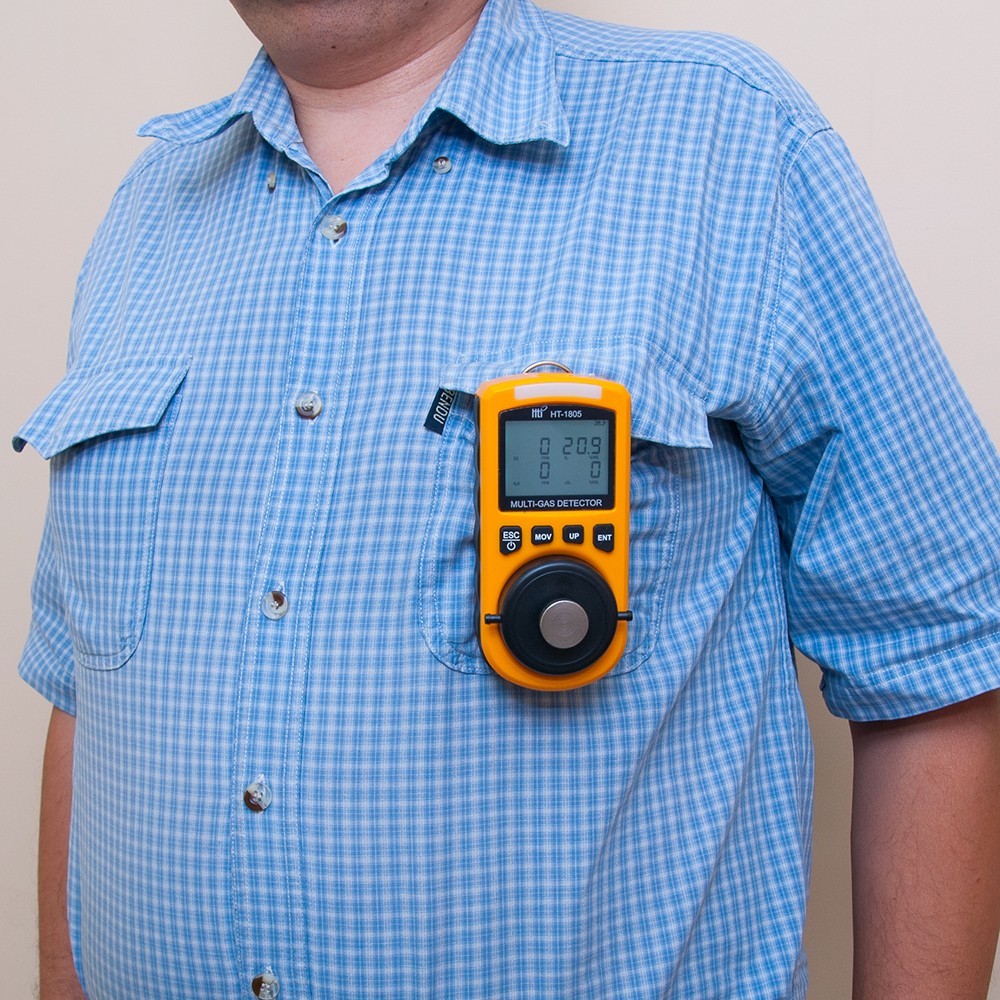
- Compact housing with a clip
Cons
- Three channels require a minute to warm up
- No stated IP rating
- Requires regular calibration checks
HTI HT-1805: four reasons not to enter blindly
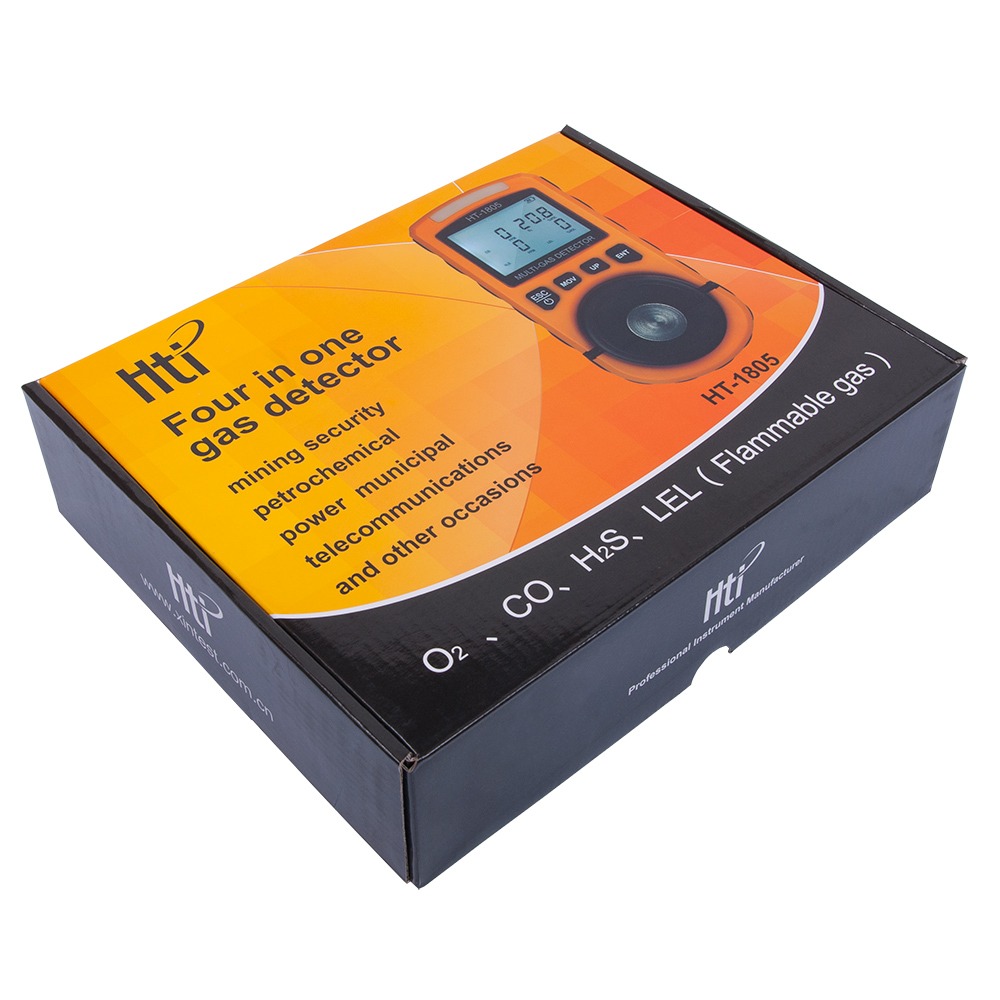
The HTI HT-1805 is a portable four-channel gas analyzer for checking the atmosphere in wells, mines, utility rooms, boiler rooms, sewer systems, industrial facilities and other places where the air can hold a very unpleasant surprise. The device simultaneously displays concentrations of oxygen O₂, carbon monoxide CO, hydrogen sulfide H₂S and combustible gases as a percentage of the lower explosive limit, or LEL.
In other words, the HT-1805 does more than look for a “gas leak.” It helps assess four critical risks at once: oxygen deficiency or enrichment, CO and H₂S toxicity, and the possibility of an explosive gas-air mixture forming. For work in potentially hazardous atmospheres, this is much more practical than a set of separate detectors.
Four readings on one screen
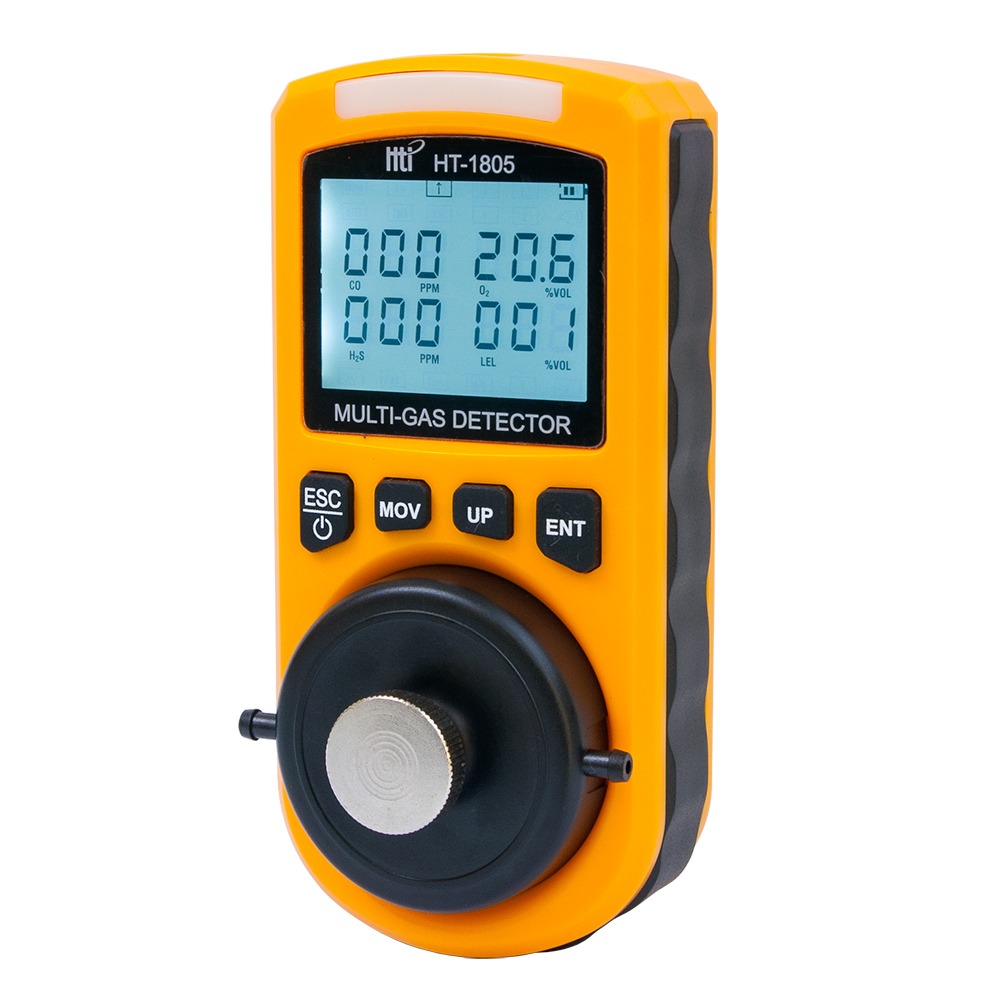
The large LCD is divided into four sections, with CO and O₂ at the top and H₂S and LEL at the bottom. The operator can see the whole picture at once without switching modes. The backlight comes in handy in a dark basement or utility tunnel, or during a nighttime equipment inspection.
The O₂ range is 0–30 % vol., CO is 0–999 ppm, H₂S is 0–100 ppm, and combustible gases are 0–100 % LEL. An important distinction: the LEL reading does not identify a specific gas or show its concentration as a percentage of volume. It indicates how close the atmosphere is to the lower explosive limit.
After startup, the oxygen reading is available immediately, while the CO, H₂S and LEL channels need up to a minute to produce readings. This is not a device you can pull out, wave near a pipe and put away: it needs a little time before measuring.
An alarm that's hard to ignore
When a concentration exceeds a set threshold, the HT-1805 gives visual, audible and vibration alerts. The combination of three alert types is useful at a noisy worksite, when wearing gloves or when the device is clipped to clothing. Upper and lower gas thresholds can be adjusted through the menu, so the analyzer can be configured for specific conditions and internal safety procedures.
The alarm switches off automatically once readings return to normal. The device also displays peak CO, H₂S and LEL values and records the lowest oxygen reading since startup. This lets you quickly check after a walk-through whether there was a dangerous dip in the readings.
STEL and TWA: more than the current reading
Two useful exposure indicators are provided for the toxic gases CO and H₂S. STEL shows the average concentration over a short 15-minute period, while TWA is the time-weighted average over 8 hours. These readings help assess not just a single spike, but also accumulated gas exposure throughout the work period.
Keep in mind that STEL, TWA and peak values apply to the current session and reset when the device is switched off. The HT-1805 is no substitute for a complete measurement log, but it gives the operator important context on the spot.
A compact tool, not a household detector
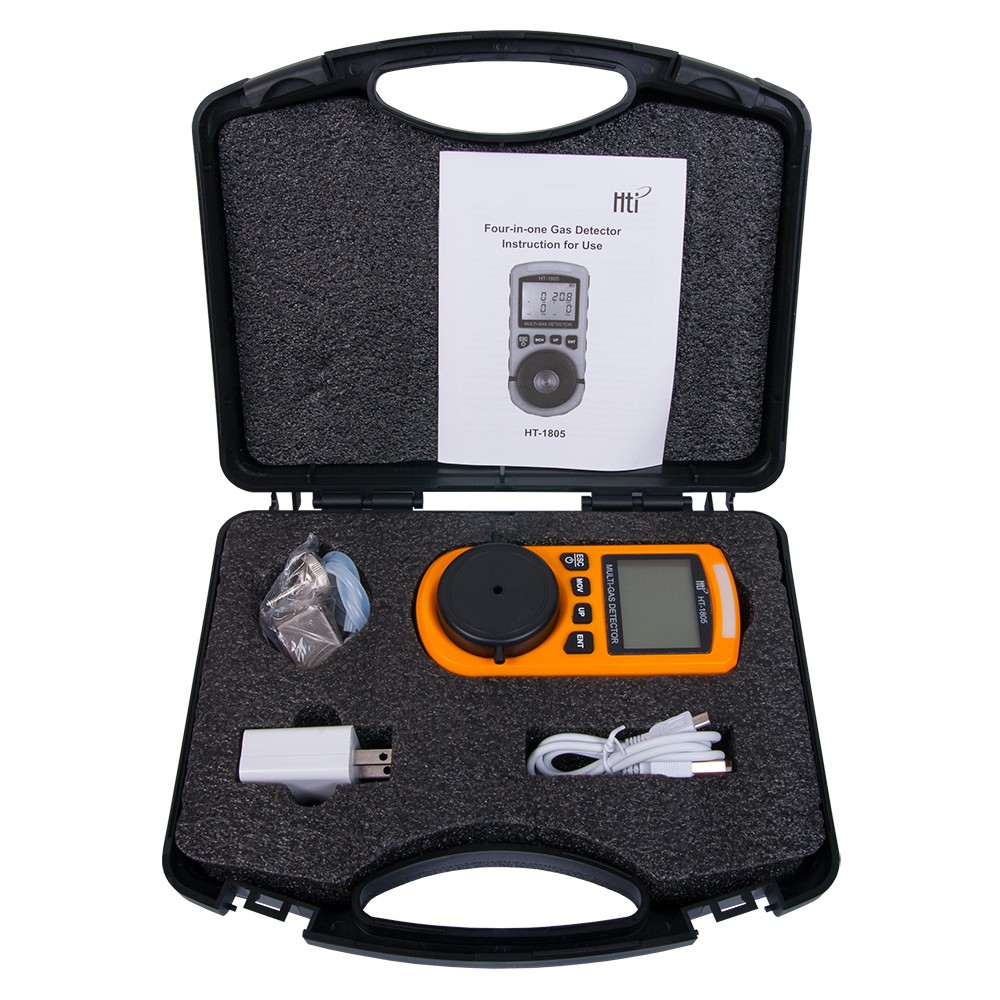
The gas analyzer measures 13.5 × 6.5 × 4.3 cm, weighs 200 g and has a built-in 3.7 V lithium rechargeable battery. It charges via a USB port; a power adapter, USB cable and manual are included. The operating temperature range is −10 to +50 °C, and the permitted humidity range is 15–90 % without condensation.
The HT-1805 is designed for serious work and requires responsible handling. The manual specifies zero and gas calibration. For work where readings determine whether a person may enter a confined space, the device should be checked regularly with a reference gas mixture in accordance with your safety procedures. Do not charge it in an explosive area, cover the sensor window or measure a stream of pure natural gas: excessive concentrations can damage the sensors.
Conclusion
The HTI HT-1805 is a solid gas analyzer for technicians, utility crews, installers, industrial workers and anyone who needs to quickly assess whether the air is safe. Its strength is not exotic features, but straightforward monitoring of O₂, CO, H₂S and LEL on one screen, three types of alerts, and tracking of short-term and shift-long exposure.
Before buying it for regulated work or work in explosive atmospheres, be sure to check your site's requirements for certification, protection rating and calibration intervals. In other situations, the HT-1805 provides just what you expect: readings before the air becomes a problem.