Xintest HT-401
Delivery and payment
Choose your city or town to see the price with delivery there and when you can get it.
Pickup points
- Branch
- Parcel locker
Pros
- Measures CO₂ concentration in ppm
- Compact housing with wall mounting
- Easy-to-understand color-coded air quality indicator
- Large four-digit LED display
- Runs on a rechargeable battery and USB power
Cons
- Battery runtime of about four hours
- Auto power-off after 30 minutes
- No thermometer, hygrometer, or measurement history
Xintest HT-401: a little reason to open a window
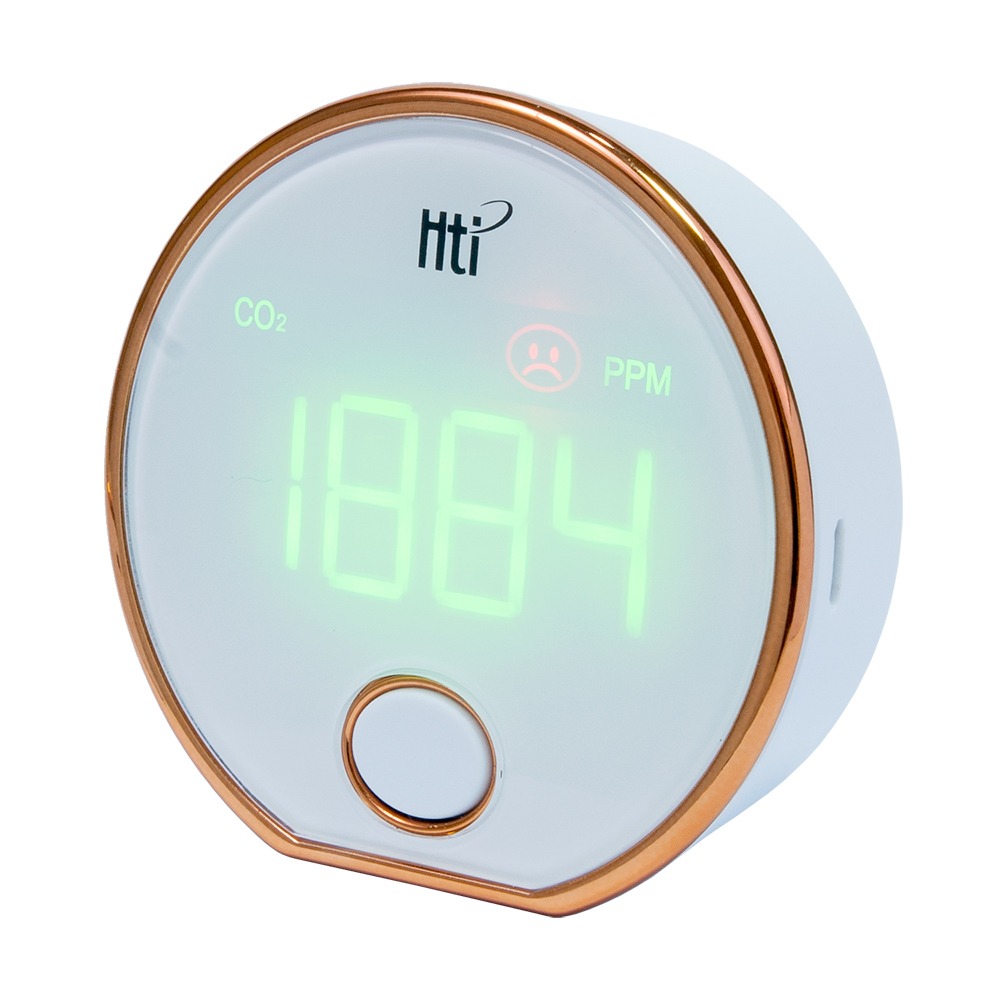
The Xintest HT-401 is a compact home carbon dioxide meter designed for one job: showing how much CO₂ is in the air right now. There are no ten-screen menus, cloud connections, or graphs that nobody will open after the first week. The device displays the current concentration in ppm in large digits, while a colored icon instantly shows whether the room has enough ventilation.
It's a convenient option for a bedroom, child's room, home office, small office, or car. The HT-401 is not a substitute for a carbon monoxide (CO) detector: it measures CO₂ specifically and helps you tell when a room is getting stuffy, rather than detecting dangerous combustion products.
One number that matters
The front panel has a four-digit LED display that shows CO₂ concentration from 0 to 9999 ppm, with a resolution of 1 ppm. A simple comfort indicator sits alongside it: green corresponds to levels up to 600 ppm, yellow comes on above 600 ppm, and red above 1200 ppm. So you don't have to analyze the numbers every time: if you see a yellow or red signal, it's time to let in some fresh air.
The stated accuracy up to 5000 ppm is ±70 ppm or ±5% of the reading. That's enough for monitoring ventilation at home: the device helps you spot patterns, such as how quickly CO₂ levels rise when people gather in a room, windows are closed, or a long online meeting begins.
No setup or unnecessary science
The controls are as simple as they come: a single power button. After you turn it on, the HT-401 performs an approximately 30-second countdown, warms up the sensor, and starts measuring. There is no app, Bluetooth, or manual threshold selection. That's a limitation for those who like to customize every last icon, but an advantage for anyone who wants a simple answer to the question: “Is it time to air out the room?”
The device doesn't show temperature, humidity, time, or date, and it doesn't store measurement history. Its focus is narrow but straightforward: just CO₂, large digits, and the essentials.
Pocket-sized for the room, office, and car
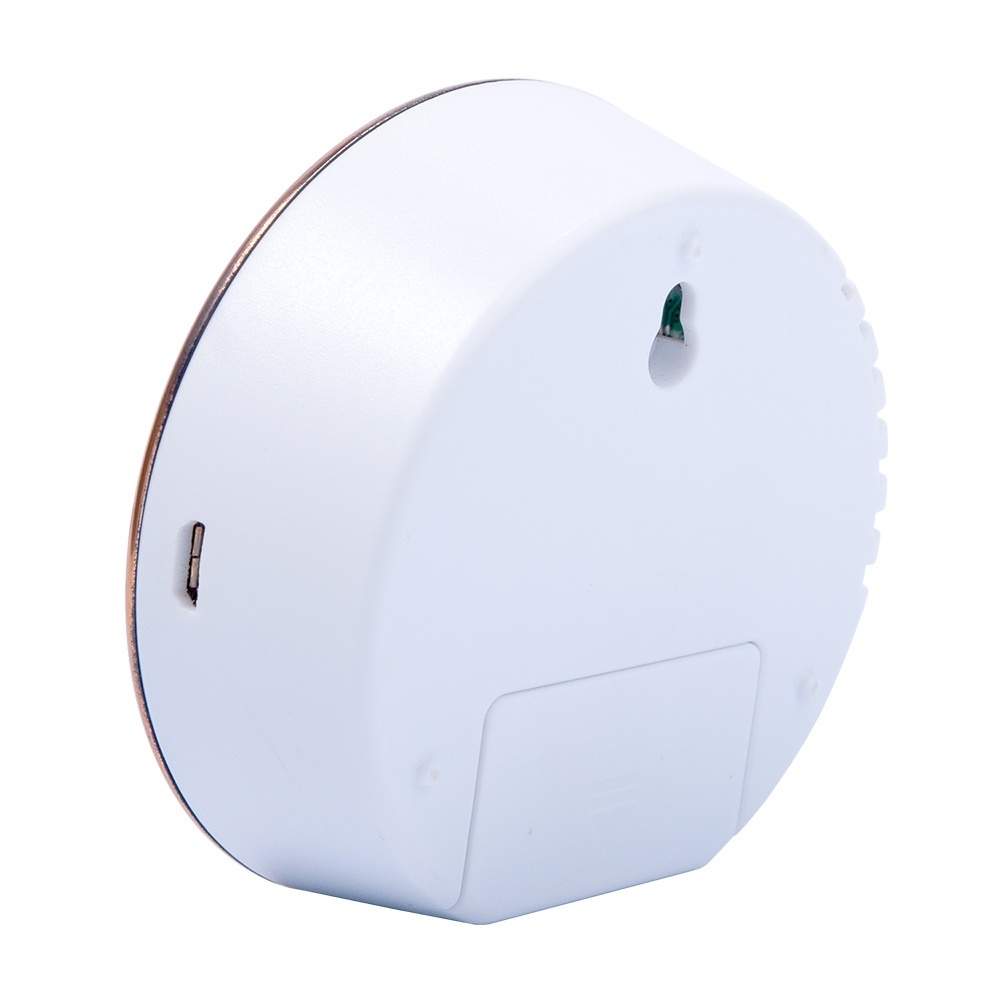
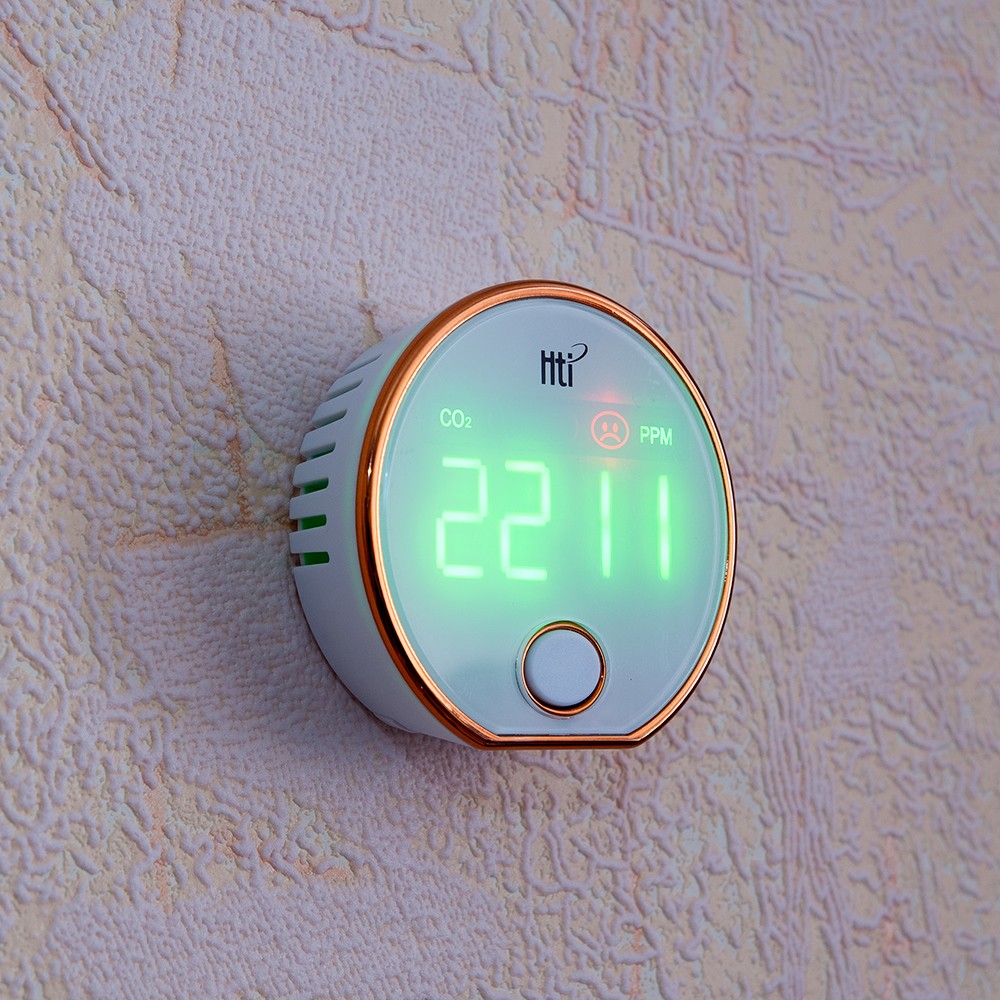
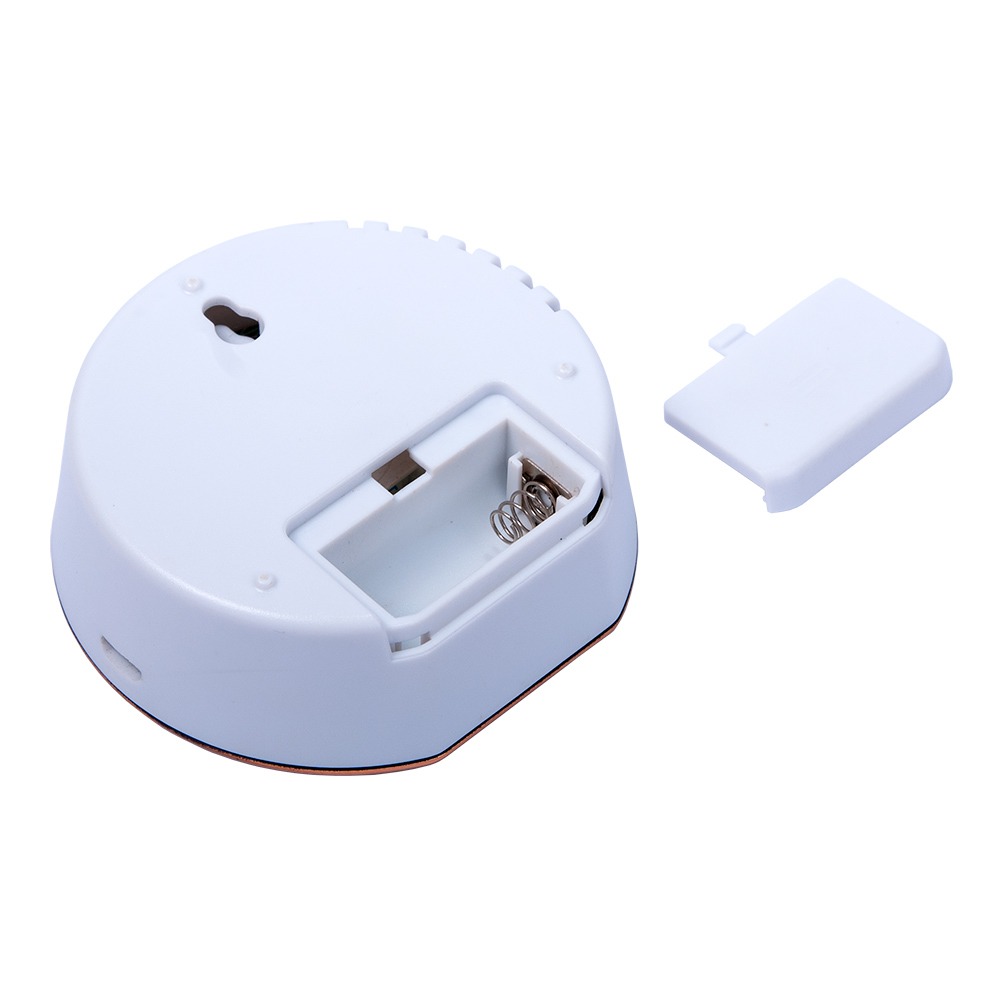
The housing measures just 7.4 × 7.1 × 2.7 cm and weighs about 60 g. You can place it on a shelf or desk, take it to a meeting room, or hang it on a wall using the hole on the back. The white panels and thin copper-colored accent look neat: the HT-401 doesn't look like an industrial instrument that accidentally found its way into your living room.
For more accurate readings, place the meter away from the direct airflow of an air conditioner, fan, or open window. You should also avoid breathing directly into the sensor: you may quickly get a very convincing number, but it won't be particularly representative.
Power: portability with a compromise
The Xintest HT-401 uses a 3.7 V lithium-ion rechargeable battery with a capacity of 300 mAh. One charge provides approximately 4 hours of operation, and a full charge takes about 3.5 hours. The device can be charged via USB; the indicator glows red while charging and green when charging is complete.
To conserve battery power, the device automatically turns off after 30 minutes. That makes sense for a quick air check, but for continuous overnight monitoring, you'll have to turn the HT-401 back on. When the battery runs low, the display shows LO.

Who is the Xintest HT-401 for?
It's a good choice for anyone who wants a small, easy-to-understand indicator of ventilation quality without a complicated ecosystem. It will show you when it's time to open a bedroom window before bed, take a break and air out your home office, or freshen the air in your car.
The HT-401 doesn't claim to be a home weather station or a professional data logger. Instead, it does its one job well: turning invisible CO₂ into visible numbers and a color-coded signal that's hard to ignore.