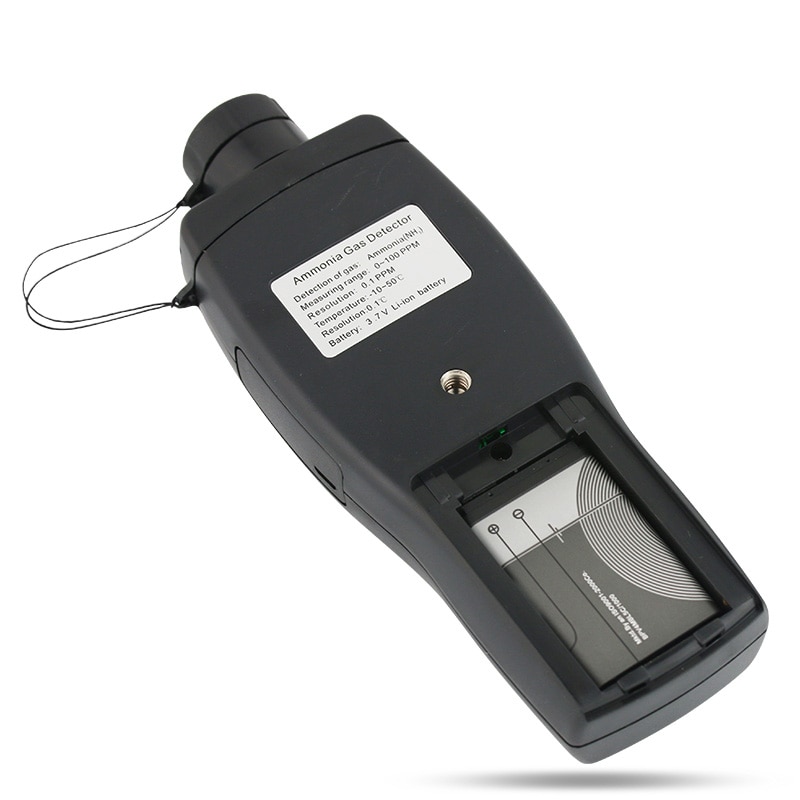
smart sensor AR-8500
Delivery and payment
Choose your city or town to see the price with delivery there and when you can get it.
Pickup points
- Branch
- Parcel locker
Pros
- Measures ammonia in the 0–100 ppm range
- Two adjustable alarm thresholds
- Loud audible and visual alarms
- Backlit display with temperature reading
- Rechargeable battery for extended operation
Cons
- Response takes up to 120 seconds
- Does not measure other hazardous gases
- Sensor has a limited service life
Smart Sensor AR-8500: a personal “nose” for ammonia
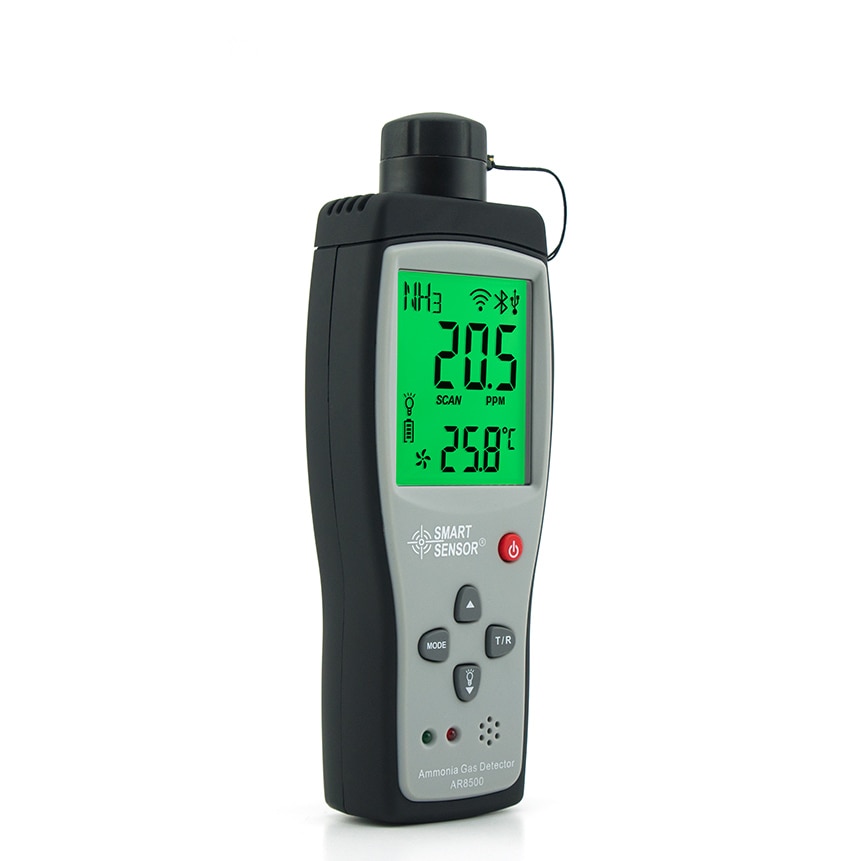
The Smart Sensor AR-8500 is a portable gas analyzer for monitoring the concentration of ammonia (NH3) in the air. It's a specialized device that focuses on ammonia rather than trying to detect everything. This gas can be found on farms, in poultry houses, refrigeration systems, workshops, fertilizer warehouses, and near pipelines or valves.
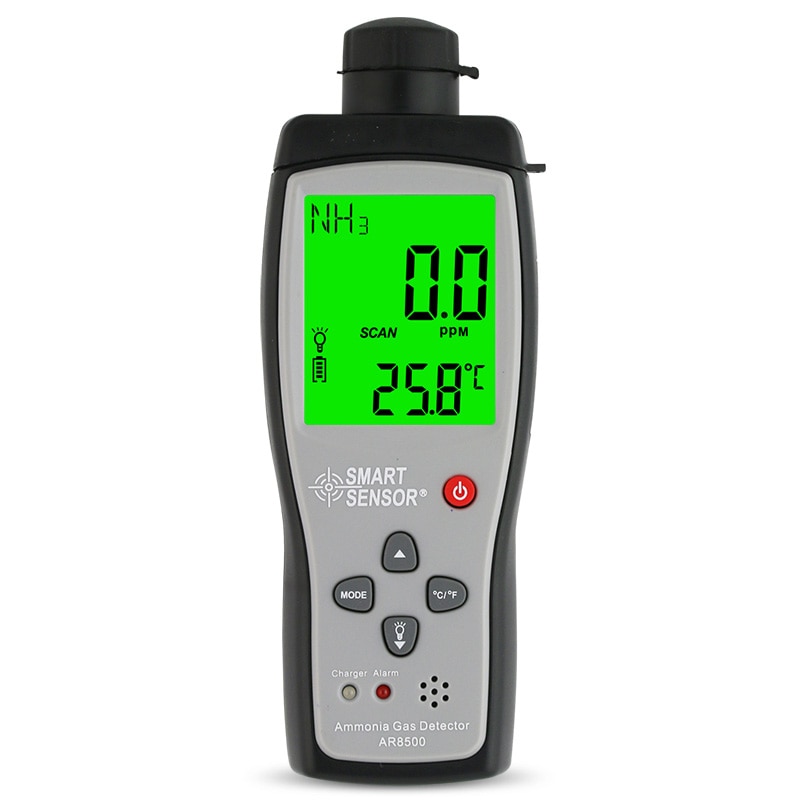
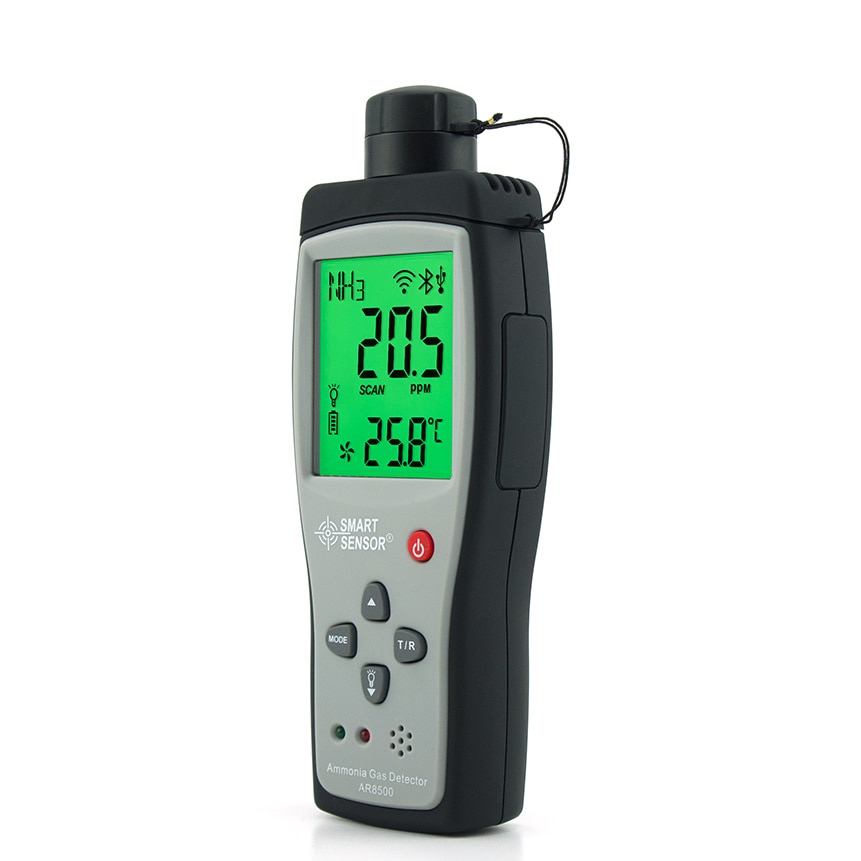
The device shows NH3 concentration in ppm, or parts per million, while also displaying the ambient air temperature. This makes it convenient for regular checks of indoor spaces, locating potential leaks, or monitoring conditions for animals, for whom excess ammonia is no small matter.
Electrochemical sensor: measures concentration, not smell
At the heart of the AR-8500 is an electrochemical sensor. It detects ammonia from 0 to 100 ppm with a resolution of 0.1 ppm. This lets you spot not only an obvious problem when the air in a room has already become hard to tolerate, but also a gradual rise in concentration.
At the same time, this is not a device for immediate emergency response: its stated response and recovery time is up to 120 seconds. The AR-8500 is well suited for routine measurements and localized searches, but it should not be the only element of a safety system at sites where there is a risk of a large industrial leak.
Dual alarm that's hard to ignore
When the ammonia level reaches a set threshold, the AR-8500 emits visual and audible alerts. There are two alarm levels, so you can set separate thresholds for a warning and for a level that calls for immediate action. The factory settings are 20 and 40 ppm, but they can be adjusted to suit the specific space and work requirements.
The buzzer reaches up to 80 dB, and visual indicators supplement the sound. This is a useful feature: sound can get lost in a noisy workshop, while an indicator is easier to miss in a brightly lit room. Together, the two types of alert are more reliable.
Convenient for regular checks
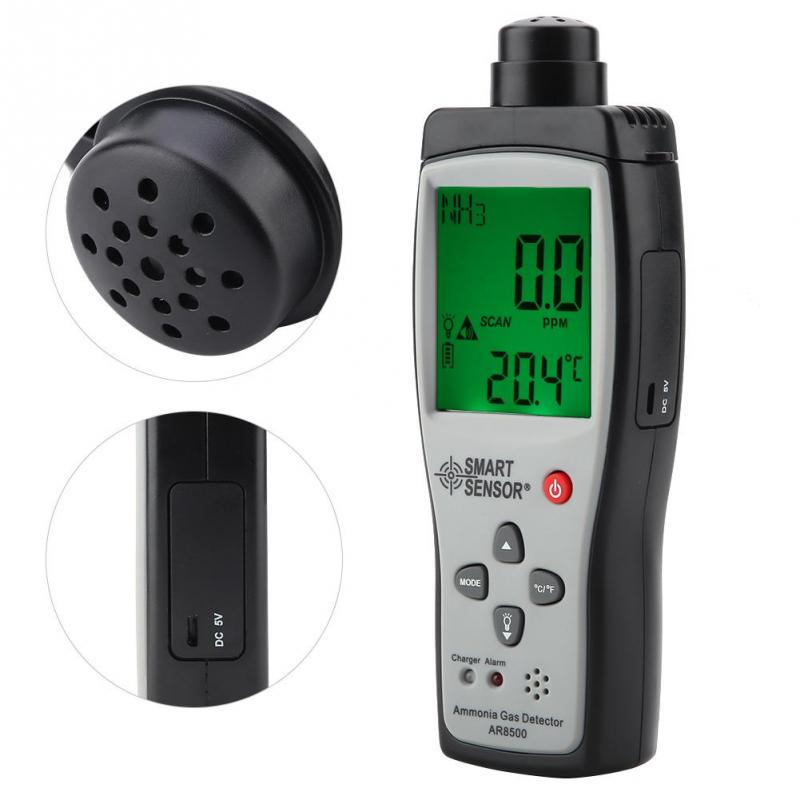
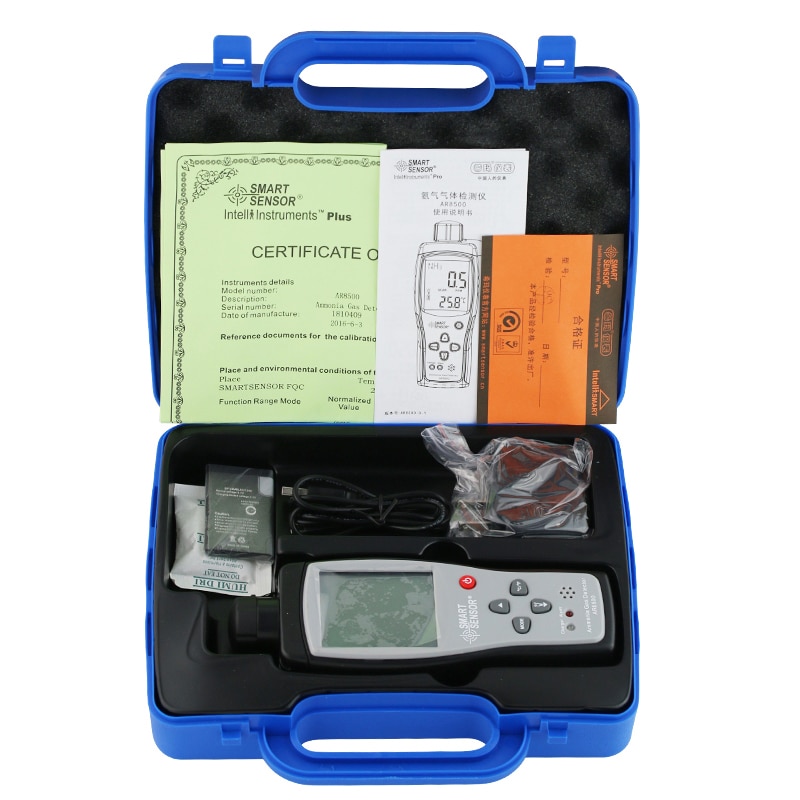
The AR-8500 is designed for one-handed operation, with buttons on the front for power, threshold settings, modes, and the backlight. The large segmented LCD display is easy to read without constantly looking closely, and the green backlight is useful in utility rooms, basements, or in the evening.
After switching on, the device goes through a short 10-second warm-up. It runs on a built-in 3.7 V rechargeable battery, with a stated continuous runtime of over 60 hours. It also powers off automatically after 10 minutes of inactivity; this feature can be disabled for extended monitoring.
What to know before use
The AR-8500 detects only NH3, so it cannot replace a multigas detector for oxygen, carbon monoxide, methane, or other substances. The upper measurement limit is 100 ppm. In a serious leak, the concentration may be higher, so the device is not intended to accurately assess extreme levels.
The electrochemical sensor is a consumable component with an estimated service life of about two years. Protect it from water, dirt, impacts, and overheating, and cover it with the protective cap when not in use. For professional work where people's safety depends on the readings, regular accuracy checks and compliance with workplace safety procedures are essential.
Conclusion
The Smart Sensor AR-8500 is a practical handheld detector for anyone who needs to monitor ammonia without a complex fixed system. It combines measurement from 0 to 100 ppm, two alarm thresholds, an easy-to-read screen, and long battery life. It's best considered for farms, cold rooms, warehouses, utility rooms, and localized checks for potential leaks, where ammonia should remain a number on the screen rather than a smell in the air.